Comparing object weights Measurement Worksheets for Ages 6-7
3 filtered results
-
From - To
Boost your child's understanding of weight concepts with our Comparing Object Weights Measurement Worksheets, designed for ages 6-7. These engaging activities help young learners grasp key measurement skills by comparing weights of different objects in a fun, interactive way. Ideal for first and second graders, our printable worksheets foster critical thinking and support math curriculum standards. With colorful illustrations and simple instructions, kids will enjoy mastering the basics of comparing weights, promoting confidence and achievement in math. Perfect for classroom use or at-home practice, these worksheets are a valuable resource for developing essential math skills.
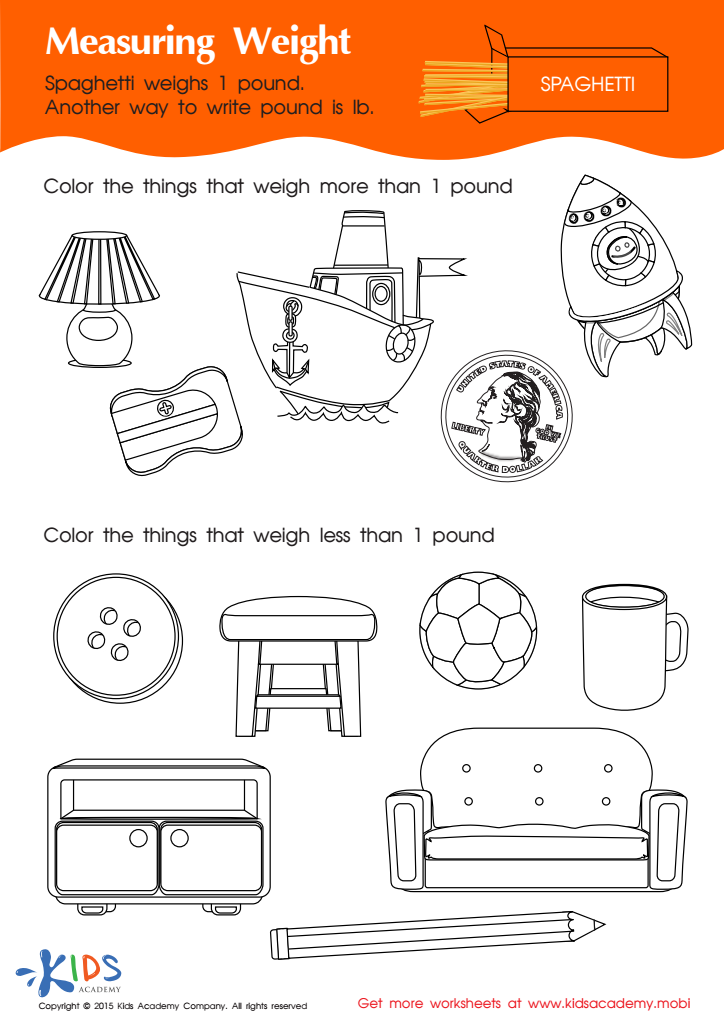
 Assign to My Students
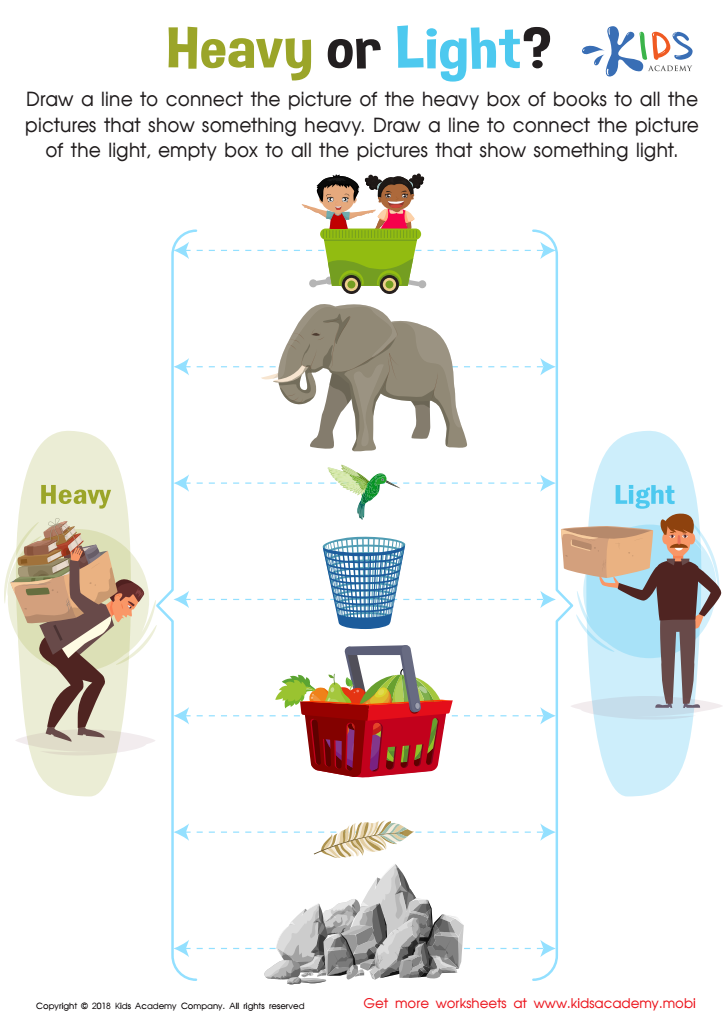
Heavy or Light? Worksheet
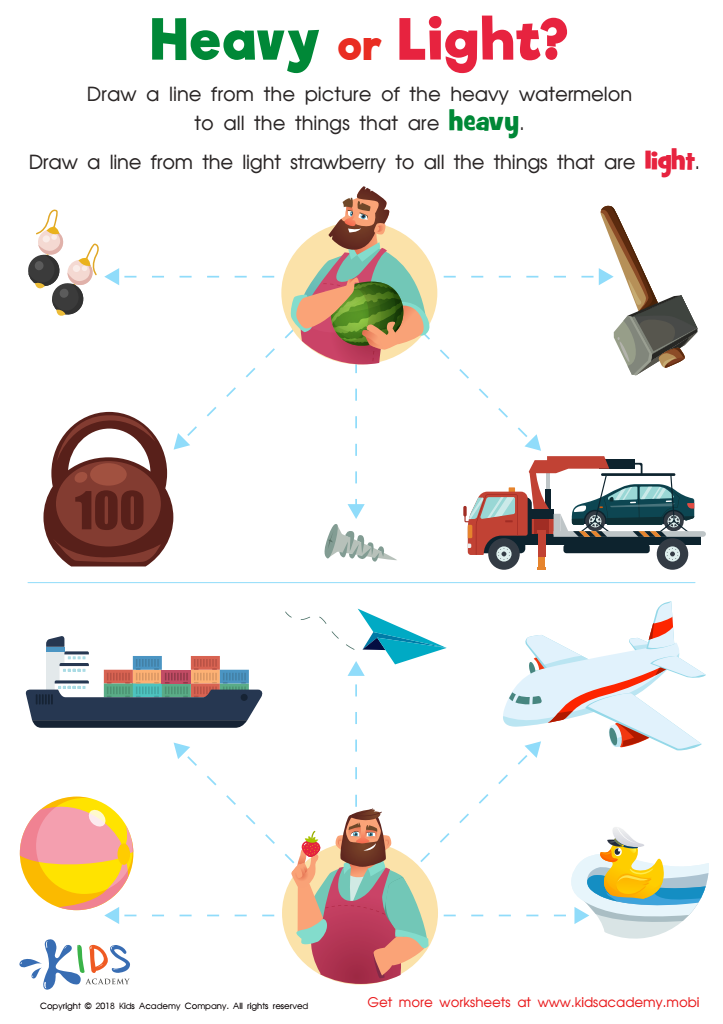
Heavy or Light? Worksheet








Children aged 6-7 are at an important stage of cognitive and mathematical development. Introducing concepts like comparing object weights through measurement is critical for several reasons. First, it helps build a foundational understanding of mass and volume, essential for future science and math learning. These early experiences with concrete measurements lay the groundwork for more abstract concepts introduced later in their education.
Moreover, comparing weights nurtures practical life skills. Children begin to comprehend the real-world implications of heavy and light objects, fostering decision-making skills, like determining manageable loads or safe handling of items.
Equally important is the development of critical thinking. When children compare weights, they engage in observation, prediction, and analysis. They form hypotheses about weights and test them, promoting scientific inquiry and fostering a sense of curiosity.
Additionally, these activities support language and communication skills. As children discuss their findings, they learn new vocabulary and practice articulating their thought processes.
Teachers and parents should care because these experiences integrate cognitive, physical, and social development. Engaging in weight comparison activities encourages children to explore their environment meaningfully, fostering growth in both intellectual and practical competencies that are crucial for lifelong learning and daily functioning.








