Moral understanding Reading Comprehension Worksheets for Ages 6-7
4 filtered results
-
From - To
Introduce young learners to essential values with our "Moral Understanding Reading Comprehension Worksheets for Ages 6-7." These carefully designed worksheets help children grasp key moral concepts through engaging stories and thought-provoking questions. Each worksheet includes age-appropriate passages followed by inquiries that encourage kids to reflect on lessons of honesty, kindness, responsibility, and more. By exploring these topics, children enhance both their reading comprehension skills and their ability to understand and practice positive behavior. Ideal for educators and parents, these resources support a balanced approach to literacy and character education, fostering well-rounded development in young minds.
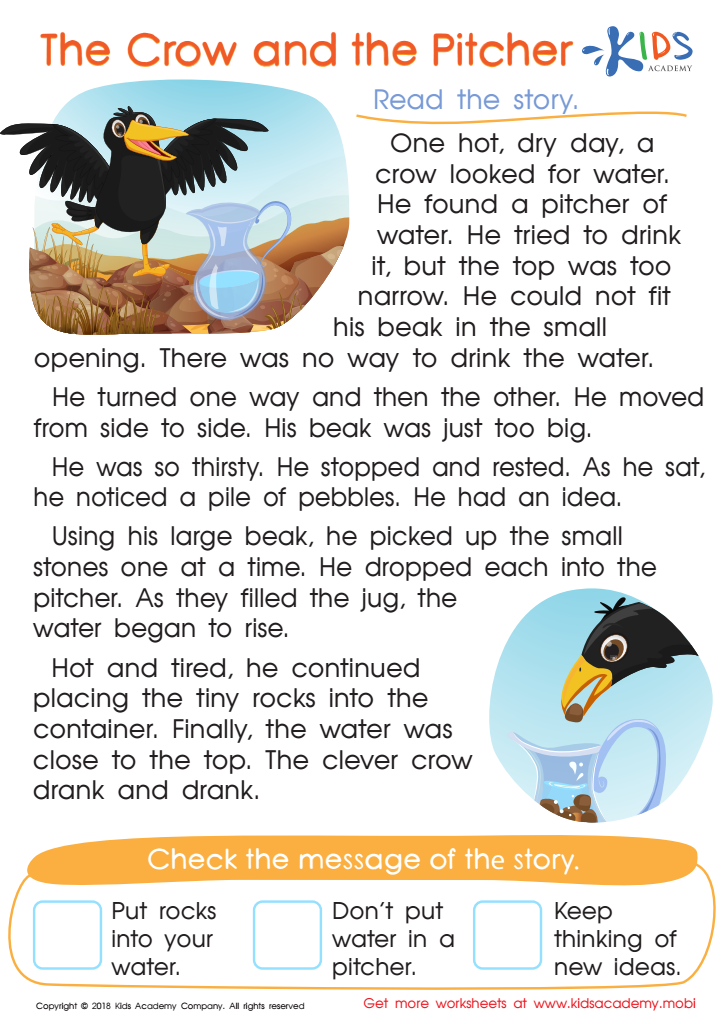
The Crow and the Pitcher Worksheet
 Assign to My Students
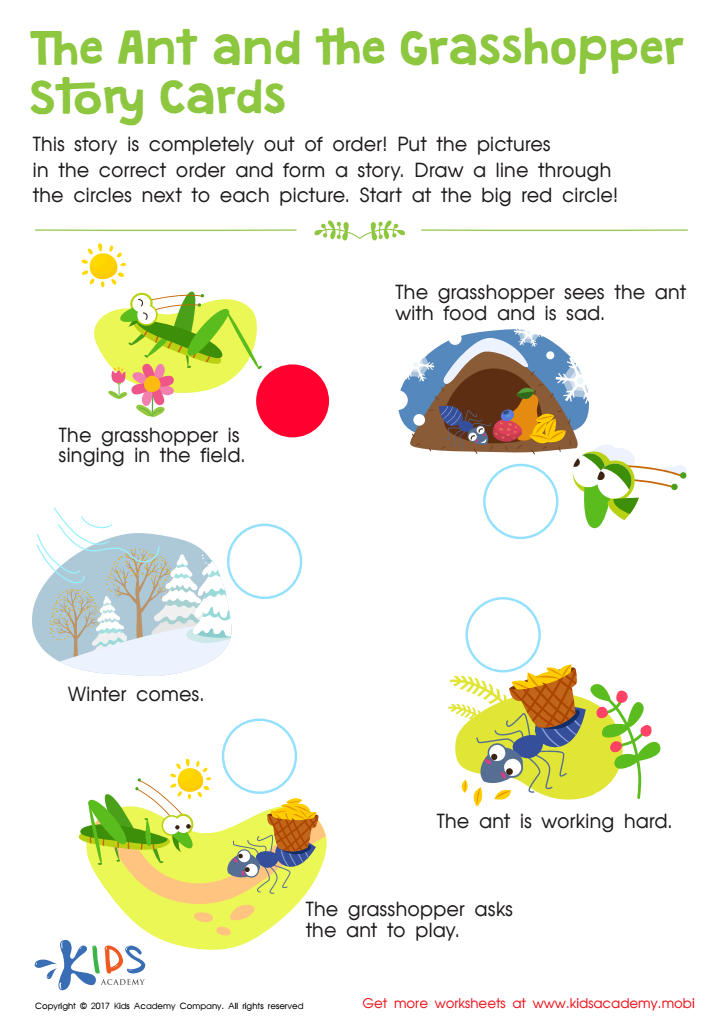
The Ant and The Grasshopper Worksheet
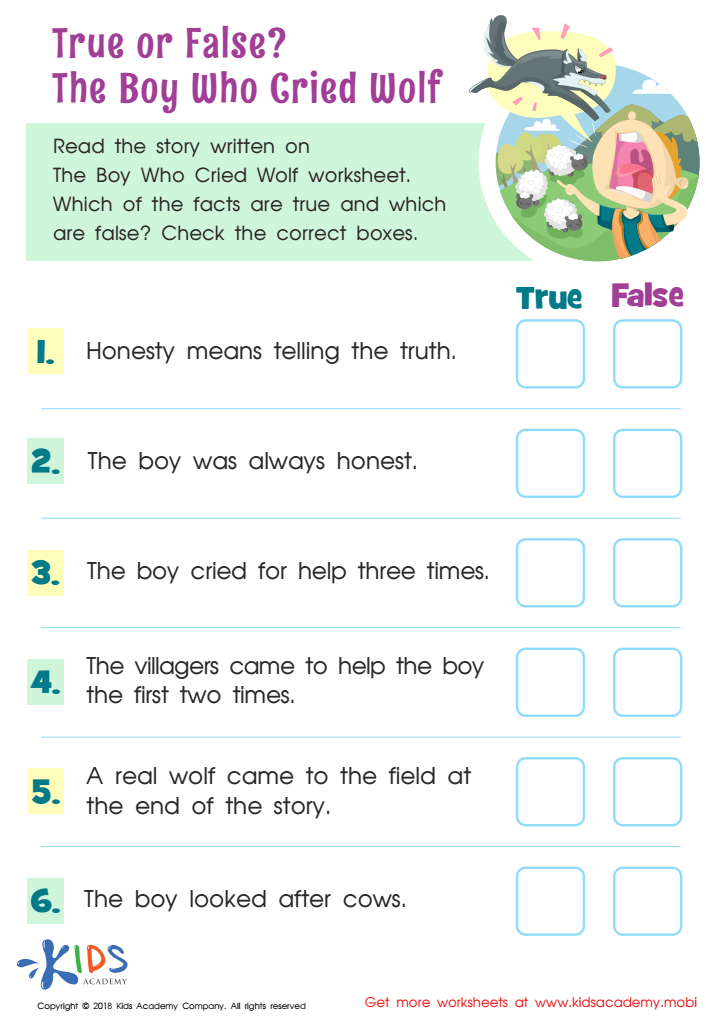
True or False? The Boy Who Cried Wolf Worksheet
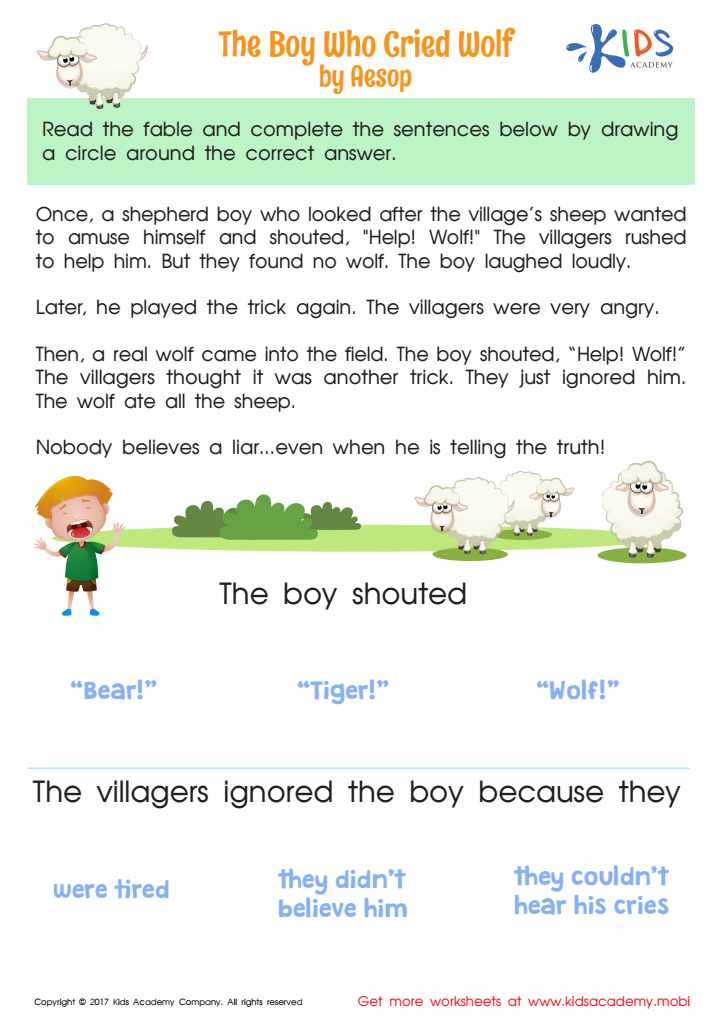
The Boy Who Cried Wolf Worksheet








Moral understanding and reading comprehension are critical areas of development for children ages 6-7, as they collectively lay the foundation for their intellectual and ethical growth. Fostering moral understanding helps young children distinguish between right and wrong, fostering empathy, fairness, and kindness in their interactions. At this impressionable age, they are beginning to grasp complex social concepts and learn appropriate ways to navigate various social situations. Therefore, parents and teachers play a vital role in guiding children's moral development through real-life examples and open discussions.
Simultaneously, developing strong reading comprehension skills is key to children’s academic success and love of learning. At ages 6-7, children transition from learning to read to reading to learn. Comprehension enables them to process information, enhance their vocabulary, and think critically about the text and beyond.
Combining moral understanding and reading comprehension helps children engage with stories that offer ethical dilemmas and social conflicts. This duality not only makes reading more meaningful but also allows children to practice empathy and critical thinking, essential components for their overall character. Therefore, with guided, thoughtful introduction and reinforcement from parents and teachers, children’s moral and cognitive abilities can grow in tandem, holistically preparing them for future challenges in diverse areas of life.








