Rhyme recognition Reading Comprehension Worksheets for Ages 6-7
3 filtered results
-
From - To
Boost your child's reading skills with our Rhyme Recognition Reading Comprehension Worksheets designed specifically for ages 6-7! These engaging worksheets help young learners identify and understand rhyming words, enhancing their vocabulary and phonemic awareness. Each worksheet features fun, age-appropriate exercises that promote critical thinking and deeper comprehension of texts. Perfect for at-home learning or classroom activities, these resources will make reading enjoyable while supporting essential literacy skills. Join the fun and watch your child gain confidence and fluency in reading through the magic of rhyme! Start their learning journey today with our interactive and colorful worksheets.
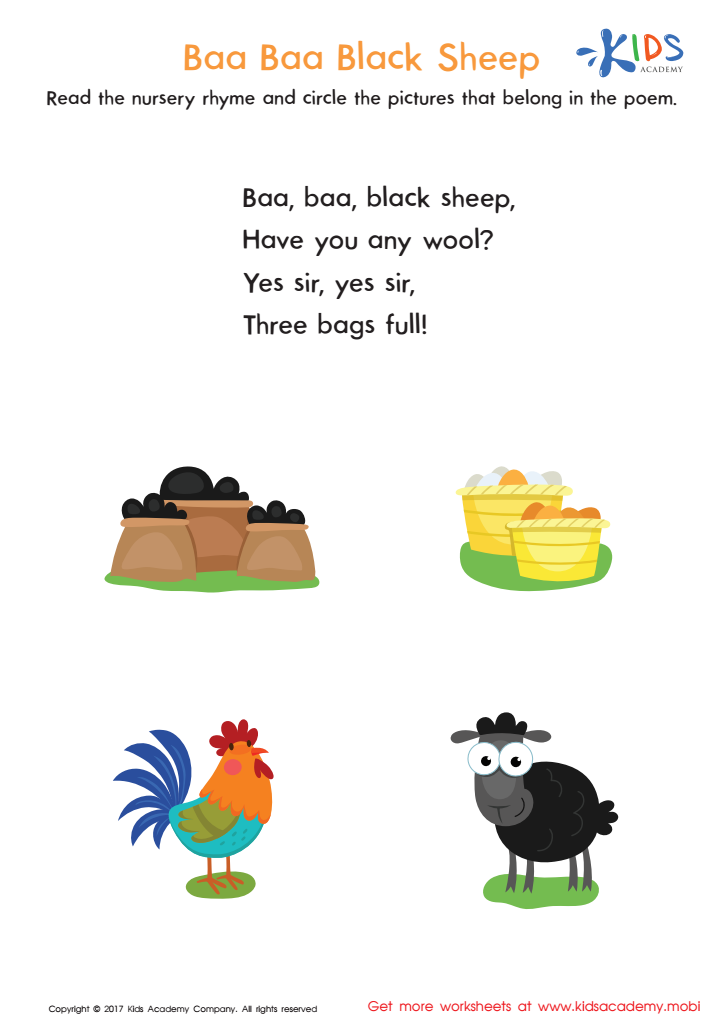
Baa Baa Black Sheep Printable
 Assign to My Students
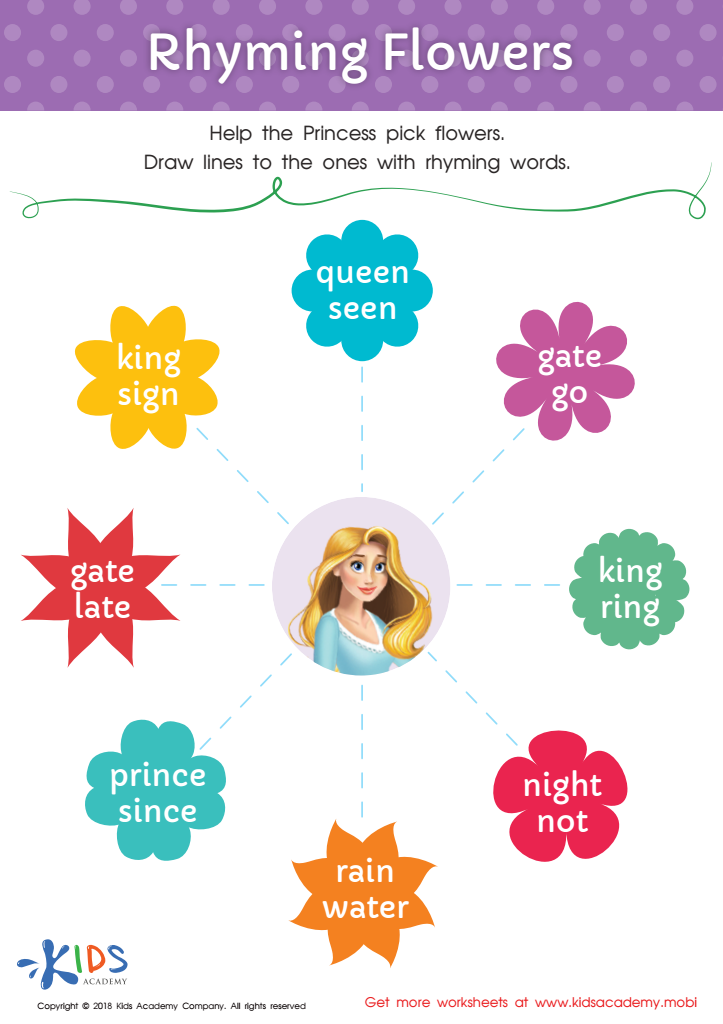
Rhyming Flowers Worksheet
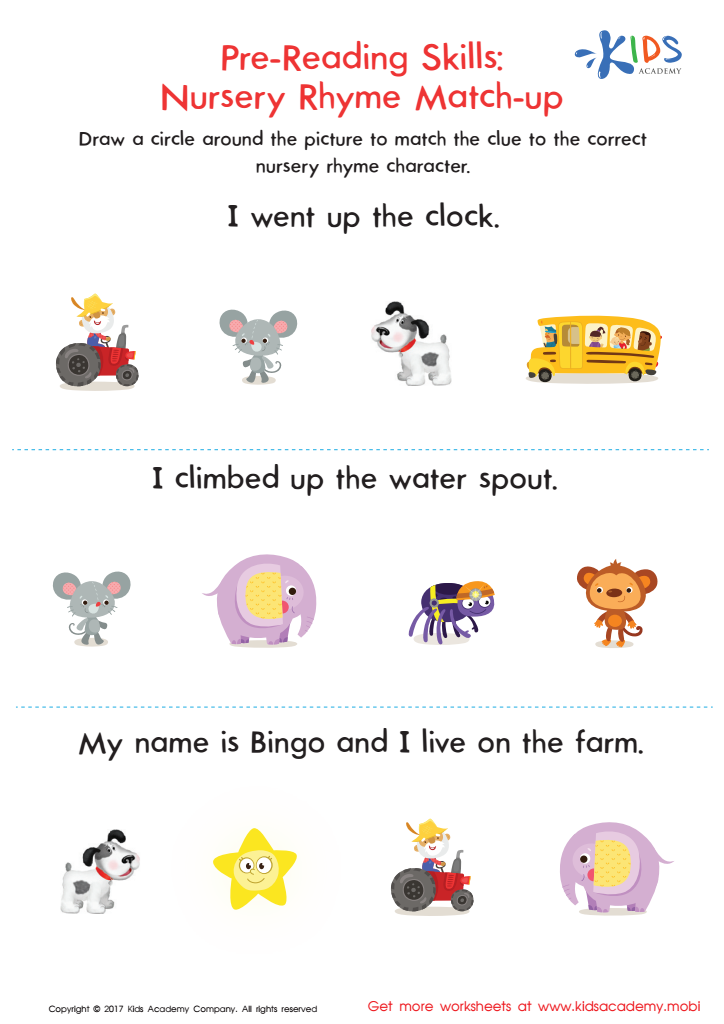
Nursery Rhyme Match–Up Worksheet


.jpg)





Rhyme recognition is a crucial skill for reading comprehension among children aged 6-7. When children identify and appreciate rhymes, they develop phonemic awareness, which is the ability to hear, identify, and manipulate individual sounds in spoken words. This skill forms the foundation for phonics and decoding, key components in effective reading.
Understanding rhymes also enriches vocabulary as children are exposed to new words in a playful context, enhancing their linguistic skills. Moreover, rhyming activities can make learning engaging and enjoyable, creating a positive attitude towards reading.
For teachers and parents, fostering rhyme recognition not only aids in literacy development but also enhances cognitive functions. Children who can recognize and produce rhymes tend to have stronger memory skills and can make connections across different subject areas.
Furthermore, rhyme recognition aids emotional and social skills, as it often occurs within songs, games, and collaborative storytelling, encouraging social interaction and communication.
Overall, prioritizing rhyme recognition directly impacts reading comprehension and overall literacy, offering children the tools they need for successful reading and learning journeys. By focusing on rhyming during this critical developmental stage, educators and parents can enhance children’s confidence and competence as readers.








