Understanding life cycles Reading Comprehension Worksheets for Ages 6-7
3 filtered results
-
From - To
Unlock your child's full reading potential with our expertly designed 'Understanding Life Cycles Reading Comprehension Worksheets' for ages 6-7. Each engaging worksheet combines colorful illustrations and simple text to help young learners grasp the fascinating stages of life cycles. These worksheets not only boost reading skills but also introduce essential science concepts. Perfect for classroom and home use, our reading comprehension resources make learning fun and interactive. Help your child or students understand and marvel at the wonders of nature through reading—all while developing critical thinking and comprehension skills. Download now for a curious and educated child!
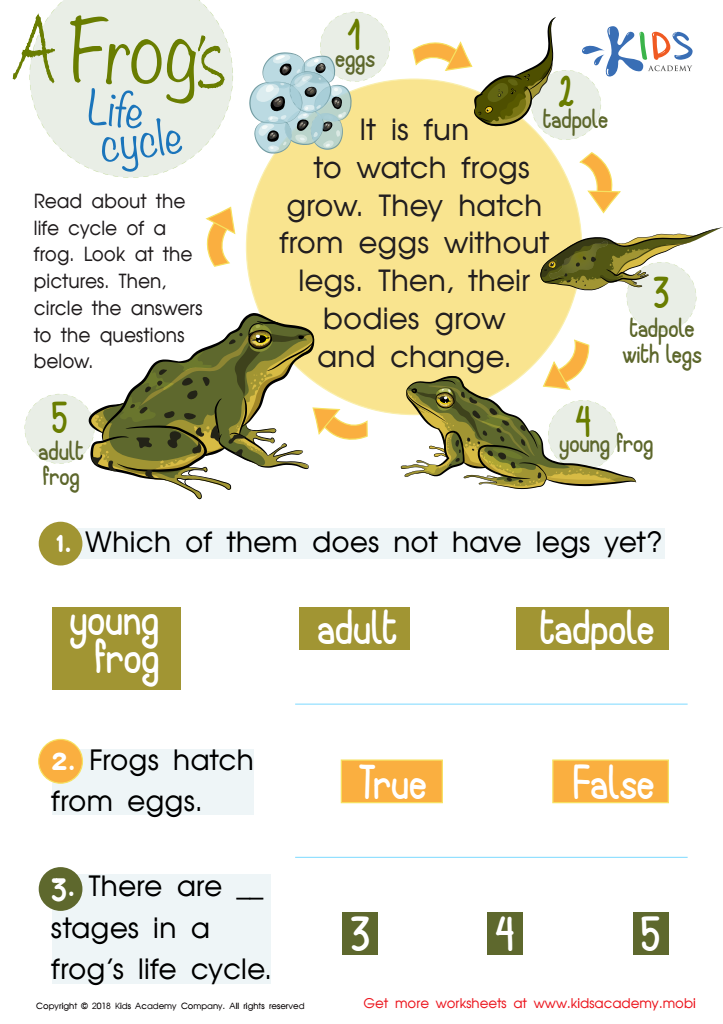
A Frog’s Life Cycle Worksheet
 Assign to My Students
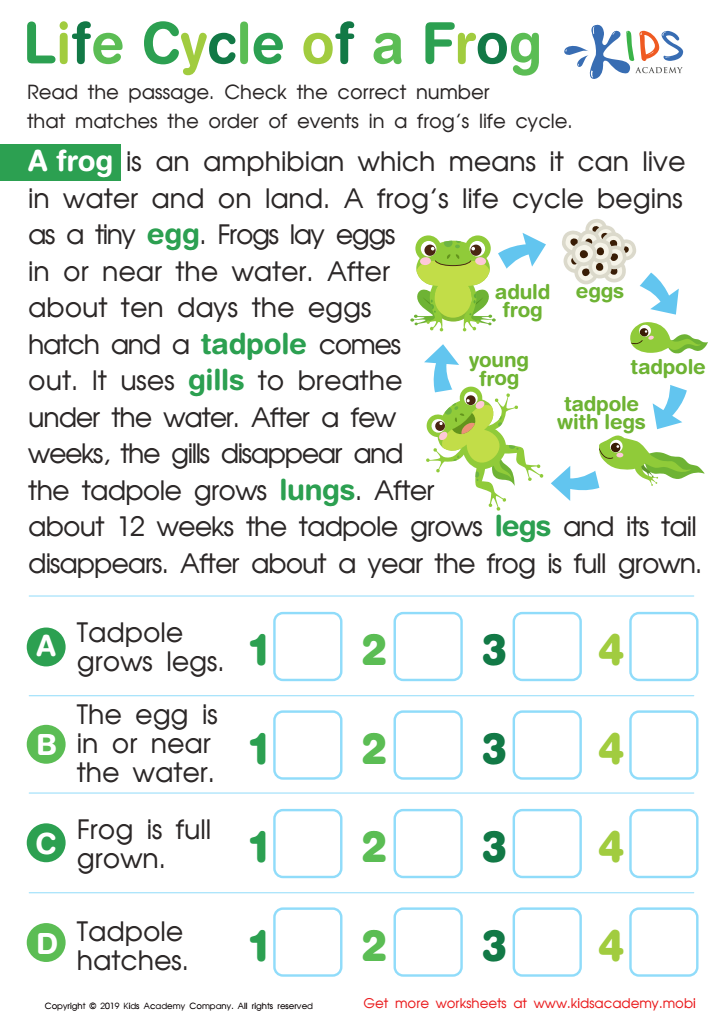
Life Cycle of a Frog Worksheet
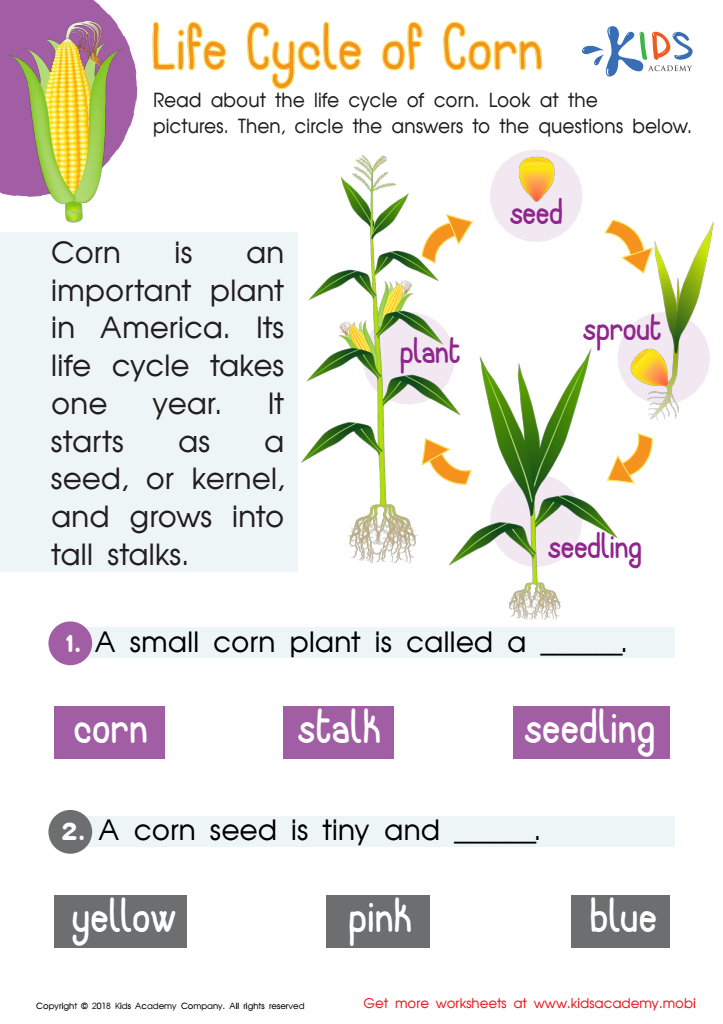
Life Cycle of Corn Worksheet







Understanding life cycles is a foundational scientific concept that is crucial for children aged 6-7, and reading comprehension about life cycles enhances both cognitive and emotional development. For one, it helps children grasp the concept of growth, change, and development in living organisms, thus fostering a deeper appreciation for the natural world. When stories or educational texts focus on life cycles, children learn patterns, sequencing, and cause-and-effect relationships, which are critical thinking skills that apply beyond science to everyday problem-solving and academic tasks.
Moreover, by delving into reading comprehension about life cycles, children expand their vocabulary and improve their language skills. Encountering terms such as "metamorphosis" or "germination" introduces them to advanced concepts in a contextual manner, easing future learning. This type of reading aligns perfectly with cross-curricular education, where literacy is integrated into science, contributing to a more cohesive learning experience.
Emotionally, understanding life cycles can help children make sense of the changes they observe in their environment, including their own growth and aging. It also teaches responsibility and empathy through examples in nature, like caring for plants or respecting animal life. Therefore, parents and teachers should prioritize this topic as it supports comprehensive education, creating curious, knowledgeable, and empathetic learners.








