Vocabulary expansion Reading Comprehension Worksheets for Ages 6-7 - Page 2
27 filtered results
-
From - To
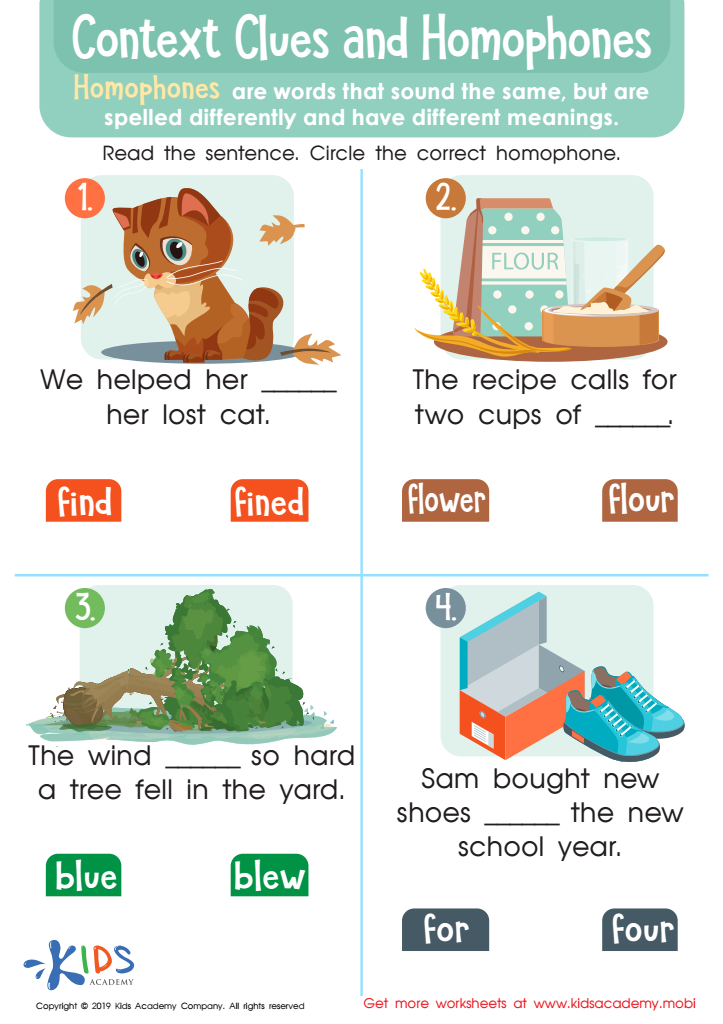
Context Clues and Homophones Worksheet
 Assign to My Students
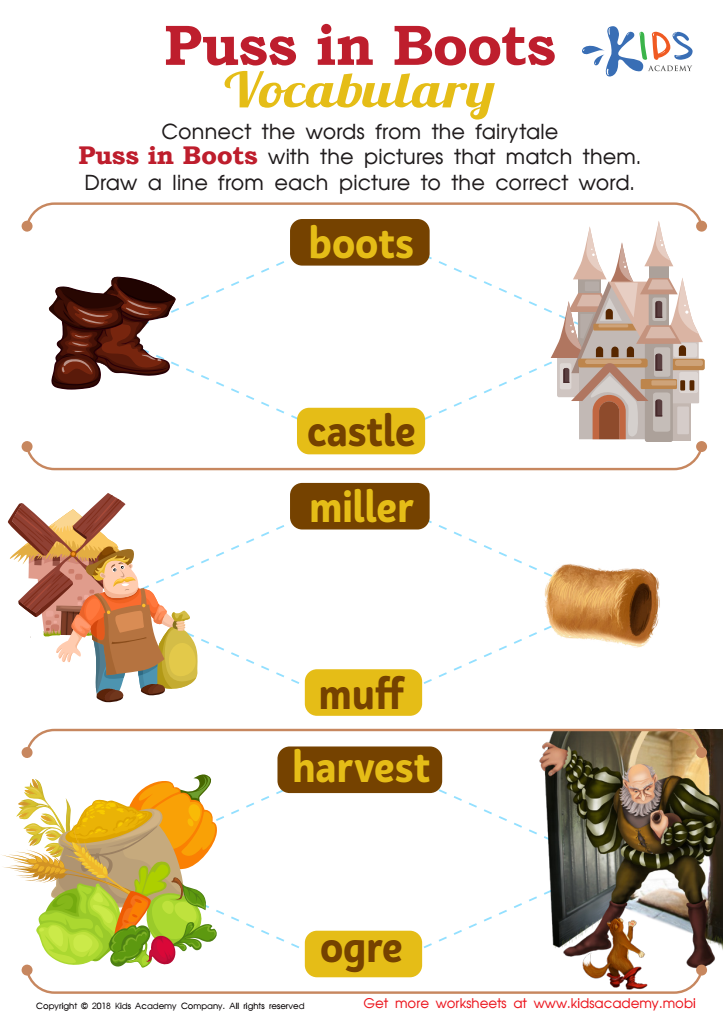
Puss in Boots Vocabulary Worksheet
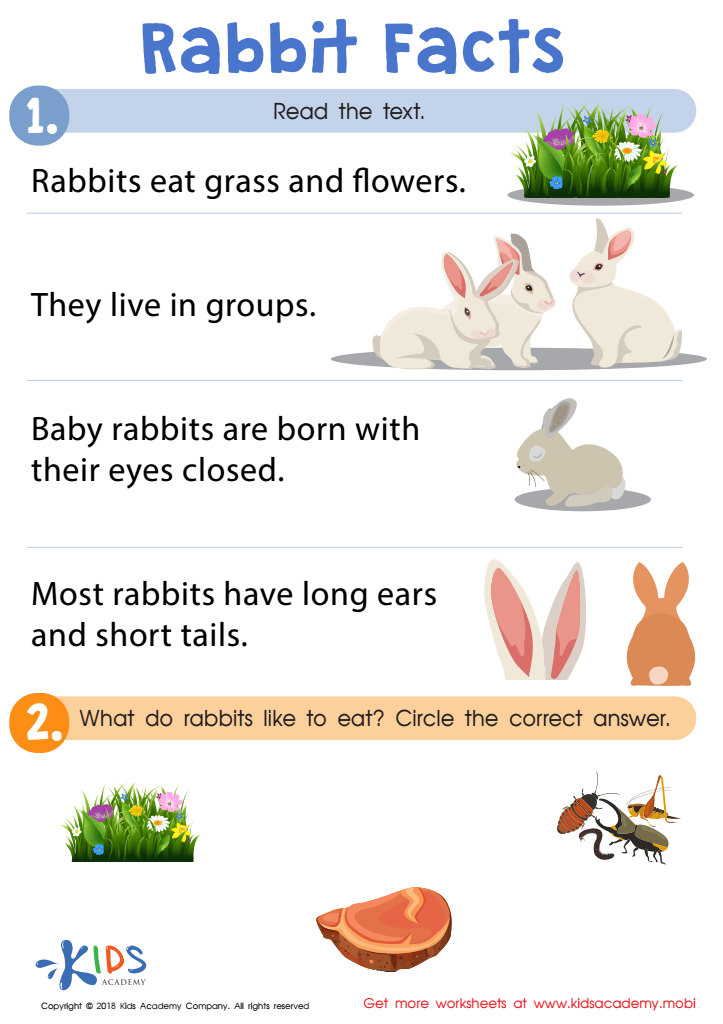
Rabbit Facts Worksheet


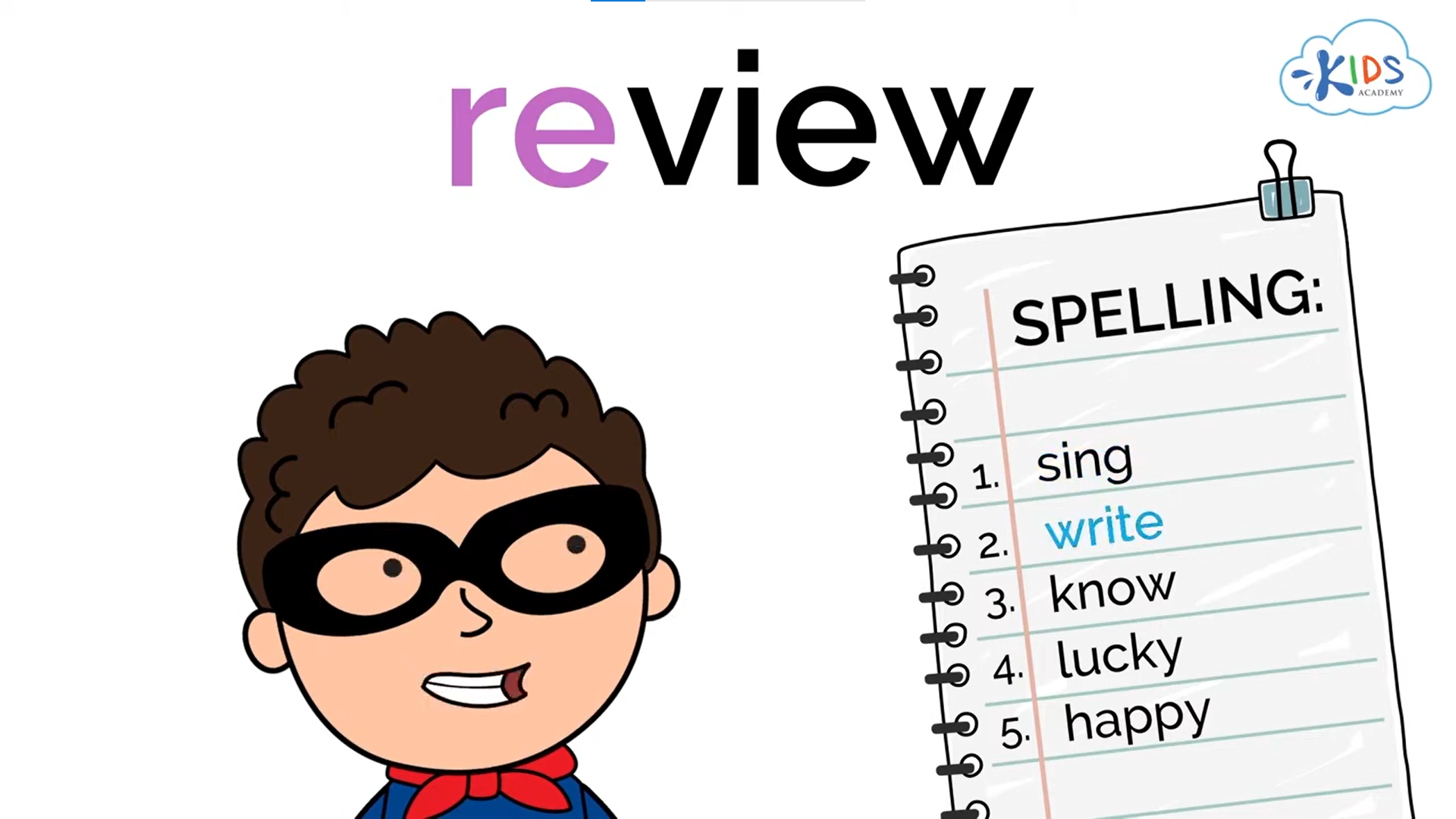





Vocabulary expansion and reading comprehension are crucial for children aged 6-7, as they lay the foundation for future academic success and effective communication. During these formative years, children are rapidly acquiring language skills and developing their cognitive abilities. A robust vocabulary enhances their ability to articulate thoughts and emotions, making it easier for them to engage with peers and adults.
Furthermore, a rich vocabulary directly impacts reading comprehension. As children encounter new words, they also learn to infer meaning from context, understand complex ideas, and grasp the main themes of a text. This is vital for building critical thinking skills, as comprehension requires not just identifying words but also interpreting and analyzing content.
When teachers and parents prioritize vocabulary expansion, they can create a stimulating environment rich in diverse language experiences. Engaging with books, storytelling, and interactive conversations encourages children to explore and learn new words. This investment in vocabulary and comprehension ultimately equips children with the tools they need to navigate their educational journey with confidence, fostering a lifelong love for reading and learning. As such, supporting vocabulary growth at this stage is an essential strategy for developing proficient readers and informed individuals.








