Rhyming skills development Rhyming Words Worksheets for Ages 6-7
3 filtered results
-
From - To
Boost your child's early literacy with our "Rhyming Words Worksheets for Ages 6-7," designed to enhance rhyming skills development. Our engaging, printable worksheets are tailored for young learners to recognize and generate rhyming words, a fundamental phonetic skill crucial for reading fluency. Activities include matching exercises, word families, and fun puzzles that gradually increase in complexity to suit your child’s progress. Perfect for both classroom and home use, these worksheets foster a love for reading and learning, laying a solid foundation for future language success. Empower your child’s reading journey with these enjoyable and educational resources!
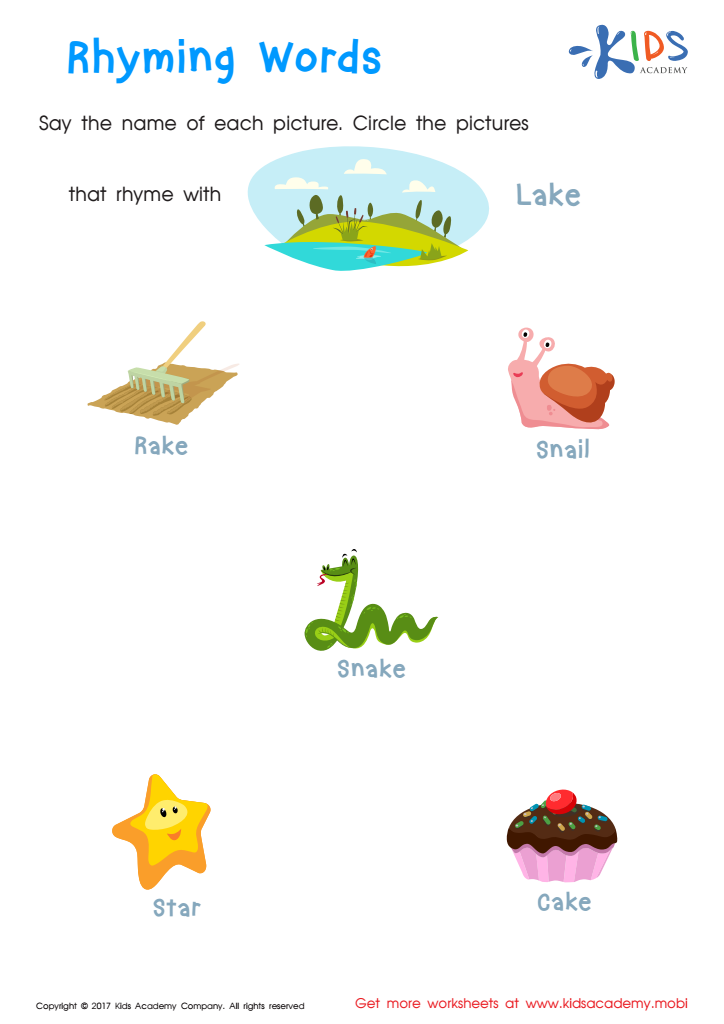
Rhyming Words Rhyming Worksheet
 Assign to My Students
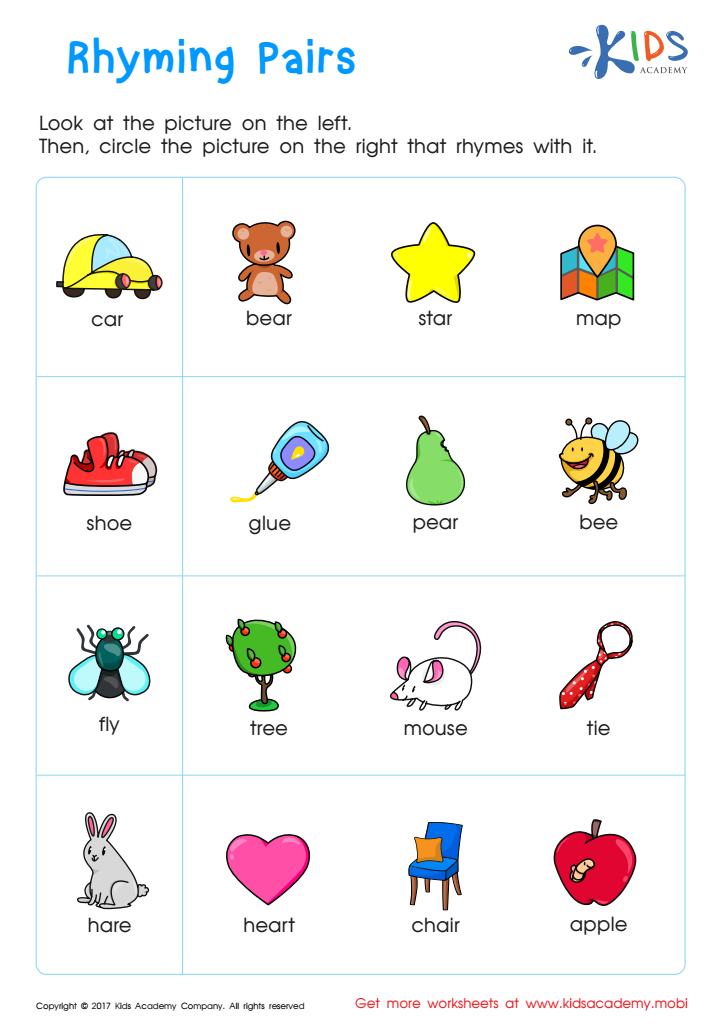
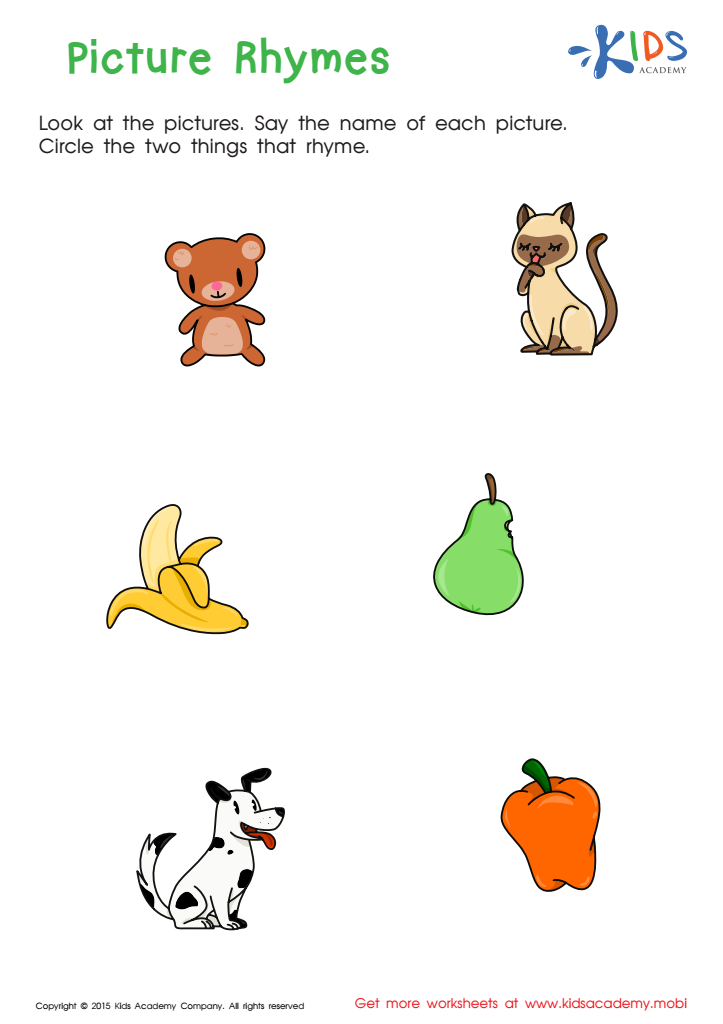
First Words: Picture Rhymes Worksheet







Rhyming skills are crucial in early childhood development, especially for children aged 6-7, and parents and teachers should prioritize fostering these skills. Primarily, rhyming enhances phonemic awareness, which is the ability to recognize and manipulate sounds in spoken words. This foundational skill is essential for learning to read, as it helps children understand patterns in language and the connections between letters and sounds.
Additionally, rhyming encourages memory and cognitive development. As children work to recall and produce rhyming words, they are exercising their memory muscles. This practice not only aids in language development but also strengthens overall cognitive abilities, which are beneficial across all subjects in school.
Moreover, engaging with rhymes boosts creativity and linguistic play. Rhymes often introduce children to imaginative storytelling and songs, making learning enjoyable and interactive. This engagement fosters a love for reading and can ignite a lifelong interest in literature.
Socially, rhyming games and activities create opportunities for cooperative learning. Children can work together to find rhyming pairs or create their own rhymes, promoting teamwork and communication skills.
Incorporating rhyming activities in early education sets a solid groundwork for future academic success and personal growth, making it a vital focus for parents and teachers alike.








