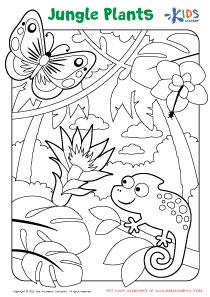
Understanding ecosystems Animals Worksheets for Ages 6-7
3 filtered results
-
From - To
Explore the wonders of ecosystems with our engaging "Understanding Ecosystems Animals Worksheets" designed specifically for ages 6-7! These worksheets combine fun and education, helping young learners discover the intricate relationships between animals and their habitats. Through interactive activities and colorful illustrations, children will grasp essential ecological concepts, including how different species interact with one another and their environment. Perfect for classroom use or at-home learning, these resources foster curiosity about nature while building foundational science skills. Dive into the fascinating world of animals and ecosystems today, and inspire a love for science in your young learners!
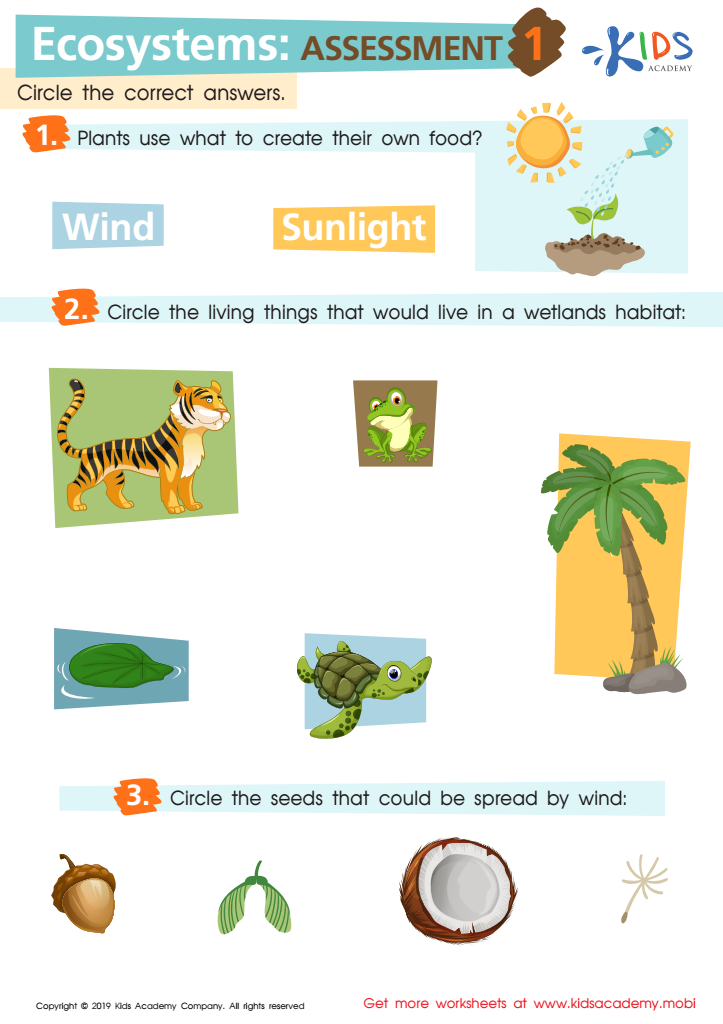
Ecosystems: Assessment 1 Worksheet
 Assign to My Students
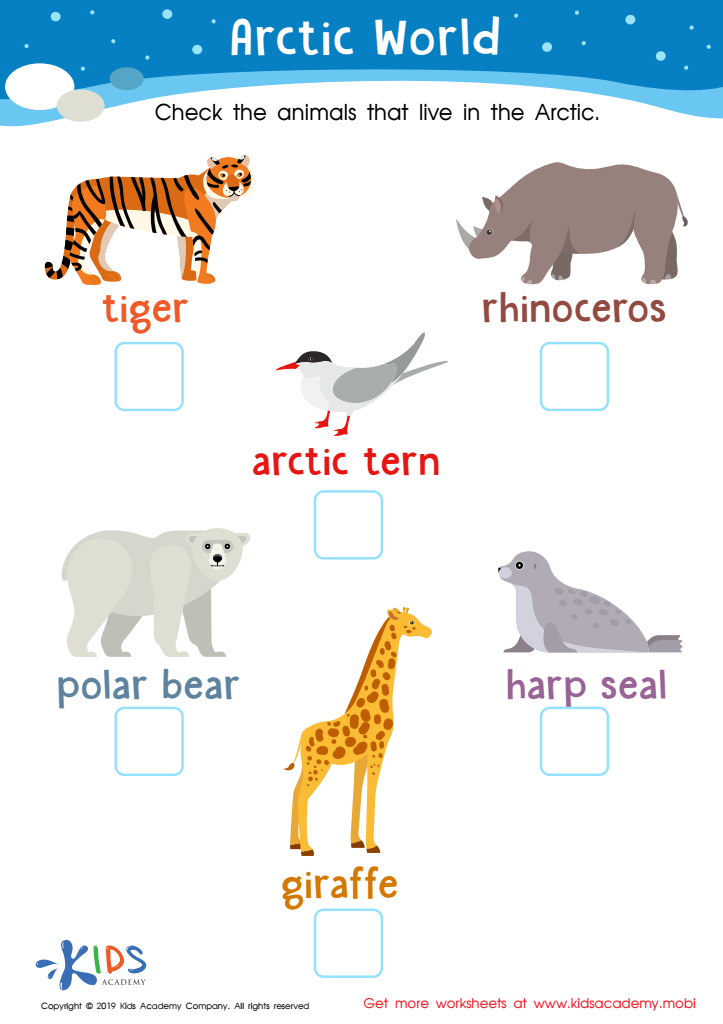
Arctic World Worksheet
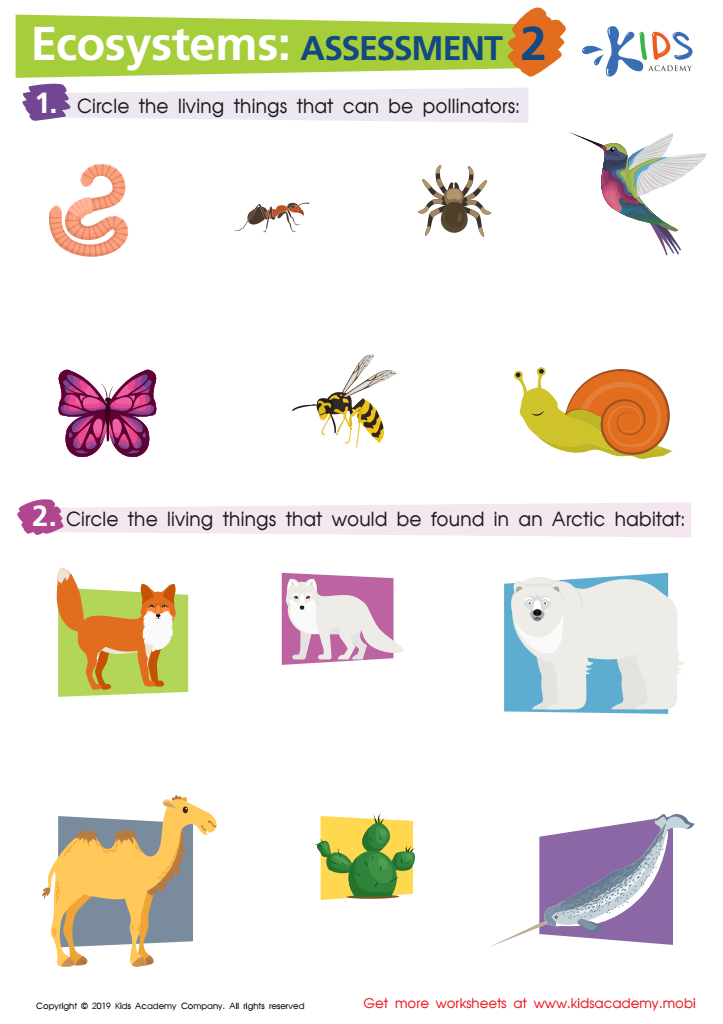
Ecosystems: Assessment 2 Worksheet








Understanding ecosystems and animals is crucial for children aged 6-7 as it lays the foundation for their awareness of the natural world. At this age, children are naturally curious and eager to explore their surroundings. By learning about ecosystems, they begin to understand the intricate relationships among living organisms and their environments, encompassing plants, animals, and humans.
This knowledge fosters a sense of stewardship for our planet. When children comprehend how ecosystems function—how animals depend on each other and their habitats—they are more likely to develop empathy toward living beings and become responsible environmental custodians in the future.
Additionally, understanding ecosystems engages critical thinking and problem-solving skills. Children explore questions such as "What happens if an animal is removed from its habitat?" This inquiry nurtures a mindset that values questioning, discovery, and long-term consequence awareness.
Moreover, learning about ecosystems promotes a love for science and enhances literacy skills. Stories about animals and ecosystems can build vocabulary and strengthen communication skills. Therefore, by emphasizing the importance of understanding animal ecosystems, parents and teachers play a vital role in nurturing informed, compassionate, and environmentally aware future generations. This ultimately contributes to a healthier planet for everyone.