Categorization skills Science Worksheets for Ages 6-7
4 filtered results
-
From - To
Unlock your child's potential with our Categorization Skills Science Worksheets tailored for ages 6-7! These engaging, educational activities are designed to enhance critical thinking by teaching children to sort and organize information. Perfect for young learners, our worksheets cover a range of topics from animals to everyday items, encouraging observation and comparison. Each worksheet is crafted to stimulate curiosity and foundational scientific knowledge, paving the way for academic success. Ideal for both classroom and home use, our printable resources combine fun with learning, making science an enjoyable adventure. Dive into categorization today and watch your child thrive!
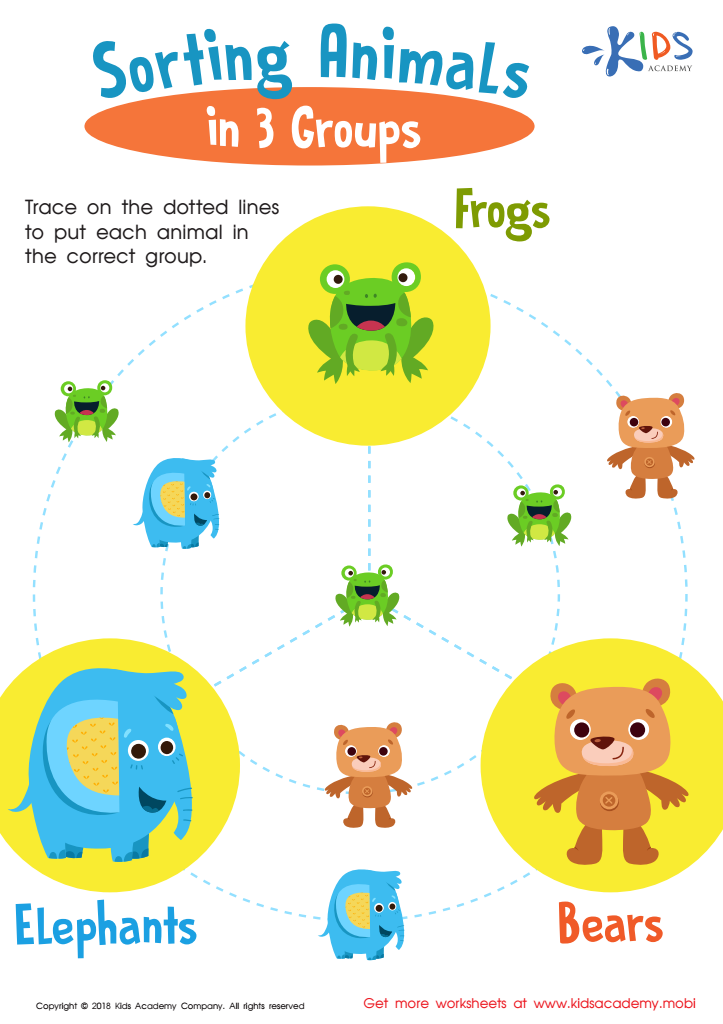
Sorting Animals in 3 Groups Worksheet
 Assign to My Students
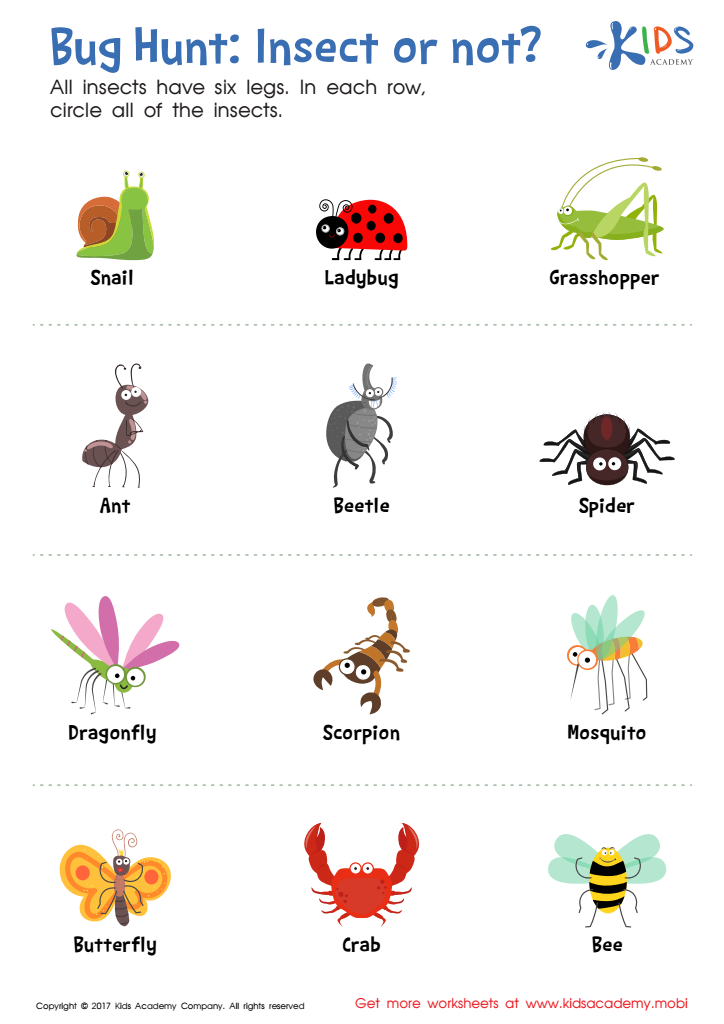
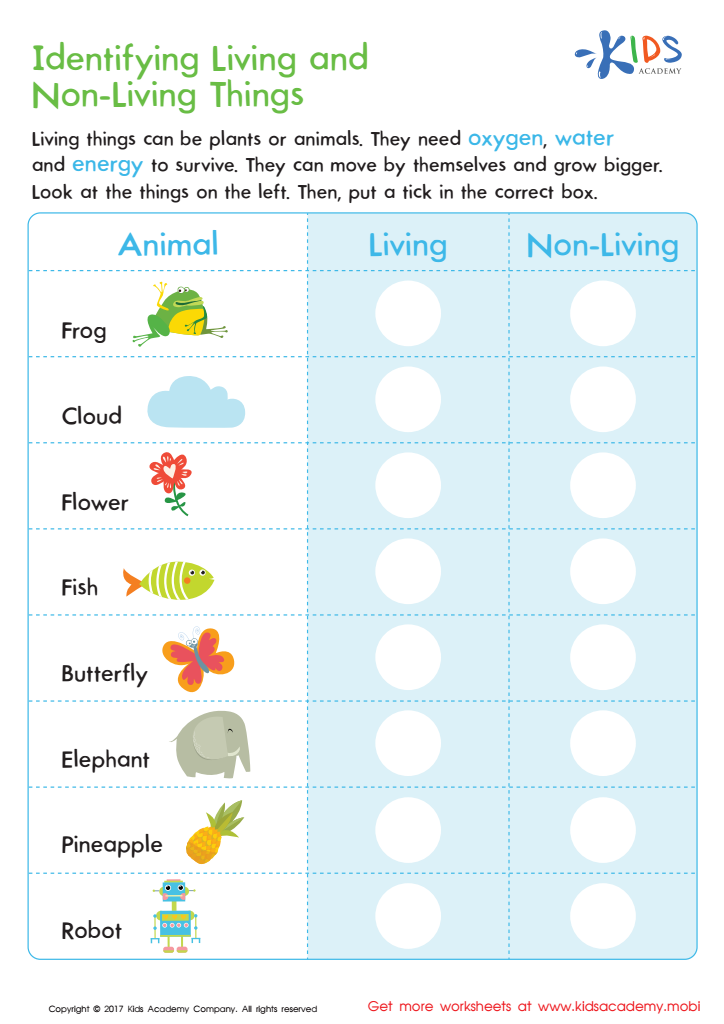
Identifying Living or Non–living Worksheet
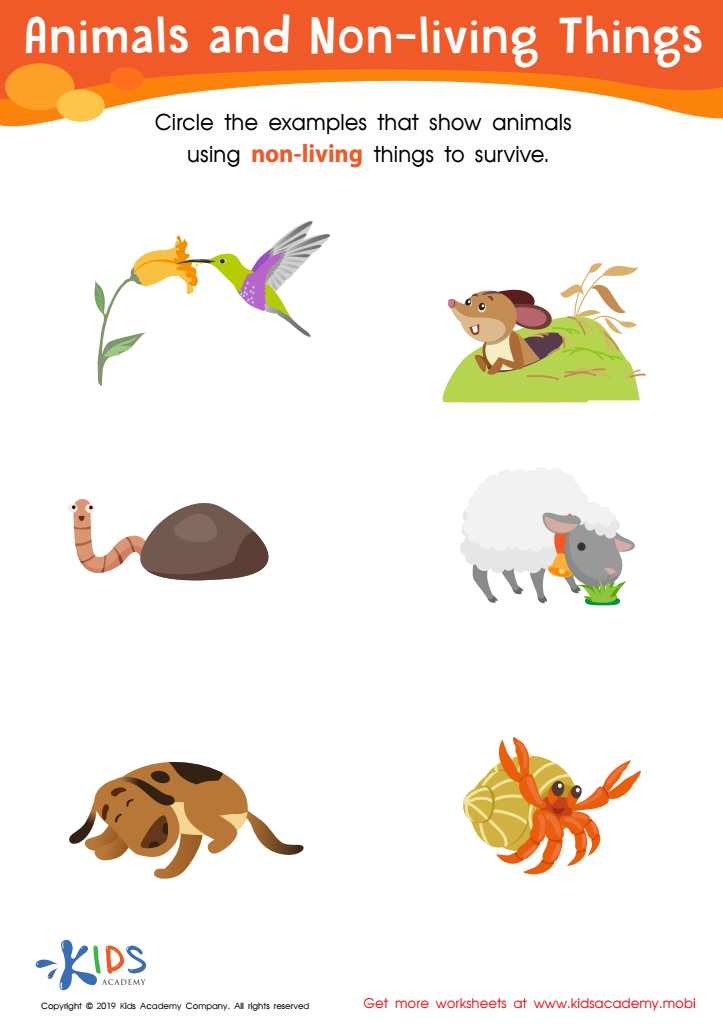
Animals and Non-Living Things Worksheet





Categorization skills are fundamental cognitive abilities that play a crucial role in a child's development and understanding of the world, especially in children ages 6-7. For parents and teachers, fostering these skills in science education is essential as it helps children organize information, understand relationships, and make sense of their environment. By learning to categorize objects, events, or organisms based on shared characteristics, children enhance their critical thinking and problem-solving abilities.
In the realm of science, categorization skills enable children to grasp basic scientific concepts more effectively. For instance, understanding the differences between living and non-living things, phases of matter, or types of weather can spark curiosity and a deeper interest in the subject. These skills also help in building a foundation for more complex scientific learning in the future, as categorizing is a step towards scientific classification systems like taxonomy.
Moreover, strong categorization skills can improve vocabulary, language development, and reading comprehension by aiding in the organization of new words and concepts. This lays the groundwork for more effective communication and academic success across various subjects. Therefore, both parents and teachers should prioritize activities and lessons that develop categorization skills, ensuring children receive a well-rounded and enriching education experience, while also motivating them to explore and engage with the world scientifically.







