
Number Recognition Science Worksheets for Ages 6-7
10 filtered results
Difficulty Level
Grade
Age
-
From - To
Subject
Activity
Standards
Discover engaging Number Recognition Science Worksheets designed specifically for children aged 6-7. These resources are perfect for young learners to develop their understanding of numbers through fun and interactive activities. Our worksheets promote essential skills such as counting, number identification, and simple addition, integrated with captivating science themes. Each worksheet is crafted to enhance cognitive abilities while making learning enjoyable. Parents and educators will appreciate the ease of use and the curriculum alignment, fostering a solid foundation in numeracy and scientific exploration. Explore our collection today and help your child embark on an exciting learning journey through numbers and science!
Favorites
With answer key
Interactive
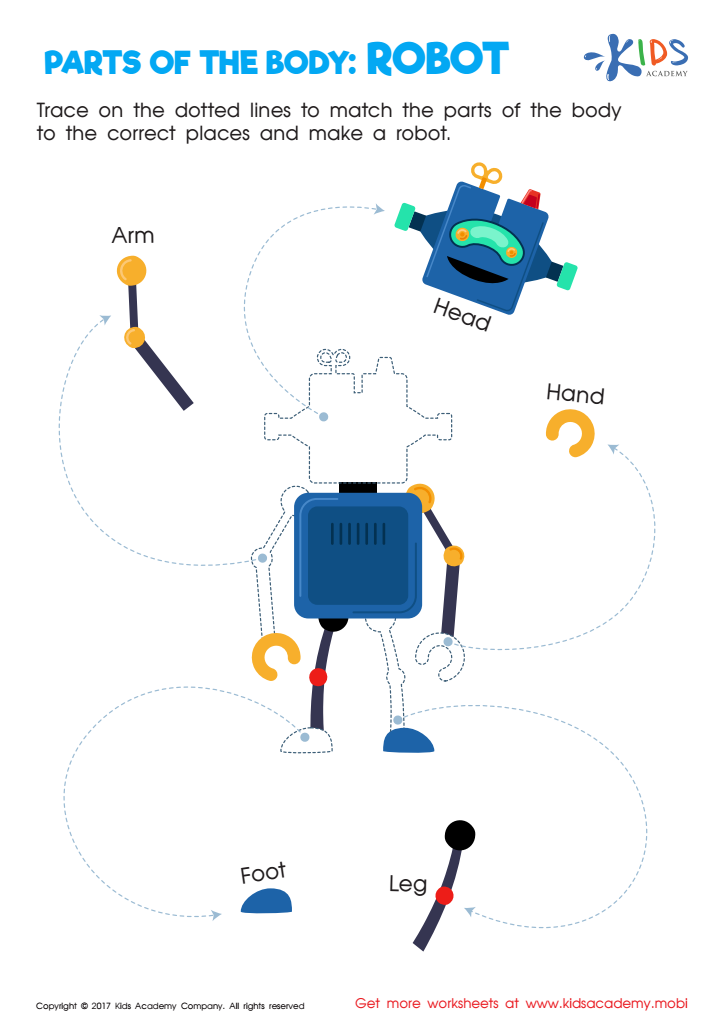
Robot Printable
Introduce your child to a fun robot and help her hone her matching skills with this parts of the body worksheet! Your child will trace dotted lines to match the robot's body parts to the right place, helping her focus, use abstract thinking and reason better. This worksheet is sure to get your child excited and help her build essential skills for future success!
 Assign to My Students
Robot Printable
Worksheet
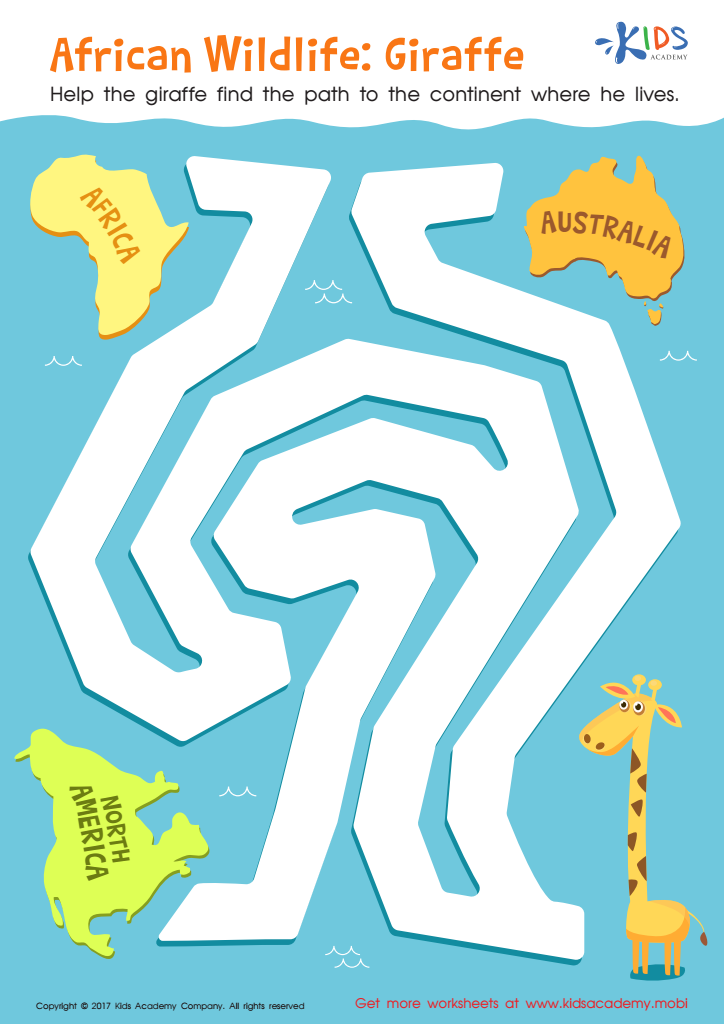
African Wildlife: Giraffe Worksheet
Help the giraffe get home! This African wildlife giraffe worksheet will boost your child's logical reasoning skills while they complete a maze to help the giraffe navigate choppy waters. Learn about different continents and their unique climates, practice problem solving and expand knowledge of the world and its habitats. Perfect for inspiring little learners!
African Wildlife: Giraffe Worksheet
Worksheet
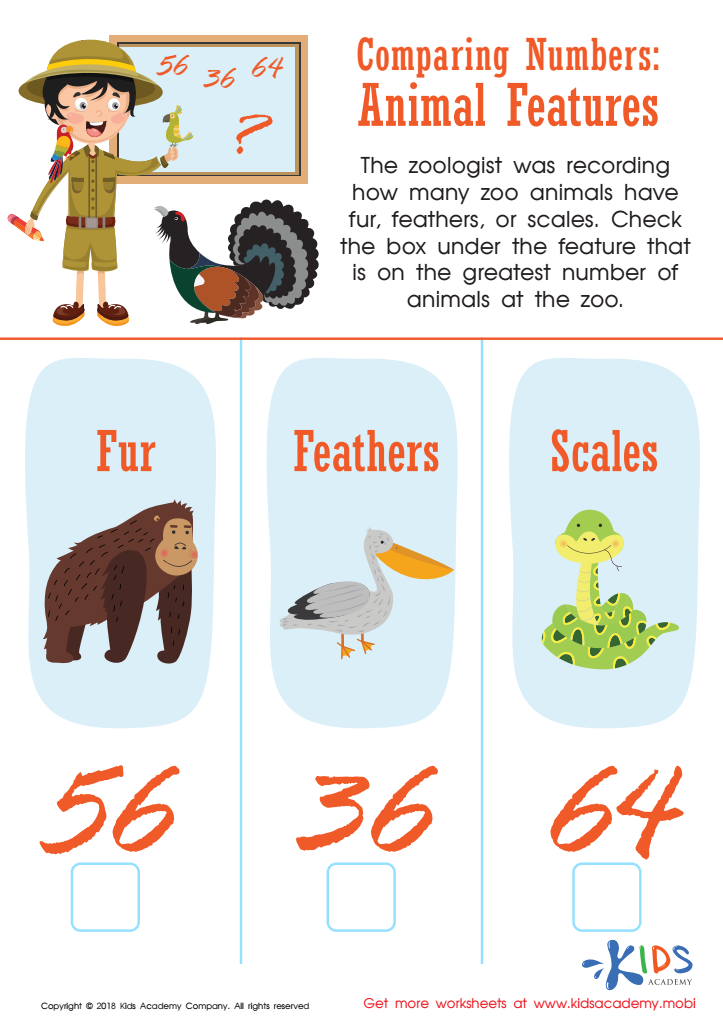
Animal Features Worksheet
Let your kids join a budding zoologist! They can count zoo animals' fur, feathers or scales, then use numbers and comparison to check the box with the most friends. The PDF will captivate them and help them understand how the value of '6' changes based on its position.
Animal Features Worksheet
Worksheet
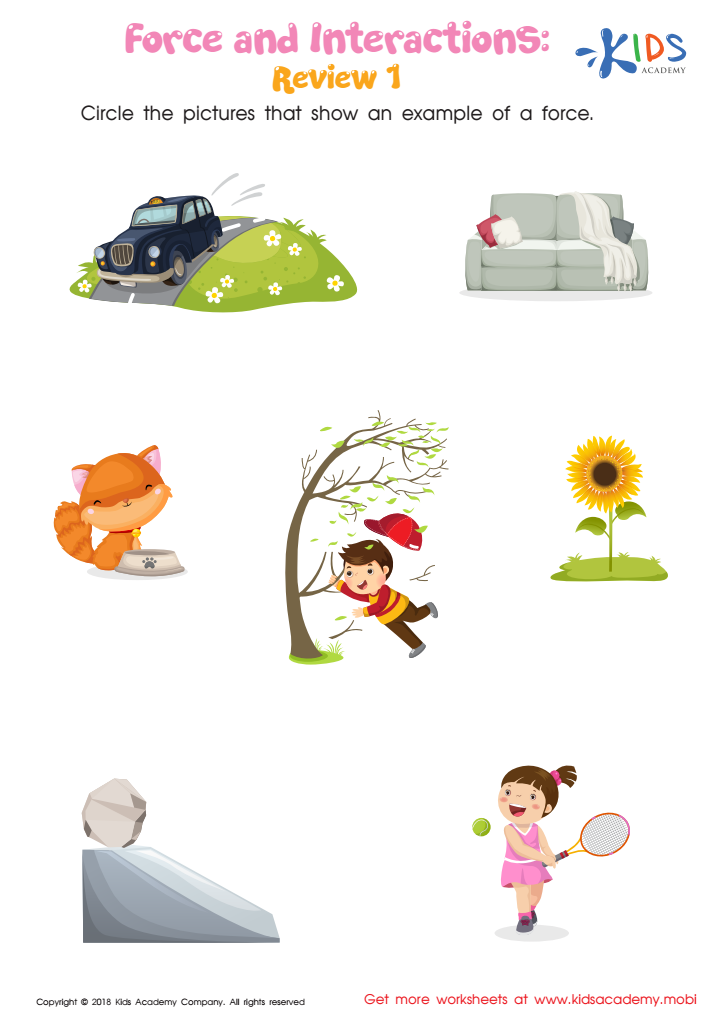
Force and Interactions: Review 1 Worksheet
See how well your child can identify the different forces.
Explain to your child that force is what causes objects to move, such as wind blowing a branch or an object going down a ramp. Ask them to circle images that show a force and assess how well they can identify them.
Force and Interactions: Review 1 Worksheet
Worksheet
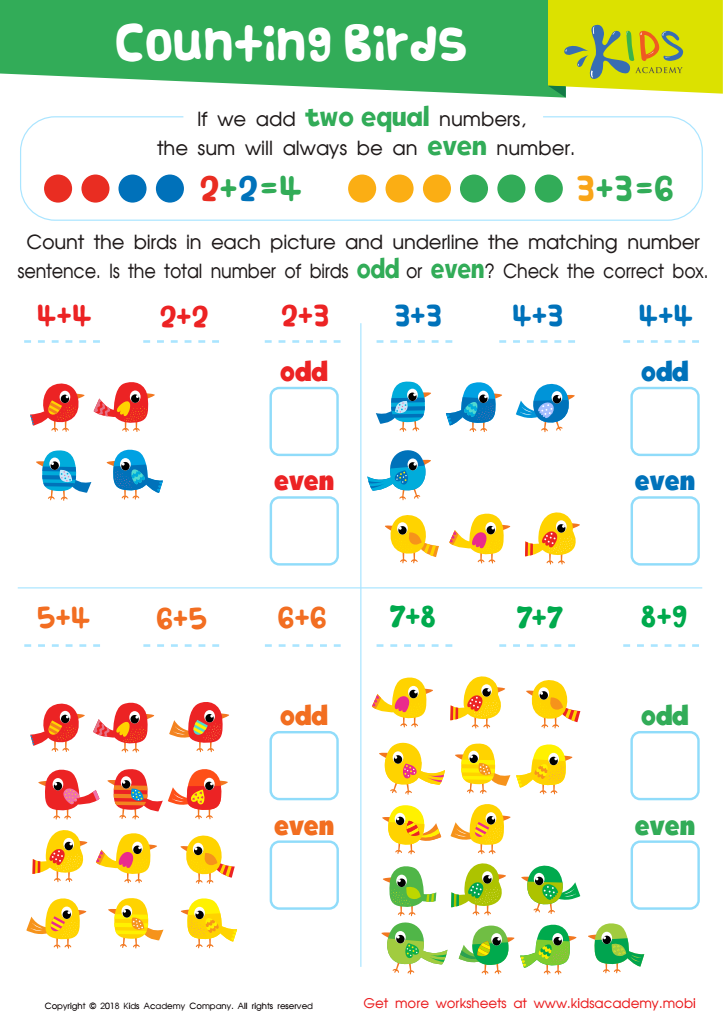
Counting Birds Worksheet
Help your child count and underline the matching number sentence in the worksheet. Ask them if the total number of birds in each picture is odd or even, then check the correct box. When two equal numbers are added, the sum is always an even number (e.g. 2+2=4, 4+4=8, both divisible by 2).
Counting Birds Worksheet
Worksheet
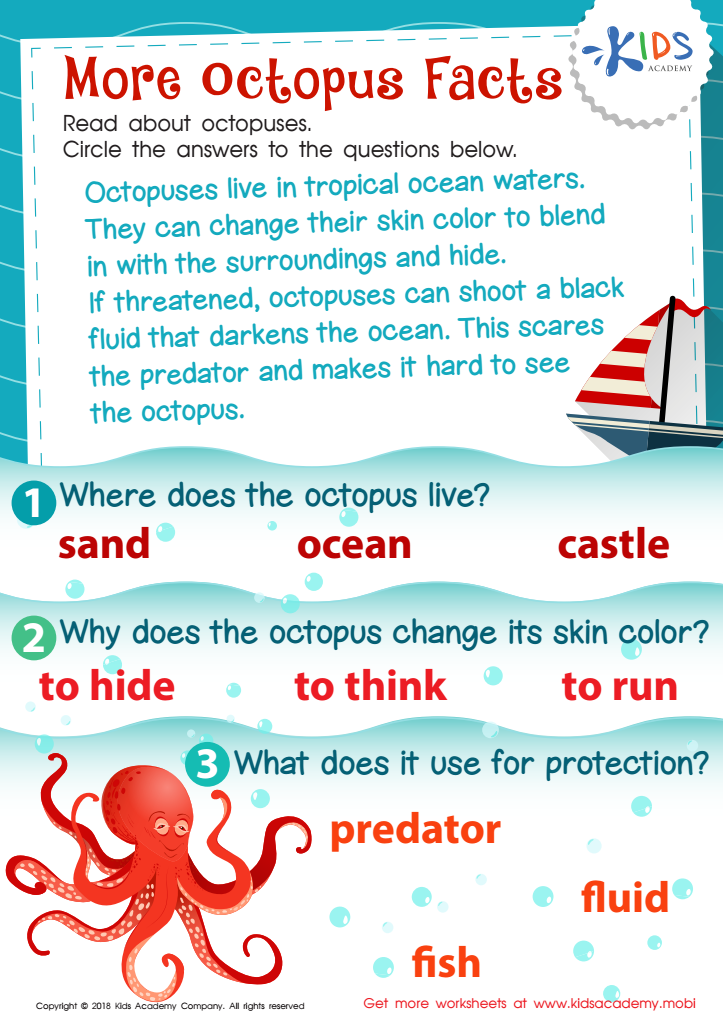
More Octopus Facts Worksheet
This worksheet will help your kids learn about the Octopus. Read the text carefully and have kids read with you. Now, ask them questions based on it and help them answer them by circling the right choices. Teaching your kids facts about animals will help them in the long run.
More Octopus Facts Worksheet
Worksheet
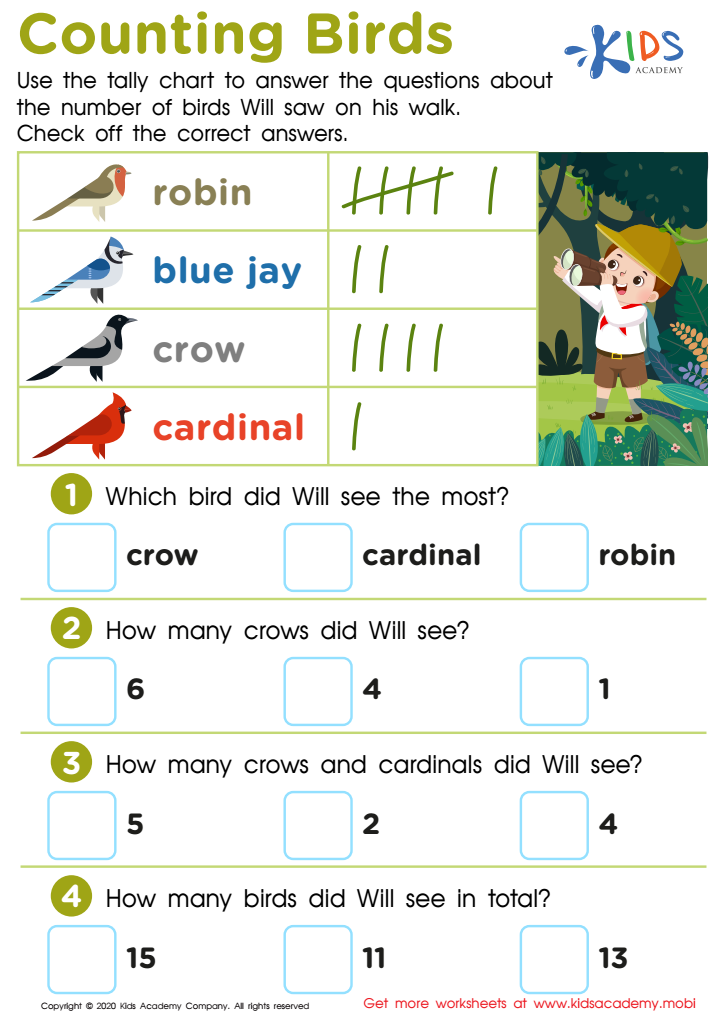
Counting Birds Worksheet
Introduce your child to the exciting activity of bird watching! This PDF worksheet features a tally chart of the different types of birds Will saw on his walk. Have your kid use the tally chart to organize information and use it to answer the questions that follow, thus boosting early science and math skills.
Counting Birds Worksheet
Worksheet
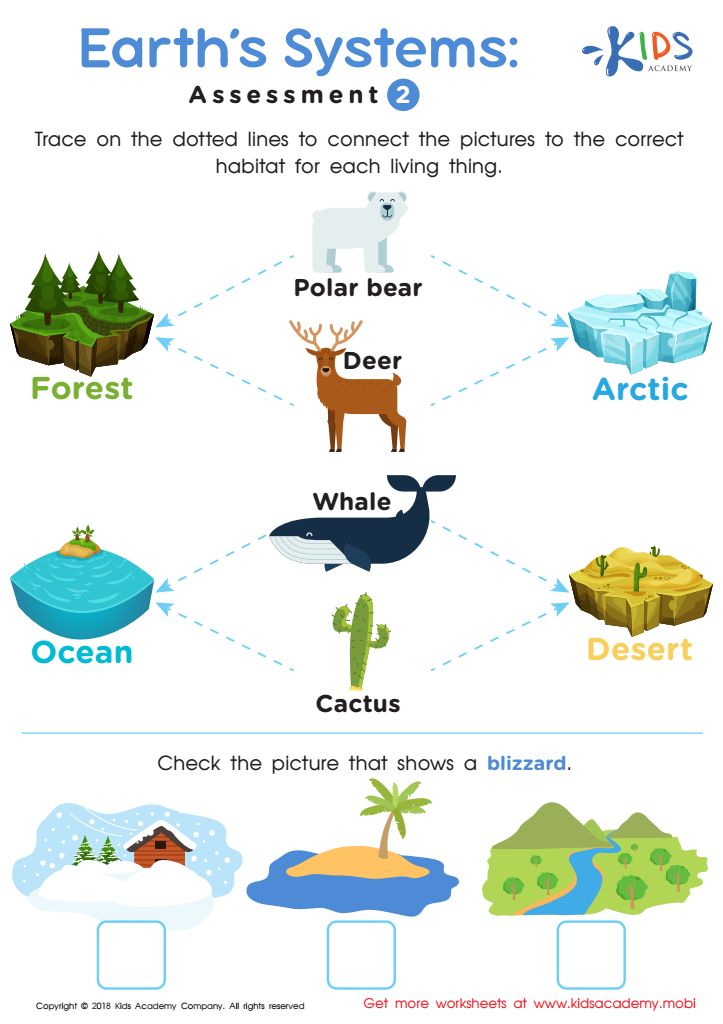
Earth's Systems: Assessment 2
Kids will love this free printable worksheet to assess their knowledge of habitats and the living creatures found in them. They'll trace the dotted lines to connect the pictures of plants and animals to their respective habitat and identify the type of weather depicted. No, polar bears don't live in the ocean, but they do like to swim in icy waters! With this fun activity, your little learner will master earth science basics.
Earth's Systems: Assessment 2
Worksheet
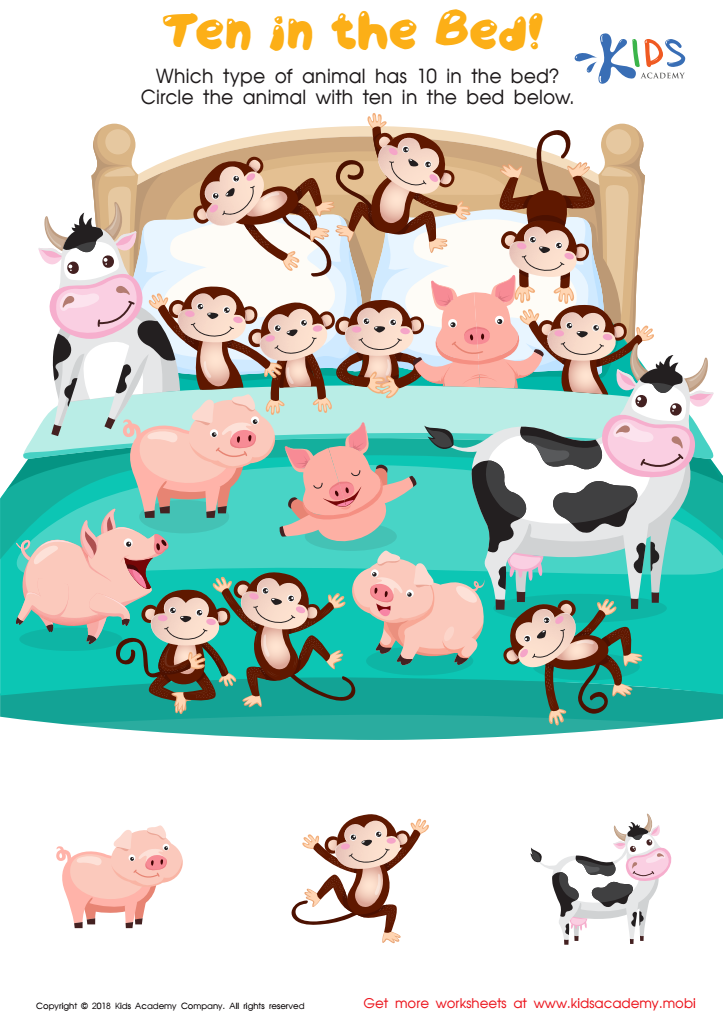
Ten in the Bed Worksheet
This fun worksheet has your kids counting and sorting friendly animal faces in a bed of ten! It's a great way for them to practice their mental math skills, like adding and multiplying more efficiently. Plus, it brings a new meaning to the classic song "Monkeys Jumping on the Bed"!
Ten in the Bed Worksheet
Worksheet
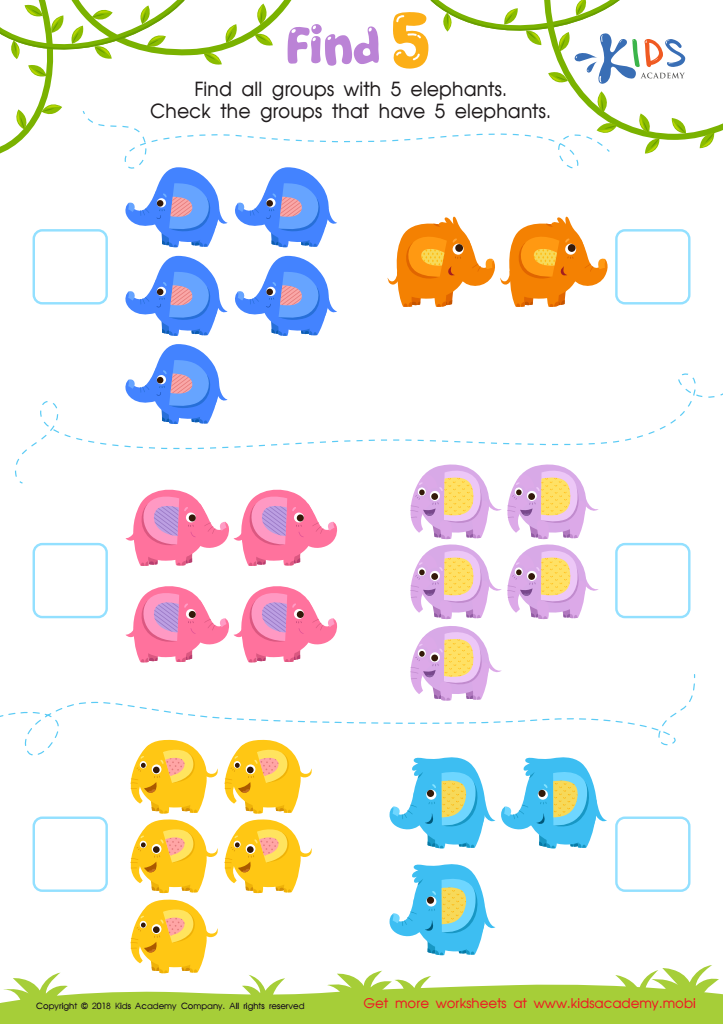
Find 5 Worksheet
Kids will love these cheery elephants that help them discover grouping and counting by fives. It's a great way to start learning addition and multiplication, while also developing fine motor skills. Download the free PDF and let the fun begin.
Find 5 Worksheet
Worksheet
Join Kids Academy for Free
Who is primarily going to use this learning content?








Number recognition is a crucial early math skill, especially for children aged 6-7, as it lays the foundation for future mathematical understanding. Parents and teachers should care about this developmental milestone because it is tied to a child’s overall academic success and cognitive development. Mastery of number recognition allows children to identify, understand, and manipulate numbers, which is essential for learning more advanced math concepts such as addition, subtraction, and eventually multiplication and division.
Moreover, strong number recognition skills can boost a child's confidence in their mathematical abilities, making them more likely to engage actively in classroom activities and discussions. For parents, reinforcing this skill at home can contribute to a child’s enthusiasm for learning and foster a positive attitude toward mathematics.
Additionally, early number recognition is associated with better performance in standardized tests and a smoother transition to more complex mathematical concepts in later grades. Overall, by prioritizing number recognition during this critical developmental stage, parents and teachers can equip children with the essential skills needed for academic success and lifelong mathematical competency. This investment in early education has far-reaching implications for both individual children and society as a whole, as numeracy is foundational in daily life and future career opportunities.







