Shape Recognition Physical Science Worksheets for Ages 6-7
3 filtered results
-
From - To
Discover engaging Shape Recognition Physical Science Worksheets designed for kids ages 6-7. Our expertly crafted resources from Kids Academy help young learners explore fundamental shapes through fun and interactive activities. These worksheets foster skills in physical science, pattern recognition, and fine motor development. Perfect for homeschooling or classroom settings, each sheet provides hands-on practice to reinforce critical learning. Guide your child through exciting exercises that develop their understanding of geometry and spatial awareness. With colorful illustrations and age-appropriate challenges, shape recognition becomes an enjoyable and educational experience for every young scientist. Start your learning adventure today!
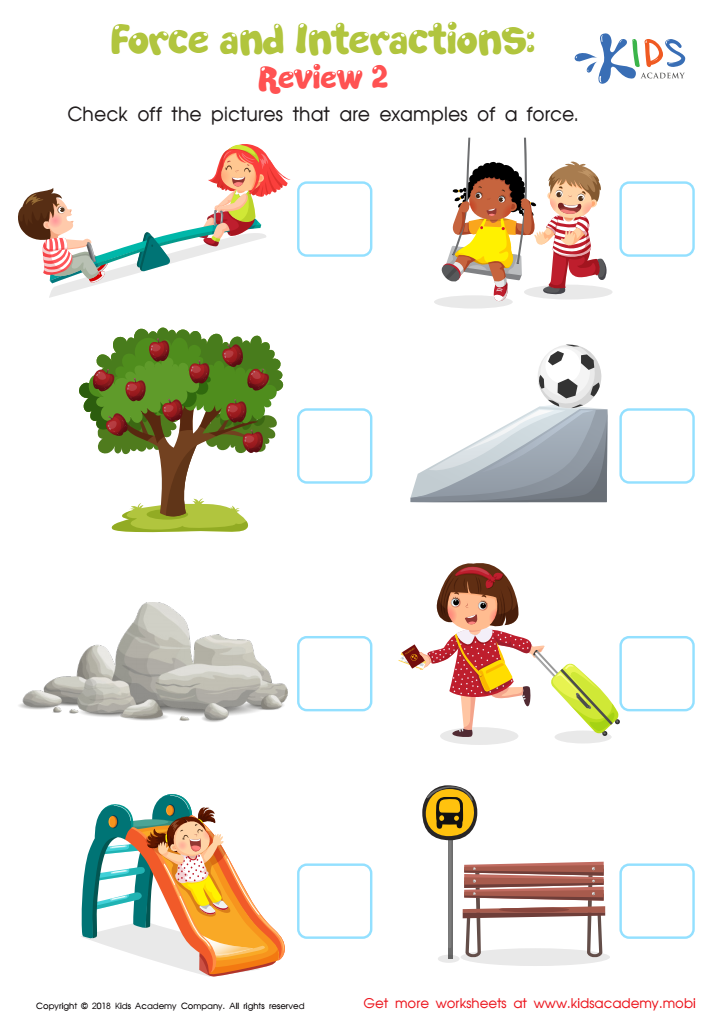
Force and Interactions: Review 2 Worksheet
 Assign to My Students
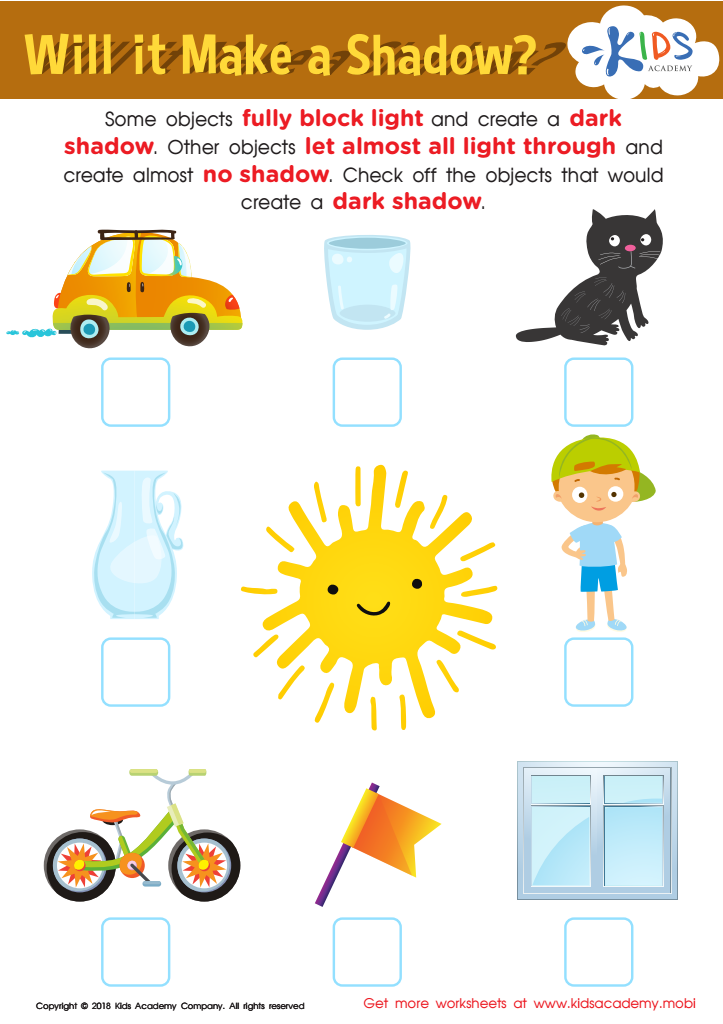
Will It Make a Shadow? Worksheet
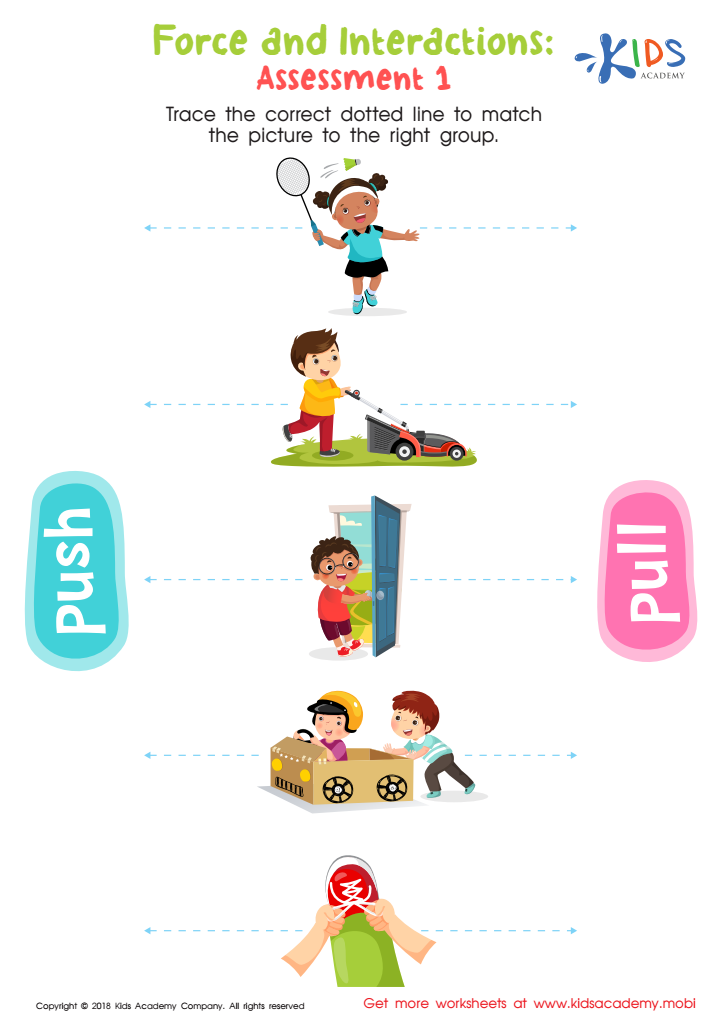
Force and Interactions: Assessment 2 Worksheet








Parents and teachers should prioritize shape recognition in early grade physical science because it forms a foundational aspect of cognitive development and scientific understanding. At ages 6-7, children's brains are rapidly developing, and recognizing various shapes enhances their spatial awareness, critical thinking, and problem-solving skills. Shape recognition is not merely about identifying circles and squares; it allows children to observe, classify, and understand the physical world around them.
Incorporating shape recognition into physical science lessons helps children grasp basic scientific concepts and principles. For instance, when learning about different shapes, children practice measurement, geometric properties, and symmetry, which are essential in understanding more complex scientific and mathematical topics later on, such as physics and engineering.
Moreover, shape recognition contributes significantly to improving children's fine motor skills and hand-eye coordination. Activities like sorting and drawing shapes enhance these physical capabilities, equipping children with skills necessary for writing and other academic tasks.
Teachers and parents also benefit as they witness the tangible progress in logic and concentration. Through engaging lessons that merge play and education, students develop a sense of curiosity and love for learning. Thus, emphasizing shape recognition is an important step in nurturing future scientists, mathematicians, and problem-solvers, setting a strong foundation for lifelong learning and intellectual growth.







