
Color recognition Geography Worksheets for Ages 6-7
3 filtered results
Difficulty Level
Grade
Age
-
From - To
Subject
Activity
Standards
Explore our engaging Color Recognition Geography Worksheets designed specifically for children aged 6-7! These interactive resources help young learners identify colors while enhancing their geography skills. Our colorful worksheets feature maps, landmarks, and geographical elements that captivate children’s imagination, encouraging their love for learning. Each activity promotes critical thinking as students match colors with related geography topics. These worksheets are perfect for home or classroom use, providing an exciting blend of color recognition and geographical awareness. Foster your child’s cognitive development in a fun and educational way with our thoughtfully designed resources! Start your journey through colorful geography today!
Favorites
With answer key
Interactive
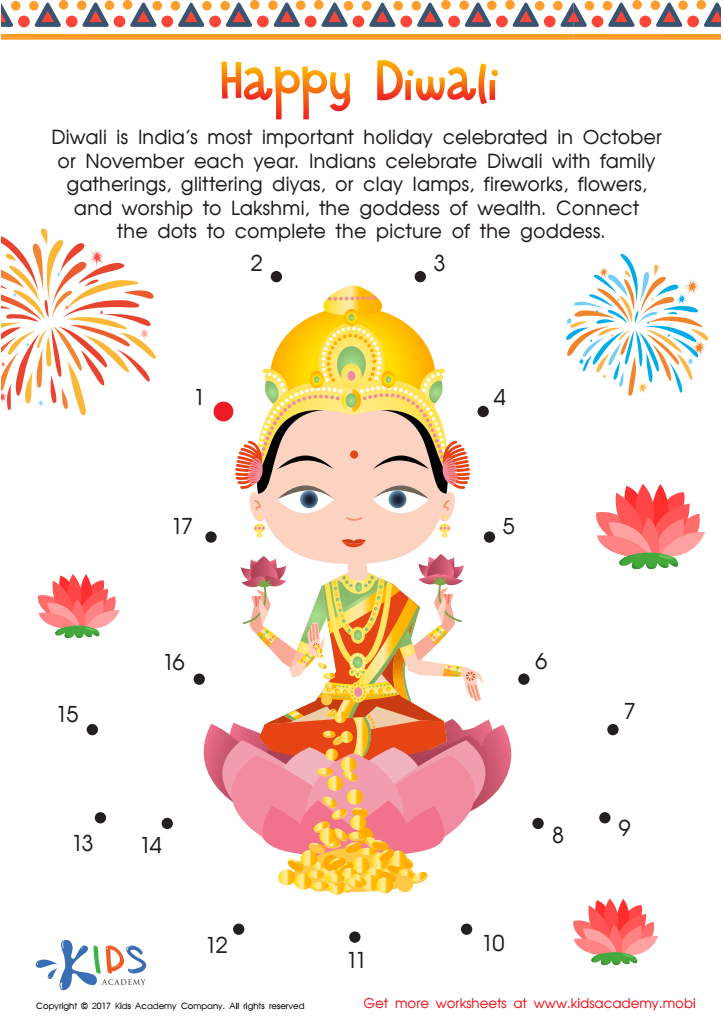
Happy Diwali Printable
Explore India this Diwali! Learn about India's most significant holiday, Diwali, with this fun-filled printable activity for kids. Your child can gain an appreciation for Indian culture with this Diwali dot to dot worksheet.
Happy Diwali Printable
Worksheet
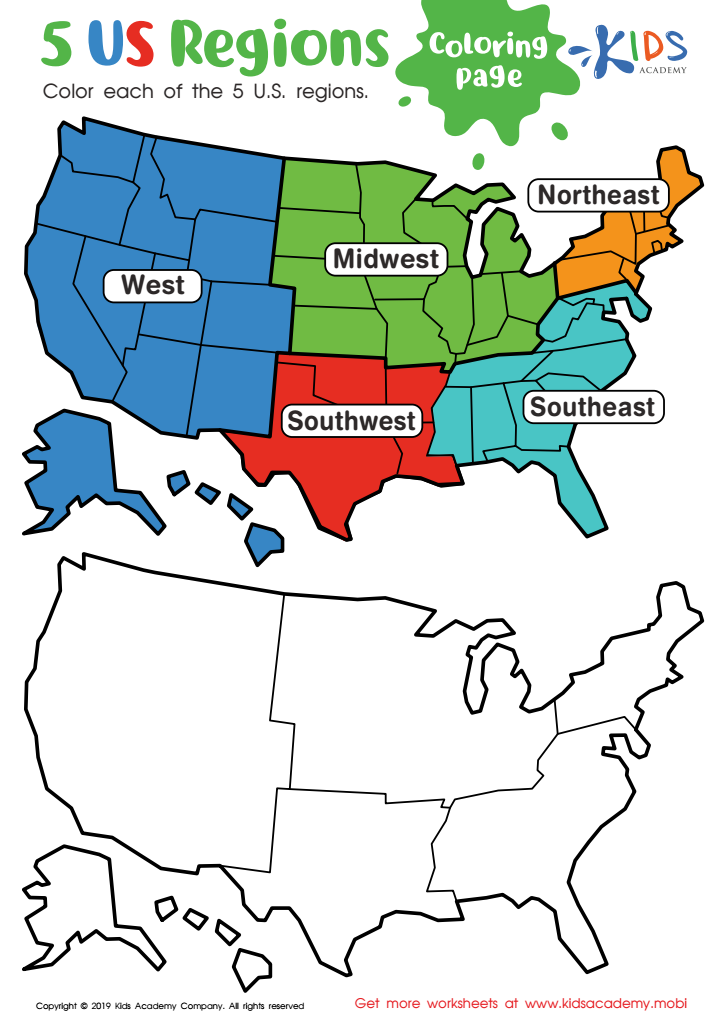
US Regions Coloring Page Worksheet
Our great nation is split into five distinct regions: Southeast, Southwest, West, Midwest, and Northeast. Each is known for its own special offerings and states. Let your kids have fun learning about the regions with a coloring activity! It's a great way for them to understand where each region stands on the map.
Download (PDF)
 Assign to My Students
Assign to My Students
US Regions Coloring Page Worksheet
Worksheet
Globe Coloring Page Worksheet
Kids love coloring! Save yourself stress by giving them coloring sheets instead of letting them color on furniture and walls. This worksheet has a fun activity that engages their hands and mind - ask them to color the globe picture, and help them pick the colors.
Download (PDF)
Assign to My Students
Assign to My Students
Globe Coloring Page Worksheet
Worksheet
Join Kids Academy for Free
Who is primarily going to use this learning content?







Color recognition in geography is an essential skill for children aged 6 to 7, as it enhances not only their understanding of the world but also supports their cognitive development. At this age, children are naturally curious and eager to explore their surroundings. By learning to associate colors with geographical features—such as green for forests, blue for water, and brown for mountains—they begin to visualize and categorize the natural world, fostering spatial awareness and observational skills.
Moreover, color recognition aids in literacy development. Maps, globes, and other geographical tools often utilize color coding, which can help children interpret information more effectively. This visual learning approach can make geography engaging, helping to solidify concepts in a fun and memorable way.
For parents and teachers, encouraging color recognition in geography promotes critical thinking and problem-solving abilities. Engaging activities such as coloring maps, identifying landmarks, and analyzing the environment around them create a hands-on learning experience. Ultimately, these skills not only inform children's understanding of geography but also inspire a sense of responsibility and connection to their world, forming a foundation for lifelong learning and curiosity. This makes it a topic of vital importance in early education.








