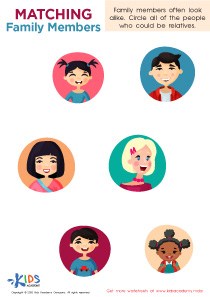
Understanding communities Social Studies Worksheets for Ages 6-7
4 filtered results
Difficulty Level
Grade
Age
-
From - To
Subject
Activity
Standards
"Understanding Communities Social Studies Worksheets for Ages 6-7" are designed to help young learners explore the vibrant world of communities. Through engaging activities and hands-on exercises, children will discover various roles, norms, and the significance of cooperation within a community. These worksheets are tailored to captivate the natural curiosity of kids aged 6-7, promoting critical thinking and cultural awareness. With illustrated exercises and thoughtfully crafted content, Kids Academy ensures that learning about neighborhoods, community helpers, and social interactions is both fun and educational. Equip your child with essential life skills and a deeper appreciation for the diverse world around them.
Favorites
With answer key
Interactive
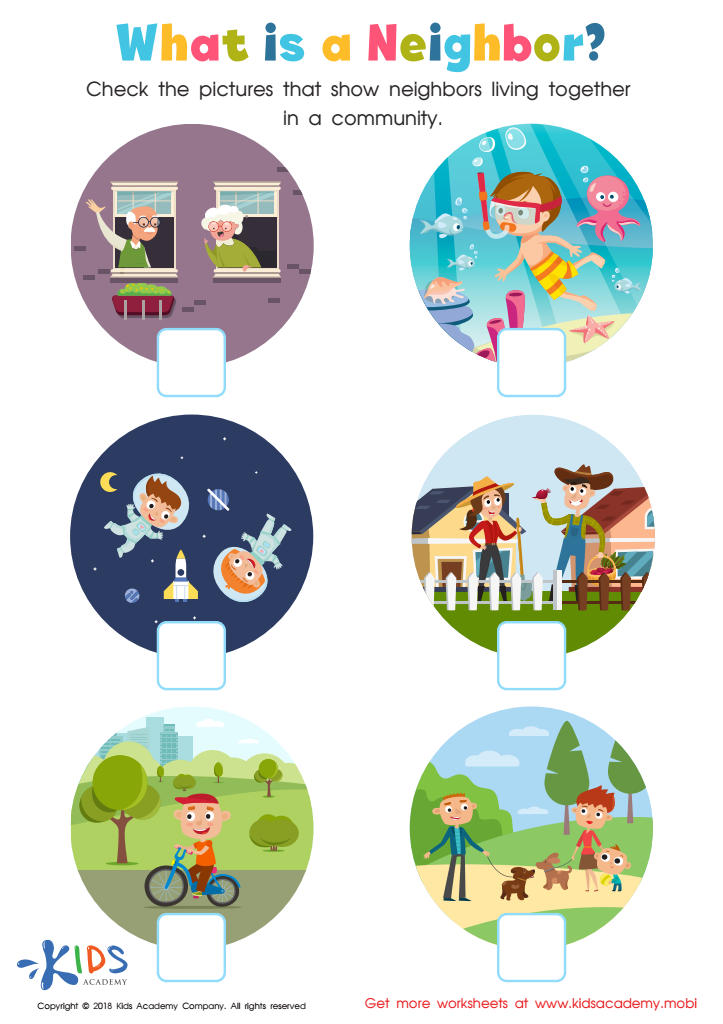
What is a neighbor Worksheet
This engaging worksheet helps students recognize neighbors and their role in a community. They'll identify pictures of people living together and understand the importance of being neighborly. Download the PDF to help reinforce the concept of community teamwork.
 Assign to My Students
What is a neighbor Worksheet
Worksheet
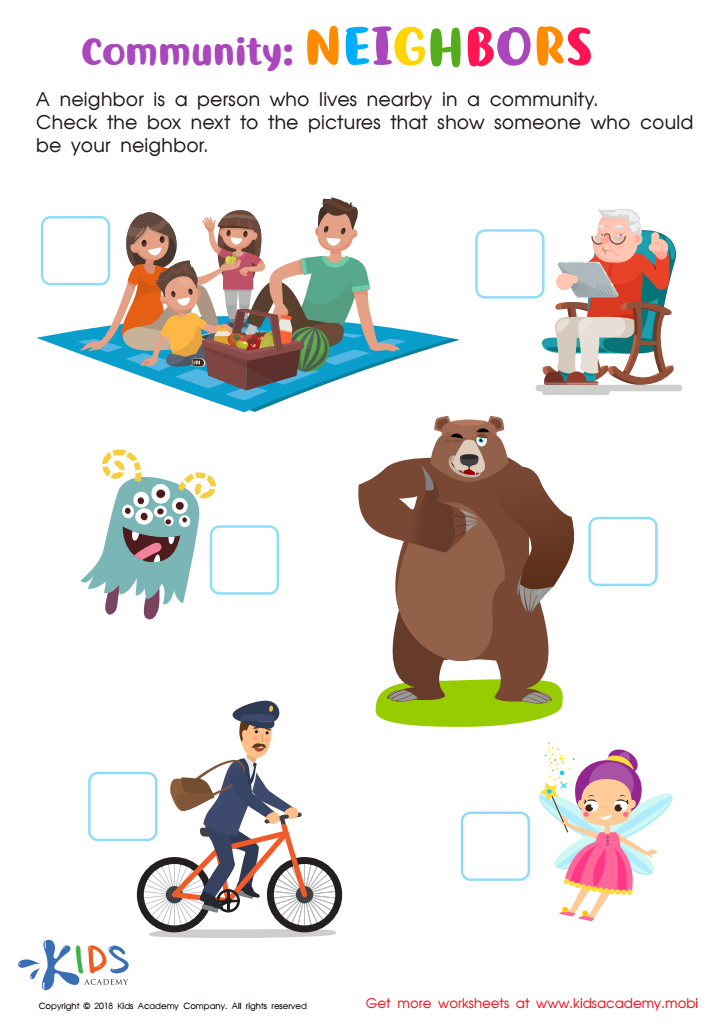
Community: Neighbors Worksheet
This free worksheet helps young learners understand who neighbors are and how they fit into their community. Have your student check out the options, decide which can and can't be neighbours and develop essential social and emotional skills. It's a fun and cheery way to learn about the social sciences!
Community: Neighbors Worksheet
Worksheet
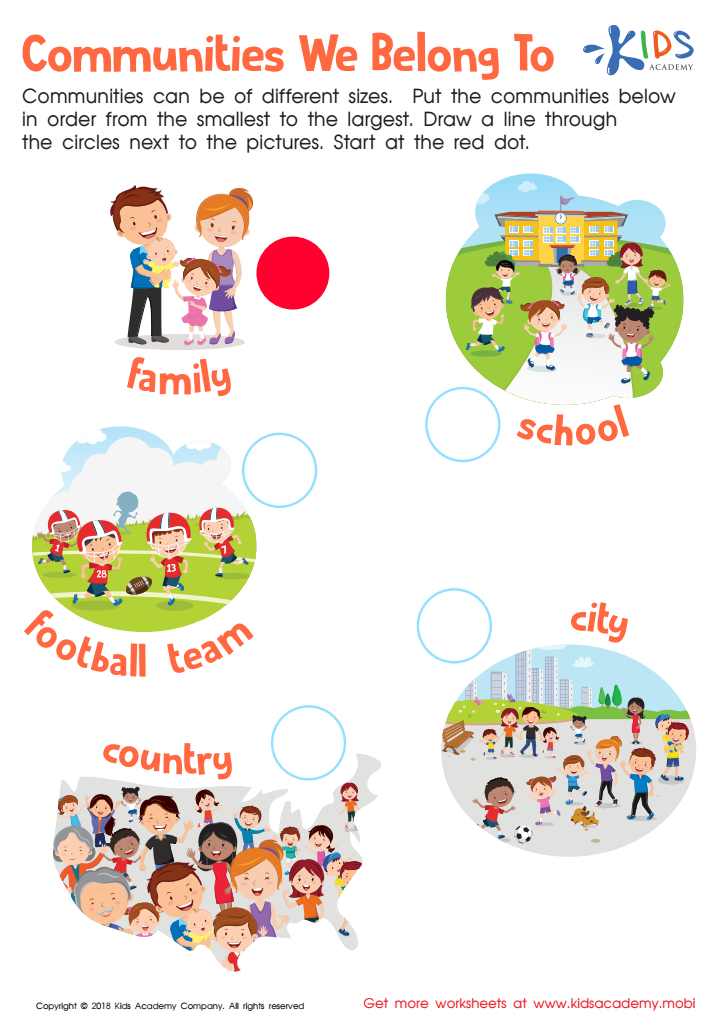
Communities We Belong to Worksheet
Help your child understand the differences between communities with this worksheet. Look at the family, school, football team, city, and country and discuss which is larger and which is smaller. Follow the red dot from the smallest to the largest.
Communities We Belong to Worksheet
Worksheet
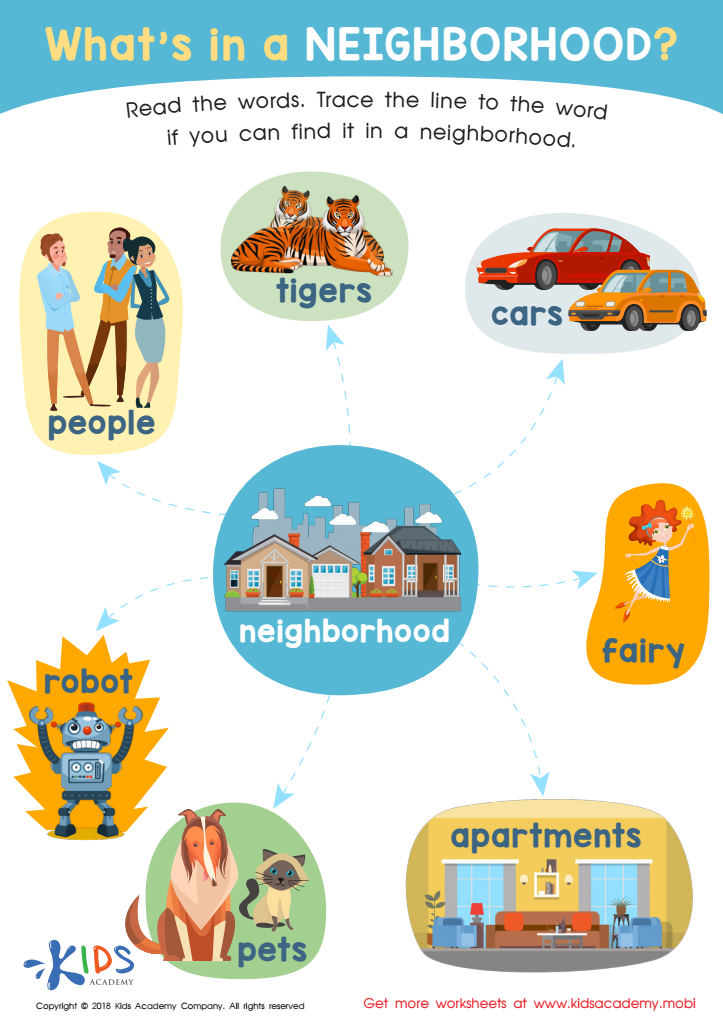
What's in a Neighborhood? Worksheet
This fun worksheet uses picture clues and traceable lines to help kids learn neighborhood words. Kids will match the neighborhood pictures to the correct words and practice connecting the two. The bright colors make it a great way for kids to practice understanding the qualities of a neighborhood.
What's in a Neighborhood? Worksheet
Worksheet
Join Kids Academy for Free
Who is primarily going to use this learning content?







Understanding communities is a vital part of Social Studies education for children aged 6-7, as it lays the foundation for responsible citizenship and offers numerous developmental benefits. At this young age, children are naturally curious about their surroundings. Learning about communities helps them make sense of the world around them by examining how people live, work, and interact in different settings.
Parents and teachers who prioritize this subject help children grasp the significance of diversity, respect, and cooperation. When kids explore various roles within a community—like firefighters, doctors, teachers—they develop an appreciation for the contributions of others and understand their role within a larger ecosystem. This nurtures empathy and a sense of responsibility from an early age.
Additionally, learning about communities advances critical thinking and problem-solving skills. It encourages kids to ask questions about how things work and why they are the way they are, fostering a sense of inquiry. Discussing concepts like fairness, rules, and governance introduces them to moral and ethical considerations.
Moreover, such lessons create a shared experience between home and school, reinforcing the idea that learning is continuous and interconnected. In summary, understanding communities equips young learners with social, emotional, and cognitive tools that serve as building blocks for future academic and life success.