Letter recognition Elementary Phonics Worksheets for Ages 6-8
5 filtered results
-
From - To
Discover our engaging Letter Recognition Elementary Phonics Worksheets designed for ages 6-8, available at Kids Academy. These printable worksheets provide young learners with exciting activities that enhance their ability to recognize and understand letters and their sounds. Perfect for reinforcing foundational literacy skills, our worksheets feature fun and interactive exercises that keep children motivated and intrigued. Parents and educators can easily integrate these resources into any learning plan, whether at home or in the classroom. Set your child on the path to reading success with our expertly crafted phonics worksheets! Explore more at Kids Academy today.
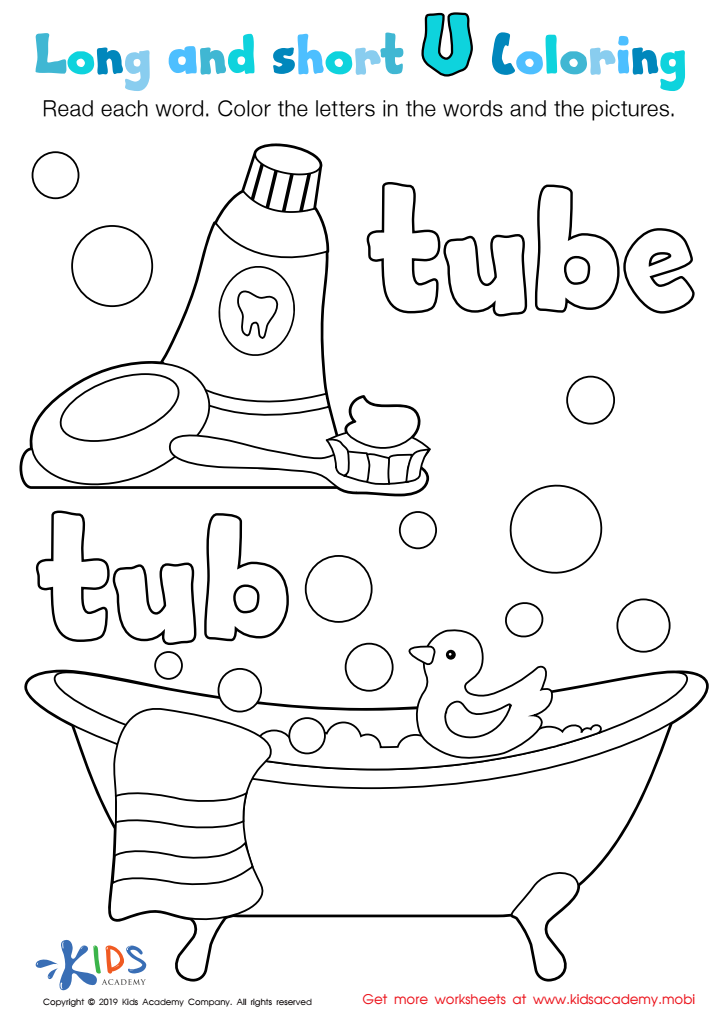
Long and Short U Worksheet
 Assign to My Students
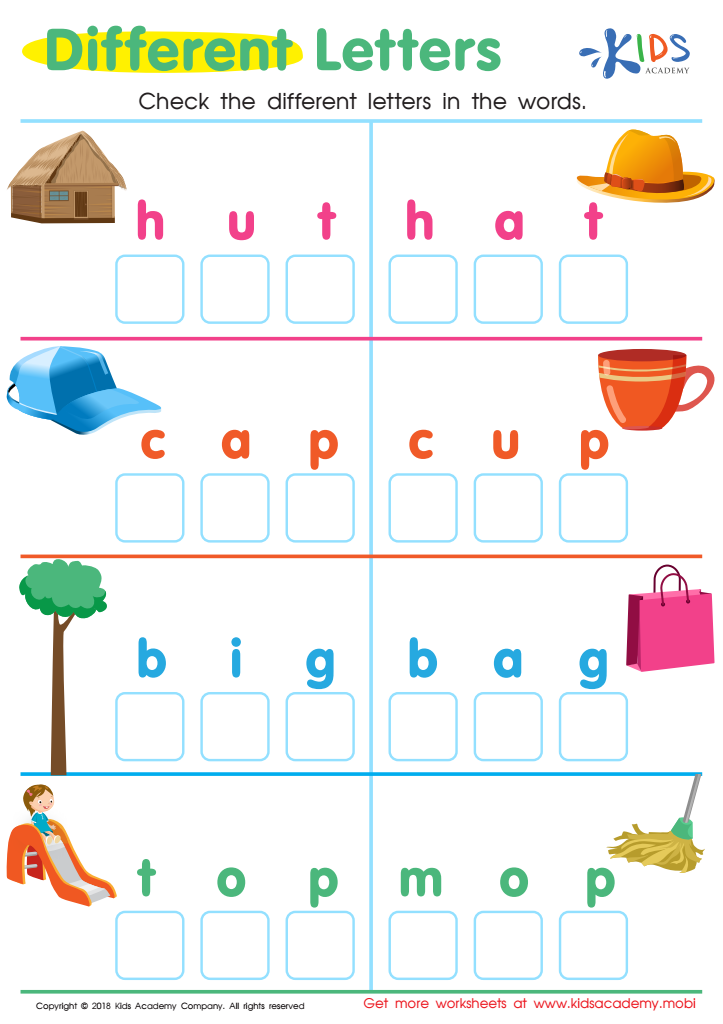
Different Letters Reading Worksheet
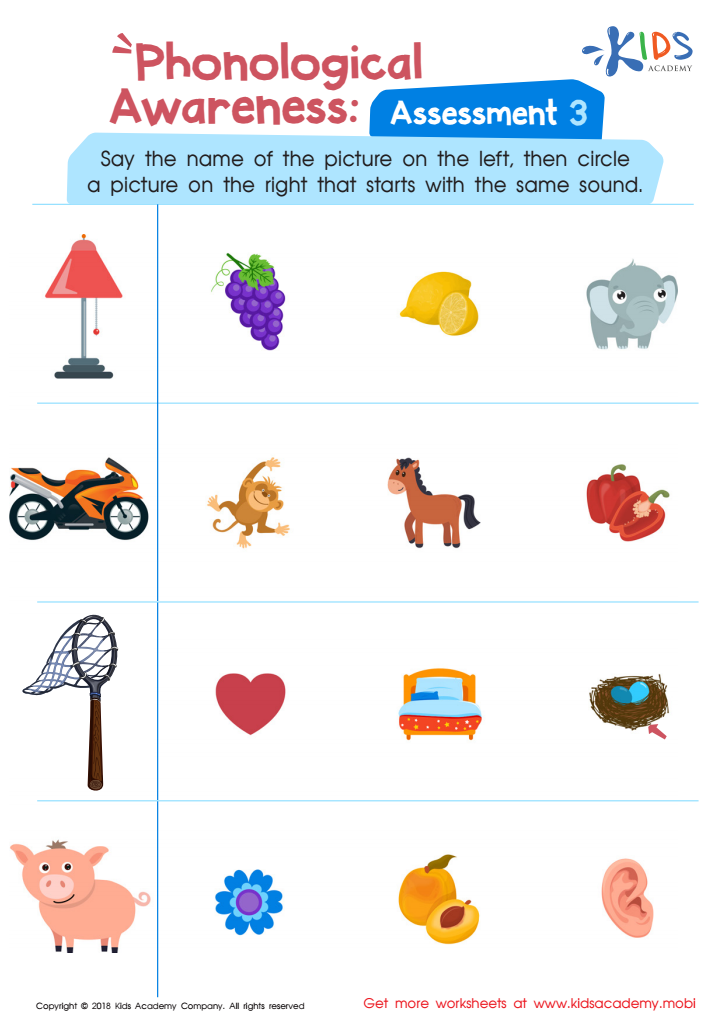
Phonological Awareness: Assessment 3 Worksheet

Long and Short E Worksheet
Assign to My Students
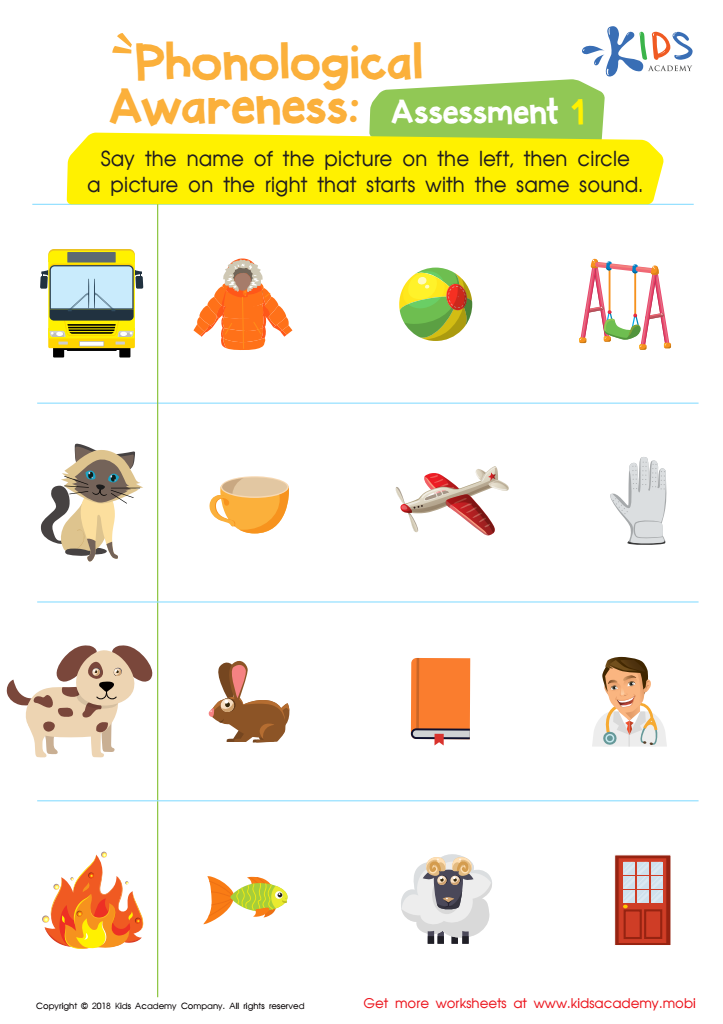
Phonological Awareness: Assessment 1 Worksheet




Parents and teachers should care about letter recognition and elementary phonics for children aged 6-8 because these are foundational skills critical for successful reading and writing development. At this age, children's brains are highly receptive to learning new concepts, and mastering the basics of phonics helps them make connections between letters and their sounds, a fundamental step in decoding words.
Letter recognition is the ability to identify letters by name and sounds, which is crucial for practicing early reading skills. When children can recognize letters instantly, they can more easily sound out words, leading to improved reading fluency. Fluency, in turn, influences comprehension; fluent readers can focus less on decoding each word and more on understanding the text as a whole.
Additionally, strong phonics skills typically translate to better spelling and writing abilities. As children learn the relationships between letters and sounds, they can apply this knowledge to spell unfamiliar words correctly. This boosts their confidence in writing, making them more eager and less intimidated to write essays, stories, and reports.
Fostering these skills early sets a solid foundation for future academic success. Children who struggle with letter recognition and phonics are often at a disadvantage, making it essential for educators and parents to prioritize these areas in the early years. Investing time and resources into teaching letter recognition and phonics benefits children not just in their language arts education, but across all subjects.







