Rhyming skills development Alphabet Worksheets for Ages 6-8
4 filtered results
-
From - To
Enhance your child's literacy journey with our "Rhyming Skills Development Alphabet Worksheets" designed for ages 6-8! These engaging resources focus on building essential rhyming skills while reinforcing letter recognition and sound awareness. Each worksheet offers a variety of fun activities, from matching rhyming words to completing sentences, that keep young learners motivated and excited. Perfect for both classroom environments and at-home learning, our worksheets encourage creativity and critical thinking. Watch as your child blossoms into a confident reader and writer while mastering the rhythmic patterns of language. Start fostering a love for words today with these delightful worksheets!
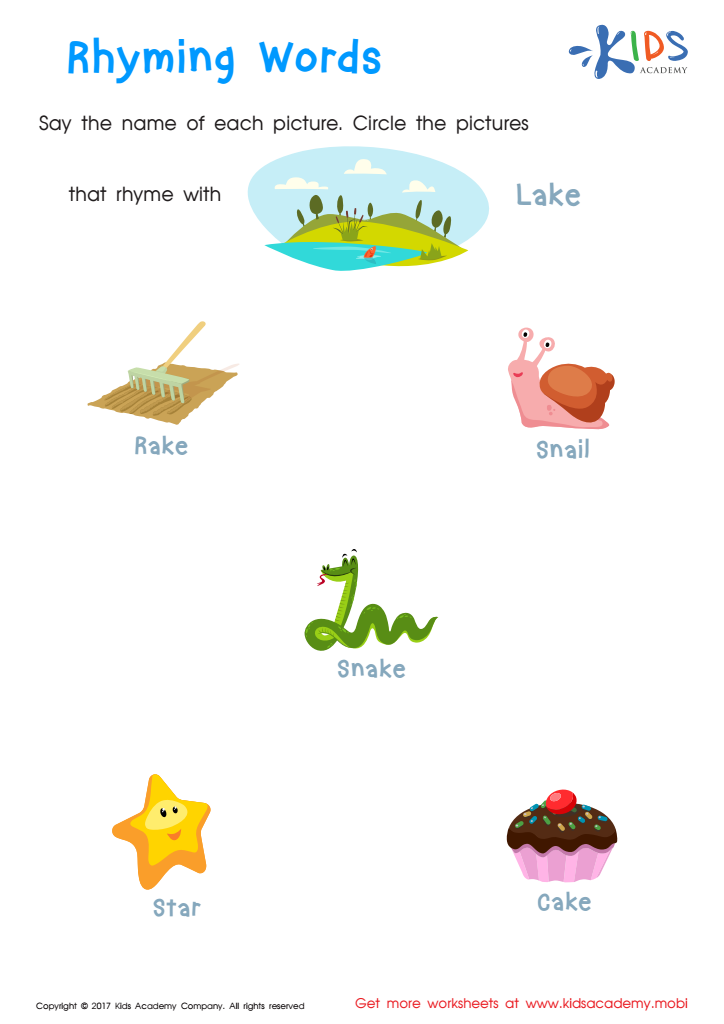
Rhyming Words Rhyming Worksheet
 Assign to My Students
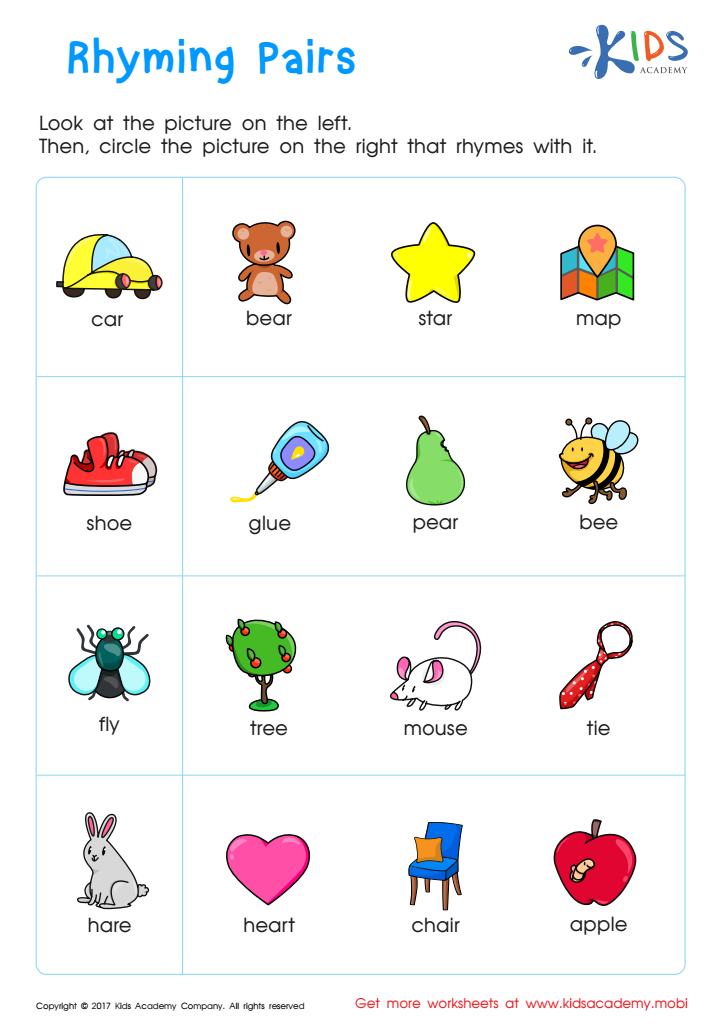
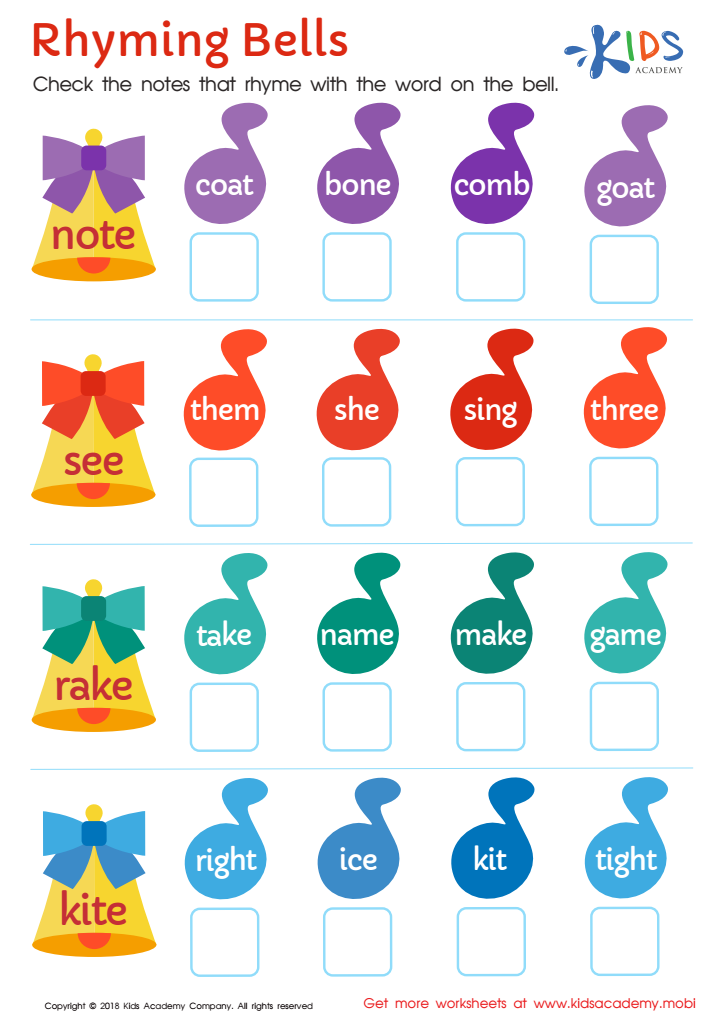
Rhyming Bells Worksheet
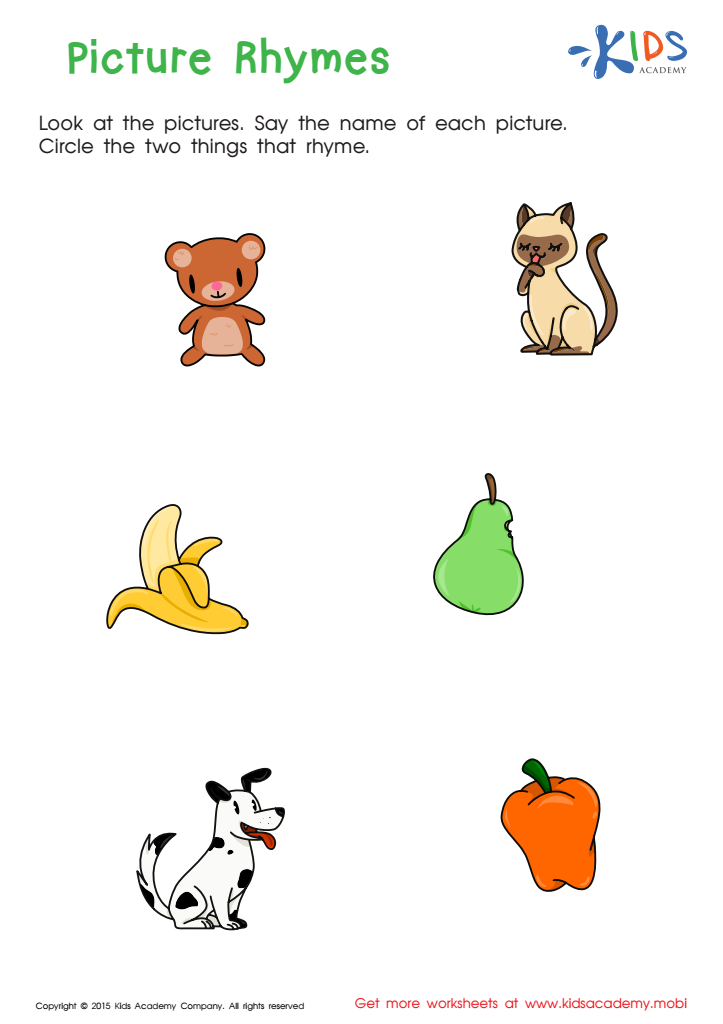
First Words: Picture Rhymes Worksheet








Rhyming skills are crucial for children's language development, particularly for those aged 6-8, as they lay the foundational building blocks for literacy. At this stage, children are transitioning from basic phonemic awareness to more complex reading and writing skills. Engaging with rhymes helps them better recognize patterns in words, enabling them to decode new vocabulary more easily. When children can identify rhyming words, they enhance their understanding of sound relationships, which is vital for phonics and spelling.
Furthermore, rhyming fosters creativity and enhances memory recall. Through playful rhymes and rhythmic patterns, children develop a love for language, encouraging their verbal expression and storytelling abilities. Rhyming activities, such as songs and poems, also promote social interaction and cooperative learning, making literacy engagement a joyful experience.
For parents and teachers, incorporating rhyming activities into everyday learning can significantly boost children's confidence and enthusiasm for reading and writing. By emphasizing the importance of rhyming, adults can support children's cognitive growth and pave the way for future academic success. Therefore, love for rhymes not only enhances literacy skills but also strengthens a child’s overall approach to learning and communication.







