
Spelling improvement Alphabet Worksheets for Ages 6-8
8 filtered results
Difficulty Level
Grade
Age
-
From - To
Subject
Activity
Standards
Enhance your child’s spelling skills with our engaging Spelling Improvement Alphabet Worksheets designed specifically for ages 6-8! These printable resources are perfect for young learners looking to boost their vocabulary and phonetic awareness. Each worksheet features interactive activities that focus on letter recognition, word formation, and spelling practice, making learning fun and effective. Watch as your child gains confidence in their abilities while developing essential literacy skills. Suitable for use at home or in the classroom, our worksheets provide the perfect mix of challenge and enjoyment, ensuring your child is on the path to spelling success in no time!
Favorites
With answer key
Interactive
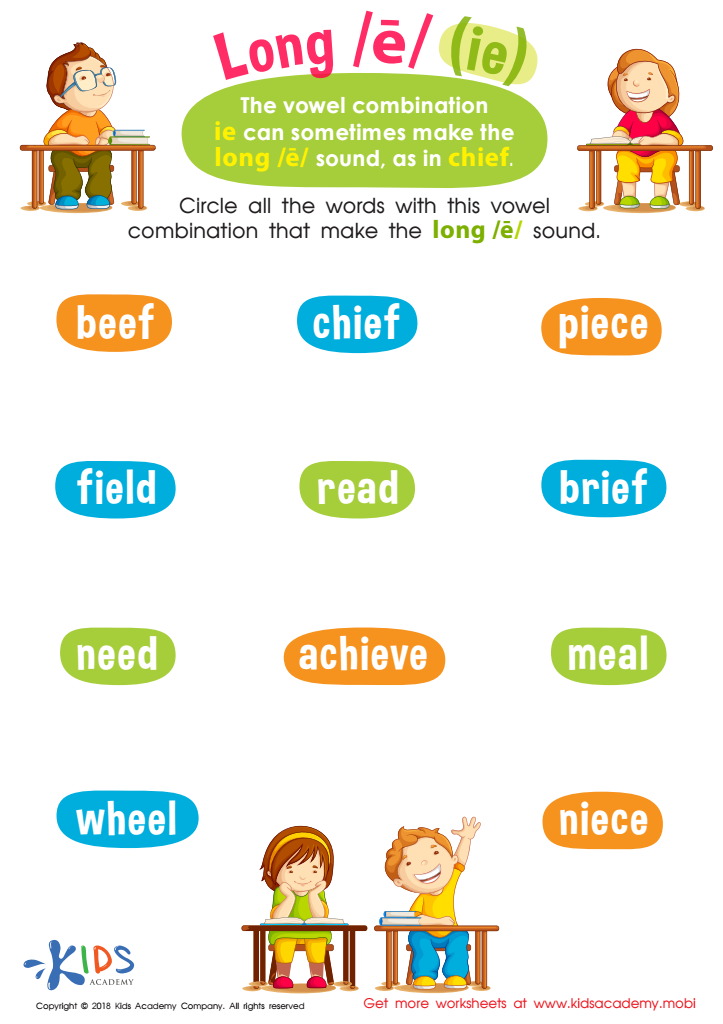
Reading: Long E and IE Worksheet
Ask your child to name some words with the long /e/ sound they hear every day. Then, read aloud all the words in the worksheet with them. Ask them to circle the words containing ie that make this sound.
Reading: Long E and IE Worksheet
Worksheet
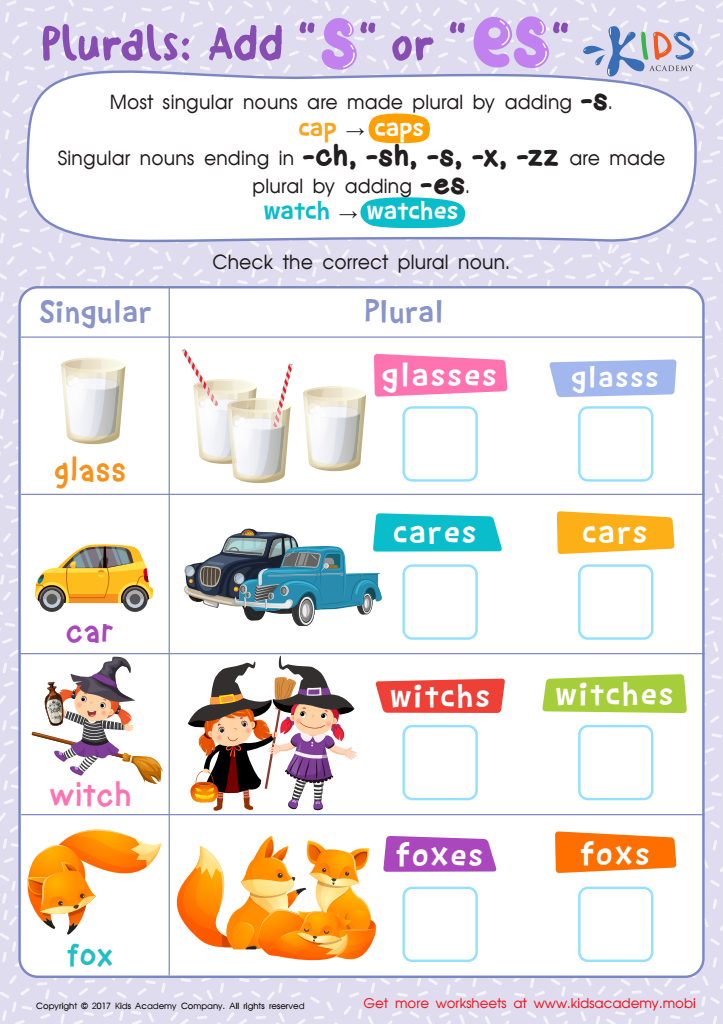
Plurals: "–es" or "–es"? Worksheet
Learning plural nouns can be tough for young readers. This worksheet shows them the difference between singular and plural spelling with cute images. Read each word and check the correct version. Remind them why the other ending can't be used.
Plurals: "–es" or "–es"? Worksheet
Worksheet
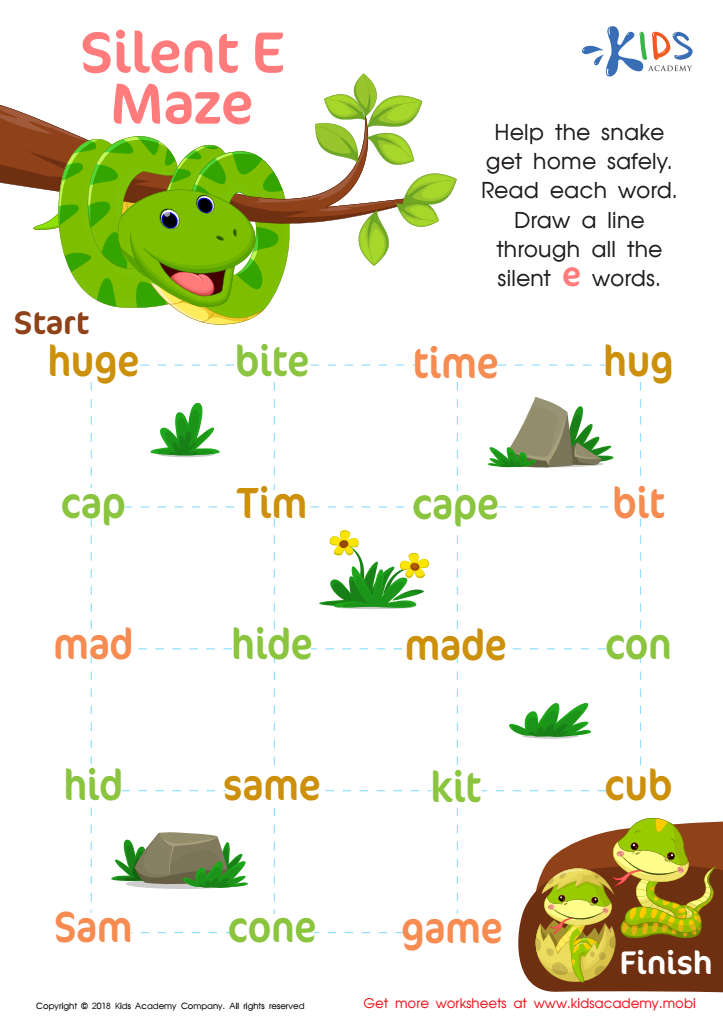
Silent E Maze Worksheet
Kids love mazes! This fun printable worksheet lets them help a mama snake get home to her babies, using Silent E words. They'll practice fine motor skills, while they draw lines through words that have Silent E and words with closed syllables that don't. It's a great way to help them recognize Silent E words!
Silent E Maze Worksheet
Worksheet
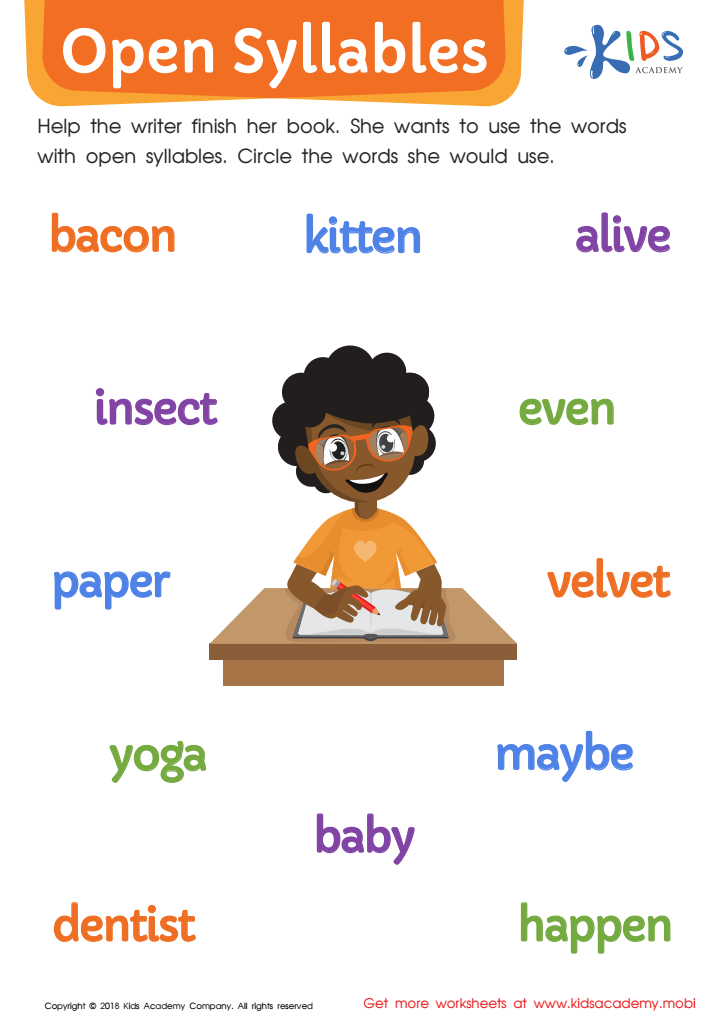
Open Syllables Worksheet
Before beginning this worksheet, make sure your child knows what open syllables are. If not, take time to teach them with examples. Then, help the writer finish her book by circling words with open syllables. She needs your child's help!
Open Syllables Worksheet
Worksheet
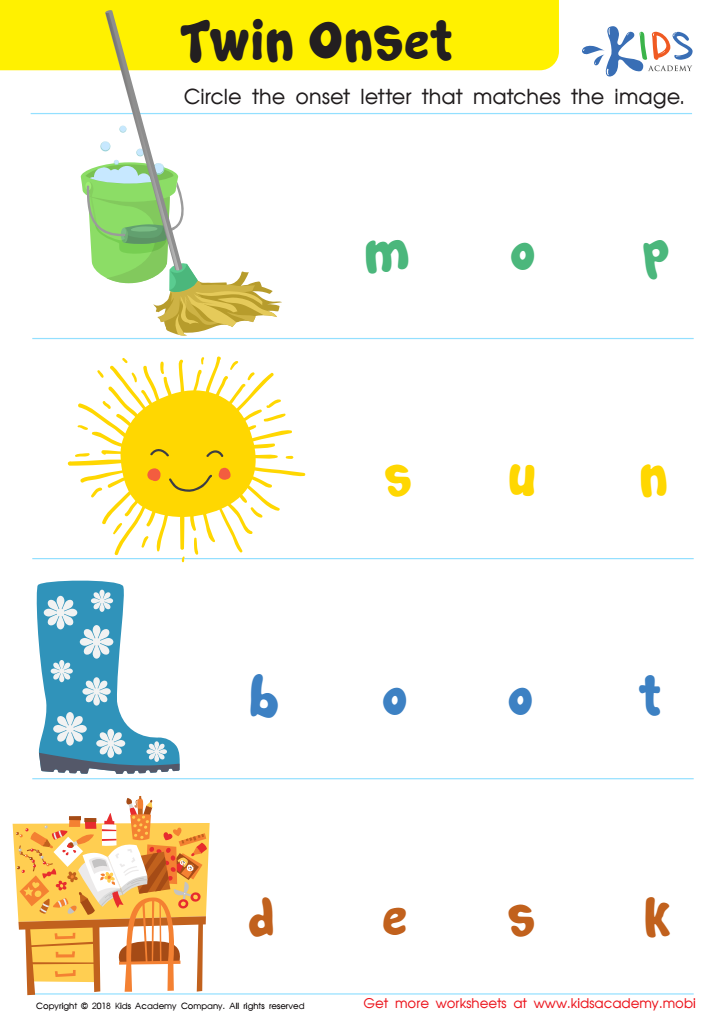
Twin Onset Worksheet
Children's phonological skills and reading/spelling strategies are strengthened by isolating initial consonants. This fun PDF worksheet encourages kids to trace the correct onset letter and hone fine motor skills. It's a great way to introduce early reading and spelling.
Twin Onset Worksheet
Worksheet
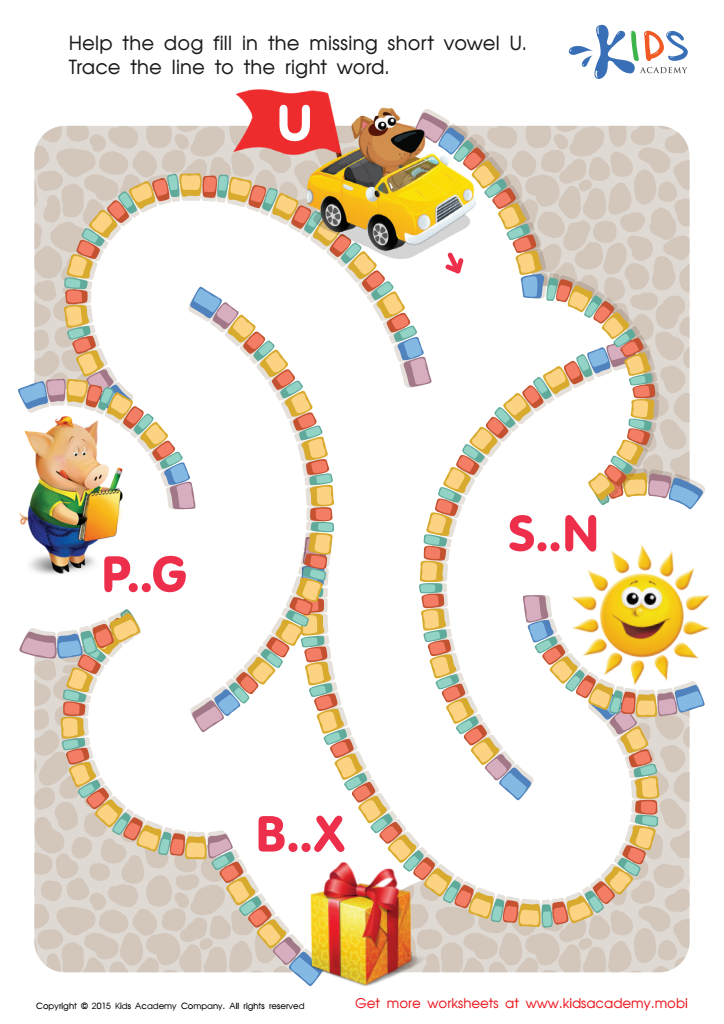
Short Vowel Sound U Worksheet
Practice abc phonics to help young learners link sounds to letters. This free printable phonics worksheet helps your kid learn the short vowel sound U. Guide them through the maze to help the dog complete the word "sun". Make sure they say the word out loud to emphasize the short U sound. Check out more phonics worksheets with mazes here.
Short Vowel Sound U Worksheet
Worksheet
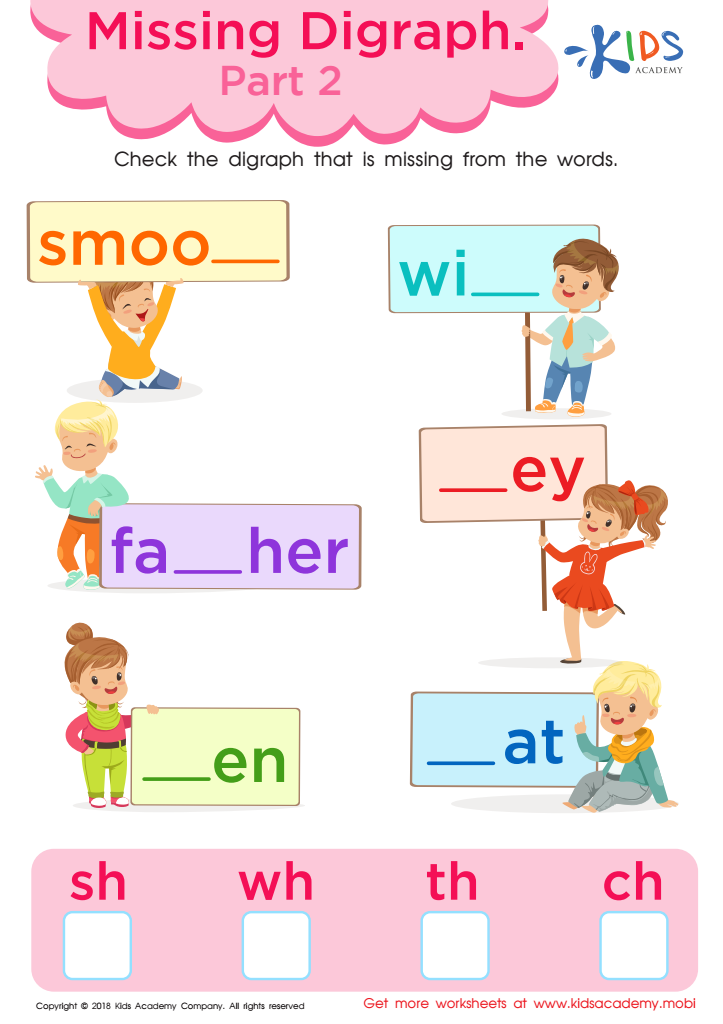
Missing Digraph: Part 2 Worksheet
Practice the "th" digraph with this fun worksheet from Kids Academy! See how it appears at the beginning, middle, or end of words and help learners fill in the blanks. Check if they got it right by finding the th digraph at the bottom!
Missing Digraph: Part 2 Worksheet
Worksheet
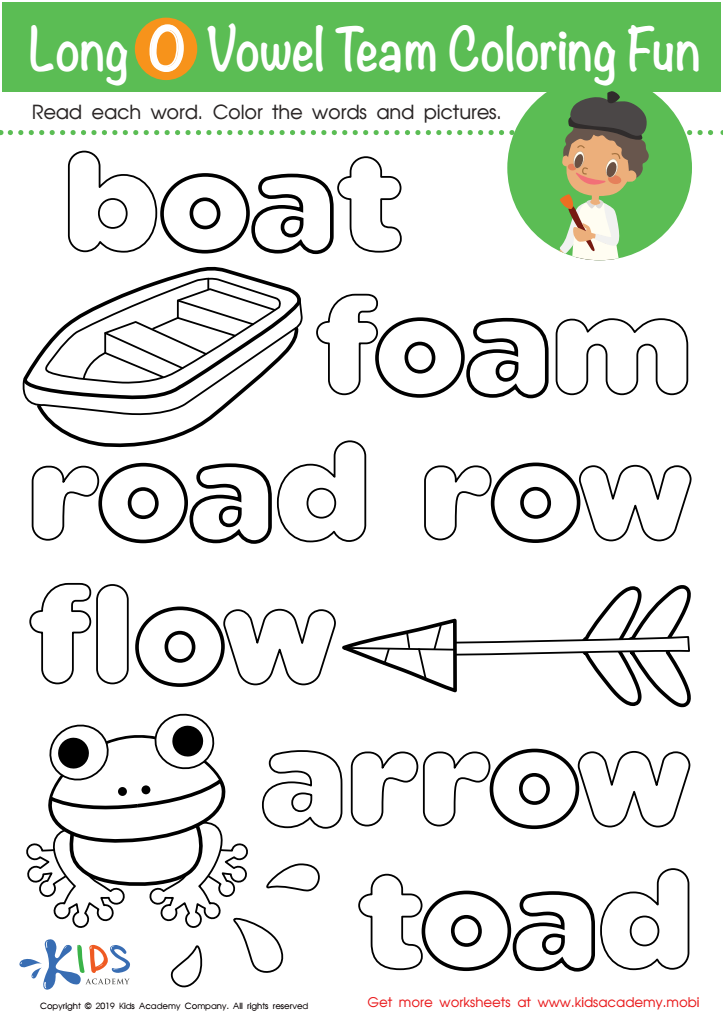
Long O Vowel Team Coloring Worksheet
Divide your class into teams and have them work together to identify and pronounce the long O sound in words like "boat" and "flow". As they read aloud, have the rest of the class listen attentively. Then let teams color in the words and matching pictures, reinforcing the lesson. This simple printout is perfect for phonics lessons and a fun way to energize your class.
Download (PDF)
 Assign to My Students
Assign to My Students
Long O Vowel Team Coloring Worksheet
Worksheet
Join Kids Academy for Free
Who is primarily going to use this learning content?








Spelling improvement is a crucial focus for children aged 6-8, as it lays the foundation for their communication skills and literacy development. This stage marks a period when children begin to grasp sound-letter relationships and phonemic awareness, essential for reading comprehension and writing proficiency. By emphasizing spelling improvement through a structured program like Spelling Improvement Alphabet, parents and teachers can foster confidence in children's abilities to express their thoughts clearly.
Early mastery of spelling helps prevent future challenges in literacy, ensuring children have the skills they need to tackle more complex texts as they advance in their education. Additionally, strong spelling skills promote better academic performance, as they are integral to subjects beyond language arts, including science and social studies.
Moreover, these spelling programs encourage consistency and motivation, turning learning into an engaging and rewarding process. Proficient spelling is linked to positive self-esteem and motivation, which are critical for lifelong learning. Invested parents and teachers can create supportive environments that stimulate interest in learning, empowering children to communicate effectively. Ultimately, supporting spelling improvement at this age not only prepares children for academic success but also equips them with essential skills for their future endeavors.







