Lowercase identification Letter Recognition Worksheets for Ages 6-8
5 filtered results
-
From - To
Discover our engaging Lowercase Letter Identification Worksheets designed specifically for children ages 6-8. These resources help young learners master the essential skill of recognizing lowercase letters in a fun and interactive way. Each worksheet features colorful illustrations and creative activities that make practicing letter identification enjoyable. Ideal for parents and educators, these worksheets not only enhance reading readiness but also foster fine motor skills through tracing and writing exercises. Strengthen your child's familiarity with the alphabet while keeping them entertained! Download our printable worksheets today and watch your child gain confidence in their reading and writing abilities. Perfect for classroom and home use!
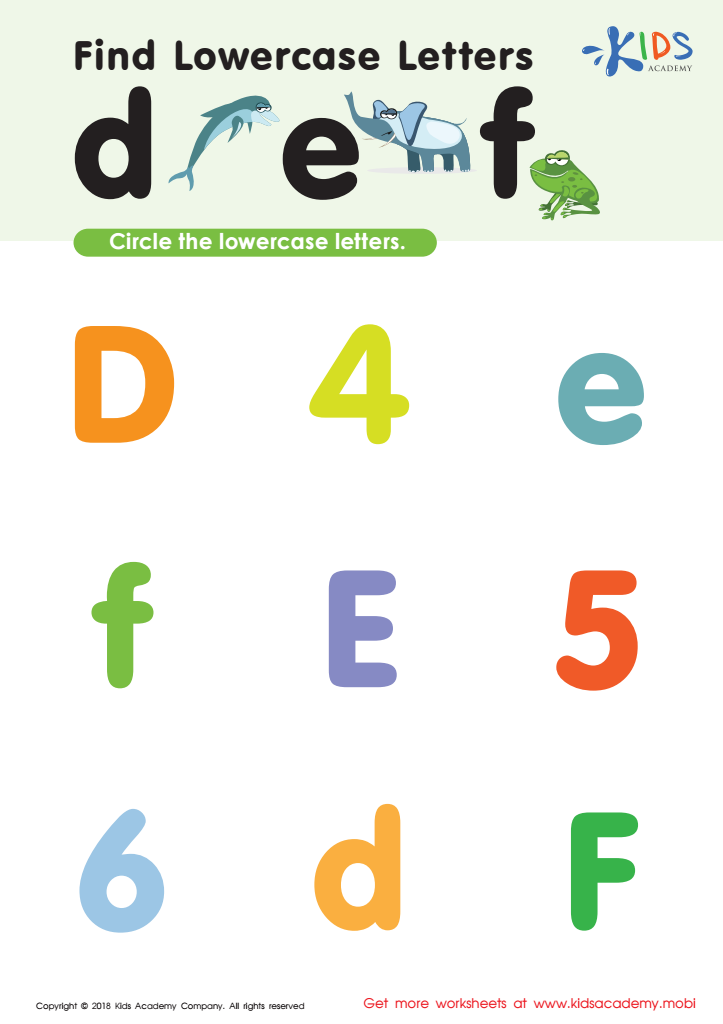
Find Lowercase Letters d e f Worksheet
 Assign to My Students
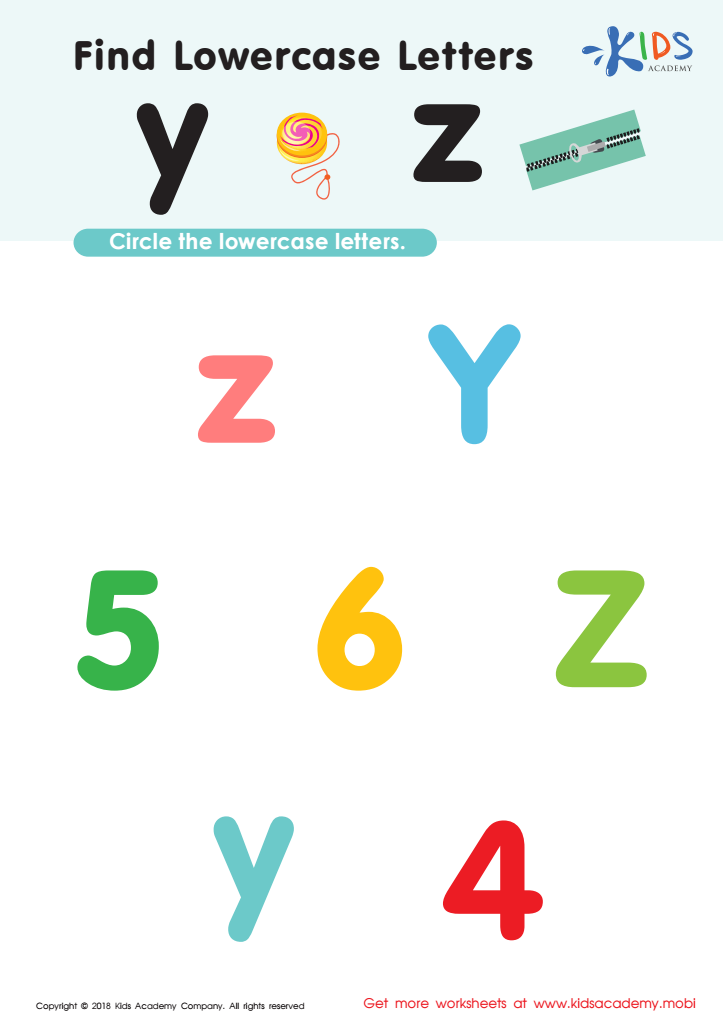
Find Lowercase Letters y z Worksheet

Find lowercase letters a b c Worksheet
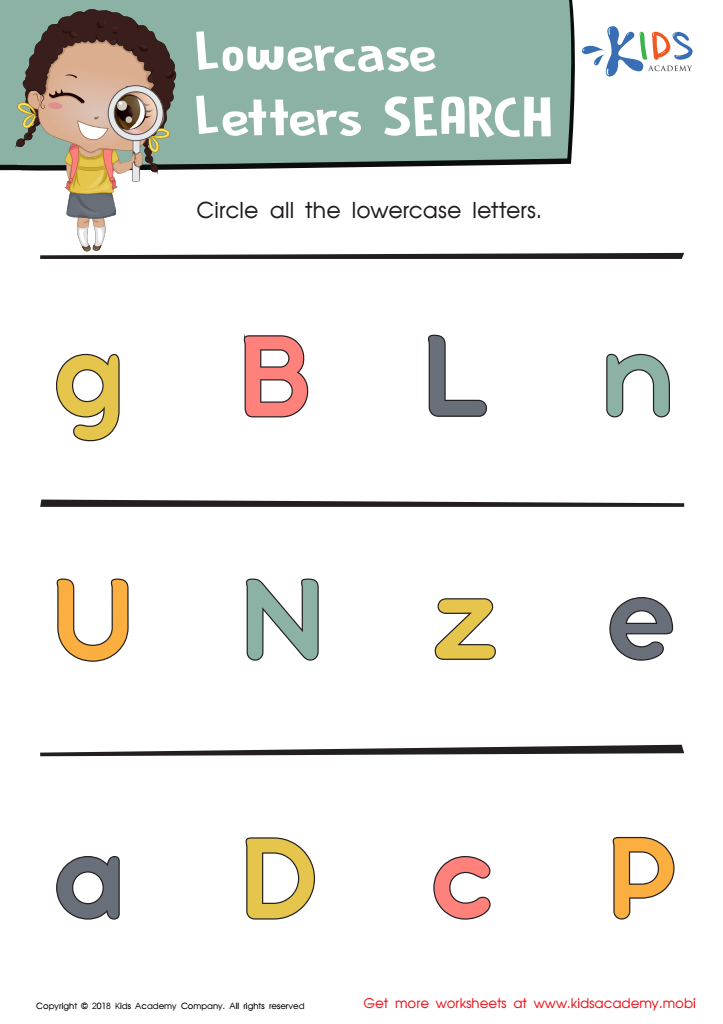
Lowercase Letters Search: Assessment Worksheet

Find Lowercase Letters v w x Worksheet








Lowercase letter recognition is a crucial skill for children aged 6-8 as they develop reading and writing abilities. This age range marks a pivotal stage in literacy development, where the foundations laid in earlier years begin to translate into independent reading and writing. Understanding lowercase letters enhances children’s ability to recognize sight words, engage with texts, and develop fluency.
Parents and teachers should prioritize lowercase letter recognition because it directly impacts a child's confidence and motivation in reading. Children typically encounter more lowercase letters than uppercase in everyday texts, making this knowledge vital for comprehension. Mastering lowercase letters allows children to navigate books, signs, and labels, fostering their curiosity and eagerness to explore language.
Furthermore, letter recognition supports phonemic awareness, which is critical for spelling and writing. As children become comfortable with lowercase letters, they can progress to forming words and sentences, leading to improved communication skills. This is not only essential for academic performance but also vital for social interactions and self-expression.
Ultimately, fostering lowercase letter recognition empowers children to connect with the world around them, enabling lifelong learning and literacy. Parents and teachers play a key role in nurturing these skills, creating a strong foundation for future success.







