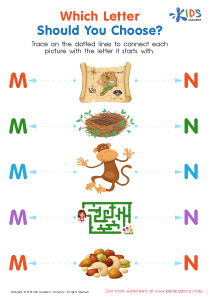
Letter recognition Lowercase/Small Letters Worksheets for Ages 6-8
11 filtered results
-
From - To
Introduce your child to the exciting world of letters with our Lowercase/Small Letters Worksheets designed for ages 6-8. These engaging activities make learning fun and effective, focusing on letter recognition and fundamental literacy skills. Perfect for early learners, our worksheets feature vibrant illustrations and interactive tasks that help kids effortlessly identify, trace, and write lowercase letters. Encourage your child to explore and develop confidence in reading and writing with these specially crafted resources, tailored to meet their educational needs. Ideal for classroom use or at-home practice, our worksheets are a fantastic tool for fostering early literacy development.
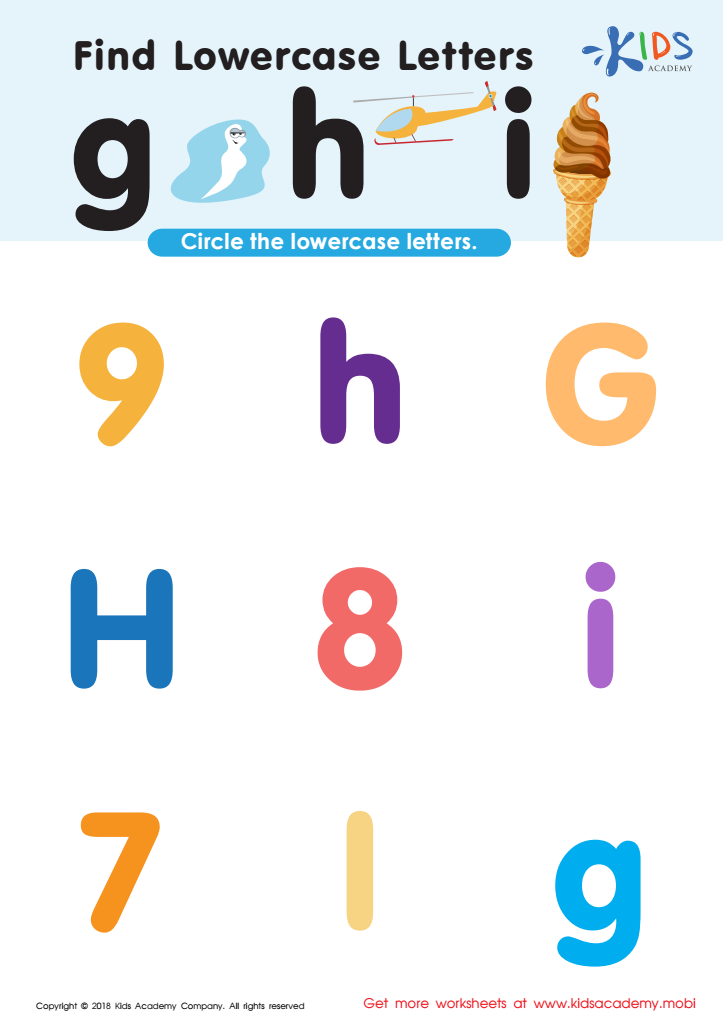
Find Lowercase Letters g h i Worksheet
 Assign to My Students
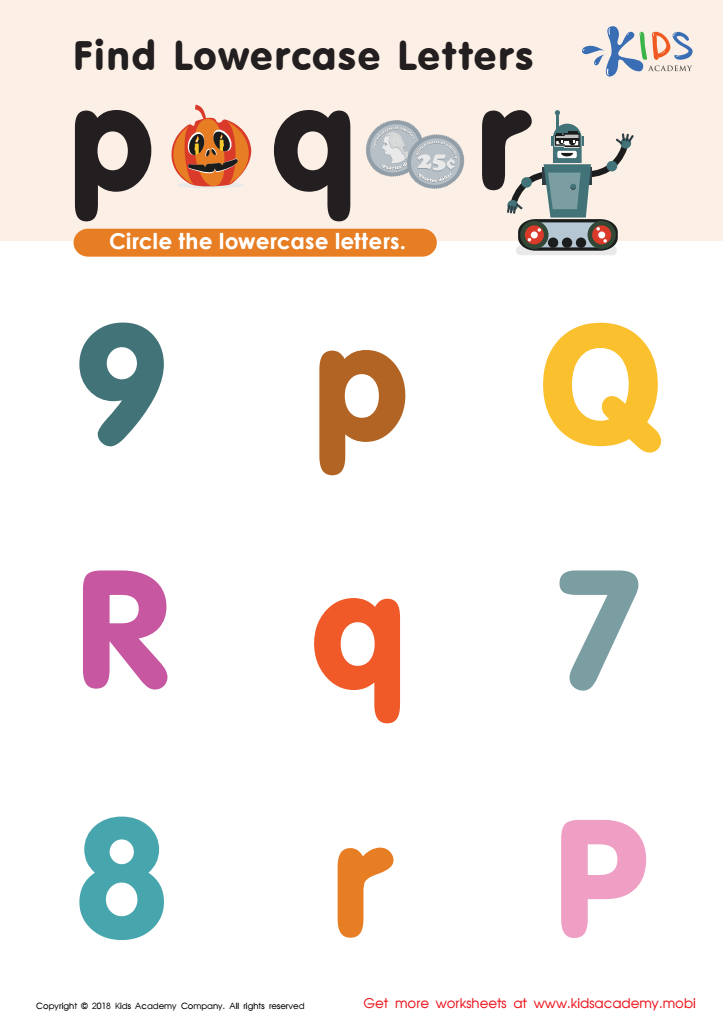
Find lowercase Letters p q r Worksheet
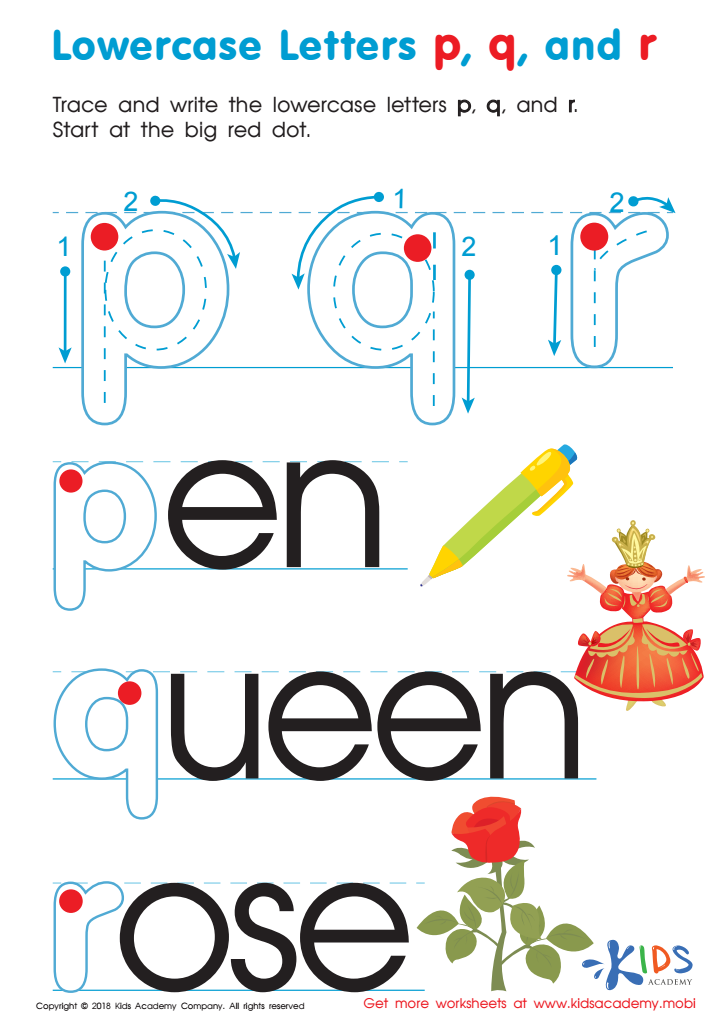
Lowercase Letters p q r Worksheet
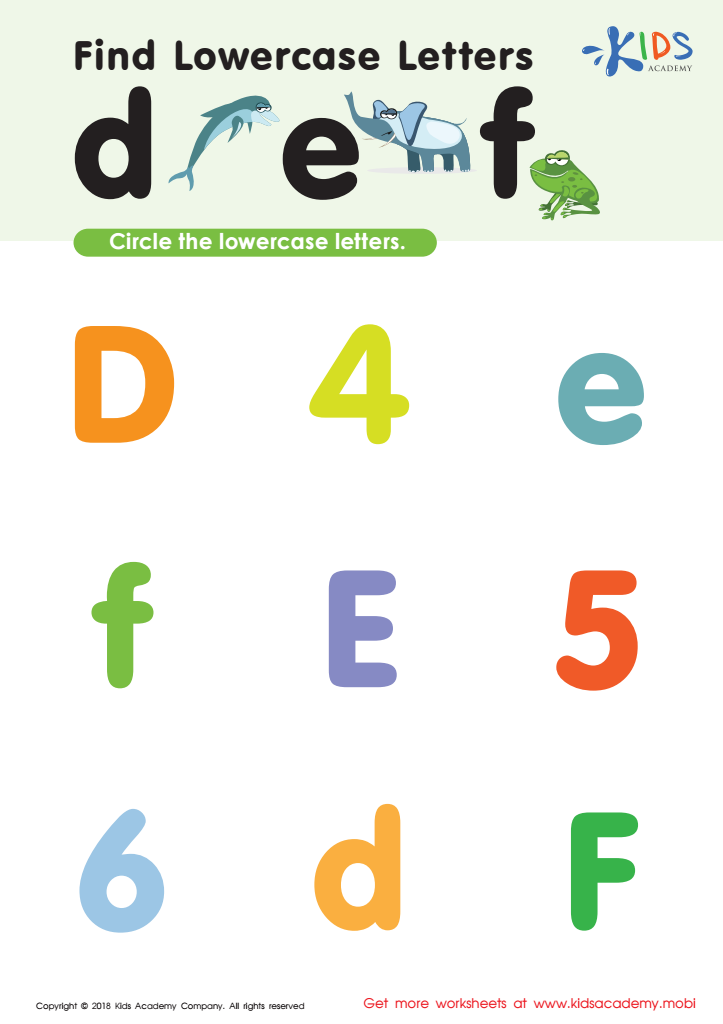
Find Lowercase Letters d e f Worksheet
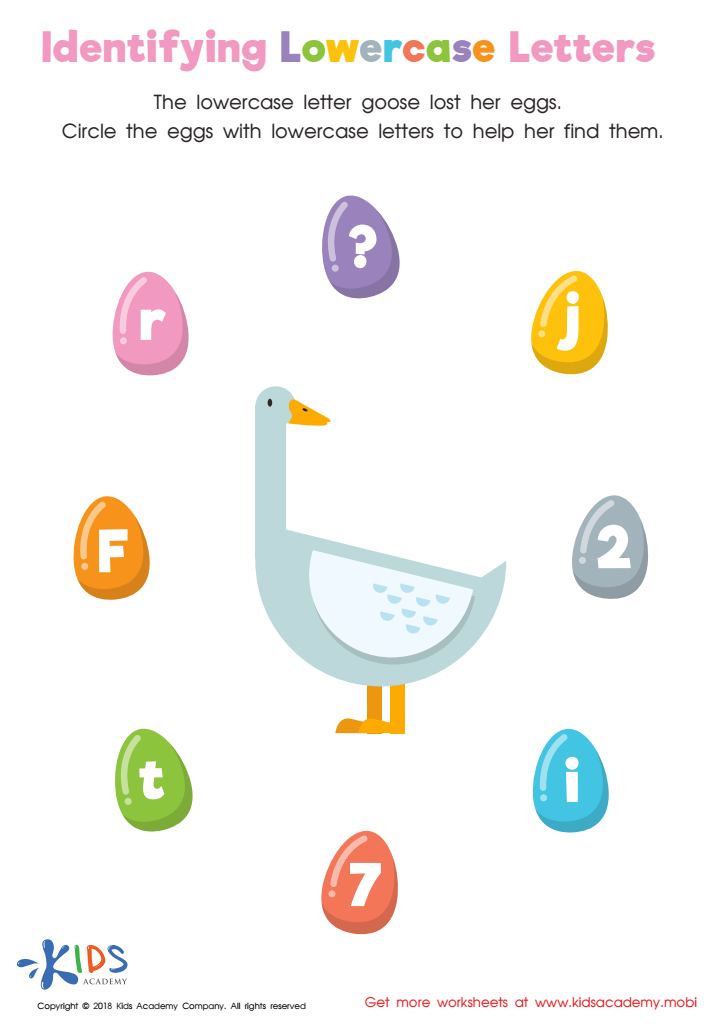
Identifying Lowercase Letters Worksheet
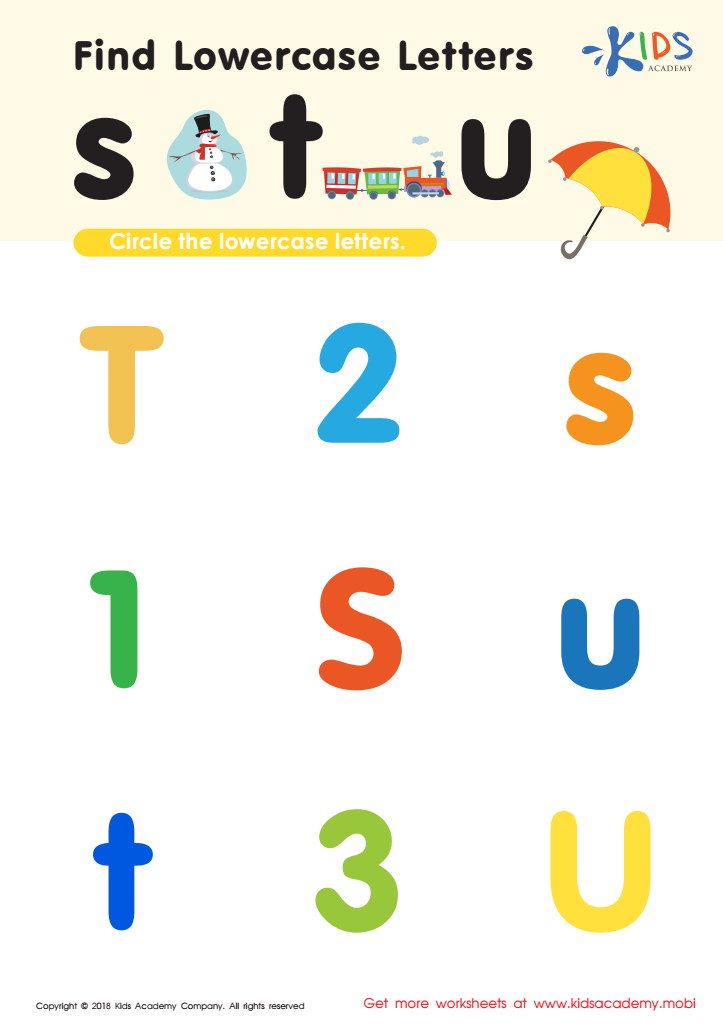
Find lowercase Letters s t u Worksheet
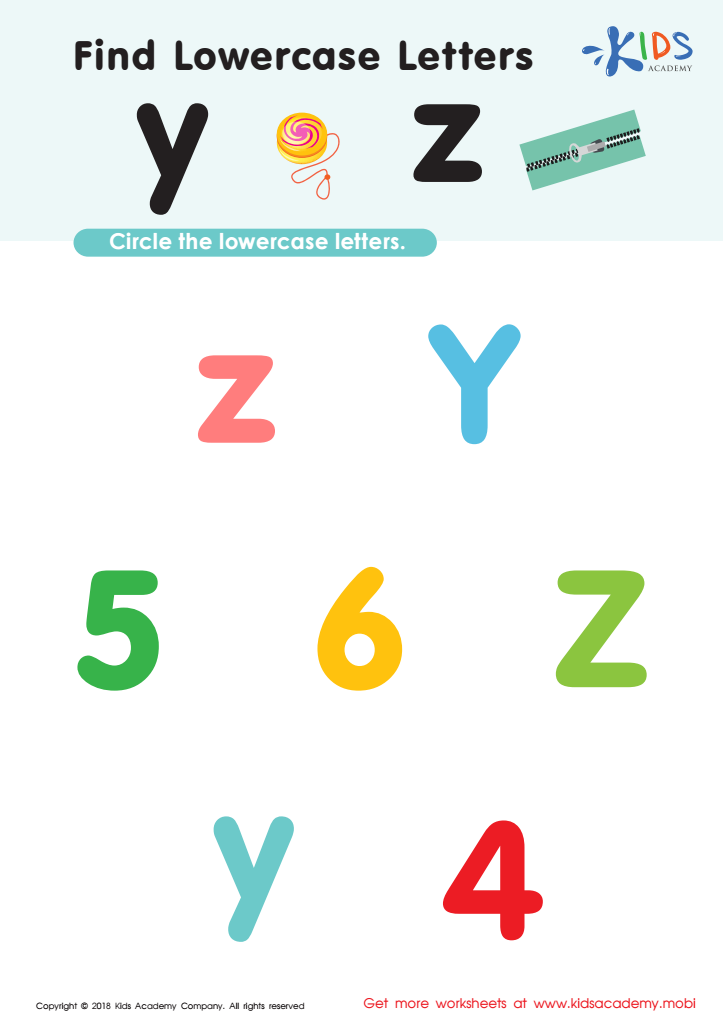
Find Lowercase Letters y z Worksheet
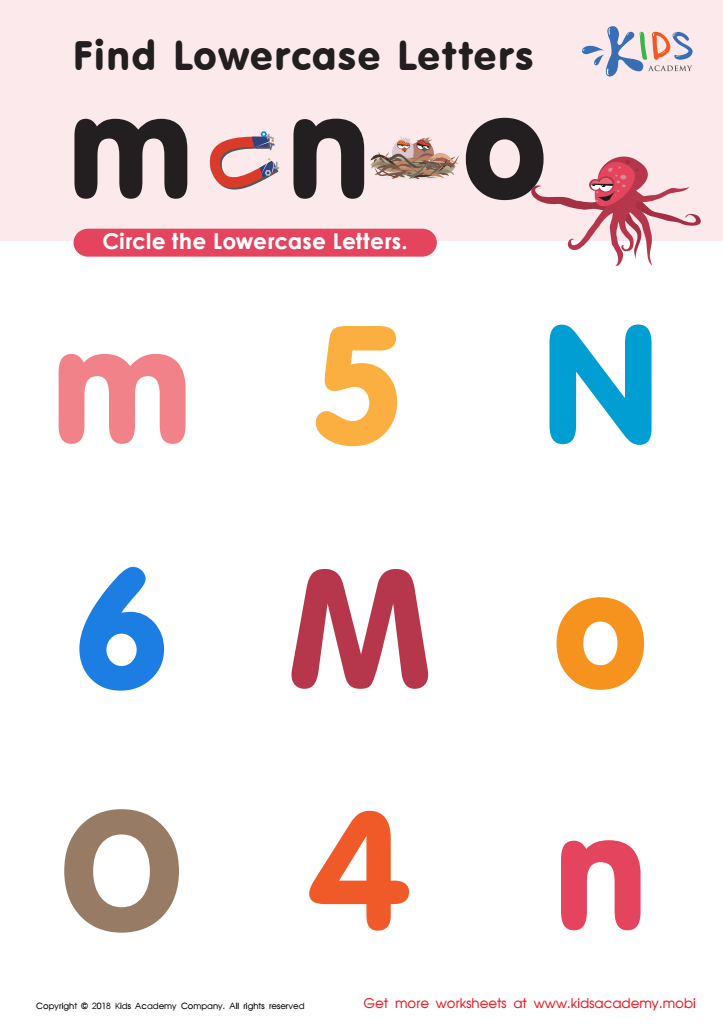
Find Lowercase Letters m n o Worksheet
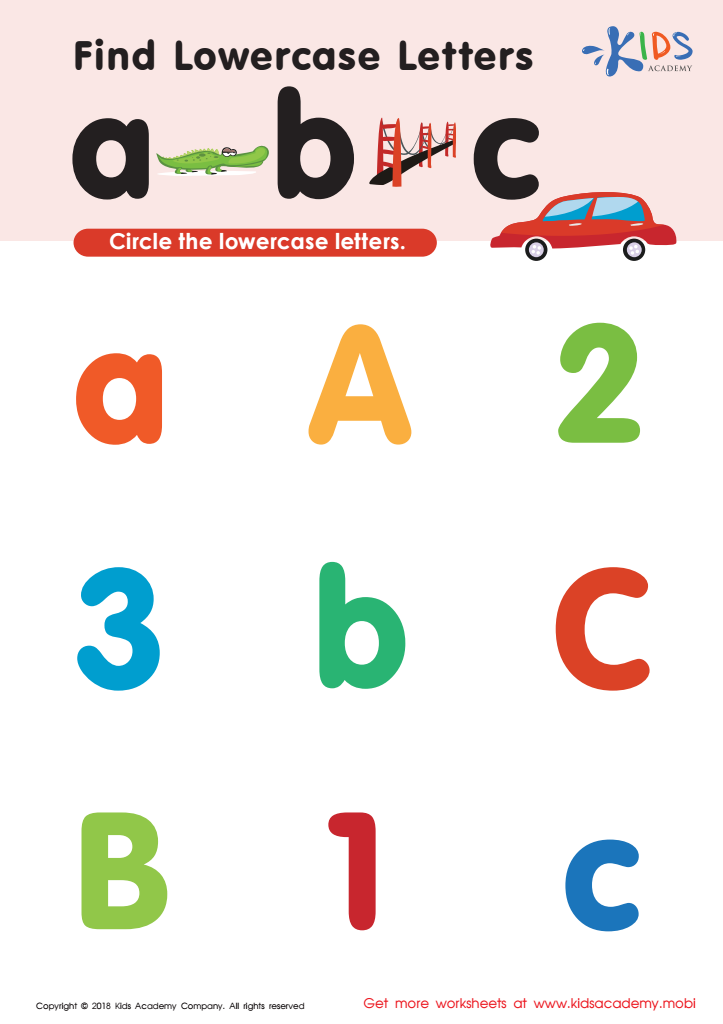
Find lowercase letters a b c Worksheet
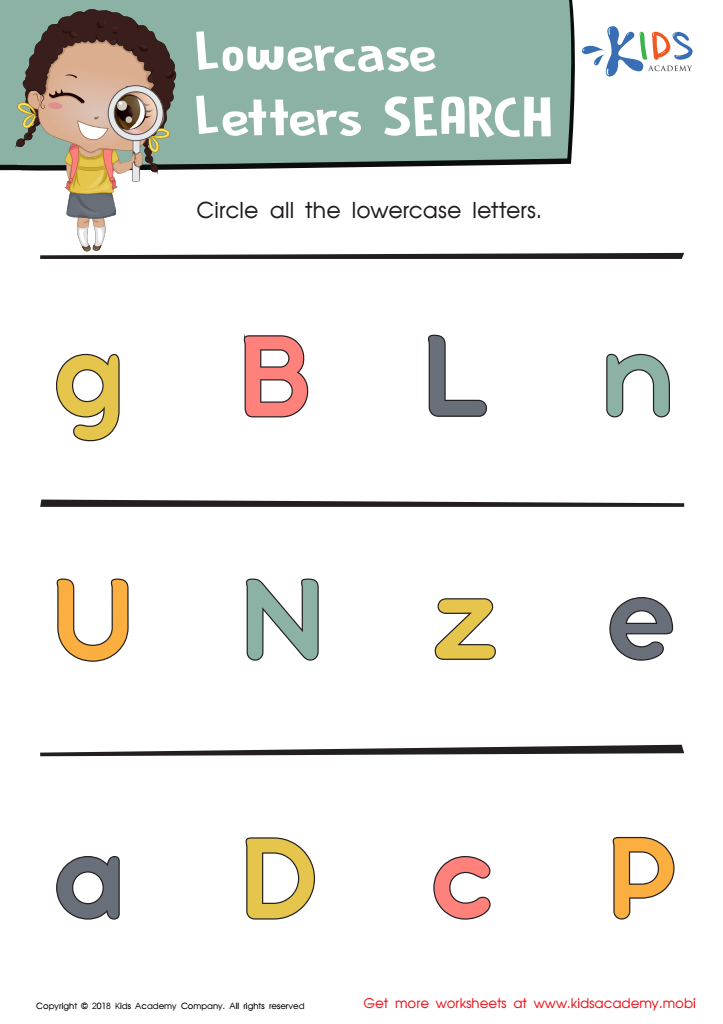
Lowercase Letters Search: Assessment Worksheet
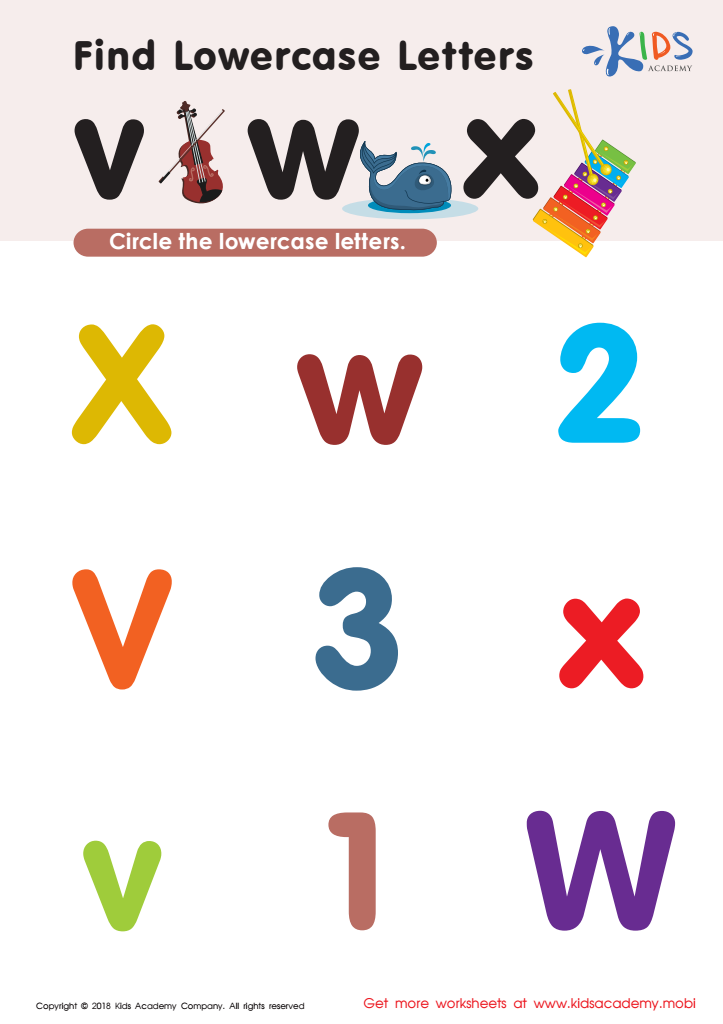
Find Lowercase Letters v w x Worksheet


Letter recognition, especially of lowercase or small letters, is fundamental for children ages 6-8 because it lays the groundwork for reading and writing proficiency. At this critical age, children transition from recognizing individual letters to decoding words and sentences. Lowercase letters are more prevalent in texts; thus, proficiency in recognizing them enhances reading fluency and comprehension. Fluent readers can focus more on understanding the content rather than decoding each word, fostering a smoother and more enjoyable reading experience, building confidence, and encouraging a lifelong love of reading.
Moreover, lowercase letter recognition is crucial for spelling and proper writing skills. Children need to distinguish between uppercase and lowercase forms to master capitalization rules and write coherently. Early mastery reduces errors and confusion, promoting clearer communication.
From a cognitive perspective, recognizing lowercase letters enhances visual discrimination skills – the ability to notice slight differences and similarities between shapes and symbols. This skill is not only essential for reading but also for other areas of learning, including mathematics and art.
Teachers and parents play a crucial role in supporting this development by introducing fun, engaging activities like alphabet games, interactive reading sessions, and hands-on practice, ensuring that children build a strong foundation for future academic success.