Chess Worksheets for Ages 6-8 - Page 5
97 filtered results
-
From - To
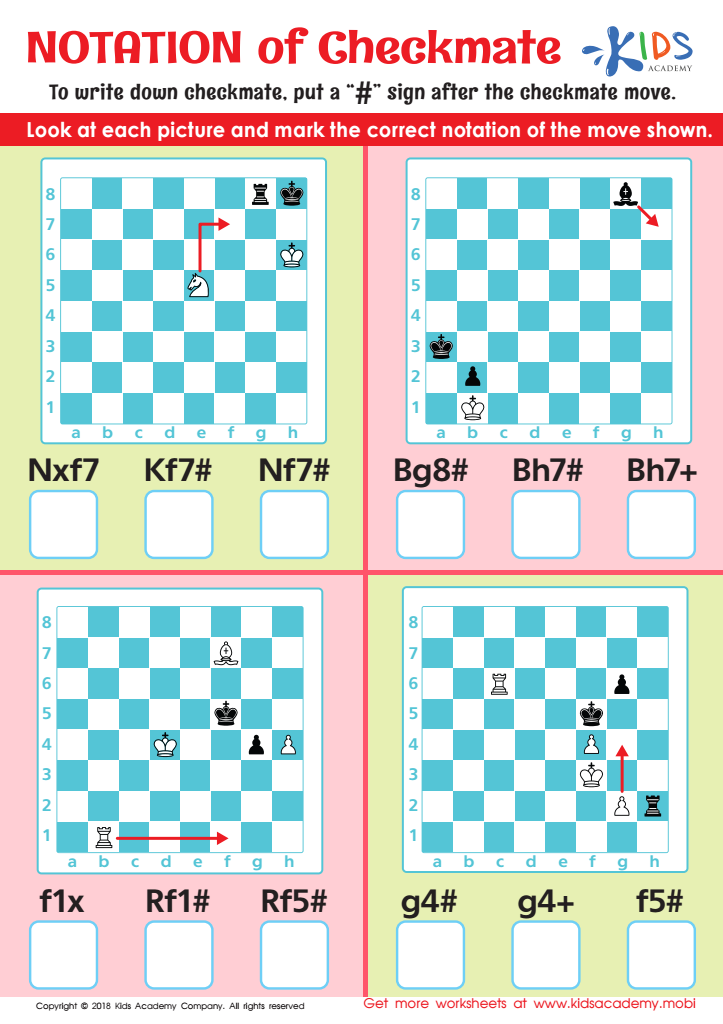
Notation of Checkmate Worksheet
 Assign to My Students








Chess is a valuable activity for children aged 6-8, offering benefits that extend beyond the game itself. First and foremost, chess enhances critical thinking and problem-solving skills. While engaging in this strategic game, children learn to analyze situations, contemplate consequences, and develop solutions—skills crucial for academic success and daily decision-making.
Moreover, chess fosters creativity. As players explore myriad possibilities with each move, they're encouraged to think outside the box, nurturing their innovative thinking. It also significantly benefits memory development; remembering different positions, pieces, and strategies helps enhance cognitive abilities and concentration.
Socially, chess promotes positive interaction and sportsmanship. Children learn to respect opponents, understand the importance of patience, and appreciate winning and losing gracefully. As they play, they can form friendships and feel a sense of community within the chess circle.
Additionally, chess can have emotional benefits by boosting self-esteem and teaching resilience. As kids overcome challenges on the board, they gain confidence in their abilities. For educators and parents striving to foster well-rounded development in kids, incorporating chess into their routines is a worthwhile investment, enriching their cognitive, social, and emotional growth.