English for Beginners Worksheets for Ages 6-8 - Page 7
148 filtered results
-
From - To
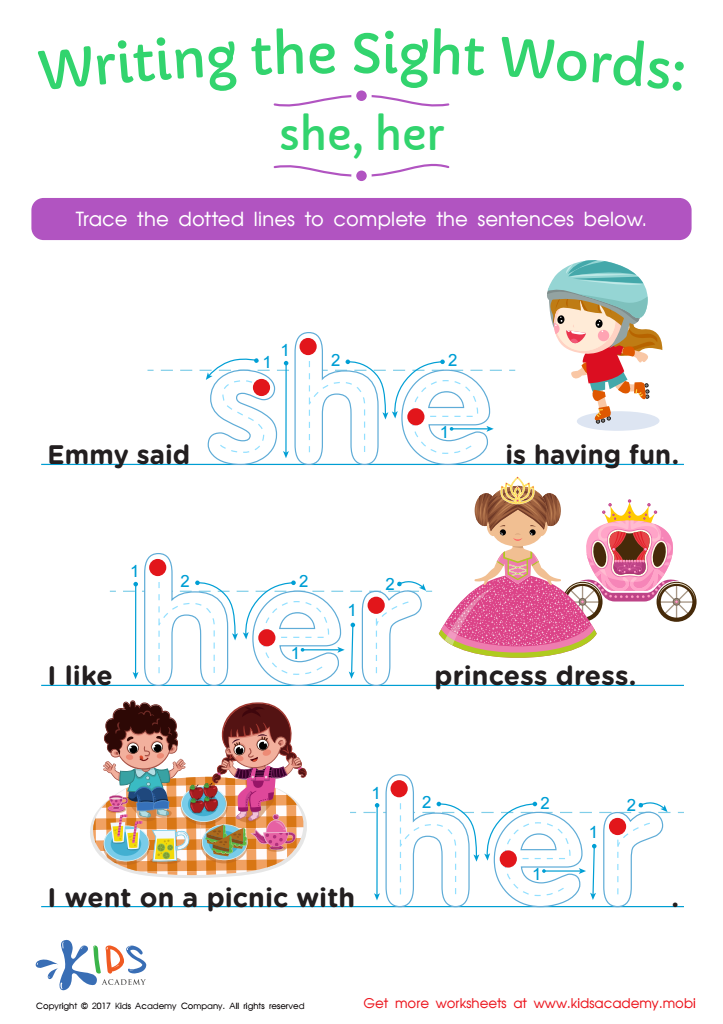
She, Her Printable Sight Words Worksheet
 Assign to My Students
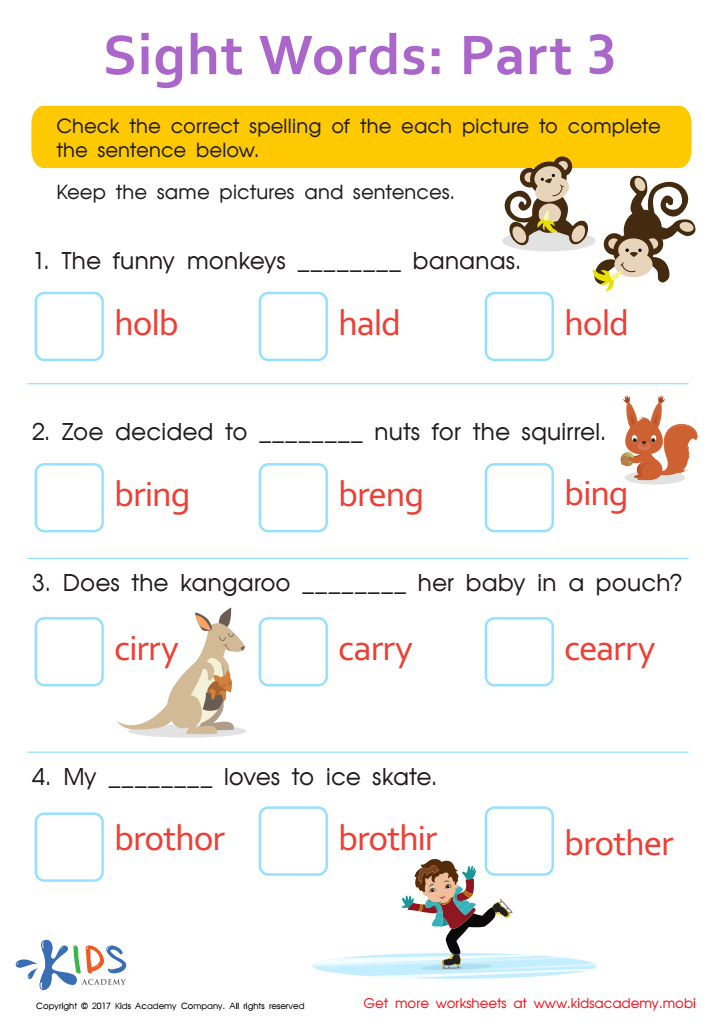
Hold, Bring, Carry, Brother Sight Words Worksheet
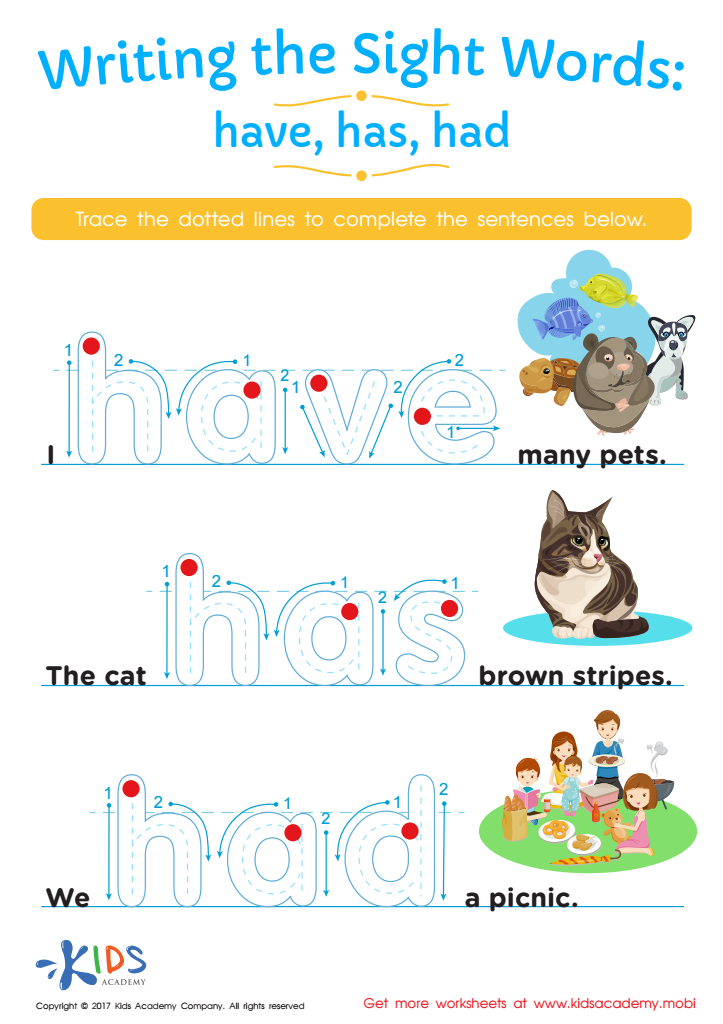
Have, Has, Had Worksheet Sight Words Worksheet
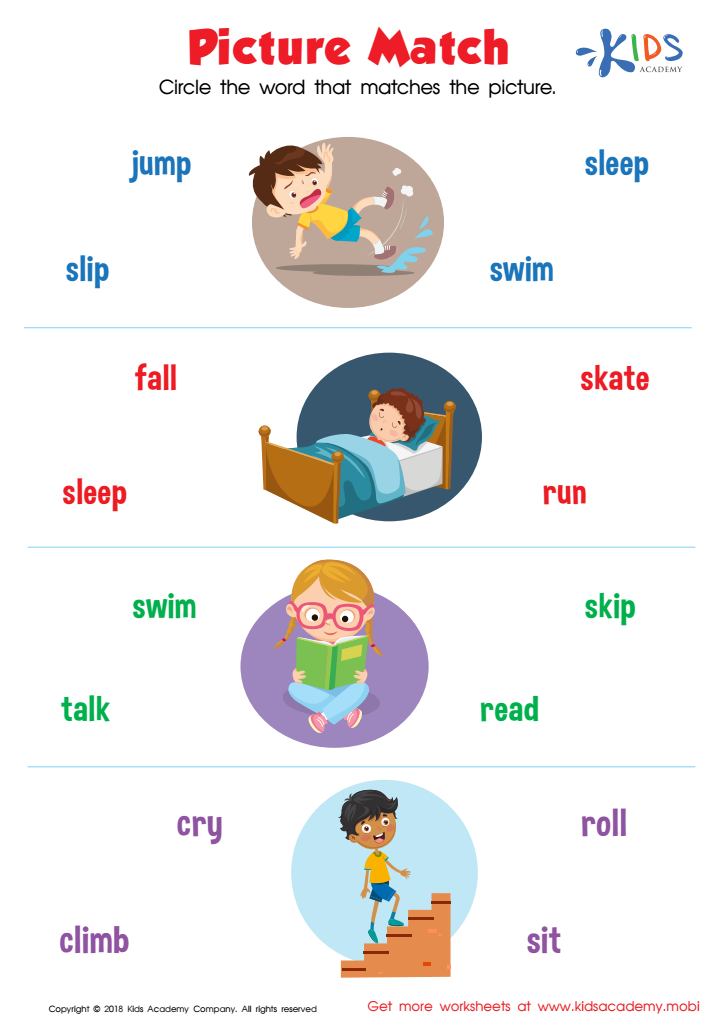
Picture Match Worksheet





Parents and teachers should care deeply about English for Beginners for children ages 6-8 because this is a formative period in language acquisition. At this young age, children's brains are incredibly receptive to learning new languages. Providing foundational English skills sets them on a path for academic success and global opportunities.
Introducing English early fosters better pronunciation and fluency as children mimic sounds more naturally than older learners. Early exposure in a structured yet engaging way ensures children develop a positive attitude towards language learning, reducing future resistance or anxiety about speaking a new language.
Moreover, learning English enhances cognitive skills like memory, problem-solving, and critical thinking. Bilingual children often excel in standardized assessments and demonstrate improved multitasking abilities. Additionally, English is a global lingua franca, meaning proficiency opens doors to vast resources, including educational materials, technology, and diverse cultures.
For teachers, a well-rounded English curriculum aids in building strong communication skills crucial for all subjects. Similarly, parents who emphasize English strengthen their child's ability to connect with an increasingly interconnected world, preparing them for a future where international collaboration is key. Ultimately, early English learning is an investment in a child’s intellectual and emotional development, equipping them with essential tools for lifelong success.