Comparing sizes Worksheets for Ages 6-8
12 filtered results
-
From - To
Discover our engaging "Comparing Sizes Worksheets" designed specifically for children ages 6-8! These interactive printables help young learners grasp essential concepts of size comparison through fun and creative activities. From easy-to-follow illustrations to hands-on exercises, students will practice identifying, sorting, and comparing various objects. Our worksheets cater to different learning styles and abilities, ensuring that every child can enhance their critical thinking and reasoning skills. Perfect for use in classrooms or at home, these worksheets foster a positive learning environment while reinforcing foundational math concepts in a playful way. Encourage your child's growth and confidence in size comparison today!
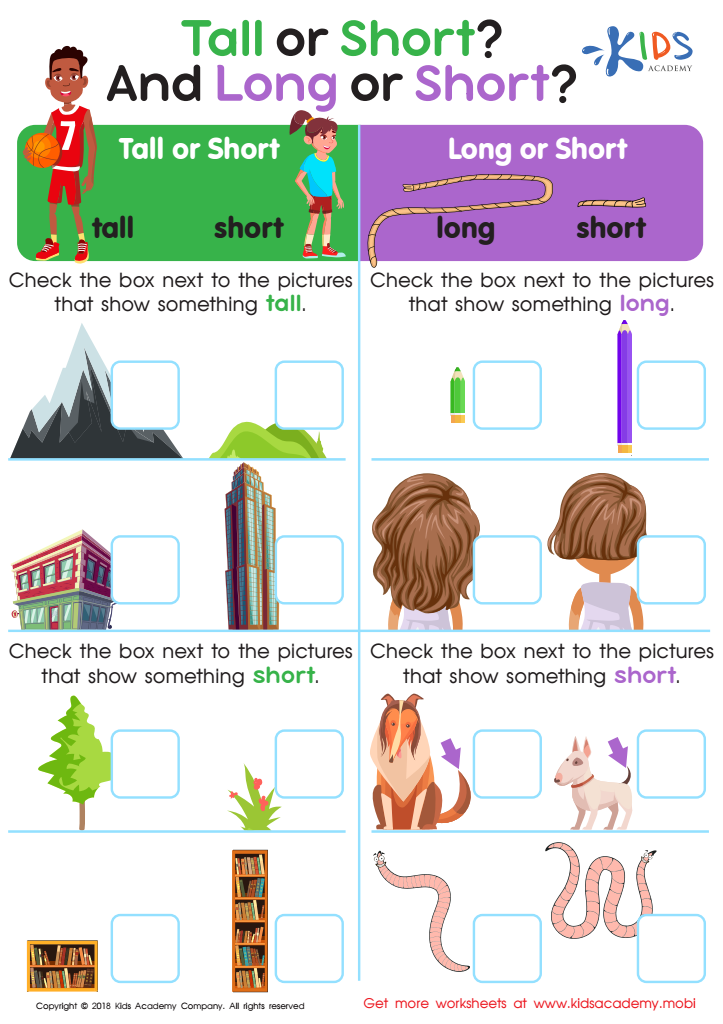
Tall or Short and Long or Short? Worksheet
 Assign to My Students
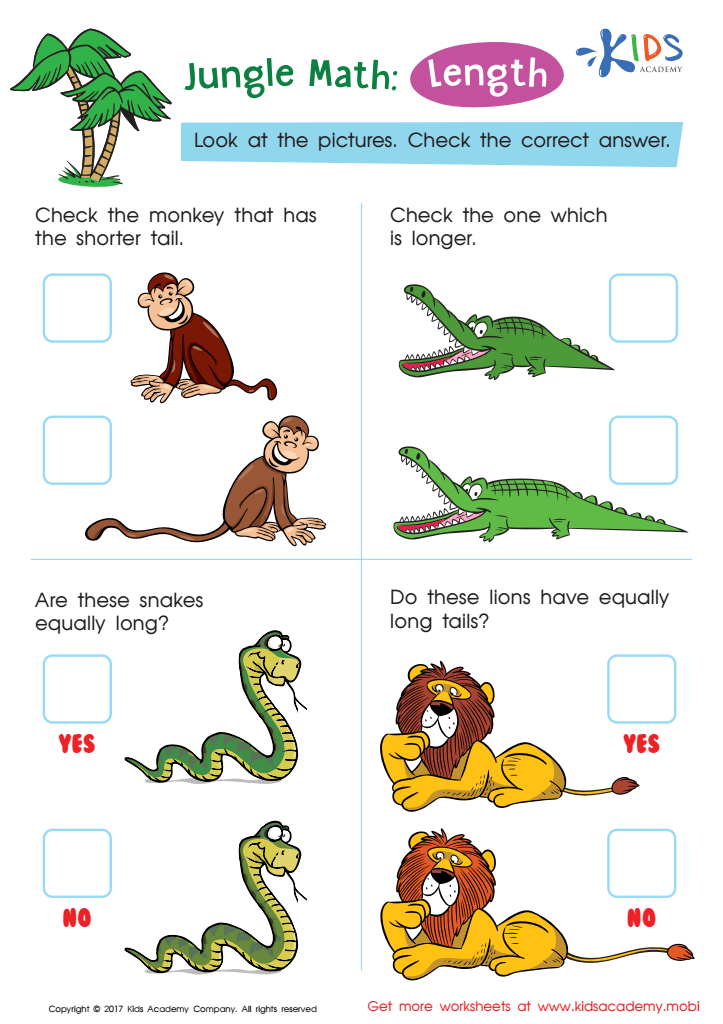
Which One Is Longer - Length Worksheet
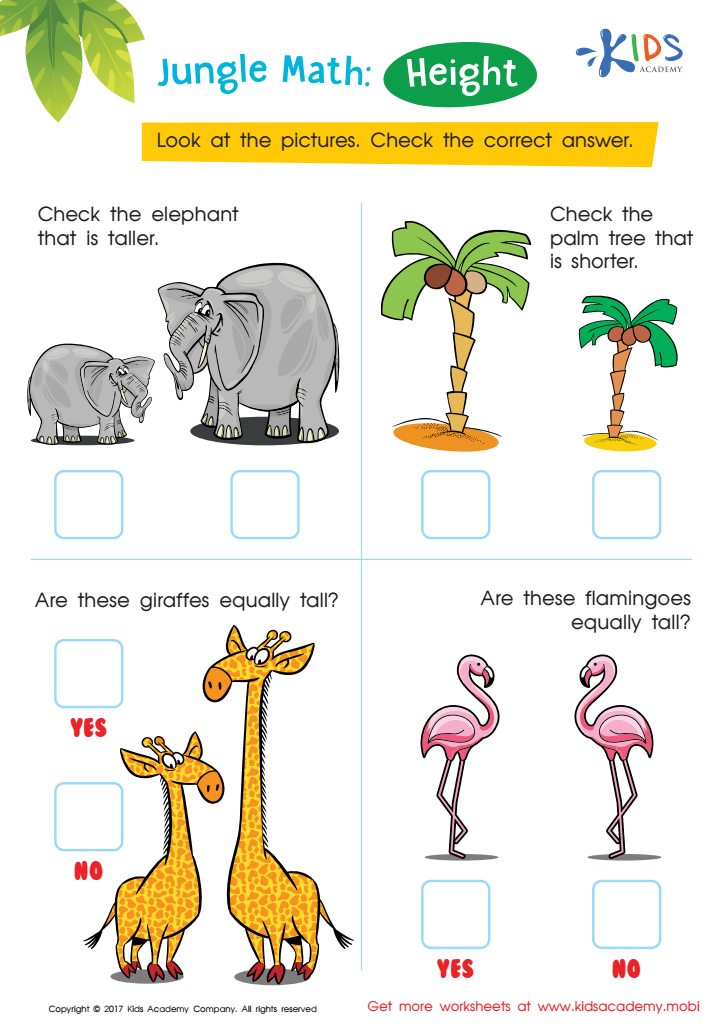
Which Is Taller Worksheet
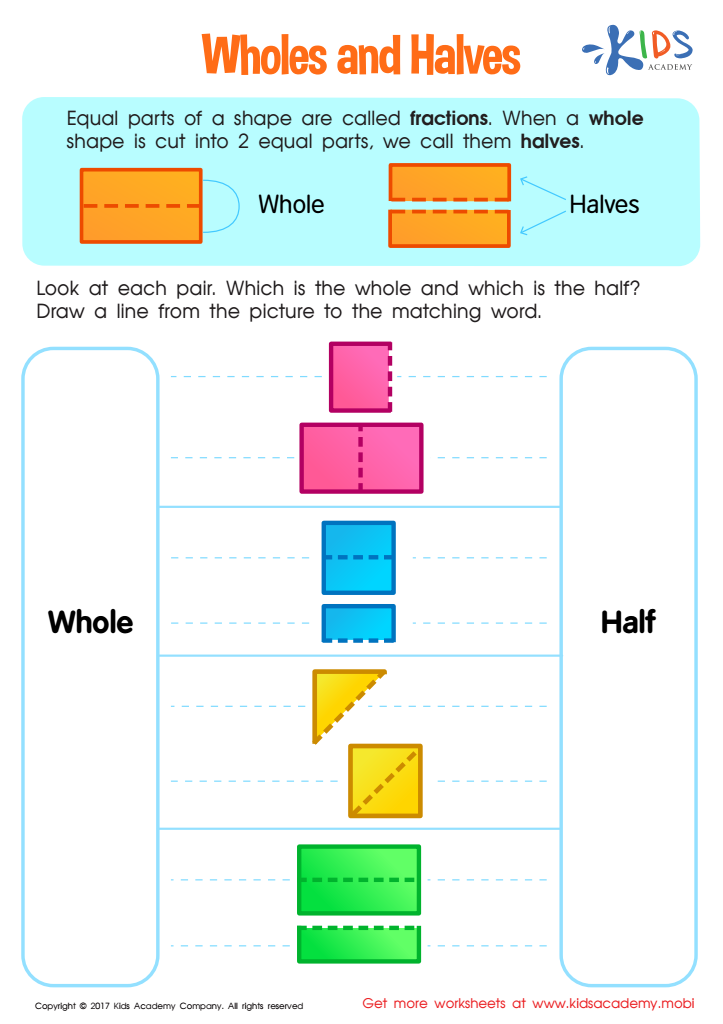
Wholes and Halves Worksheet
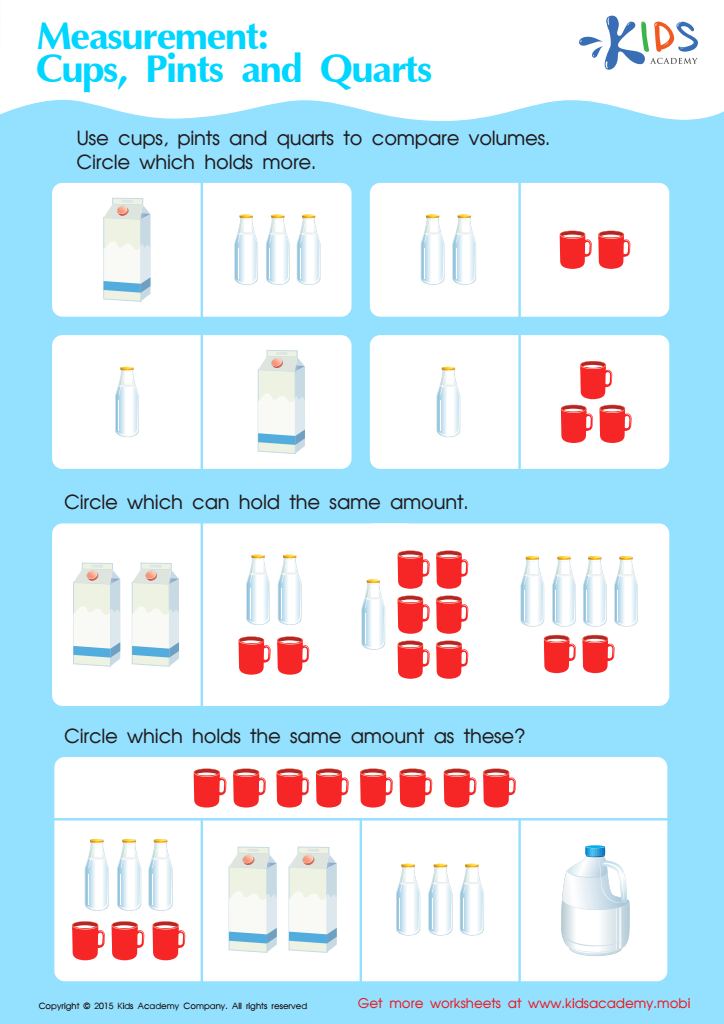
Measurement: Compare Volumes Worksheet
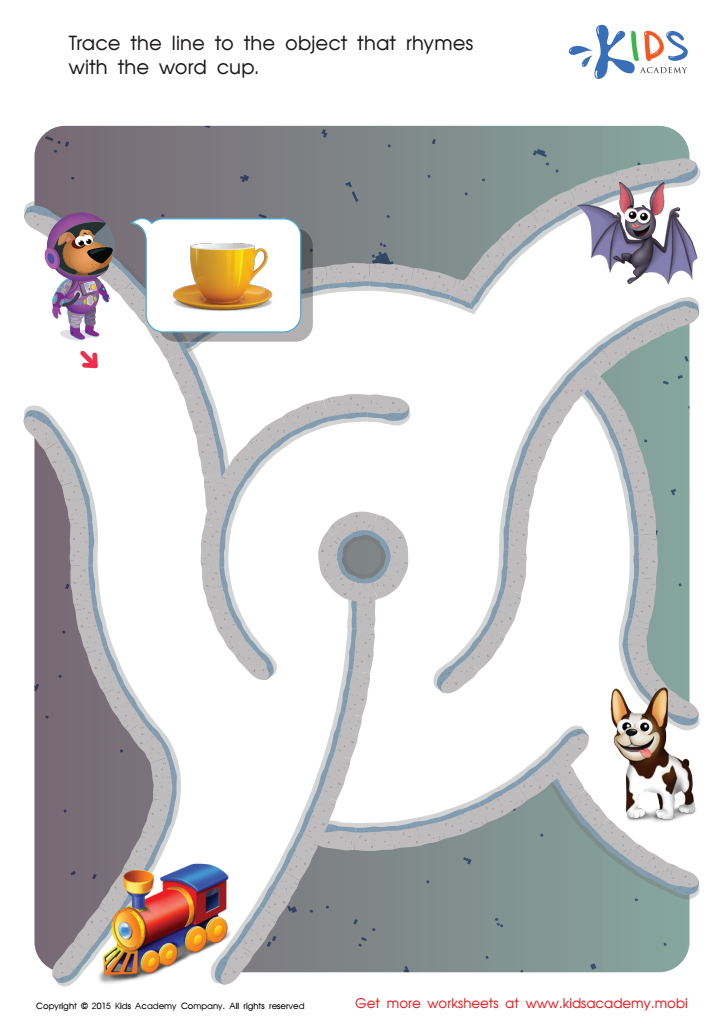
Cup Rhyming Words Worksheet
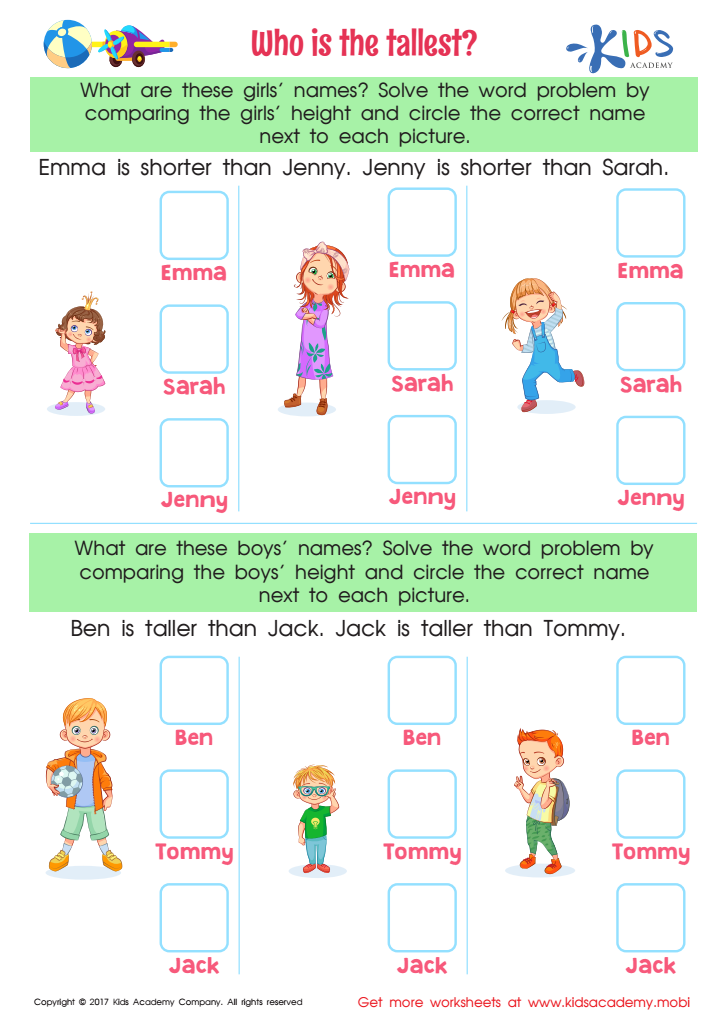
Who Tallest Printable
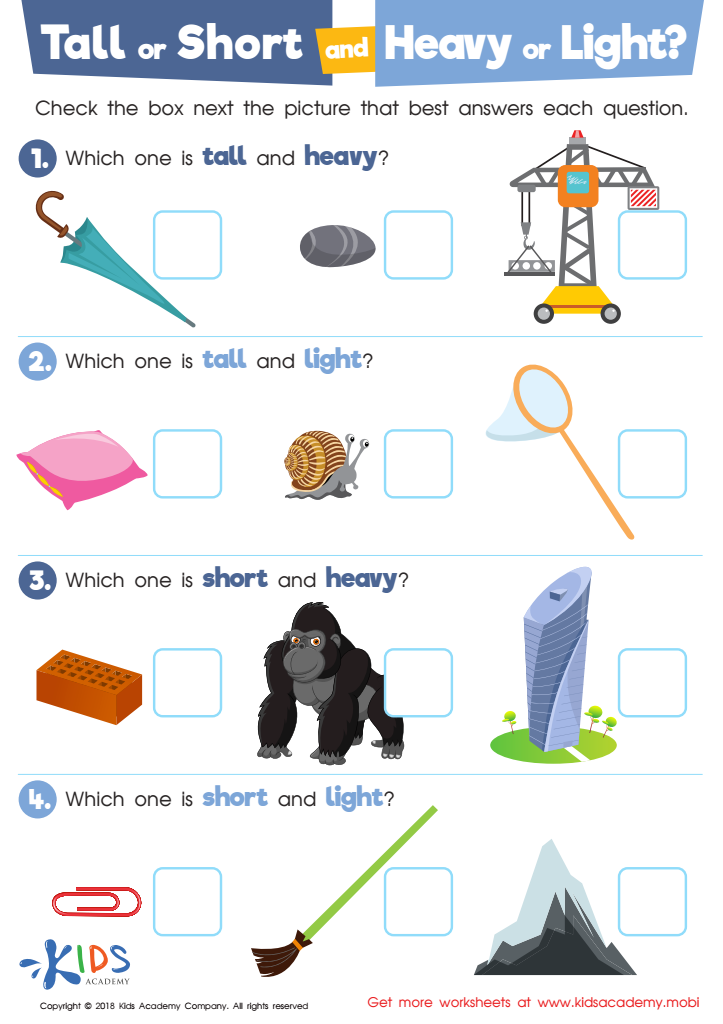
Tall or Short and Heavy or Light? Worksheet
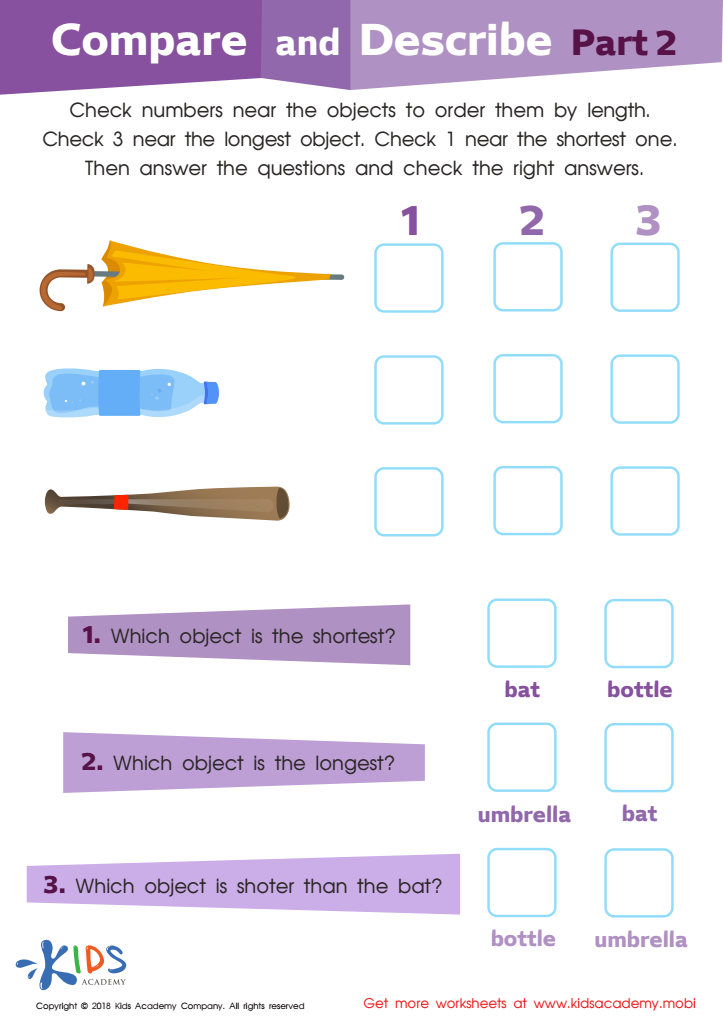
Compare and Describe: Part 2 Worksheet
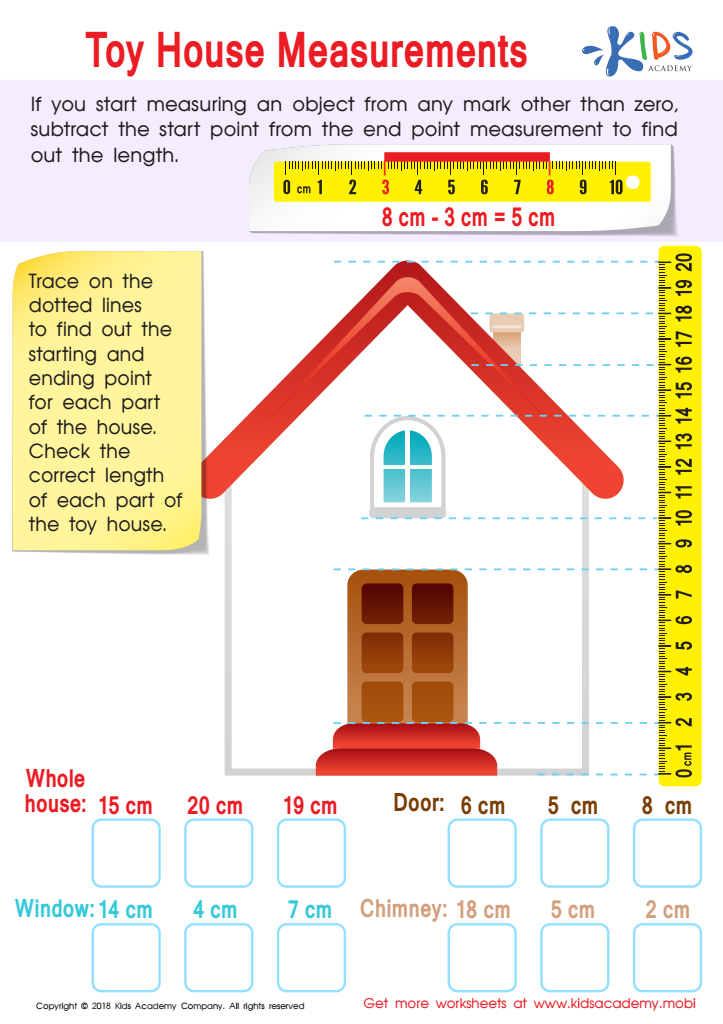
Toy House Measurements Worksheet
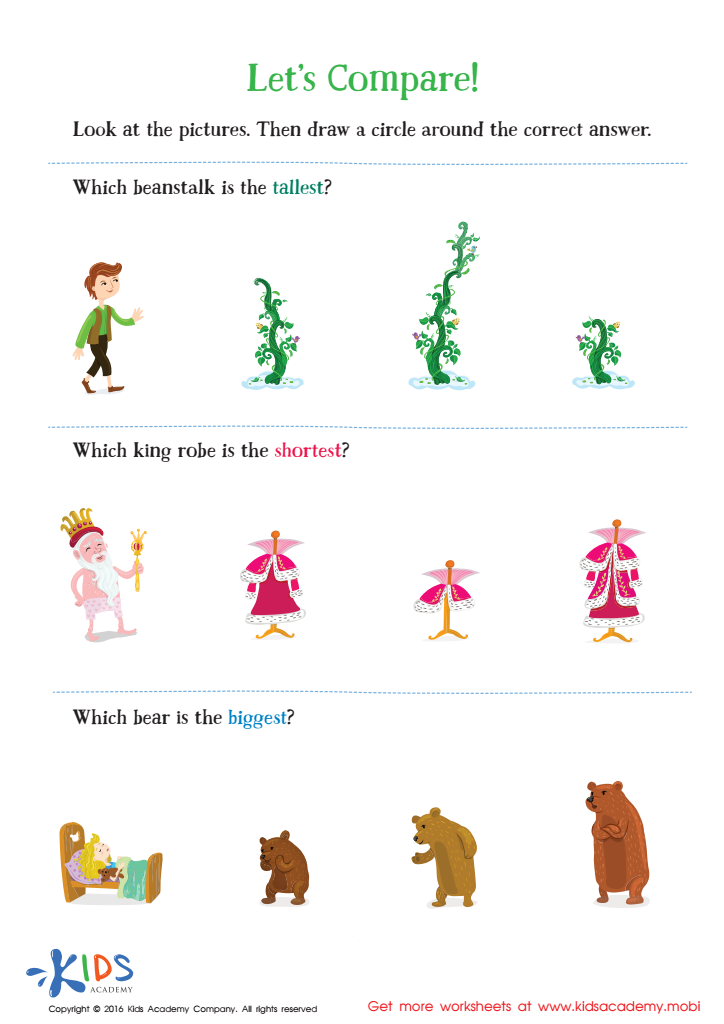
Fairy Tale Worksheet: Let's Compare




.jpg)



Understanding and comparing sizes is an essential concept for children aged 6-8, laying the groundwork for future mathematical skills and critical thinking. At this developmental stage, children are naturally curious and eager to explore their environment. Learning about size comparison helps them relate to the world around them, enhancing their observational skills and logical reasoning.
Teachers and parents should be concerned with this concept because it fosters fundamental skills such as measurement, estimation, and spatial awareness. By engaging children in activities involving sizes—like sorting objects, comparing heights, or discussing weight—parents and teachers can effectively allow children to develop a strong mathematical foundation. These activities also promote language skills as children learn to articulate their observations, using terms such as "bigger," "smaller," "taller," and "shorter."
Moreover, recognizing size differences aids in developing problem-solving skills. Children learn to make decisions based on comparative reasoning, preparing them for more complex mathematical concepts in later years. Encouraging playful and practical activities around size comparison nurtures a child's critical thinking, boosts confidence, and makes learning enjoyable, ultimately fostering a lifelong interest in mathematics and science.








