Develop problem-solving abilities Worksheets for Ages 6-8
6 filtered results
-
From - To
Discover our captivating collection of "Develop Problem-Solving Abilities Worksheets for Ages 6-8" designed to engage young minds and boost critical thinking. Each worksheet incorporates fun and interactive activities, such as puzzles, logic exercises, and practical word problems, tailored specifically for kids aged 6 to 8. These resources encourage independent thinking, creativity, and resilience by challenging students to find solutions in a supportive and educational environment. Perfect for both classroom and home learning, our worksheets set the foundation for lifelong problem-solving skills, preparing children for future academic success. Unlock their potential today!
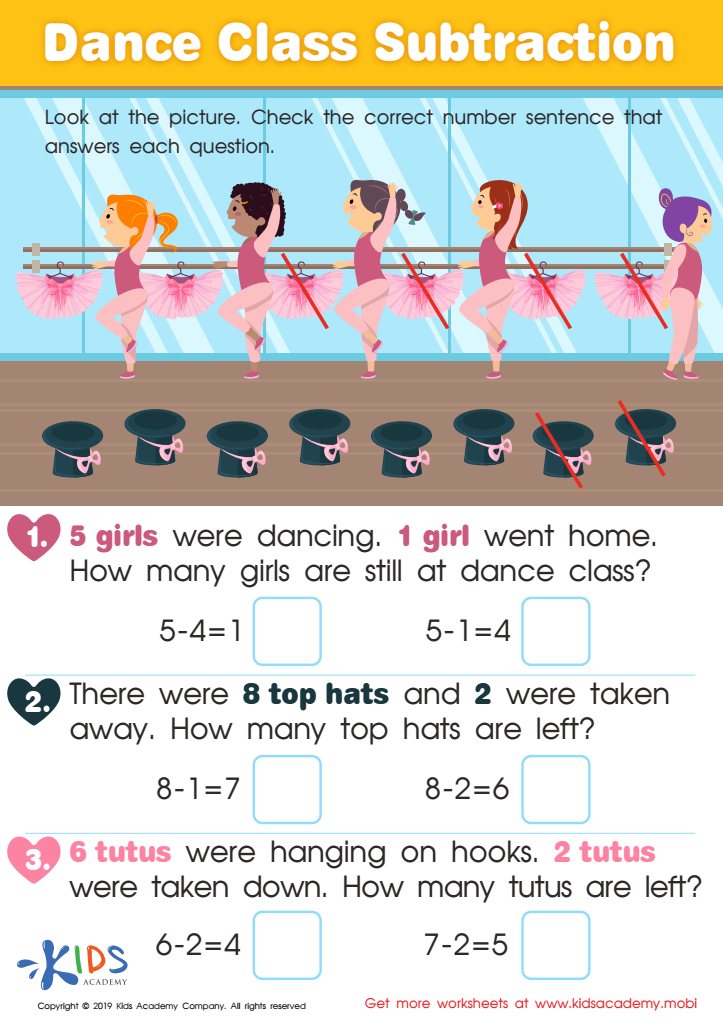
Dance Class Subtraction Worksheet
 Assign to My Students
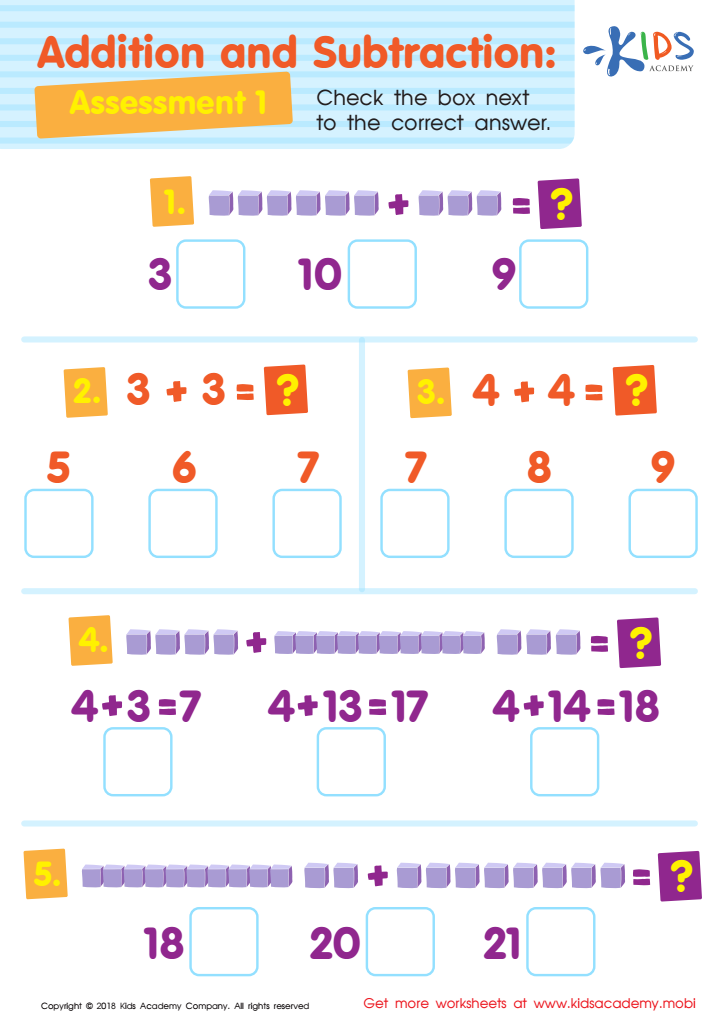
Addition and Subtraction Assessment 1 Worksheet
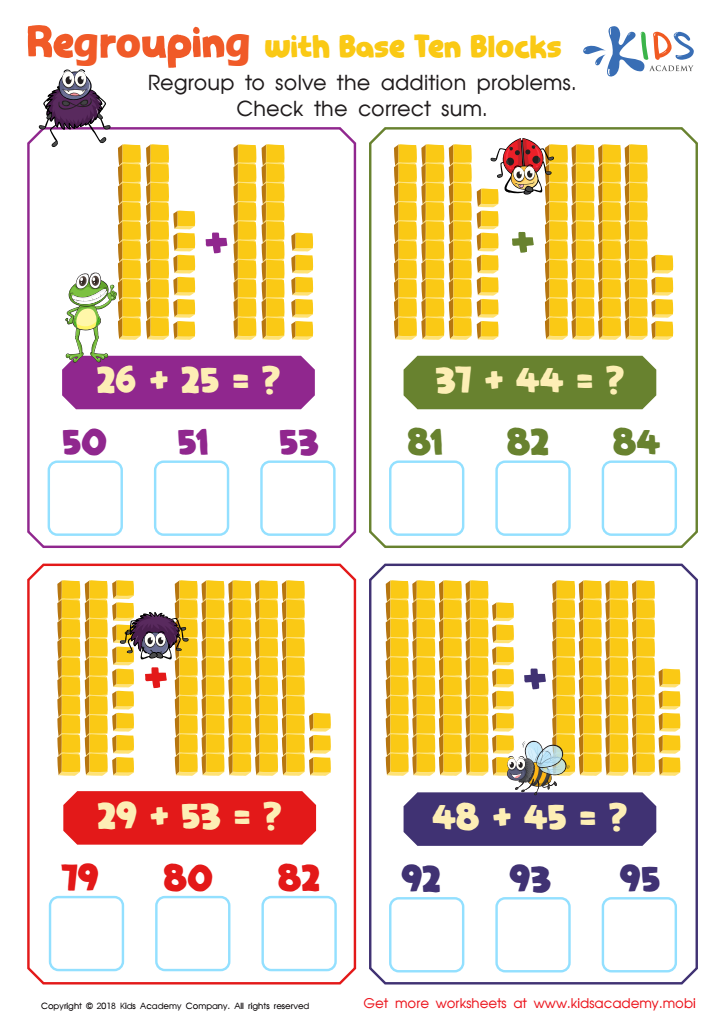
Regrouping With Base Ten Blocks Worksheet
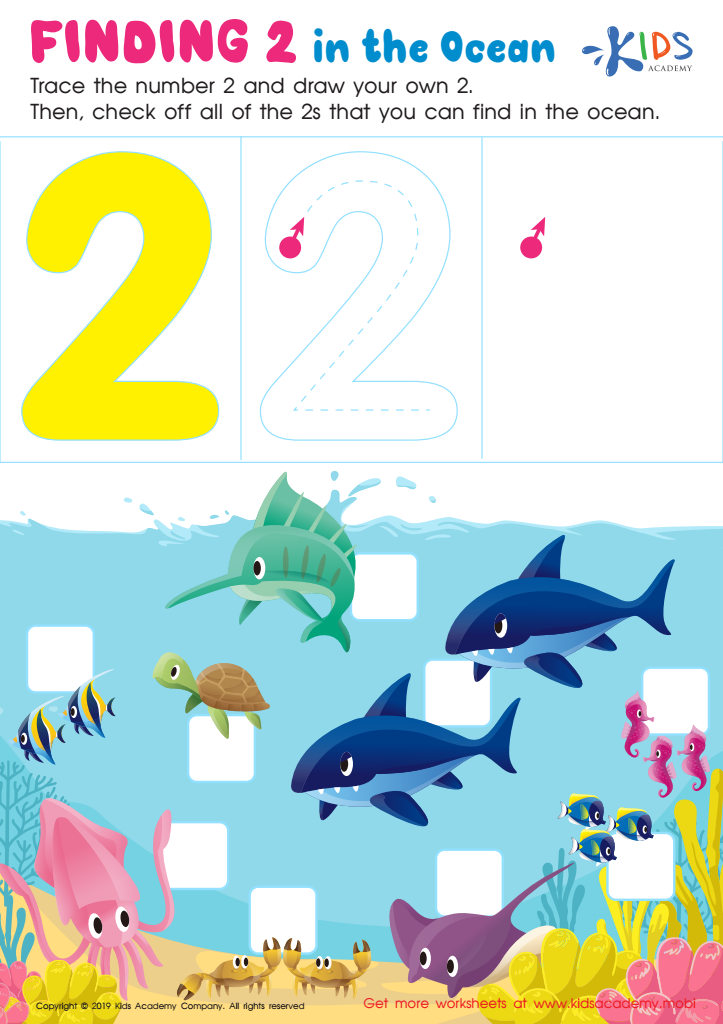
Finding 2: In the Ocean Worksheet



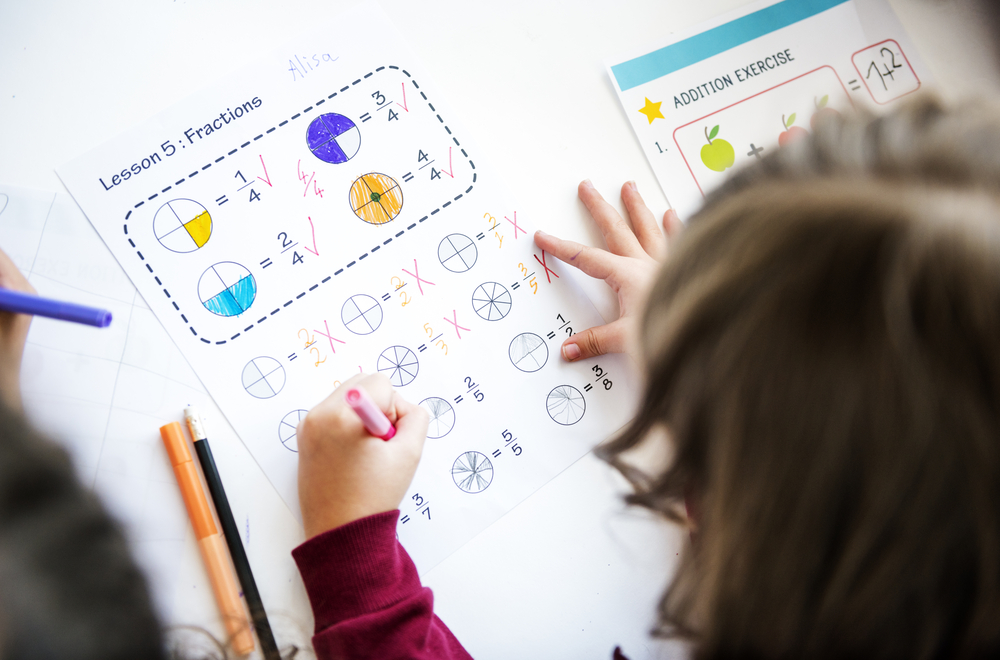


Developing problem-solving abilities in children aged 6-8 is crucial as it lays the foundation for their future cognitive and emotional growth. At this age, children's brains are highly adaptable and capable of learning new skills quickly. When parents and teachers focus on enhancing problem-solving skills, they equip kids with essential tools for navigating challenges independently.
Firstly, problem-solving promotes critical thinking and creativity. It encourages children to think outside the box and explore multiple solutions. This fosters not just abstract thinking but concrete reasoning abilities that are vital for academic success across various subjects, including math, science, and reading comprehension.
Secondly, developing these skills early helps in emotional regulation. Children learn to manage frustration and anxiety that can arise from encountering problems. By practicing problem-solving, they're less likely to become overwhelmed and more likely to approach challenges with a positive, resilient mindset.
Lastly, these abilities enhance social interactions. Problem-solving in group activities enriches teamwork by teaching kids how to listen, negotiate, and collaborate effectively. It's a cornerstone for building strong relationships and succeeding in group settings.
Involving young children in problem-solving activities prepares them for a lifetime of learning and adaptation, which is why both parents and teachers should prioritize this essential aspect of their development.








