
Differentiating goods/services Worksheets for Ages 6-8
3 filtered results
Difficulty Level
Grade
Age
-
From - To
Subject
Activity
Standards
Unlock your child's understanding of the differences between goods and services with our engaging Differentiating Goods/Services Worksheets designed for ages 6-8! These worksheets provide a fun and interactive way for young learners to explore everyday concepts. Through vibrant illustrations and age-appropriate activities, kids will learn to identify and categorize various goods and services in their surroundings. Ideal for classroom and home use, these resources promote critical thinking and develop essential economic skills. Watch as your child effortlessly distinguishes between tangible products and helpful services, fostering a foundation for future learning. Start exploring today and ignite a love for learning!
Favorites
With answer key
Interactive
 Assign to My Students
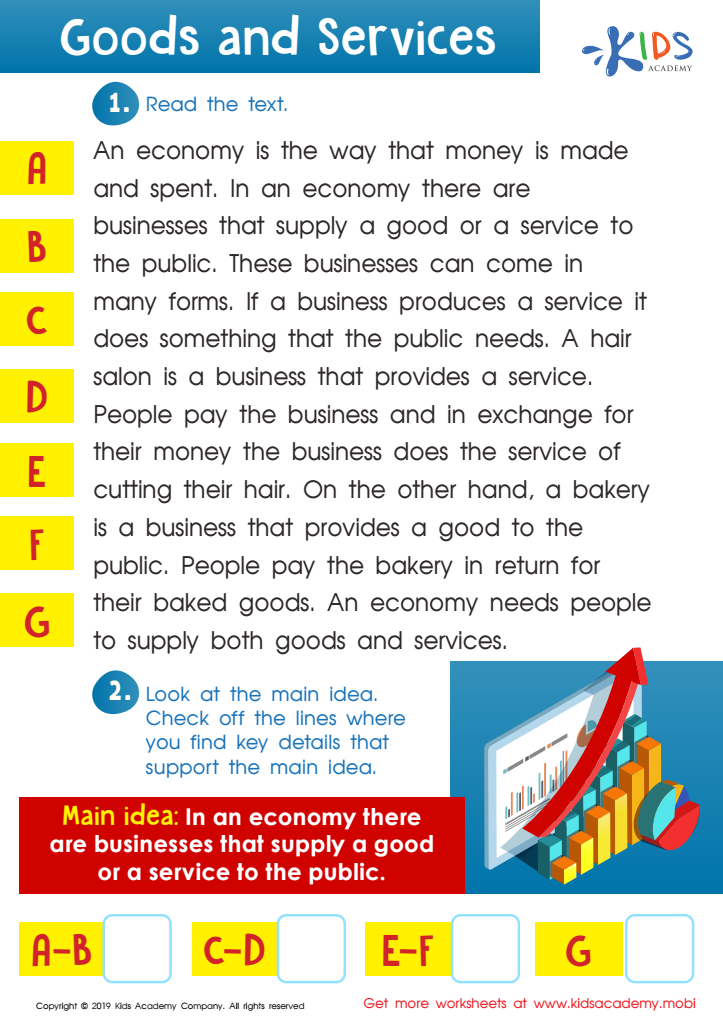
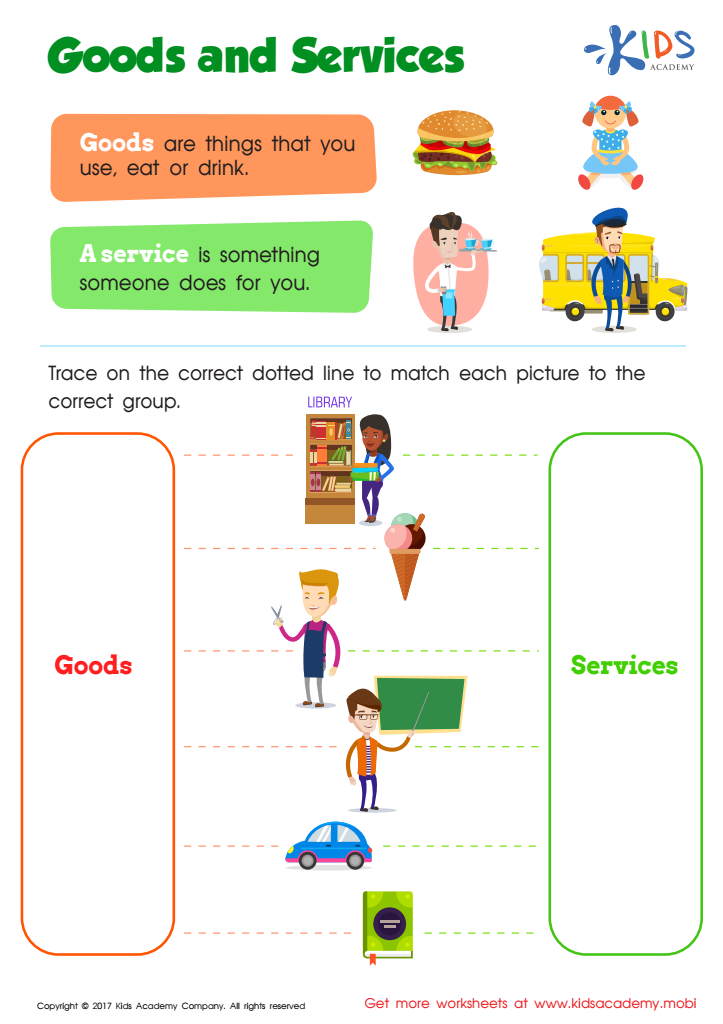
Goods and Services Worksheet
Teach your kids about the economy and businesses with this worksheet. Ask them if they know what goods and services are. After they complete the worksheet, they'll have a better understanding. Read the text to them and guide them step-by-step through the instructions. Help them learn!
Goods and Services Worksheet
Worksheet
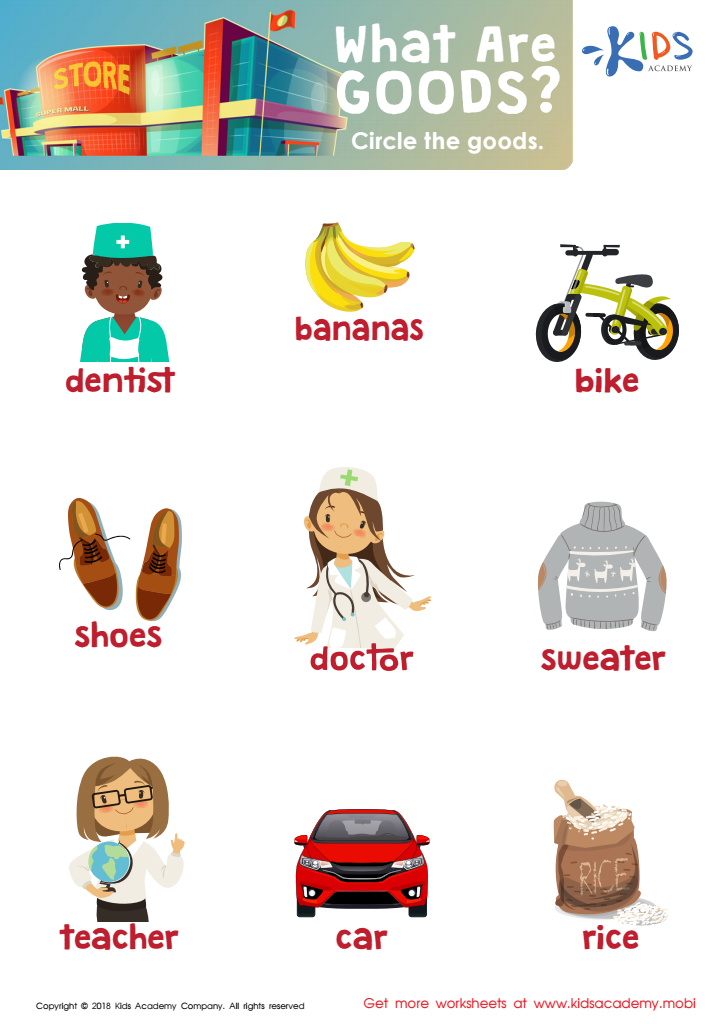
What Are Goods? Worksheet
Introduce your child to economics with this social studies worksheet! It helps kids differentiate between goods and services. Have them look at each picture, discuss what it does, and decide whether it's an object or a service. Encourage them to think carefully and circle the goods. It's a great way to start teaching the basics of economics.
What Are Goods? Worksheet
Worksheet
Join Kids Academy for Free
Who is primarily going to use this learning content?







Differentiating goods and services for children aged 6 to 8 is crucial for fostering an enriching and effective learning environment. At this age, children exhibit diverse learning styles, interests, and developmental stages, making a one-size-fits-all approach inadequate. By differentiating, teachers and parents can tailor their educational methods and resources to meet each child's unique needs, helping them engage more deeply with the material.
Differentiation allows children to find success at their own level, building confidence and encouraging a love for learning. When students encounter challenges that are appropriately matched to their skills, they are more likely to persevere and develop resilience. Additionally, this approach supports the development of critical thinking and problem-solving skills, as activities can be adapted to promote higher-order thinking.
Parents can play a pivotal role in this process by providing various learning opportunities at home that cater to their child's specific interests. Whether it’s through gamified learning, creative projects, or tailored reading activities, diverse strategies keep children motivated and eager to learn. By prioritizing differentiation, parents and teachers collaboratively lay the groundwork for a lifelong love of learning in children, empowering them to thrive both academically and personally.








