
Logical reasoning development Worksheets for Ages 6-8
3 filtered results
Difficulty Level
Grade
Age
-
From - To
Subject
Activity
Standards
Discover our engaging worksheets designed to boost logical reasoning skills for children ages 6-8. These carefully crafted exercises promote critical thinking, problem-solving, and analytical skills through a variety of fun activities. Covering essential concepts such as patterns, sequences, and deductive reasoning, our worksheets encourage young learners to explore and apply their reasoning abilities. Ideal for both classroom use and home study, these resources cater to diverse learning styles, ensuring that every child can develop their logical thinking skills effectively. Empower your child with the tools to think creatively and logically, setting a strong foundation for future learning success!
Favorites
With answer key
Interactive
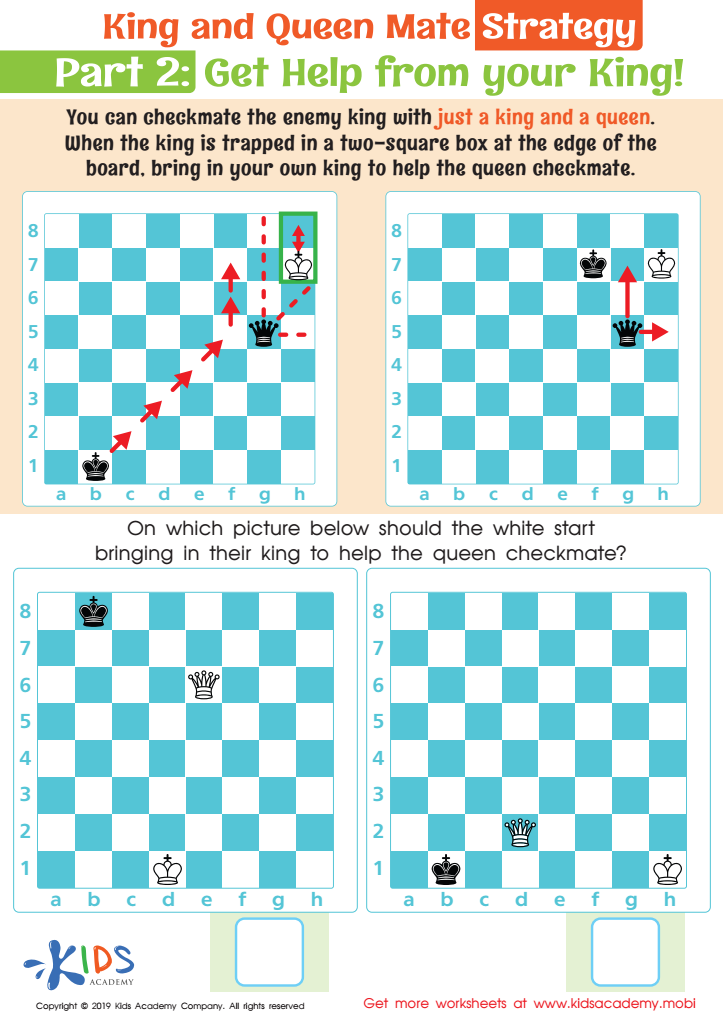
King and Queen Mate Strategy: Part 2 Worksheet
This worksheet helps your child learn to checkmate the opposing king with their king and queen. Descriptive sample boards show the strategy, and more boards help determine which one demonstrates how the king assists the queen.
 Assign to My Students
King and Queen Mate Strategy: Part 2 Worksheet
Worksheet
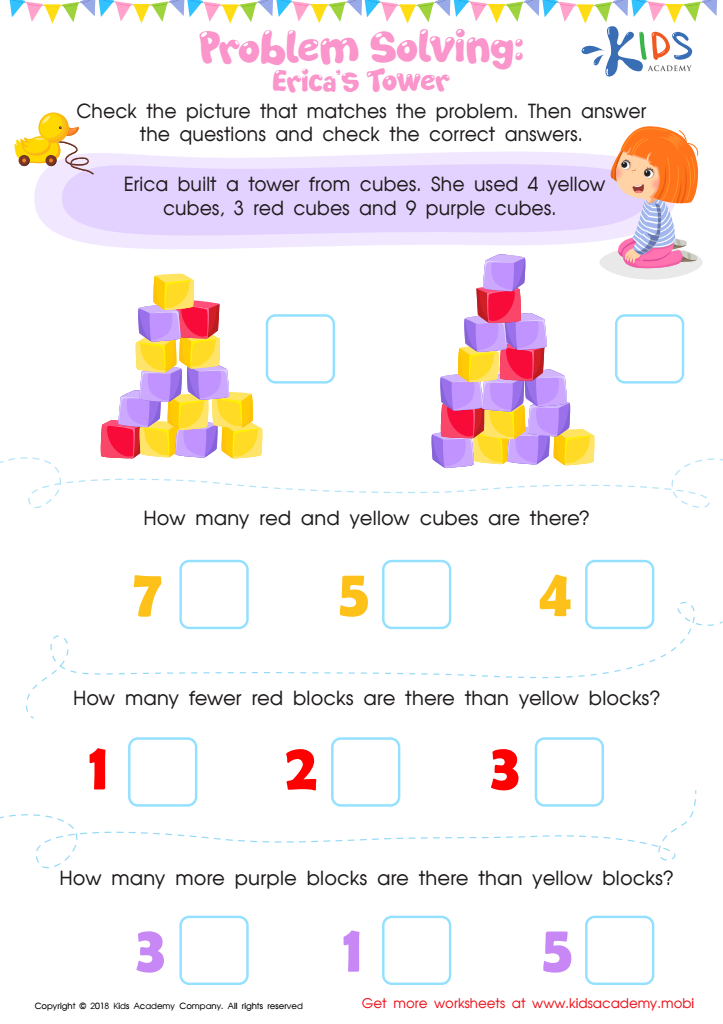
Problem Solving: Erica's Tower Worksheet
Sweet Erica needs your math student's help! Download the PDF worksheet and have your little math whiz read the word problems, match the pictures and solve basic addition/subtraction problems with two/three addends, minuends and subtrahends. They'll be having fun while strengthening their math fact skills!
Problem Solving: Erica's Tower Worksheet
Worksheet
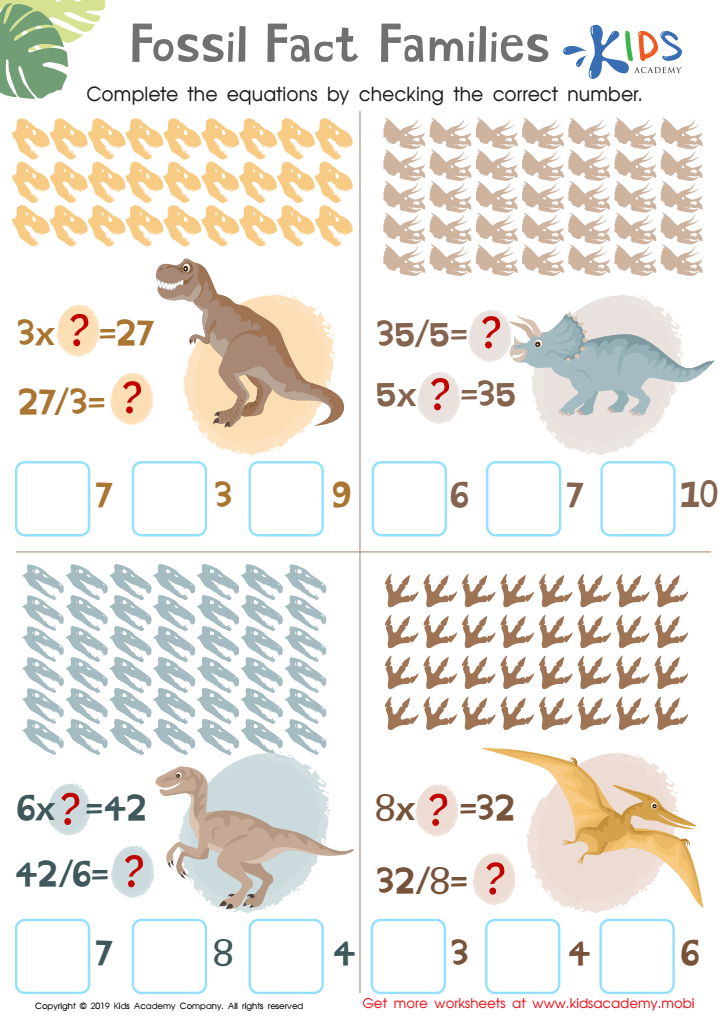
Fossil Fact Families Worksheet
Kids love dinosaurs, so why not learn about fact families with some fun prehistoric friends? This PDF worksheet uses picture arrays to help kids understand the relationships between multipliers and dividends. It helps them build automaticity with multiplication facts so they can quickly solve division problems and see the relationships between the two fact families.
Fossil Fact Families Worksheet
Worksheet
Join Kids Academy for Free
Who is primarily going to use this learning content?








Logical reasoning development in children aged 6 to 8 is crucial for several reasons. During these formative years, children begin to refine their cognitive skills, enabling them to think critically, solve problems, and make informed decisions. As they engage with complex tasks and situations, logical reasoning serves as the foundation for academic success in subjects like mathematics, science, and even language arts.
Parents and teachers should care about nurturing this skill because it fosters independence and resilience. When children learn to analyze situations and reason through problems, they develop the confidence to tackle challenges on their own. This is particularly important in helping them navigate social interactions, where logical reasoning aids in understanding perspectives and resolving conflicts.
Furthermore, an early emphasis on logical reasoning contributes significantly to future learning. It enhances abilities such as pattern recognition, deduction, and inference, which all align with higher-level cognitive processes. By prioritizing this development, caregivers not only prepare children for successful academic journeys but also equip them with life skills that are essential beyond the classroom. Ultimately, grounding children in logical reasoning paves the way for lifelong learning and critical thinking, vital in today’s complex world.








