Reading analog clocks Worksheets for Ages 6-8
9 filtered results
-
From - To
Dive into the world of time-telling with our engaging Reading Analog Clocks Worksheets for Ages 6-8! Designed to help young learners master the art of reading analog clocks, these worksheets offer a variety of fun activities that enhance understanding of hour and minute hands. Each exercise is crafted to build essential skills, improve concentration, and boost confidence in telling time. With colorful illustrations and interactive tasks, children will enjoy practicing while developing a valuable life skill. Ideal for classroom use or at-home learning, our worksheets provide an excellent resource for shaping time-telling proficiency in kids. Start exploring today!
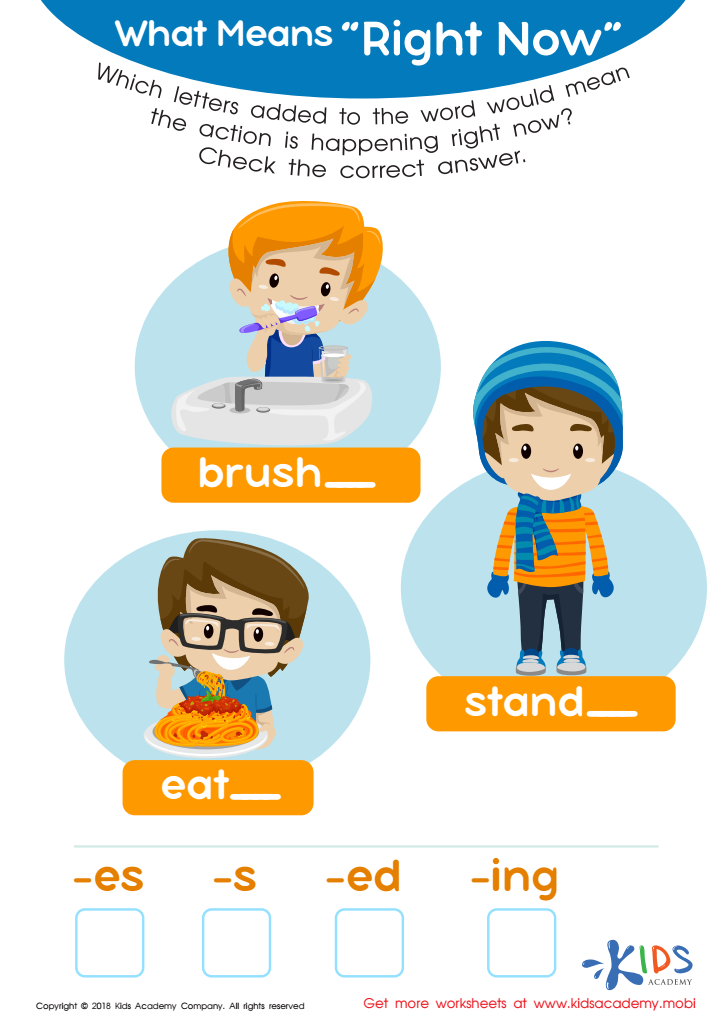
What Means "Right Now" Worksheet
 Assign to My Students
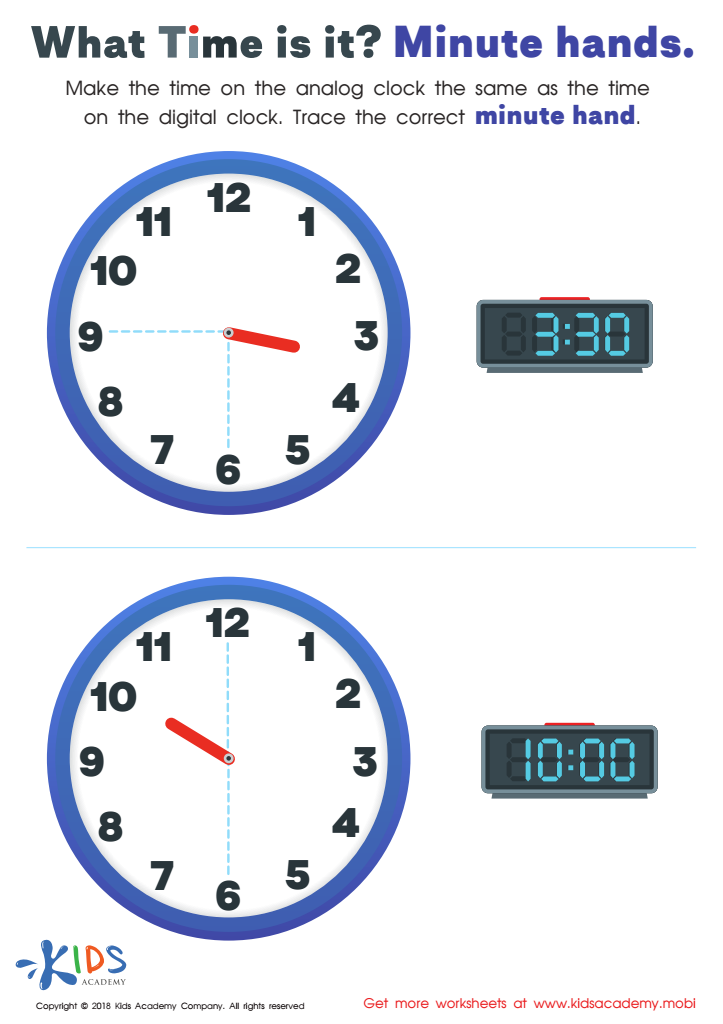
What Time Is it? Minute Hands Worksheet
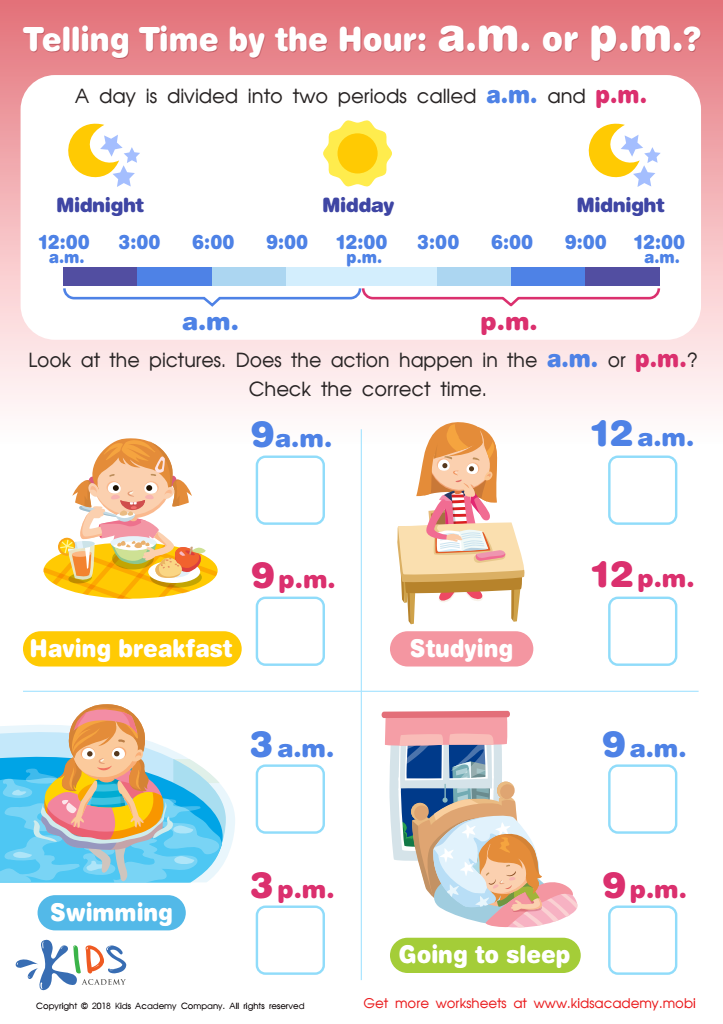
Tilling Time by the Hour: a.m. or p.m.? Worksheet
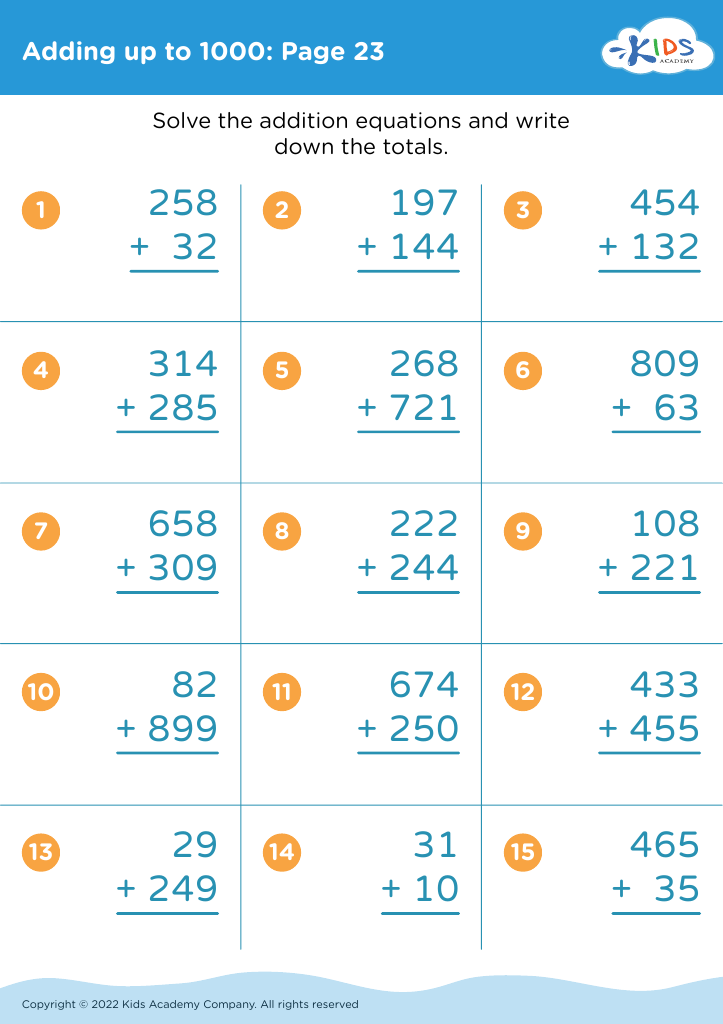
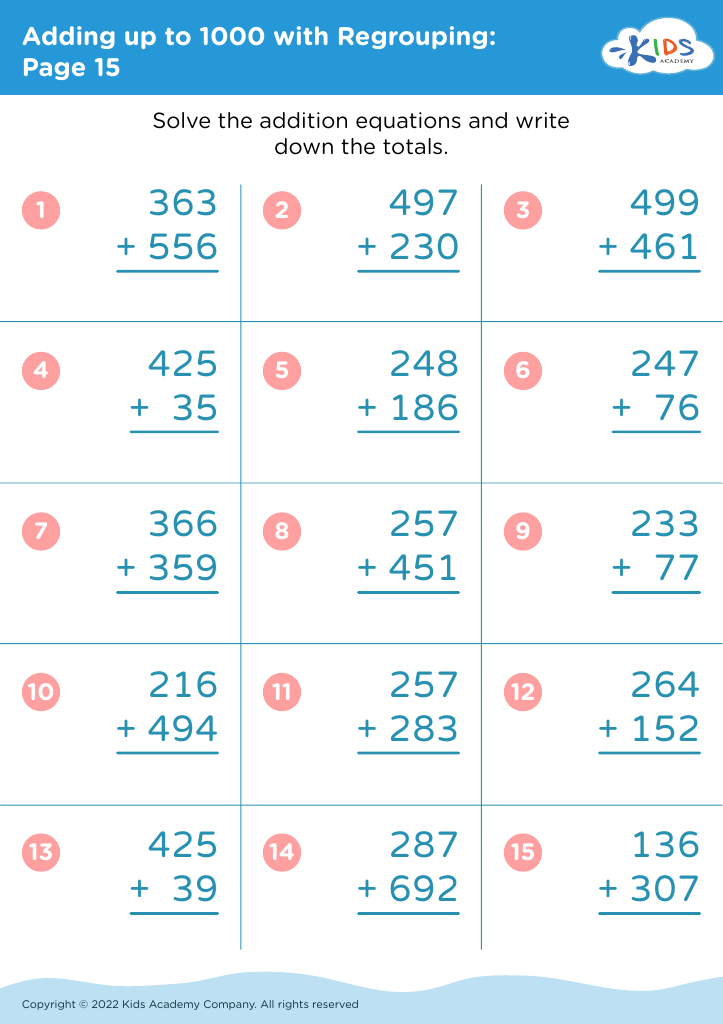
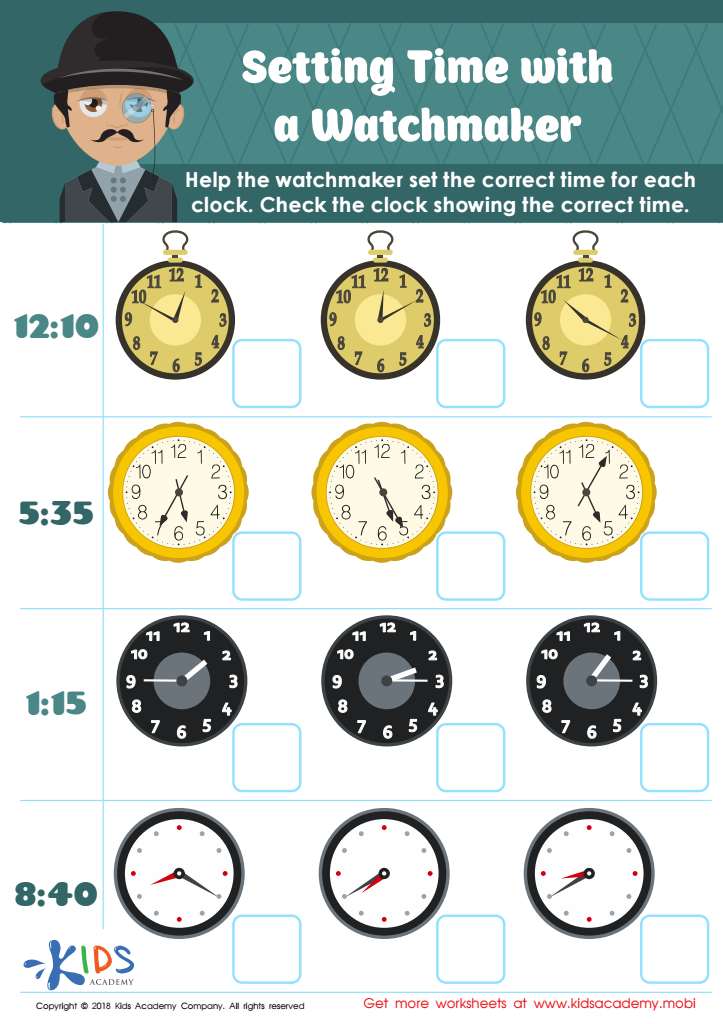
Setting Time with Watchmaker Worksheet
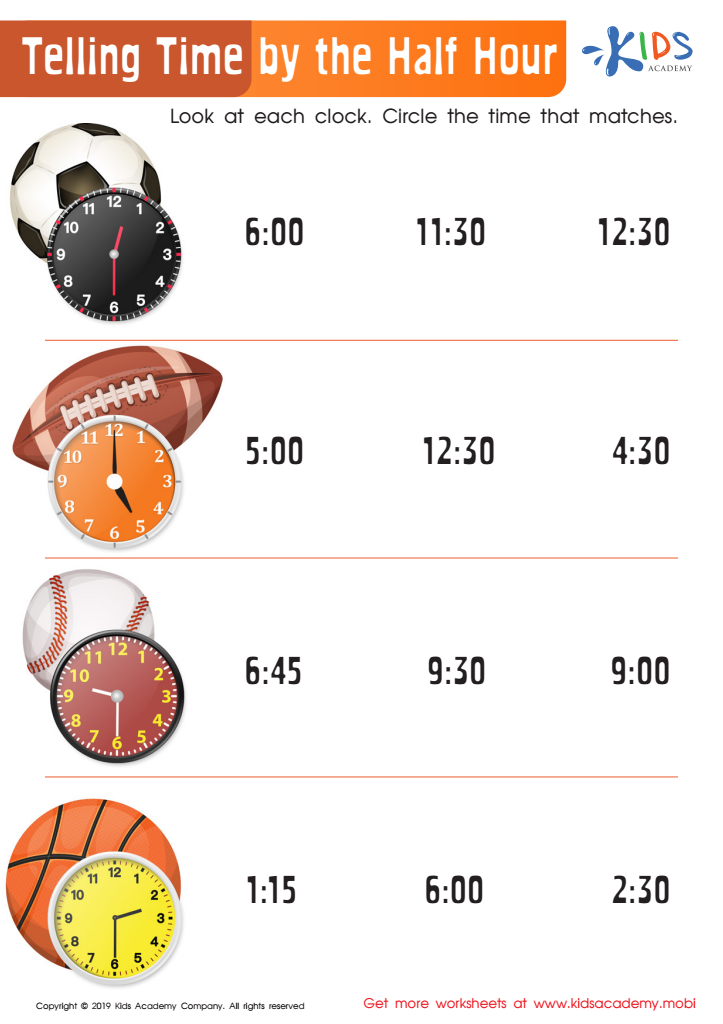
Telling Time by the Half Hour Worksheet






Reading analog clocks is an essential skill for children aged 6-8, as it fosters both mathematical and life skills. Understanding how to tell time serves as a practical application for basic arithmetic concepts, including counting by fives, recognizing fractions, and developing sequencing skills. This skill not only enhances their numeracy proficiency but also enhances critical thinking as children learn to understand the relationship between the hour and minute hands.
Additionally, knowing how to read an analog clock encourages independence and responsibility in young learners. Children who grasp this concept are better prepared to manage their time, resulting in improved punctuality and organizational skills. Such abilities are crucial as they navigate school schedules, extracurricular activities, and eventually more complex time management challenges in later life.
Furthermore, introducing children to analog clocks amidst a world dominated by digital devices promotes an appreciation for traditional methods of timekeeping. Parents and teachers alike play a significant role in fostering this skill through engaging activities that connect telling time with daily routines, enhancing learning engagement.
Ultimately, teaching children to read analog clocks isn't just about telling time; it lays a foundation for essential cognitive, social, and emotional development, crucial for their growth.








