Rounding numbers Worksheets for Ages 6-8
6 filtered results
-
From - To
Elevate your child's math skills with our engaging rounding numbers worksheets for ages 6-8. Perfectly tailored for first and second graders, these printable sheets blend fun and learning, helping young students grasp the concept of rounding to the nearest ten and hundred. Interactive exercises and vibrant images turn math practice into an exciting adventure, boosting confidence and understanding. Developed by educators, these worksheets ensure a solid mathematical foundation while enhancing critical thinking and problem-solving skills. Transform rounding lessons into enjoyable experiences and watch your children’s numeric fluency soar with Kids Academy’s expertly crafted resources!
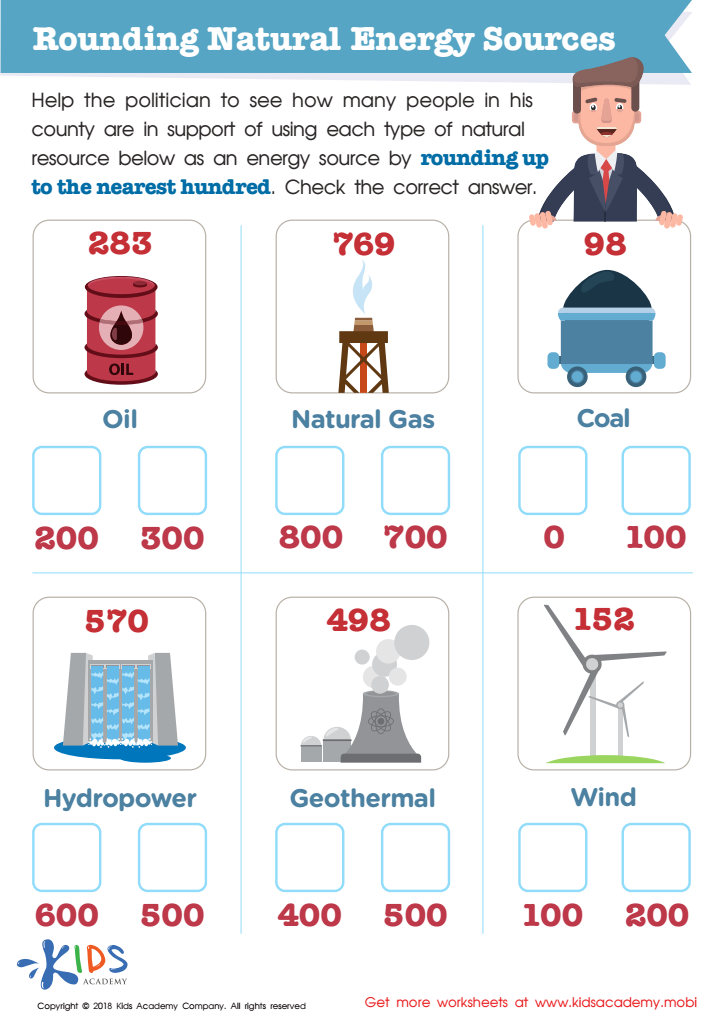
Rounding Natural Energy Sources Worksheet
 Assign to My Students
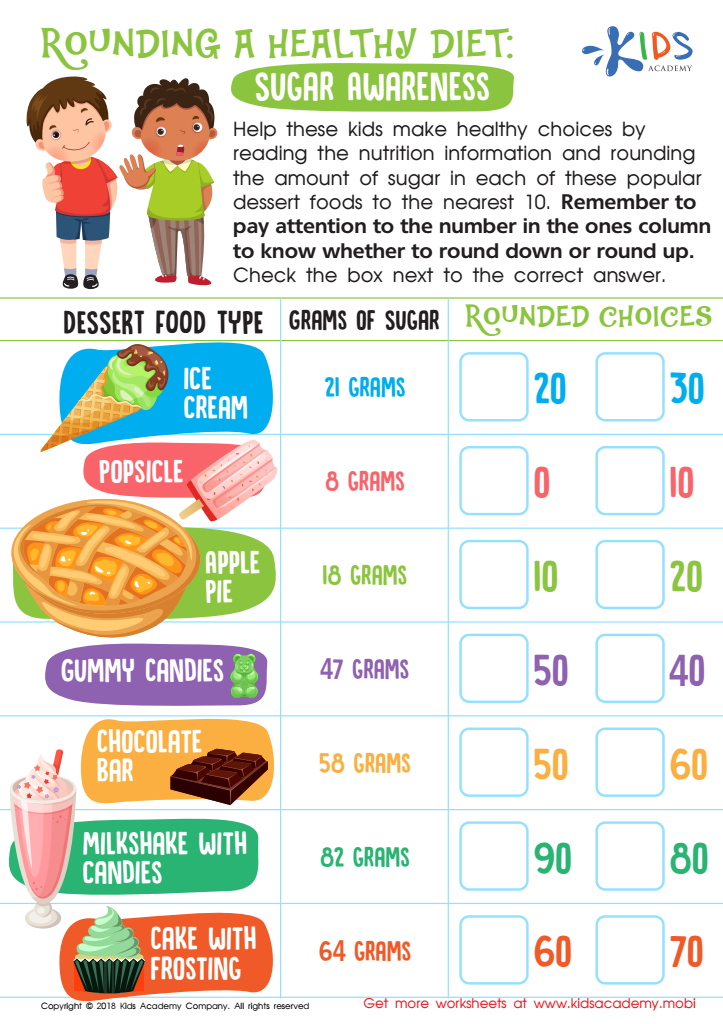
Rounding Healthy Diet Worksheet
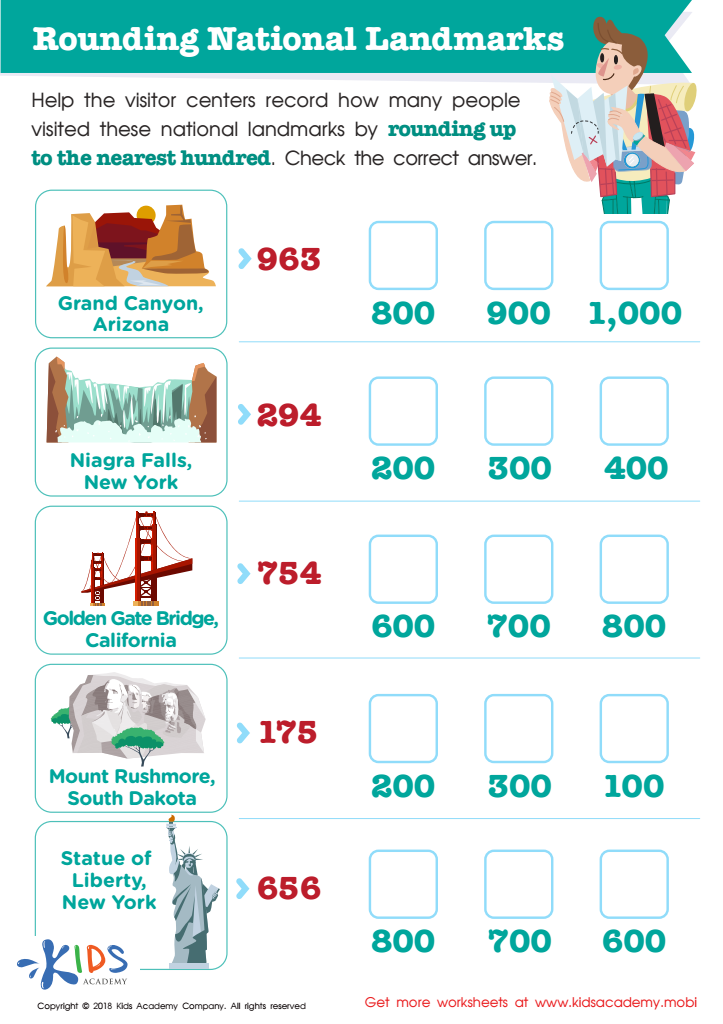
Rounding National Landmarks Worksheet
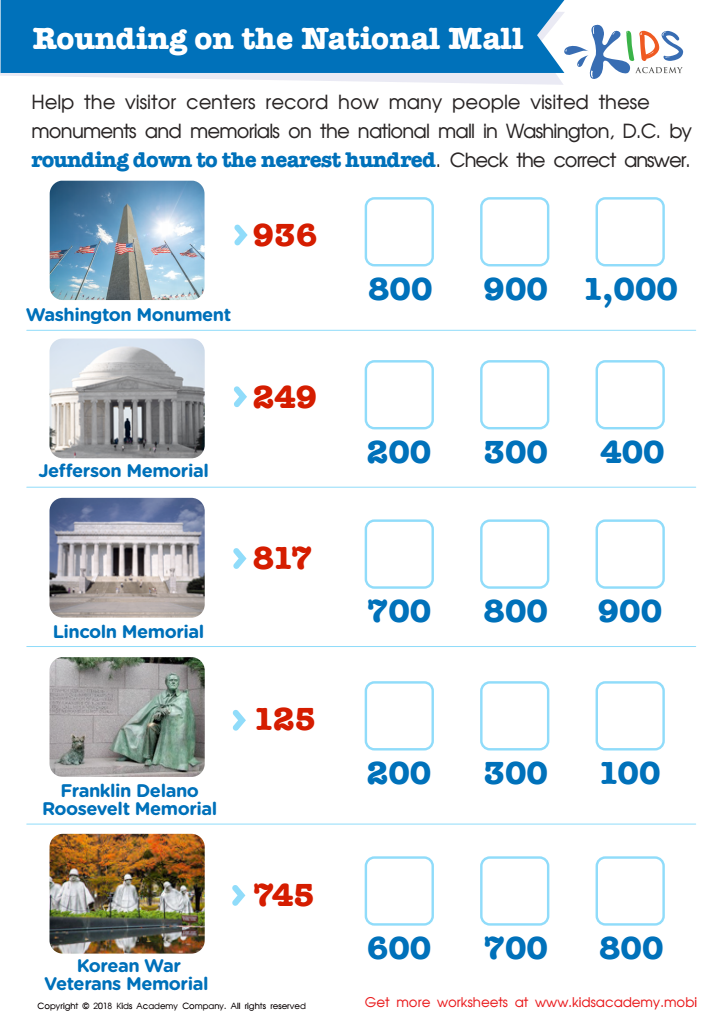
Rounding on the National Mall Worksheet
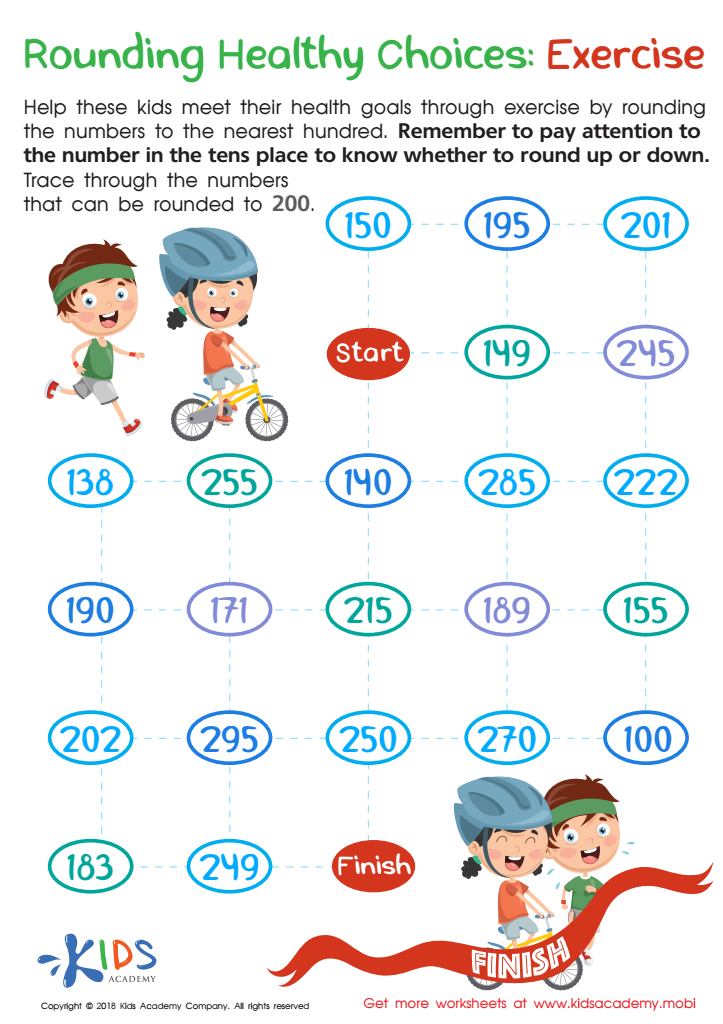
Rounding Healthy Choices Exercise Worksheet
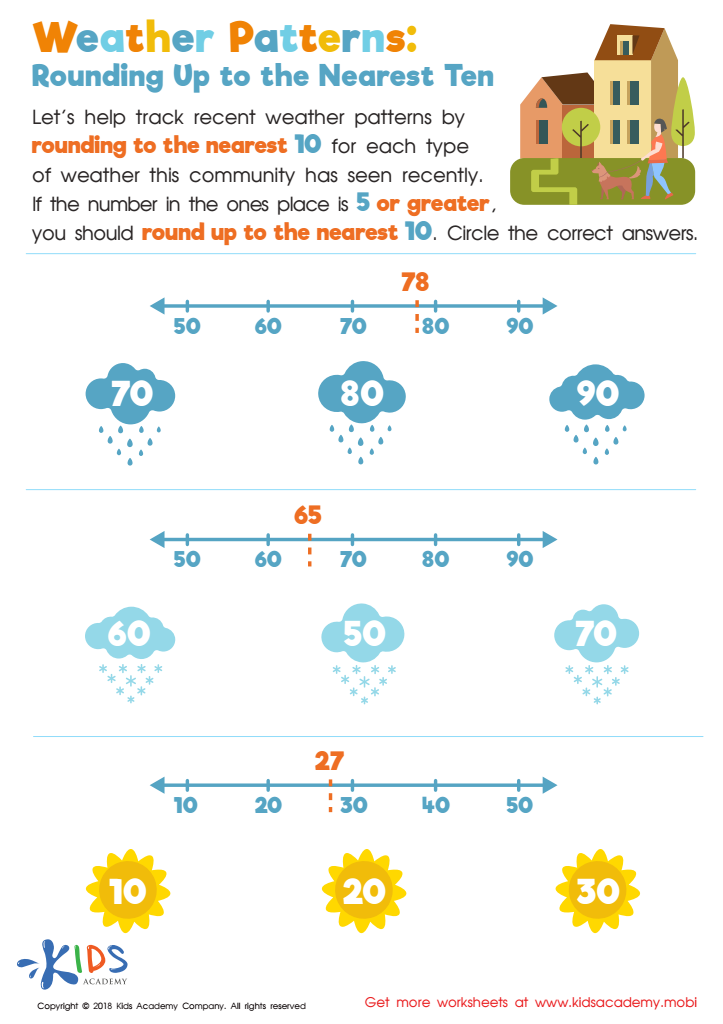
Weather Patterns Worksheet






Rounding numbers is a foundational math skill that parents and teachers should focus on when teaching children aged 6-8, as it helps lay the groundwork for more complex mathematical concepts. At its core, rounding aids in developing a child's number sense, which is essential for understanding the relative size of numbers. It also helps children build estimation skills, making it easier for them to quickly gauge answers to mathematical problems, particularly in real-life situations like shopping or time management.
Moreover, rounding is indispensable for simplifying calculations and improving mental arithmetic. For young learners, whose brains are still developing their capacity to handle multiple-digit numbers, rounding simplifies working with these numbers and makes math less intimidating. This reinforces their confidence and fosters a positive attitude toward math.
On a practical level, rounding teaches children significant life skills such as approximation and error margin, preparing them for scientific and financial literacy later in life. For example, by understanding rounding, they can better engage in daily activities like budgeting, cooking, and time planning. Hence, teaching rounding is not just about mathematics; it's an investment in a child's future critical thinking and problem-solving abilities. Parents and teachers who prioritize this skill provide children with tools that benefit their academic journey and beyond.








