Understand number relationships Worksheets for Ages 6-8
5 filtered results
-
From - To
Discover our engaging "Understand Number Relationships" worksheets designed for children ages 6-8. These interactive resources aim to enhance foundational math skills by helping young learners grasp essential concepts like greater than, less than, and equal to. With colorful illustrations and age-appropriate activities, these worksheets promote critical thinking and encourage problem-solving abilities. Aligned with educational standards, our materials support classroom and homeschool learning environments. Explore a variety of fun exercises that make mastering number relationships both enjoyable and effective. Perfect for strengthening math confidence, these worksheets are a valuable tool for parents and teachers alike. Start your child's math journey today!
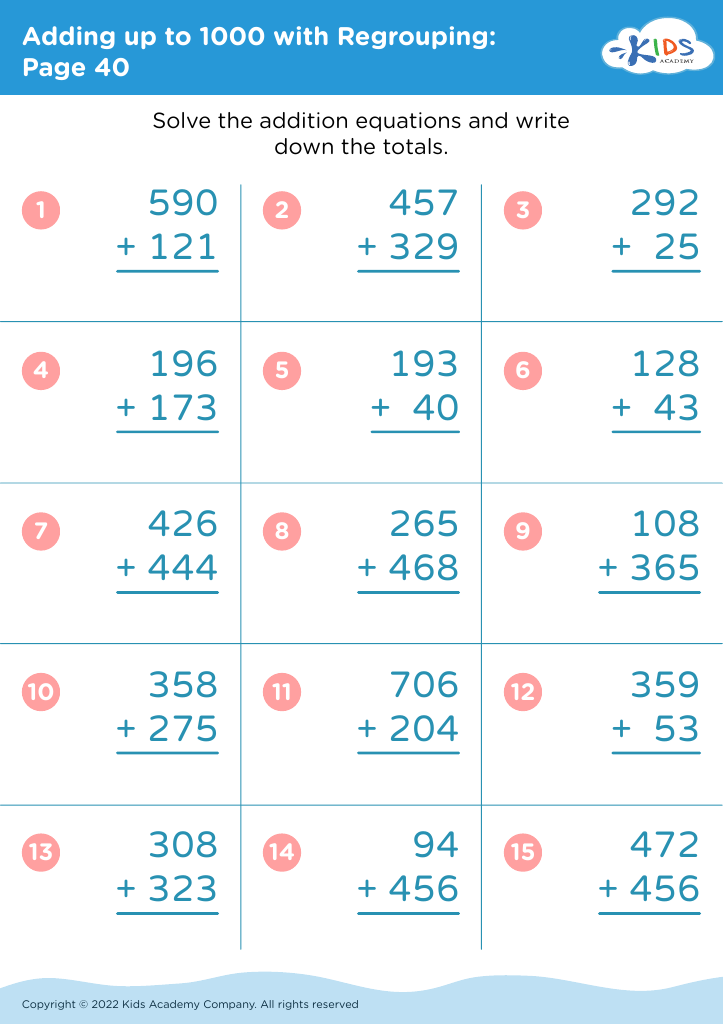
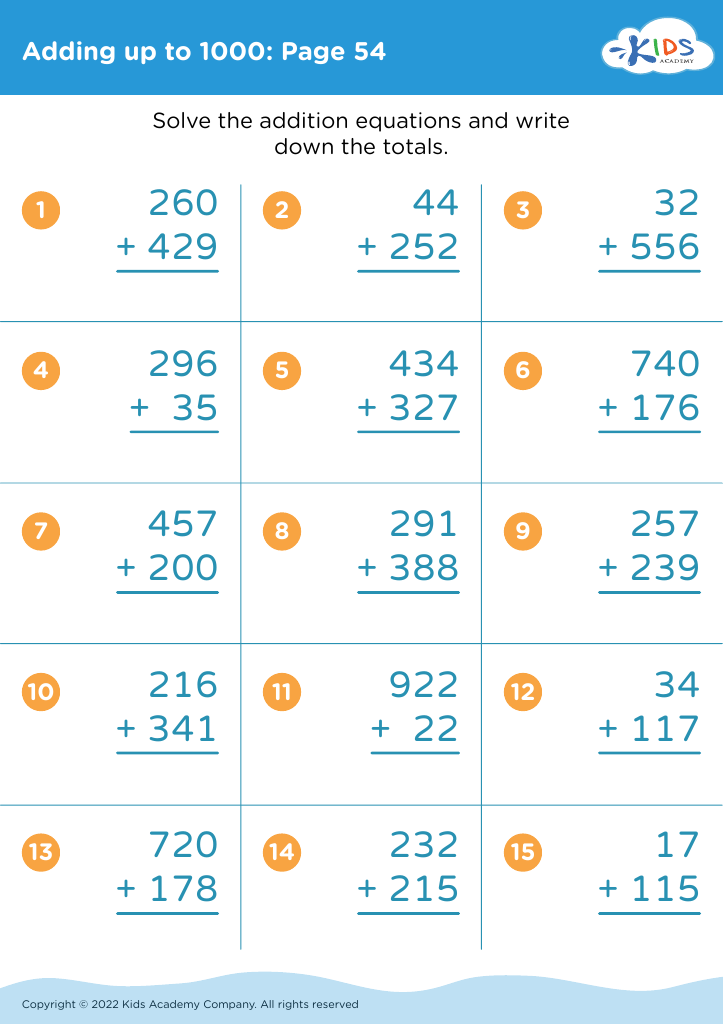
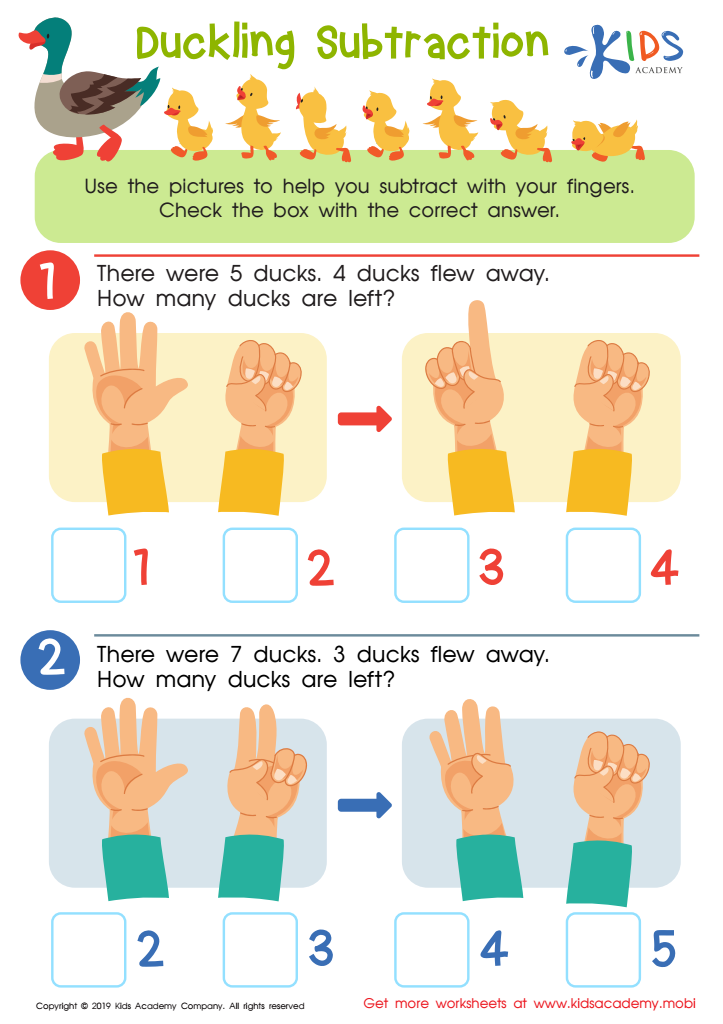
Duckling Subtraction Worksheet
 Assign to My Students








Understanding number relationships is critical for children aged 6-8, as it forms the foundation for future math skills and overall problem-solving abilities. During these developmental years, children are transitioning from basic counting to more complex mathematical concepts like addition, subtraction, and early multiplication. When parents and teachers emphasize number relationships, they help children grasp how numbers interact, which fosters a deeper comprehension of mathematical operations.
By exploring concepts such as greater than or less than, the relationship between numbers, and the ability to compare quantities, children develop logical thinking skills that they will use throughout their education. This foundational knowledge not only enhances computation skills but also promotes number confidence, reducing math anxiety.
Additionally, understanding number relationships encourages children to develop critical reasoning and estimation skills, which are essential for real-life situations, including budgeting and shopping. It supports their ability to recognize patterns and make predictions, skills valuable in science and other subjects.
Ultimately, prioritizing number relationships empowers young learners to approach math with curiosity and resilience, ensuring they build a positive attitude towards mathematics as they progress in their education. Parents and teachers play a vital role in nurturing this understanding, laying the groundwork for a child’s lifelong mathematical journey.








