Understanding number patterns Worksheets for Ages 6-8
6 filtered results
-
From - To
Unlock your child's mathematical potential with our "Understanding Number Patterns Worksheets for Ages 6-8." Designed to inspire young minds, these engaging worksheets help kids confidently recognize, analyze, and extend numeric sequences. Our curriculum-aligned activities develop critical thinking and problem-solving skills essential for a strong foundation in arithmetic. From simple counting sequences to more complex patterns, each worksheet is tailored to challenge and delight. Promoting both fun and learning, our resources aim to foster a lifelong love for mathematics. Provide your child with the tools they need to excel in their math journey today!
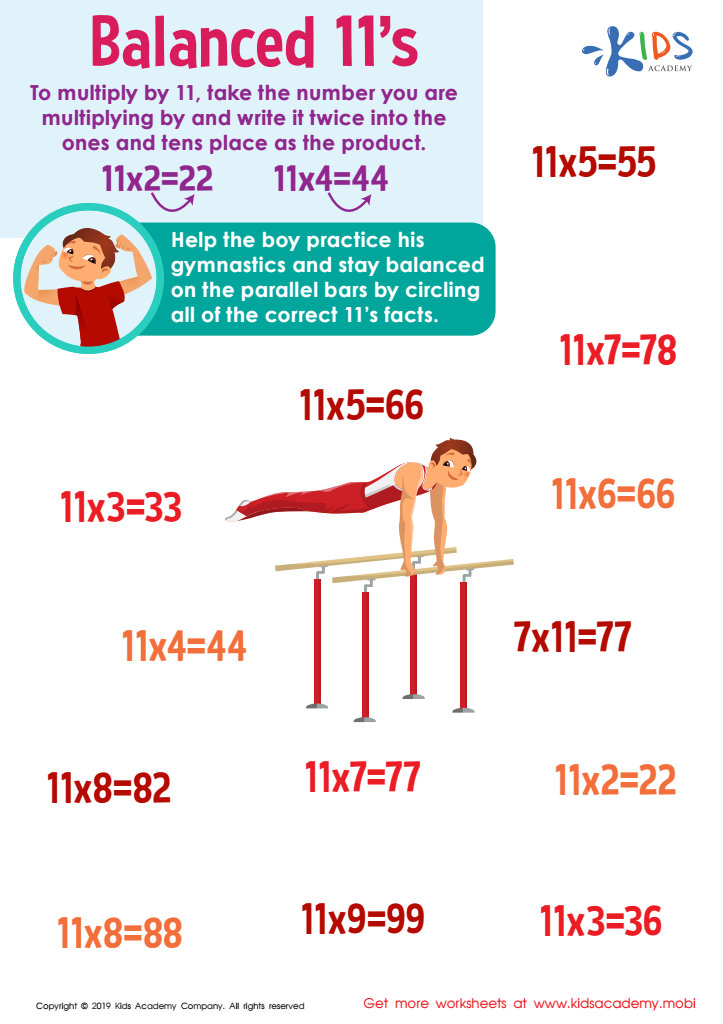
Balanced 11s Worksheet
 Assign to My Students
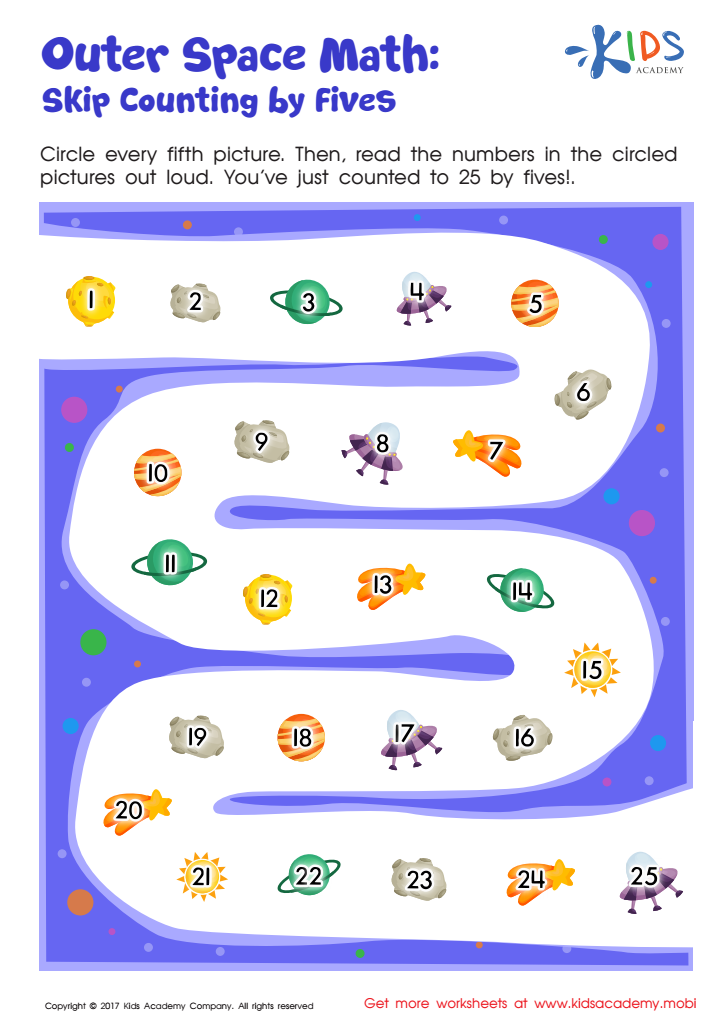
Skip Counting by 5s: Outer Space Math Printable
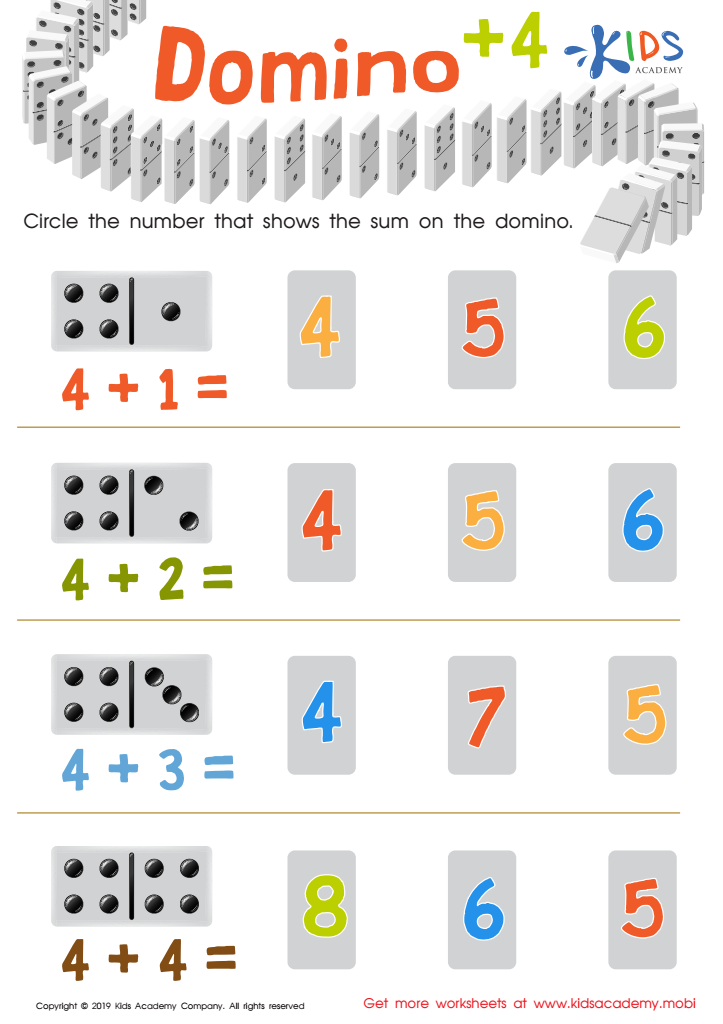
Domino +4 Worksheet
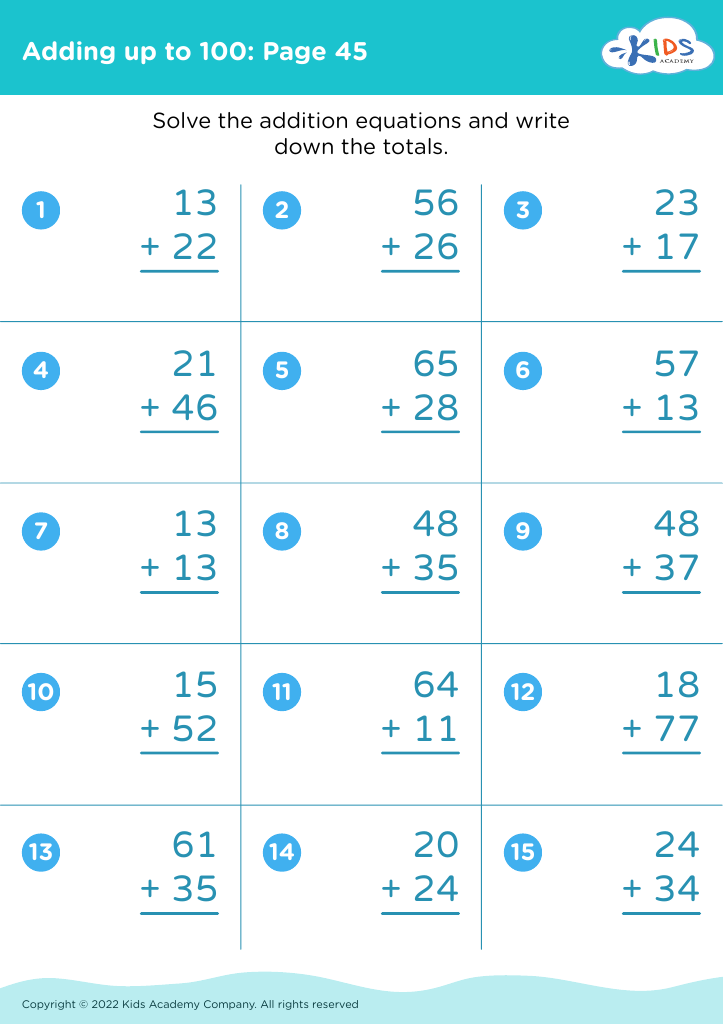
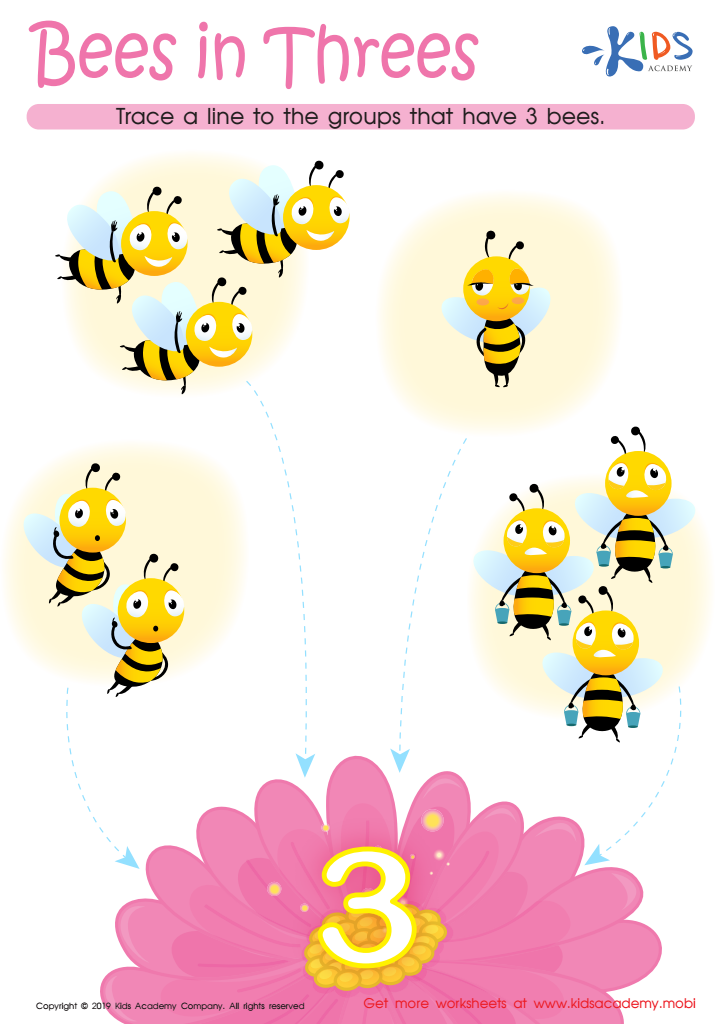
Bees in Threes Worksheet






Understanding number patterns is crucial for young children, especially between the ages of 6-8, as it lays the foundational groundwork for advanced mathematical concepts. At this age, children are developing critical thinking and problem-solving skills, both of which are heavily influenced by their early grasp of patterns.
Number patterns help children recognize relationships between numbers and predict sequences. This ability not only supports arithmetic proficiency, such as understanding addition, subtraction, multiplication, and division but also enhances logical reasoning skills. By spotting and creating patterns, children learn to identify regularities, leading to better problem-solving strategies.
Moreover, recognizing number patterns aids in the understanding of higher mathematical concepts that they will encounter later, such as algebra and geometry. For example, the concept of even and odd numbers, counting by intervals (like by 2s, 5s, or 10s), or recognizing skip counting patterns can be crucial for more complex calculations and mathematical reasoning in future grades.
In addition, early familiarity with number patterns can boost a child's confidence in their mathematical abilities. When children recognize patterns successfully, they feel a sense of achievement that motivates continued interest and effort in mathematics. Thus, fostering an early understanding of number patterns supports a child's overall cognitive development and lays the groundwork for lifelong numerical literacy and problem-solving capability.








