Understanding sizes Worksheets for Ages 6-8
3 filtered results
-
From - To
Introduce your child to the world of measurements with our engaging "Understanding Sizes Worksheets for Ages 6-8." Perfect for young learners, these worksheets cultivate key math skills through fun, interactive activities. Students will practice comparing and ordering objects by length, width, height, and volume, honing their observational and critical thinking abilities. Colorful illustrations and age-appropriate exercises ensure learning is enjoyable and effective. Suitable for classroom use or at-home practice, these worksheets provide a foundation for future mathematical concepts and understanding spatial relationships. Help your child master sizes today and foster a lifelong love for learning with Kids Academy!
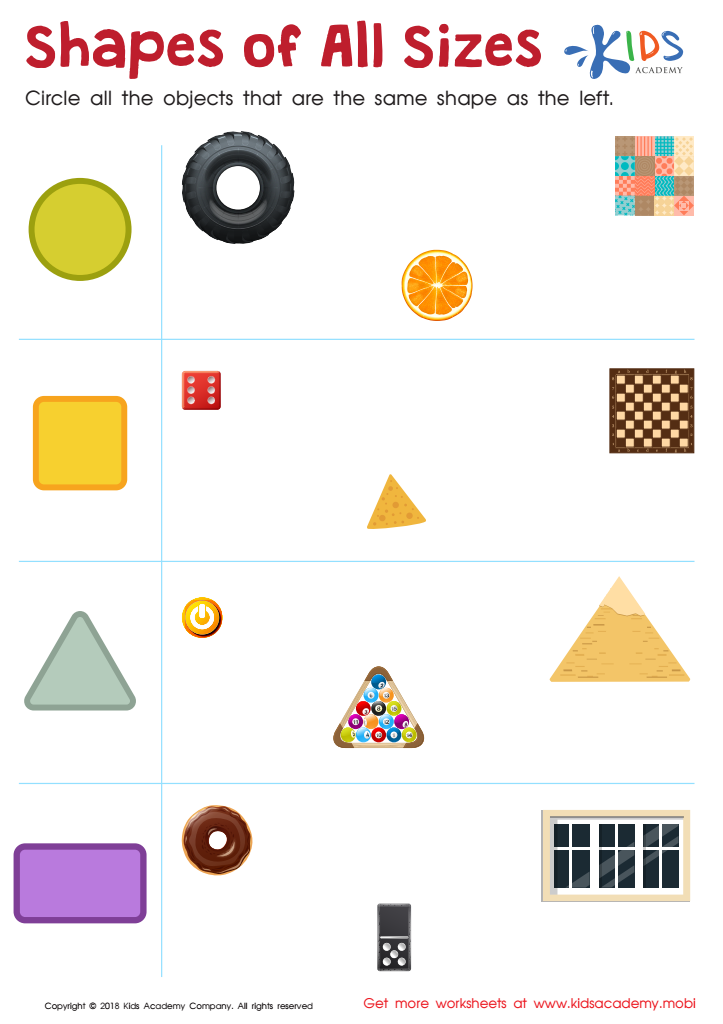
Shapes of All Sizes Worksheet
 Assign to My Students
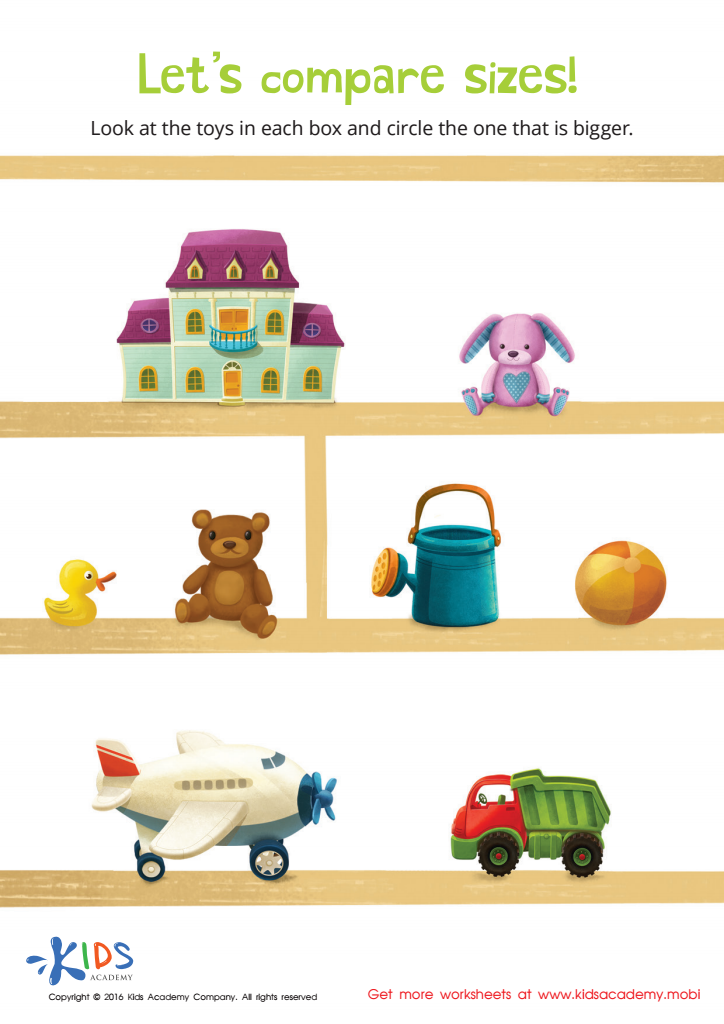
Classifying by Size Sorting Worksheet
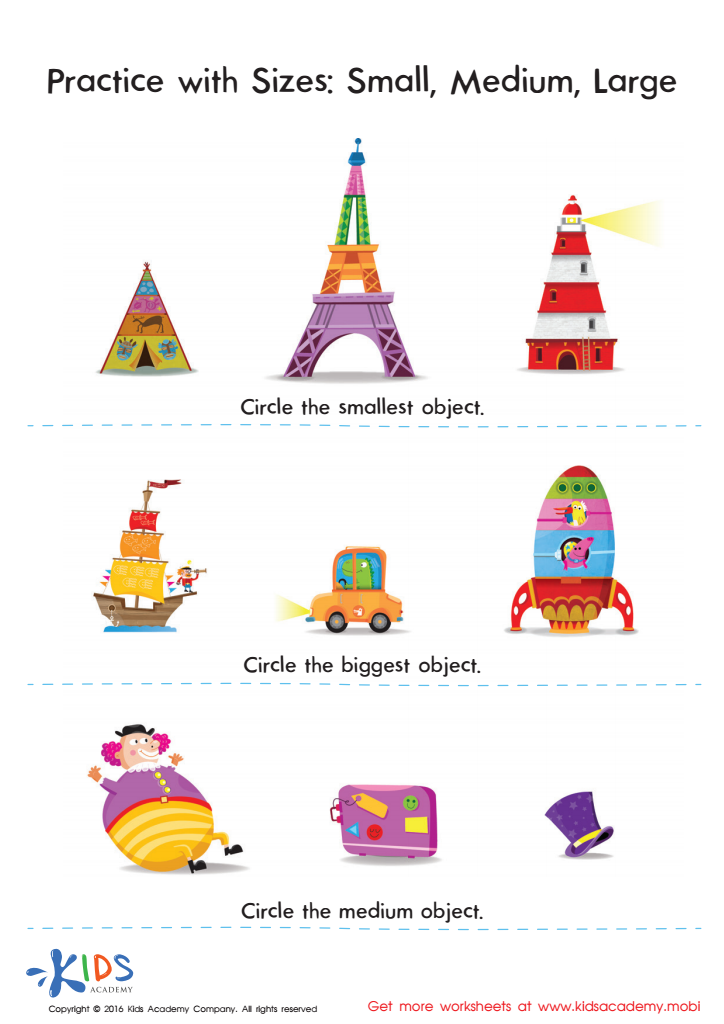






.jpg)

Understanding sizes for children ages 6-8 is crucial for several developmental reasons. First, it plays a vital role in mathematical concepts and spatial awareness. Young children who grasp size distinctions are better equipped to understand measurements, geometry, and number comparisons, laying a strong foundation for future math skills.
Secondly, recognizing sizes aids in cognitive development. Sorting objects by size enhances critical thinking and problem-solving abilities. For instance, activities involving different-sized containers or toys can teach concepts of nesting and sequencing, as well as cause-and-effect relationships.
Thirdly, being able to distinguish sizes fosters fine and gross motor skills. Tasks such as cutting shapes or fitting objects into appropriate spaces require precise hand-eye coordination. Also, understanding sizes becomes essential for practical life skills, like picking appropriately-sized clothes or portions of food.
Furthermore, social and environmental interactions benefit when children comprehend size. Whether figuring out how many friends can fit in a playhouse or sharing items equally, understanding sizes nurtures cooperation and social reasoning.
In summary, understanding sizes for ages 6-8 is foundational. It accelerates learning in mathematics, fosters cognitive advancement, improves motor skills, and aids in daily life. Therefore, parents and teachers should emphasize this concept to support well-rounded child development.








