Basic geometry understanding 2D Shapes Worksheets for Ages 6-8
4 filtered results
Difficulty Level
Grade
Age
-
From - To
Subject
Activity
Standards
Discover our engaging Basic Geometry Understanding 2D Shapes Worksheets, designed specifically for children aged 6 to 8. These interactive worksheets provide young learners with essential skills in identifying, describing, and comparing various 2D shapes, such as circles, squares, triangles, and rectangles. Each activity focuses on developing spatial awareness and visual recognition, making geometry both fun and educational. Tailored to complement classroom instruction, these resources enhance hands-on learning experiences and inspire creativity through drawing and coloring tasks. Perfect for at-home practice or classroom use, our worksheets support foundational geometry concepts, fostering a strong mathematical background in early education. Start exploring shapes today!
Favorites
With answer key
Interactive
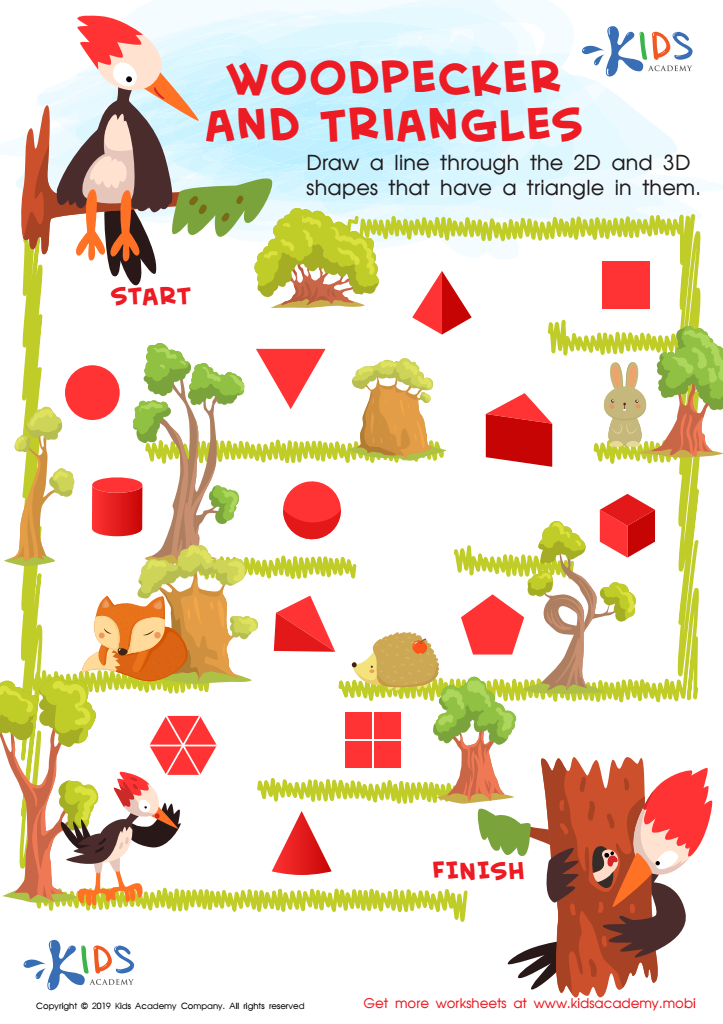
Woodpecker and Triangles Worksheet
Woodpeckers peck wood, and this printout helps kids learn about triangles. Ask your kindergartners to draw a triangle, then draw a line through the shapes that have a triangle in them to help the woodpecker get out of the maze.
 Assign to My Students
Woodpecker and Triangles Worksheet
Worksheet


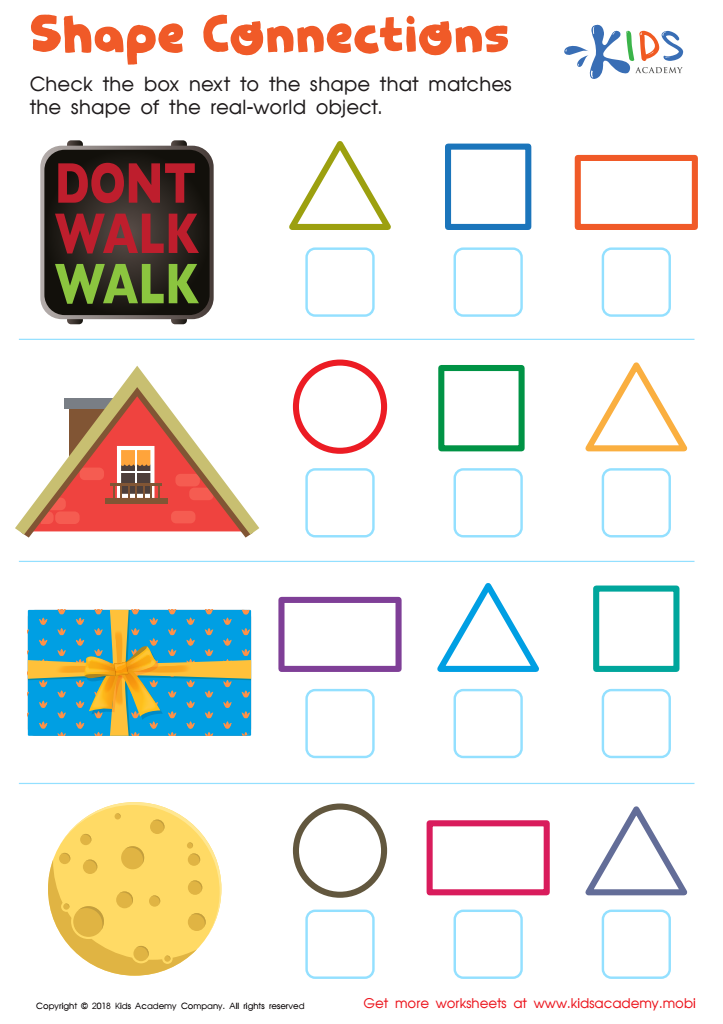
Shape Connections Worksheet
Geometric shapes are all around us and this fun worksheet brings it to life. Kids will match real-world pictures with the corresponding basic shapes, connecting how math is used in various aspects of daily life. A great way to reinforce these concepts!
Shape Connections Worksheet
Worksheet
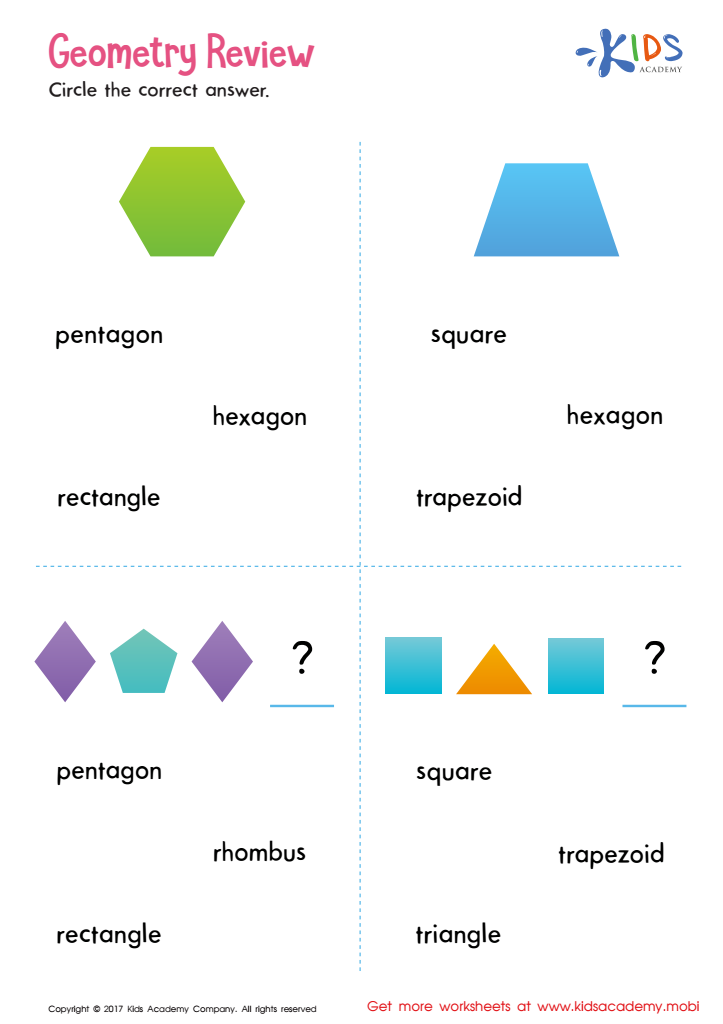
Geometry Review Printable
Repetition is key to success; give your child the practice they need with this geometry worksheet.
Geometry Review Printable
Worksheet
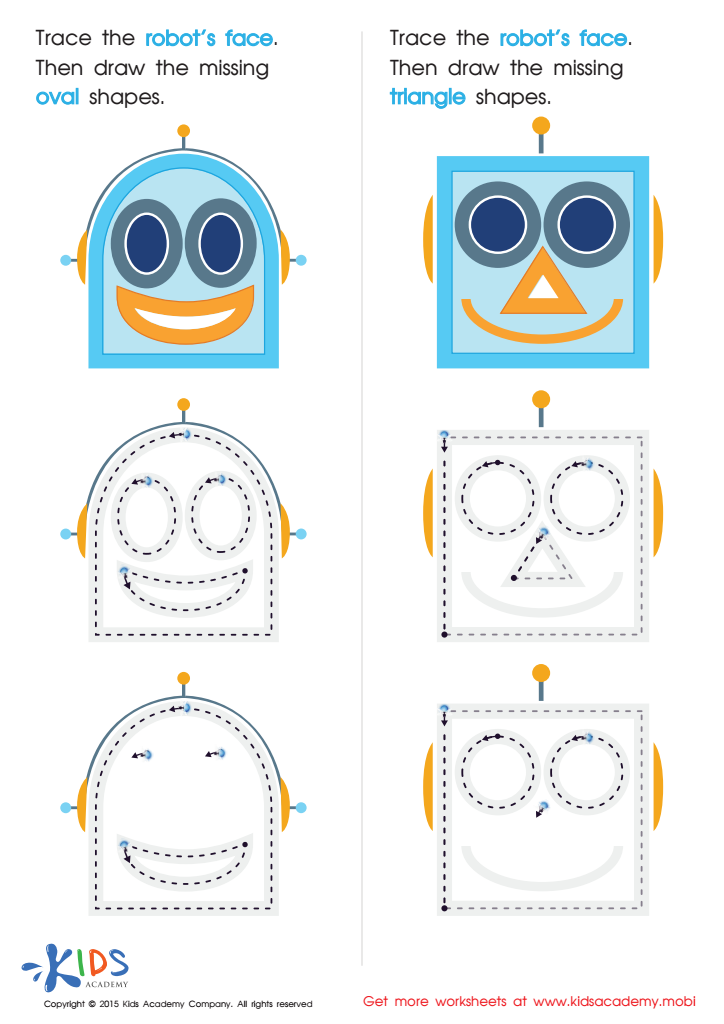
Drawing Ovals And Triangles with Fun Printable
Trace the face and draw missing ovals and triangles. Test your memory and recall shapes' names. Check if you remember how to draw them!
Drawing Ovals And Triangles with Fun Printable
Worksheet
Join Kids Academy for Free
Who is primarily going to use this learning content?








Understanding basic geometry, particularly 2D shapes, is crucial for children aged 6-8, as it lays the foundation for critical thinking and problem-solving skills. At this developmental stage, children are naturally curious and explore their environment. Learning about shapes helps them make sense of the world, recognize patterns, and engage in spatial reasoning, all of which contribute to cognitive development.
Familiarity with 2D shapes, such as squares, circles, and triangles, enhances children's ability to classify and compare objects. This understanding supports foundational math skills, which are essential as they progress in education. Moreover, geometry aids in the development of fine motor skills through hands-on activities like drawing, cutting, and assembling shapes, fostering creativity and confidence.
In practical terms, the ability to identify and manipulate shapes plays a crucial role in daily life, from understanding maps to constructing models. For teachers and parents, promoting this knowledge ensures children build essential skills that pave the way for future mathematical concepts and real-world applications.
Encouraging exploration of 2D shapes through engaging activities and discussions allows children to appreciate geometry's relevance, making learning both enjoyable and meaningful at an early age.