Visual discrimination 2D Shapes Worksheets for Ages 6-8
5 filtered results
-
From - To
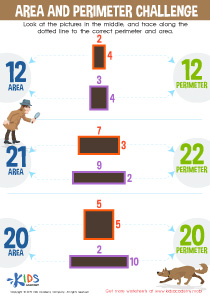
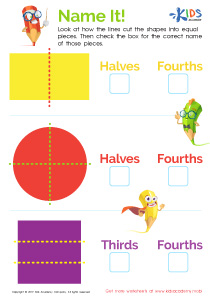
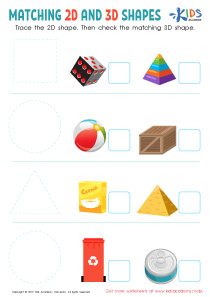
Enhance your child's visual discrimination skills with our engaging 2D shapes worksheets designed for ages 6-8! These comprehensive materials focus on helping young learners recognize, differentiate, and classify a variety of shapes through interactive activities. By practicing essential skills such as identifying similarities and differences, your child will build a solid foundation in mathematical concepts while having fun. Our thoughtfully crafted worksheets cater to diverse learning styles, encouraging creativity and critical thinking. Perfect for home or classroom use, these resources empower kids to become confident learners. Explore the world of 2D shapes and ignite a passion for math today!
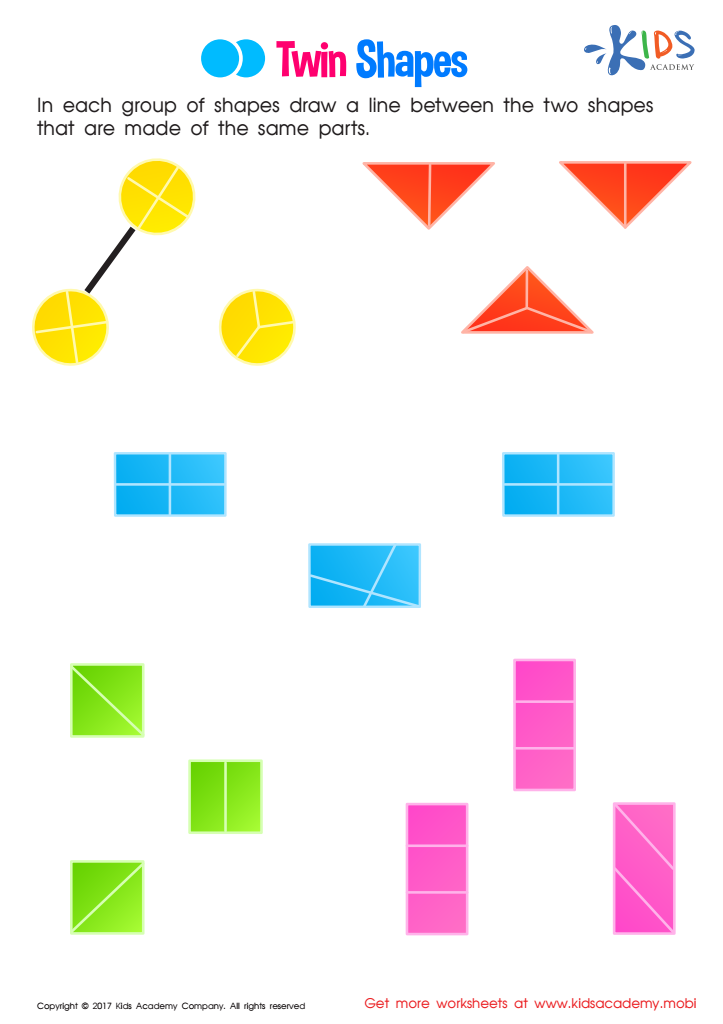
Twin Shapes Worksheet
 Assign to My Students










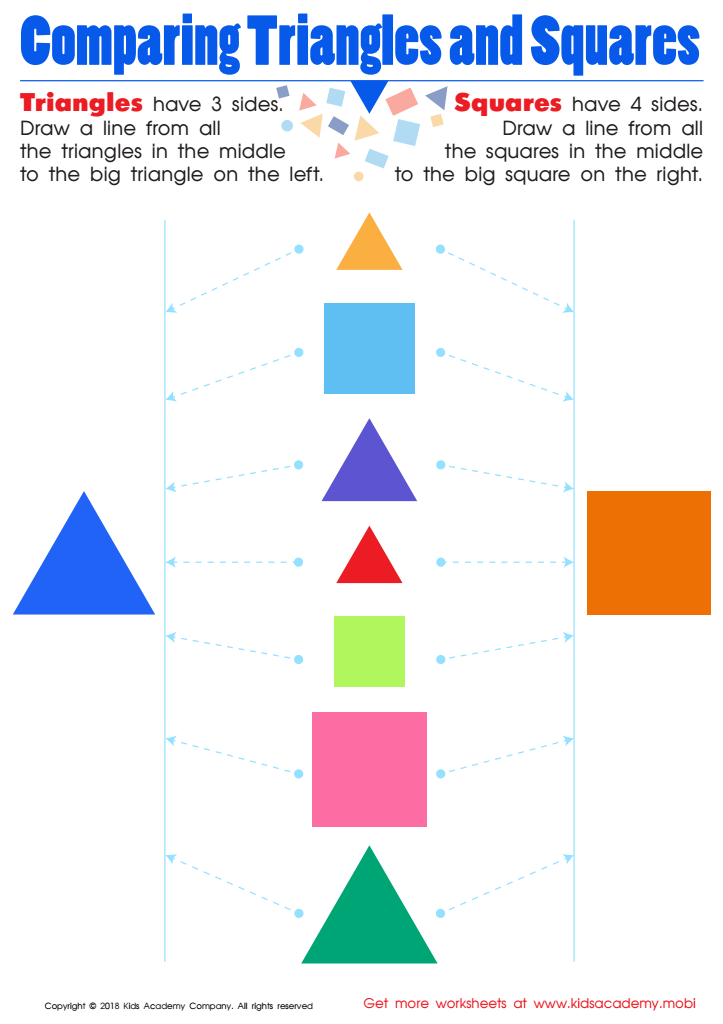
Comparing Triangles Squares Worksheet
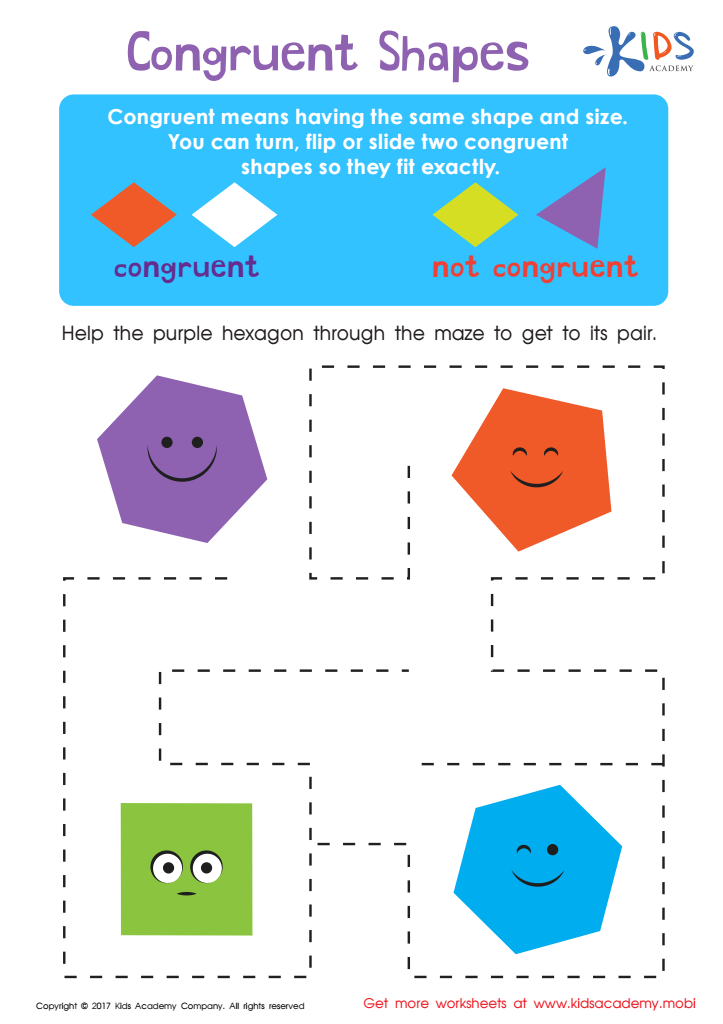
Congruent Shapes Worksheet
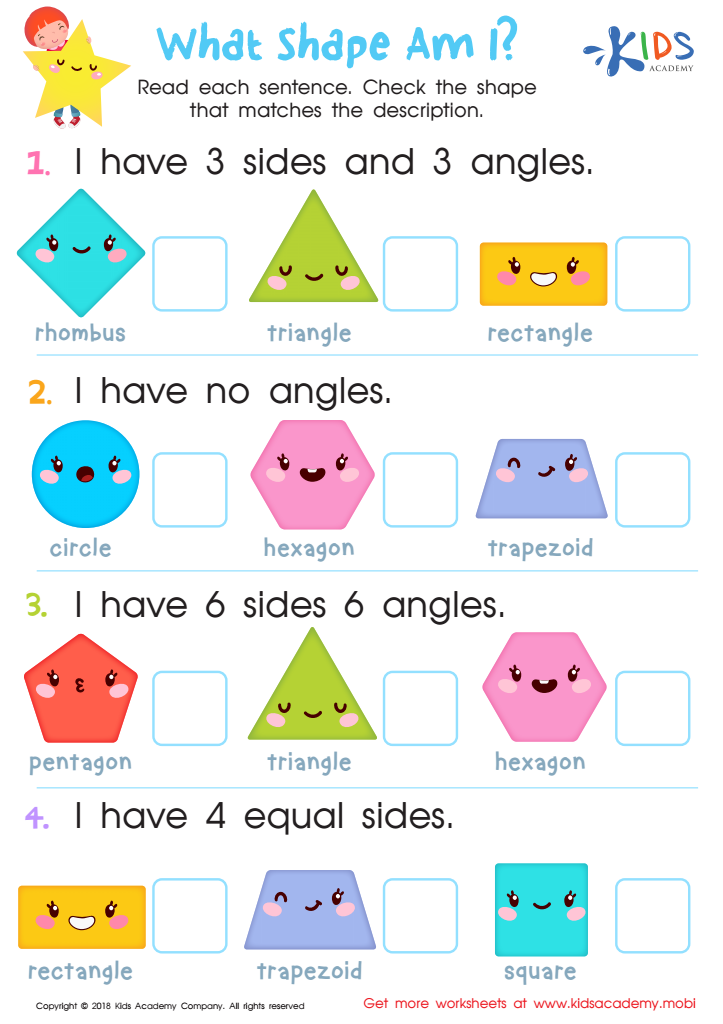
What Shape Am I? Worksheet
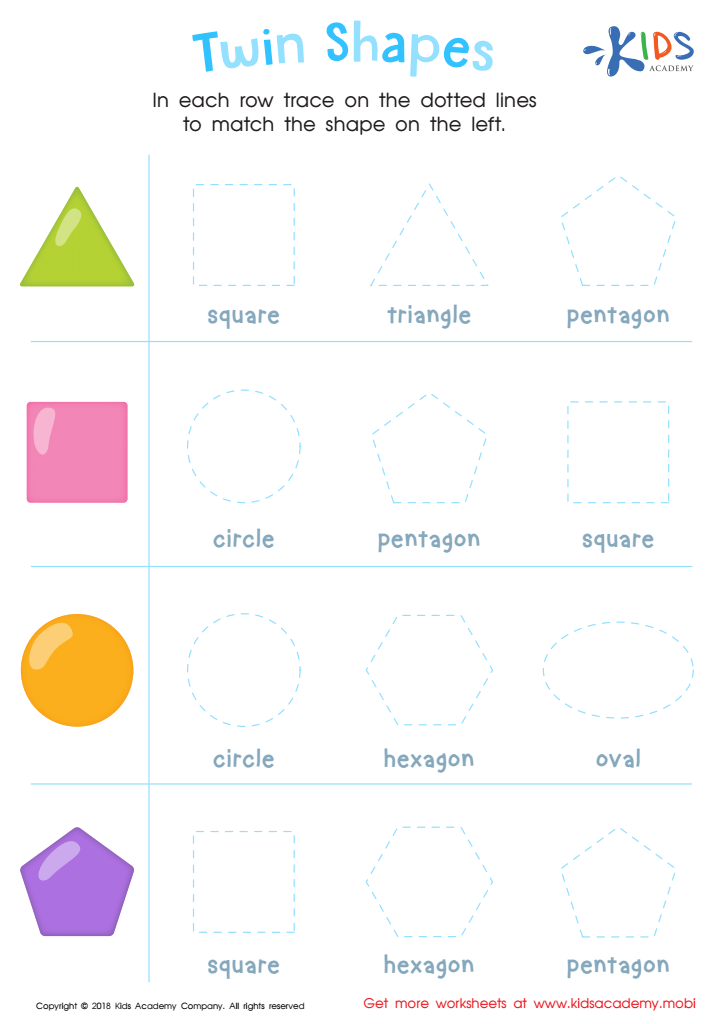
Twin Shapes Dot-to-Dot Worksheet








Visual discrimination of 2D shapes is an essential skill for children ages 6-8, as it lays the groundwork for various cognitive and academic abilities. Understanding shapes enhances children's spatial awareness, which is critical not just in math, but also in subjects like science and art. Recognizing and differentiating between shapes influences their ability to solve problems, make sense of the world around them, and develop reasoning skills.
Parents and teachers should care about this skill because it enriches children's overall learning experience. Proficiency in visual discrimination supports mathematical concepts such as geometry and measurement, fostering a solid foundation for future learning. As kids compare, categorize, and analyze shapes, they develop critical thinking and observational skills.
Furthermore, visual discrimination encourages creativity and enhances fine motor skills through activities like drawing and crafting. Engaging children in play-based learning methods, such as shape sorting games or puzzles, keeps them motivated while developing these essential capabilities. By prioritizing visual discrimination activities, parents and teachers invest in a child’s foundational skills, ultimately preparing them for academic success and real-world applications later in life.