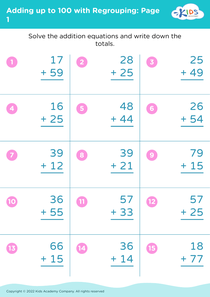
Adding up to 100 Without Regrouping Worksheets for Ages 6-8
73 filtered results
-
From - To
Unlock your child’s potential with our "Adding Up to 100 Without Regrouping Worksheets" designed for ages 6-8! These engaging worksheets provide a fun and interactive way for students to practice basic addition skills, enhancing their confidence and proficiency in math. Tailored for young learners, each worksheet includes colorful illustrations and age-appropriate exercises that encourage problem-solving abilities without the complexity of regrouping. Perfect for home or classroom use, these resources promote critical thinking while reinforcing addition concepts. Help your child master addition up to 100 effortlessly and enjoy the learning journey together! Explore our printable materials today!
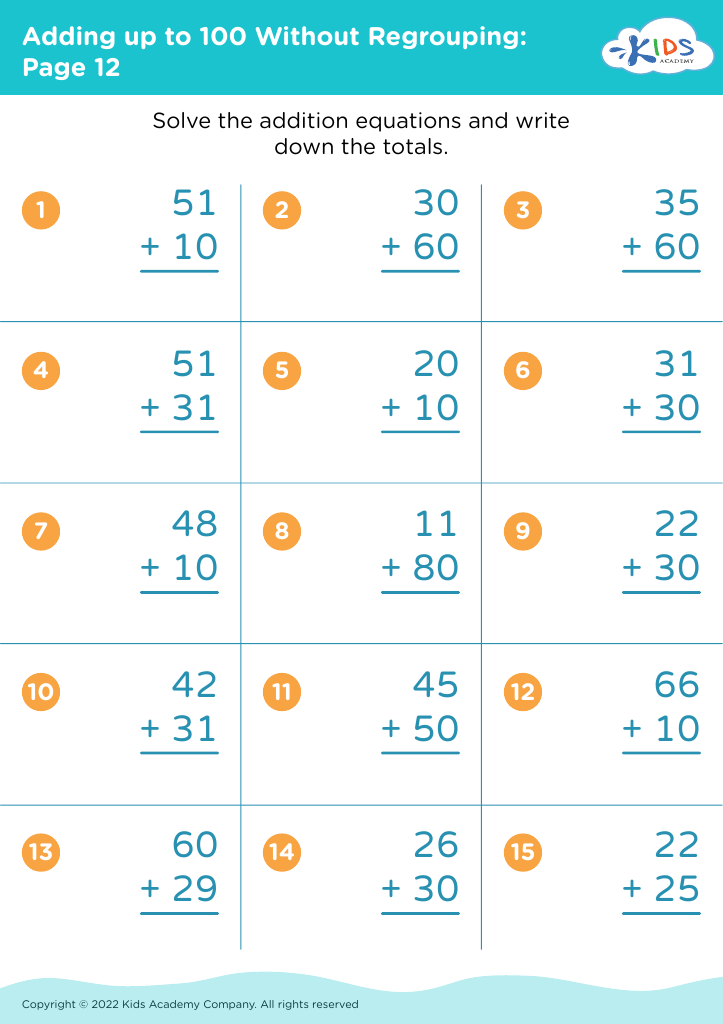
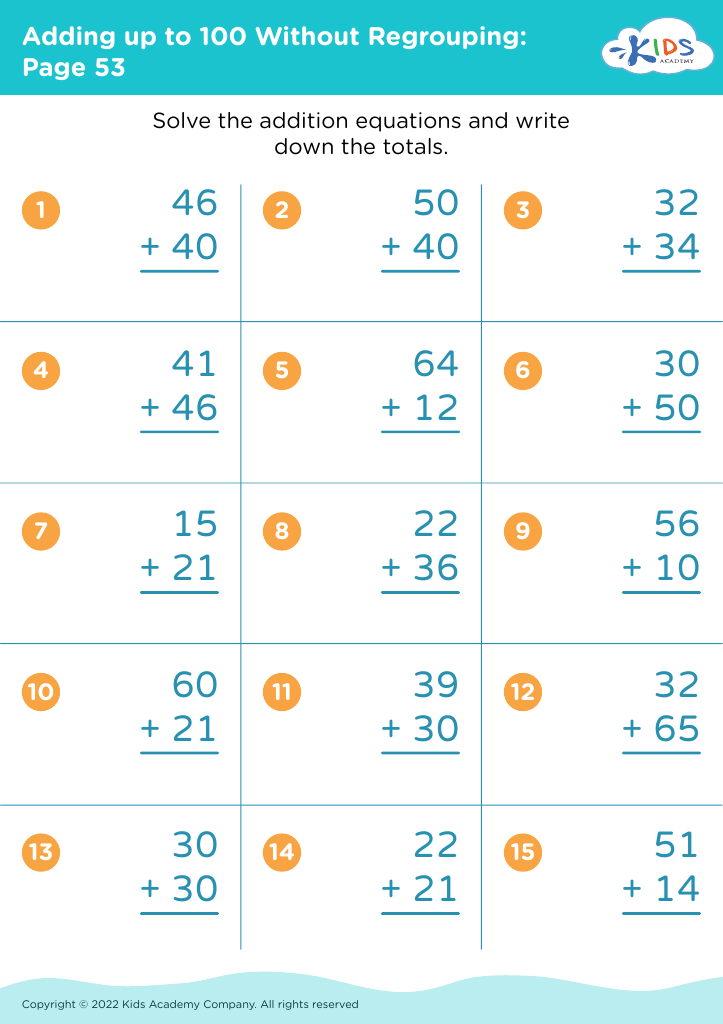
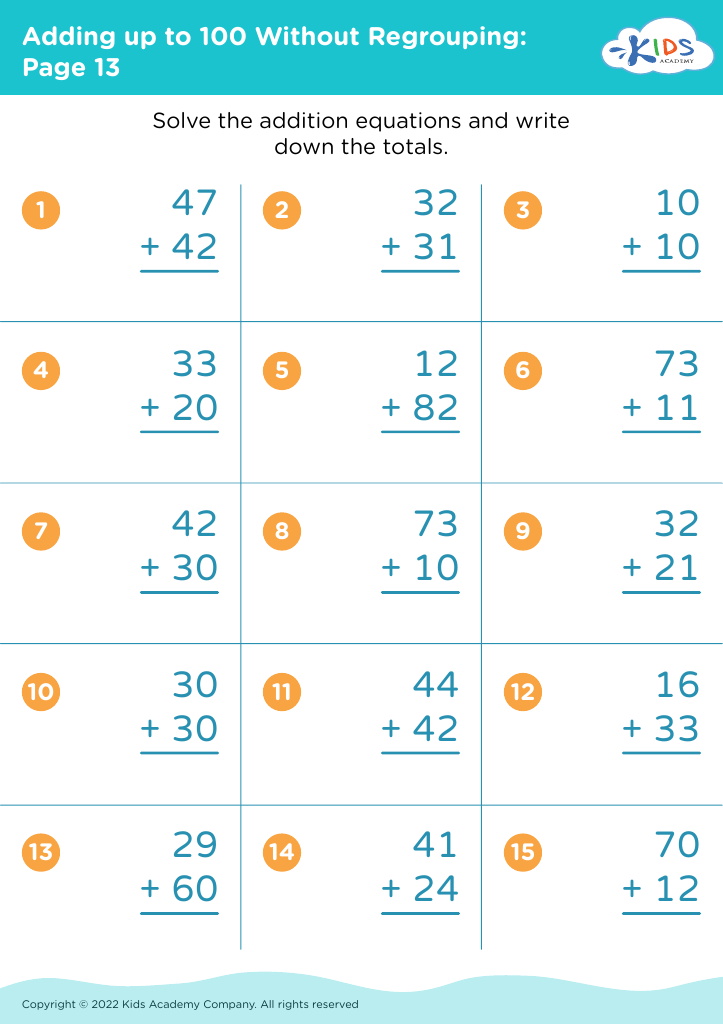
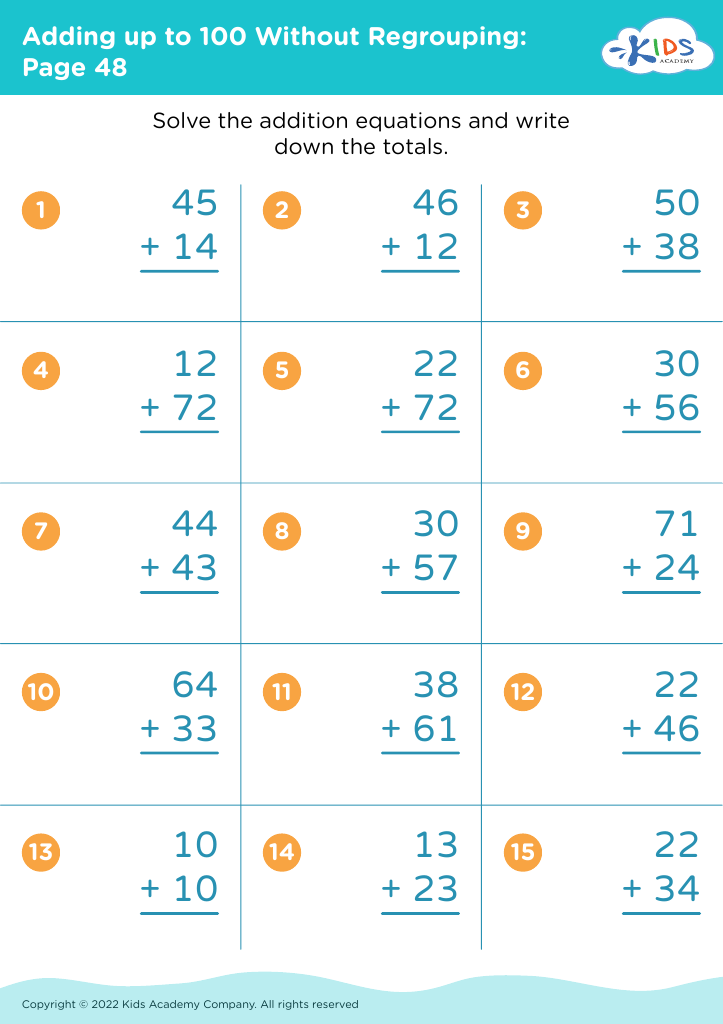
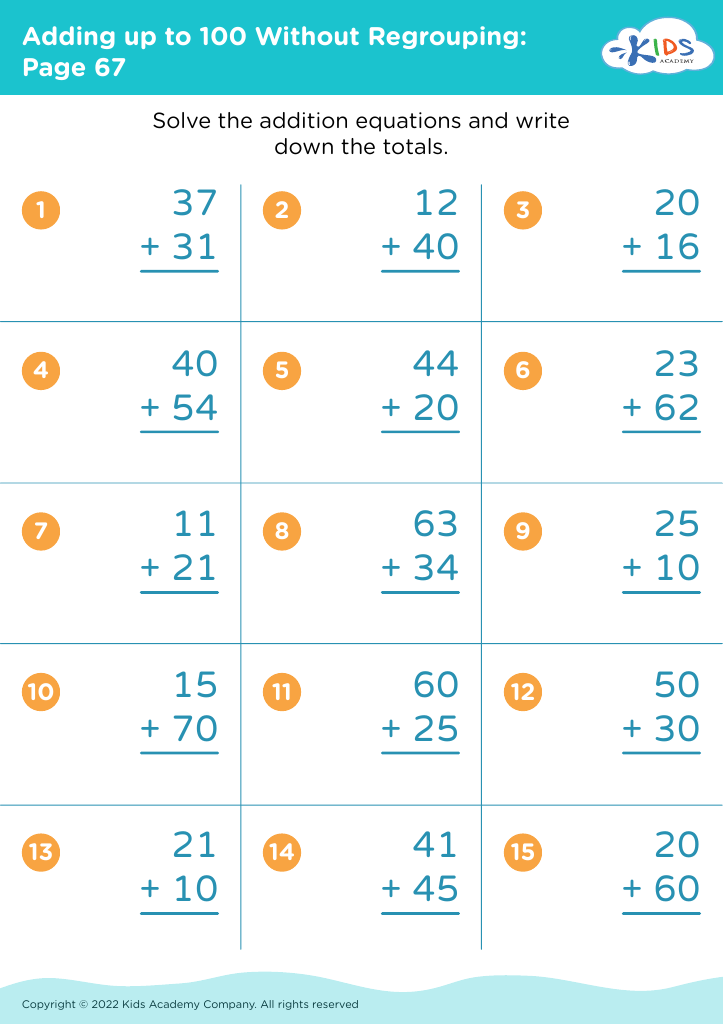
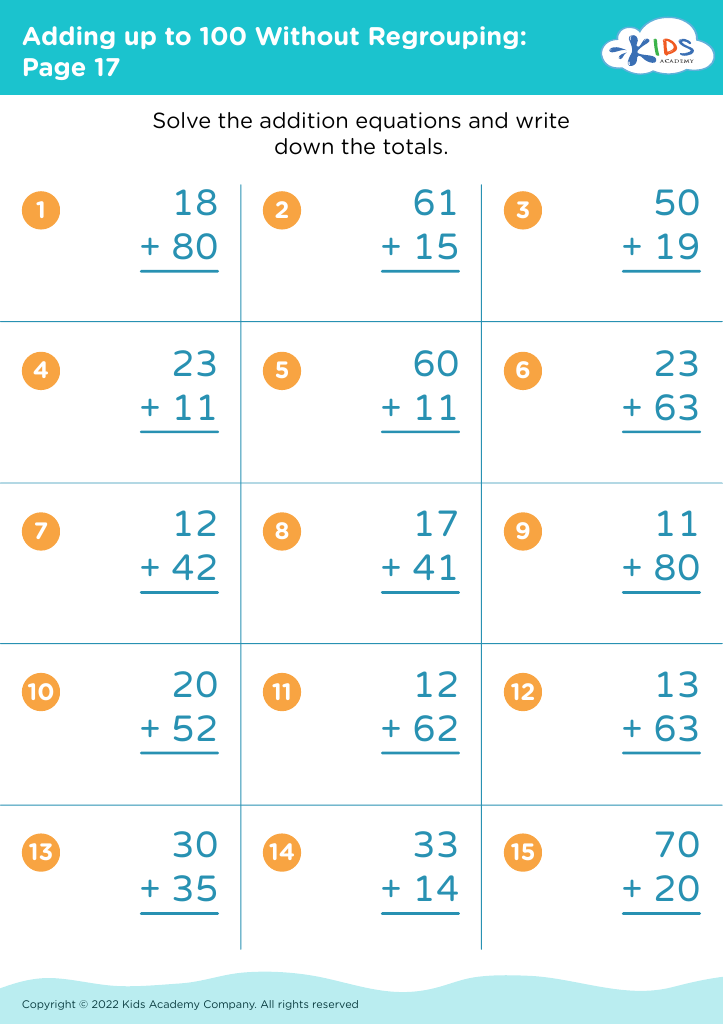
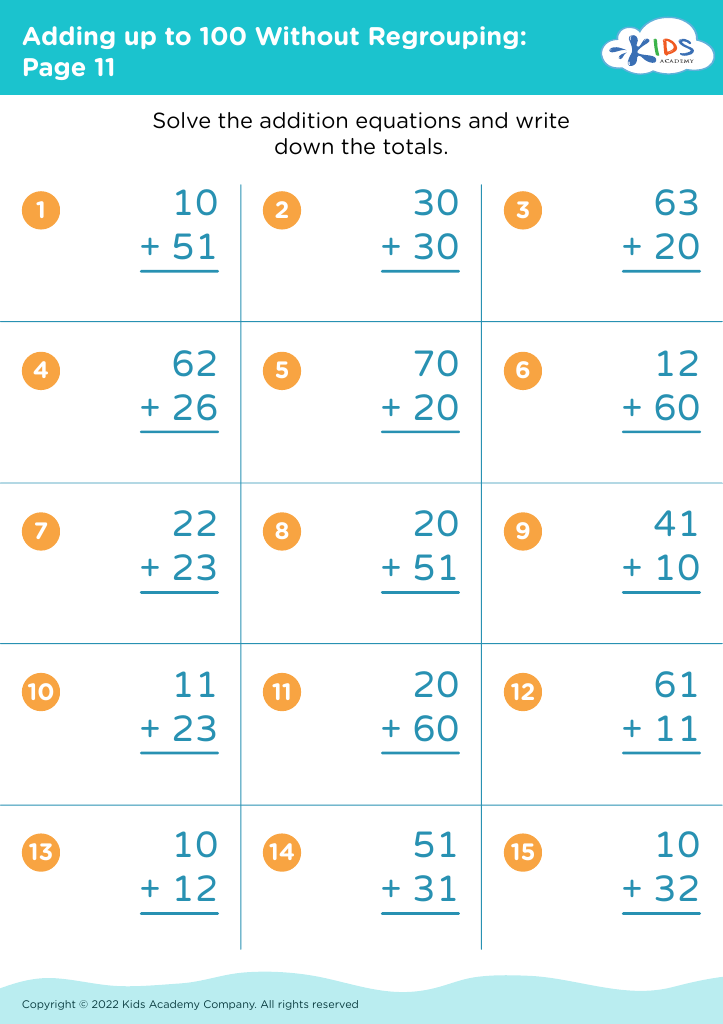
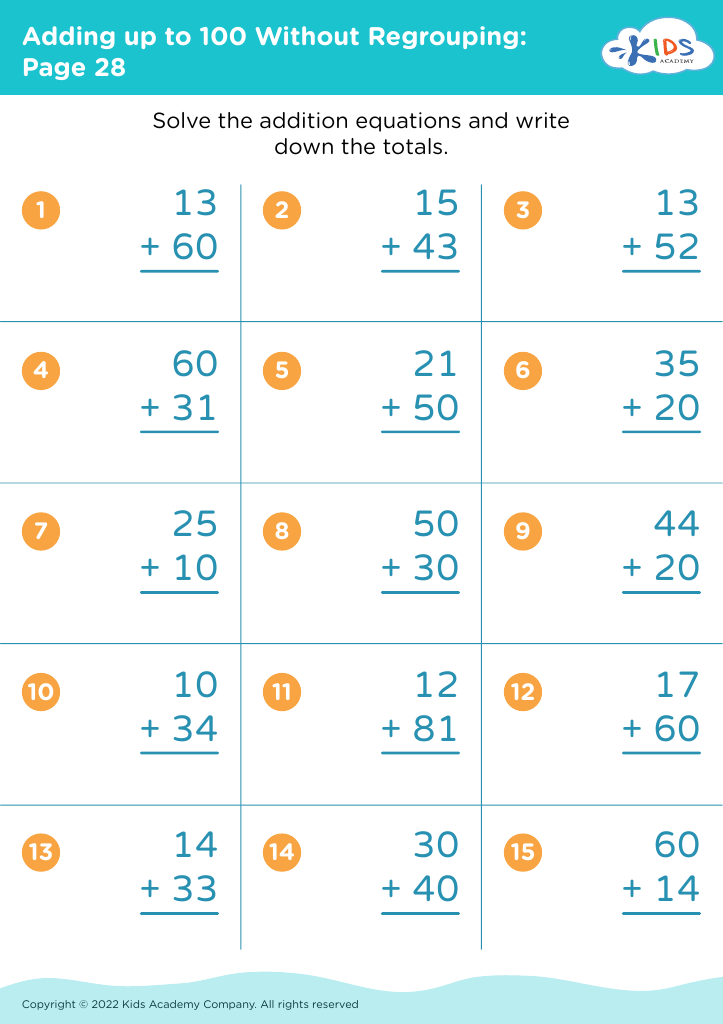
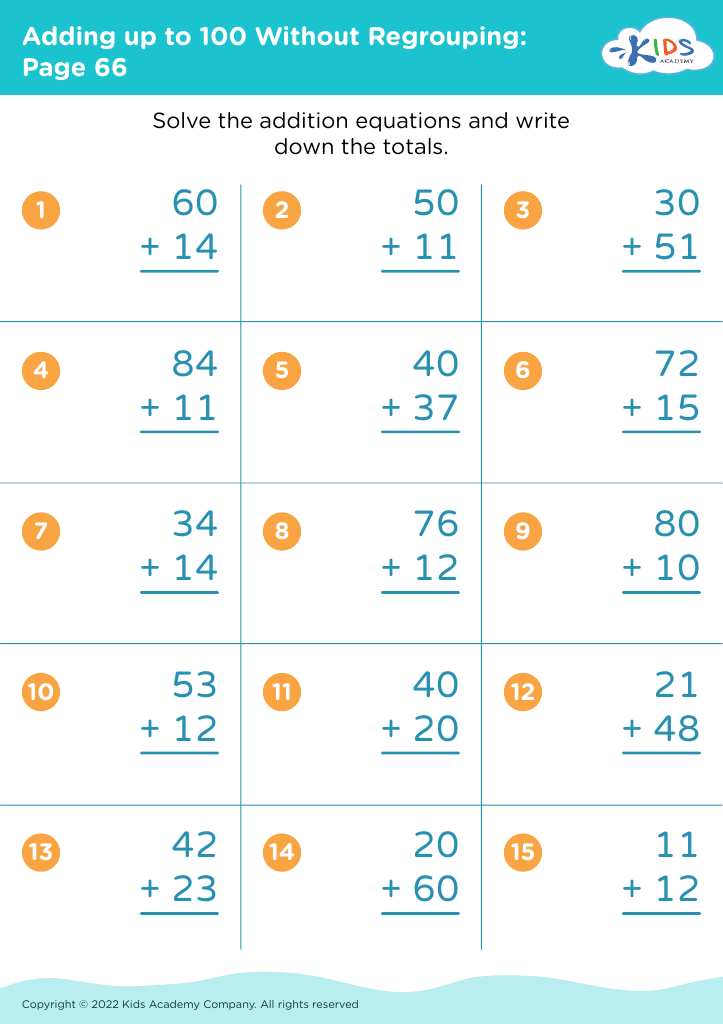
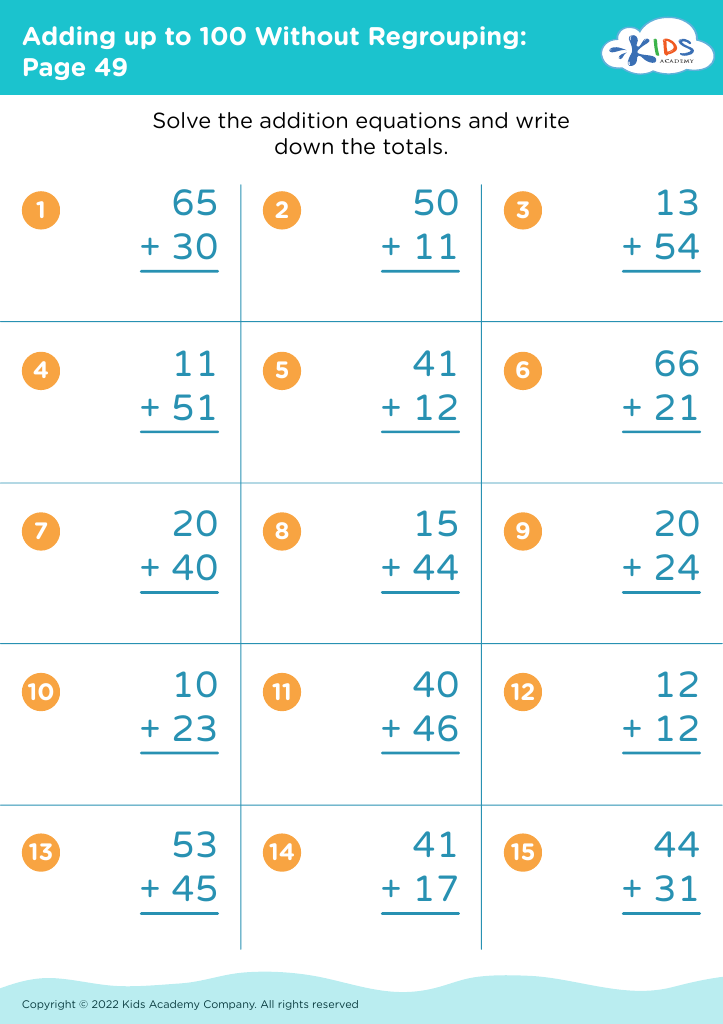
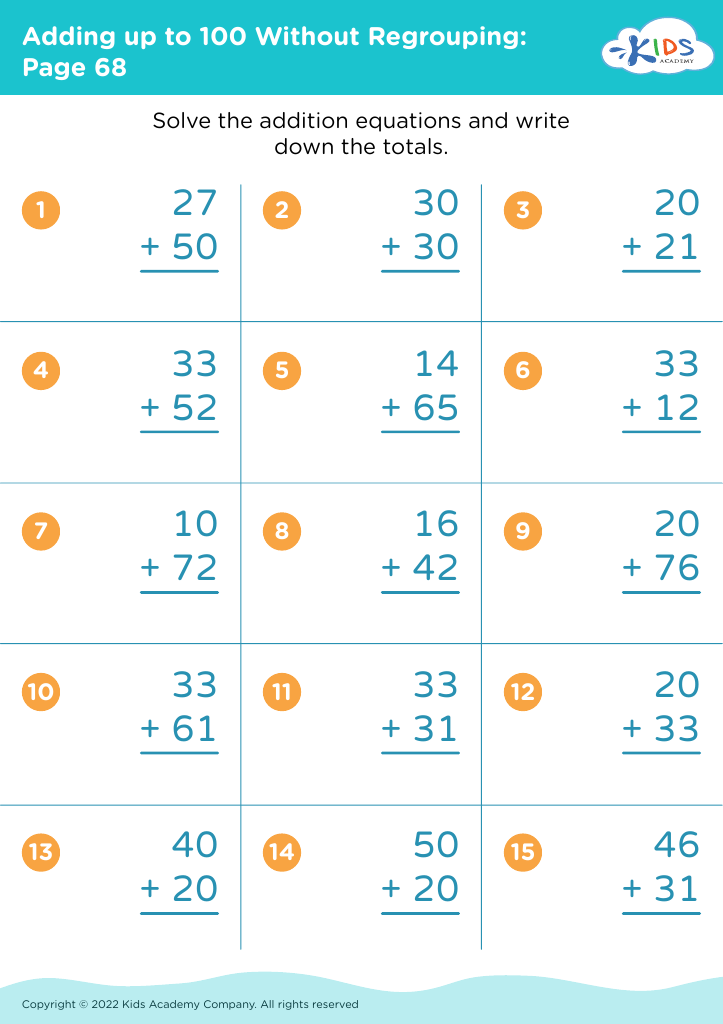
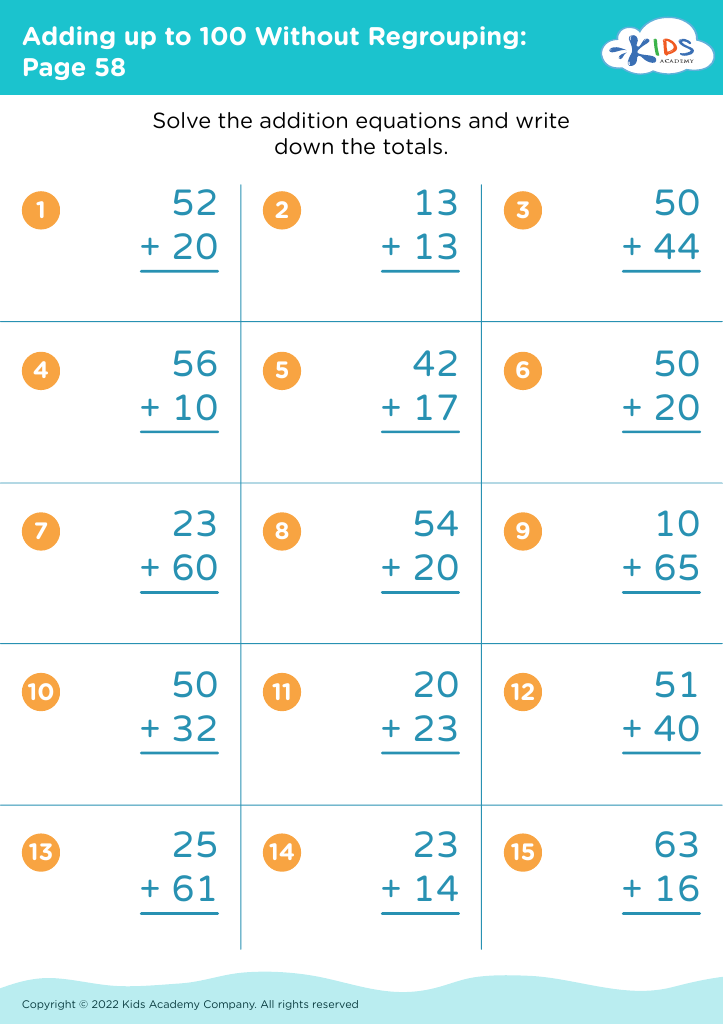
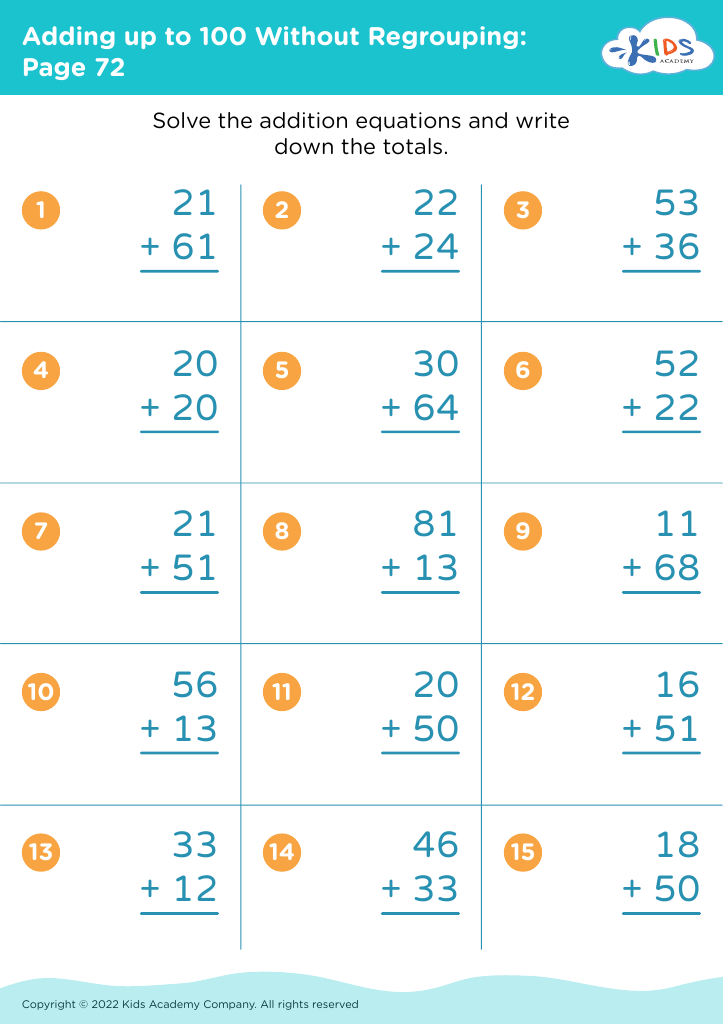
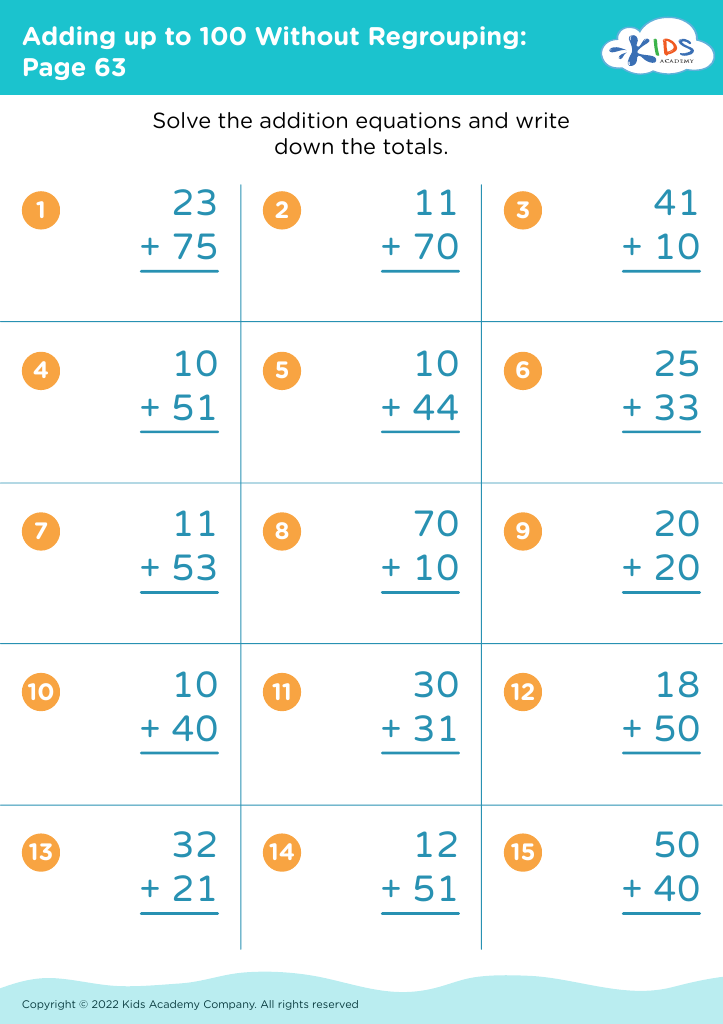
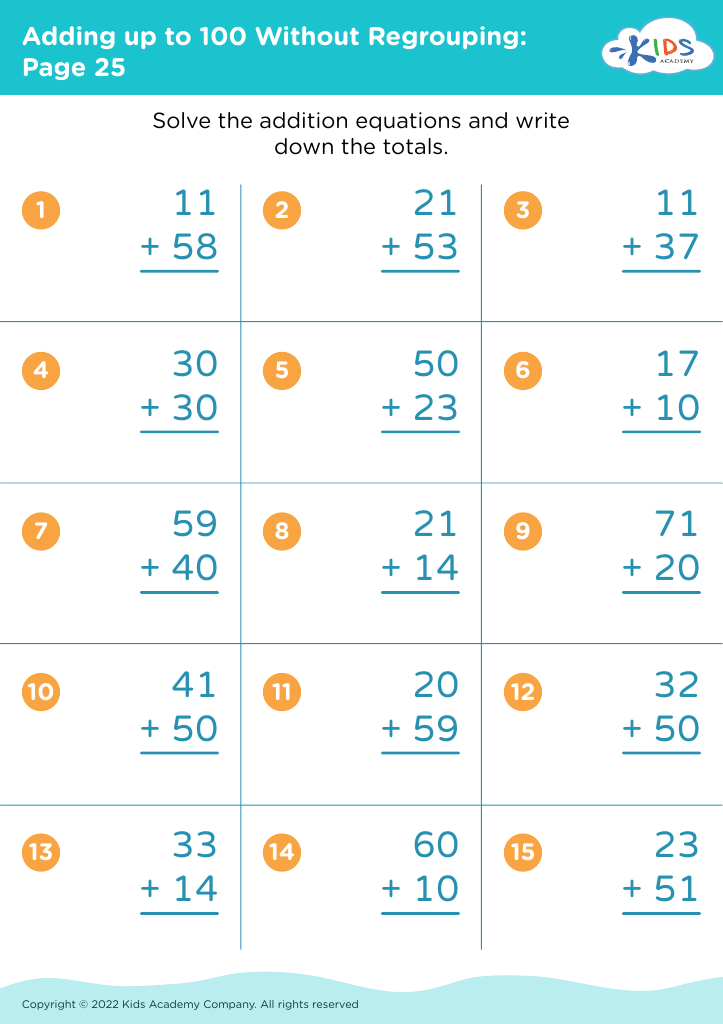
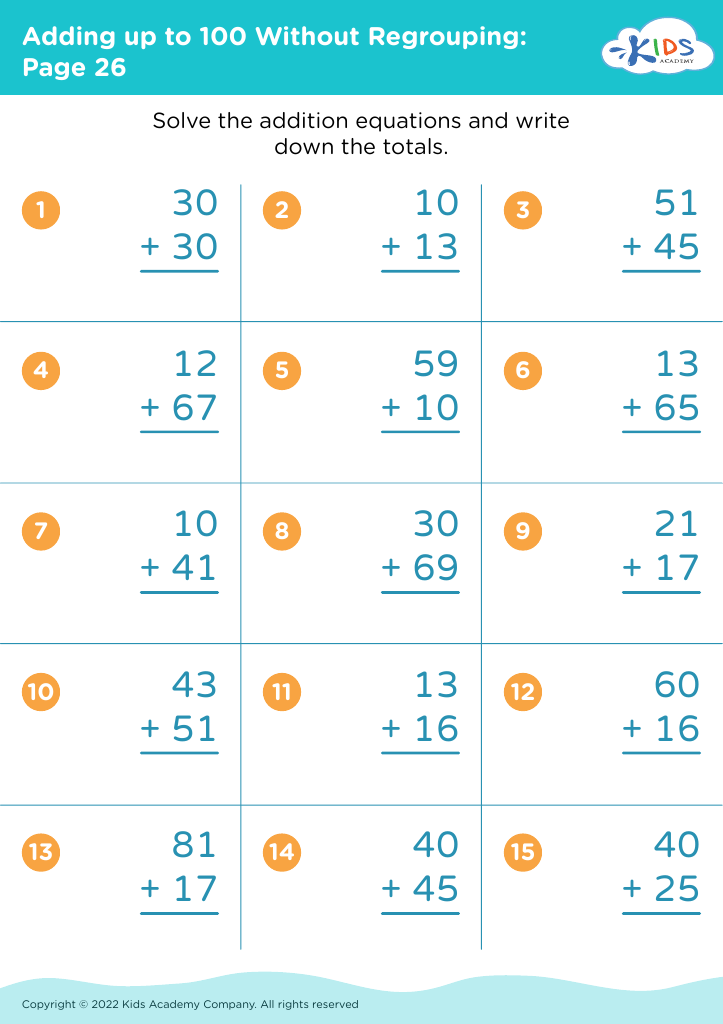
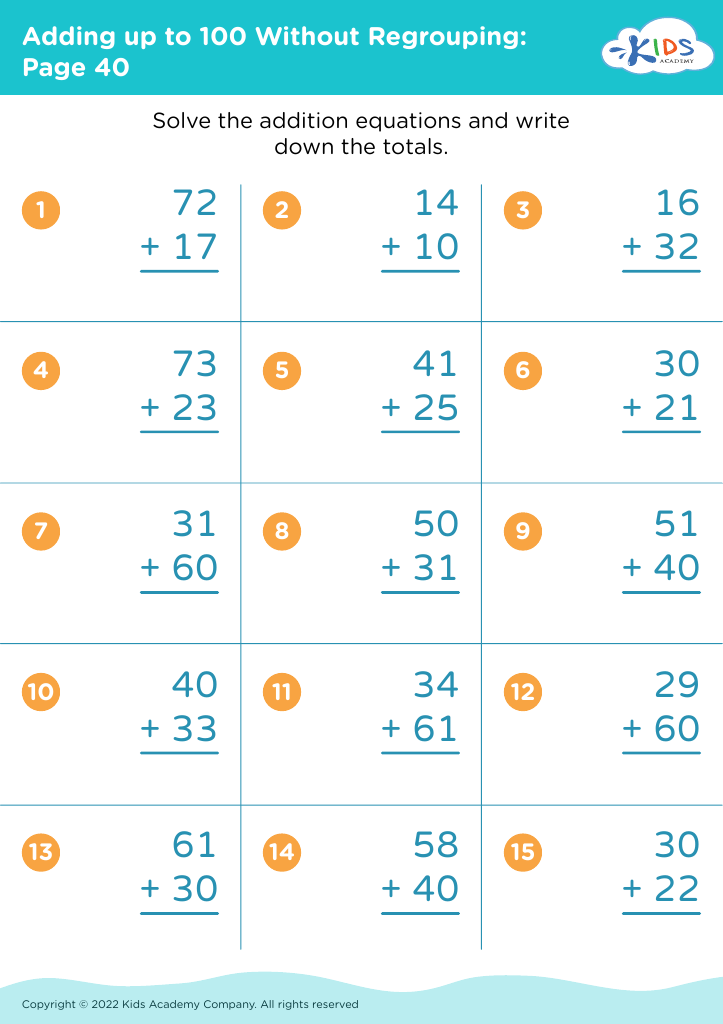
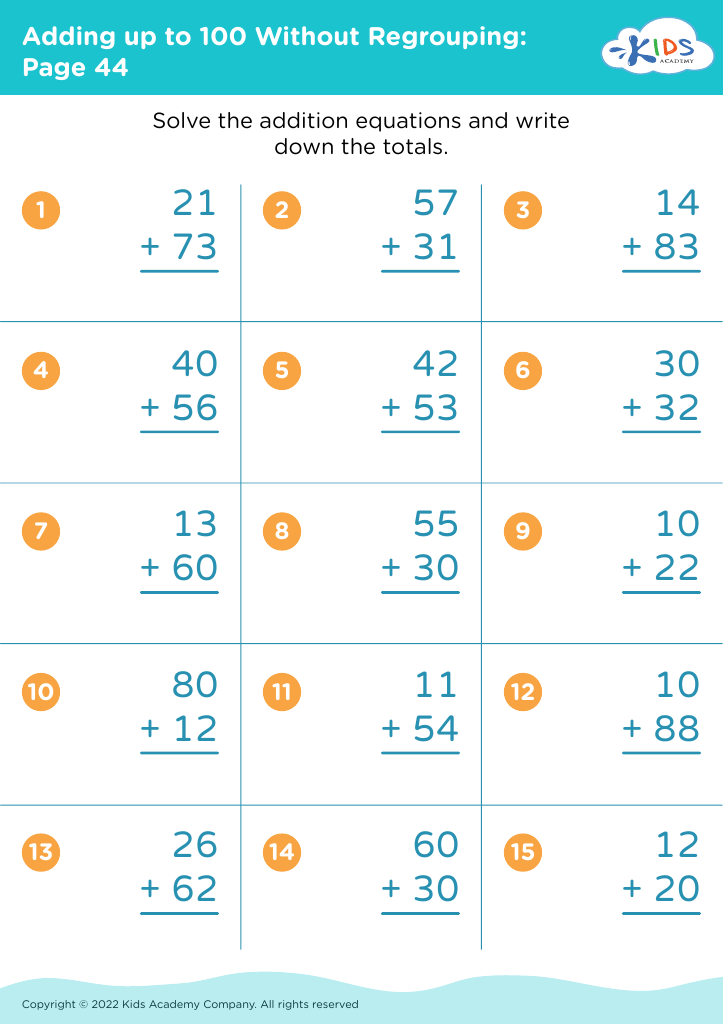
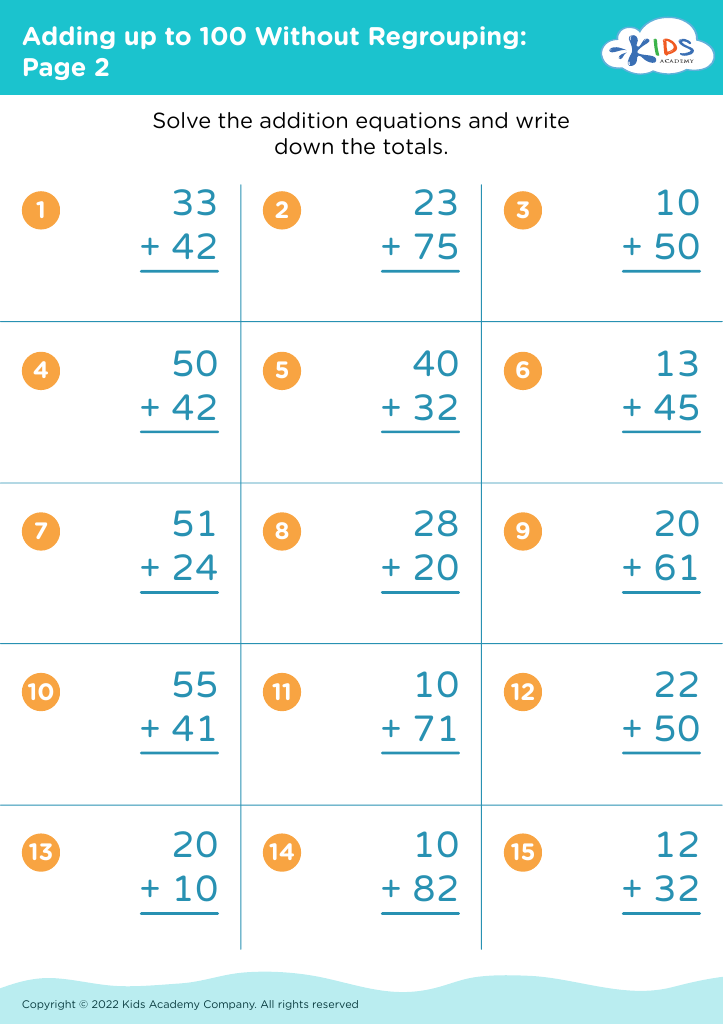
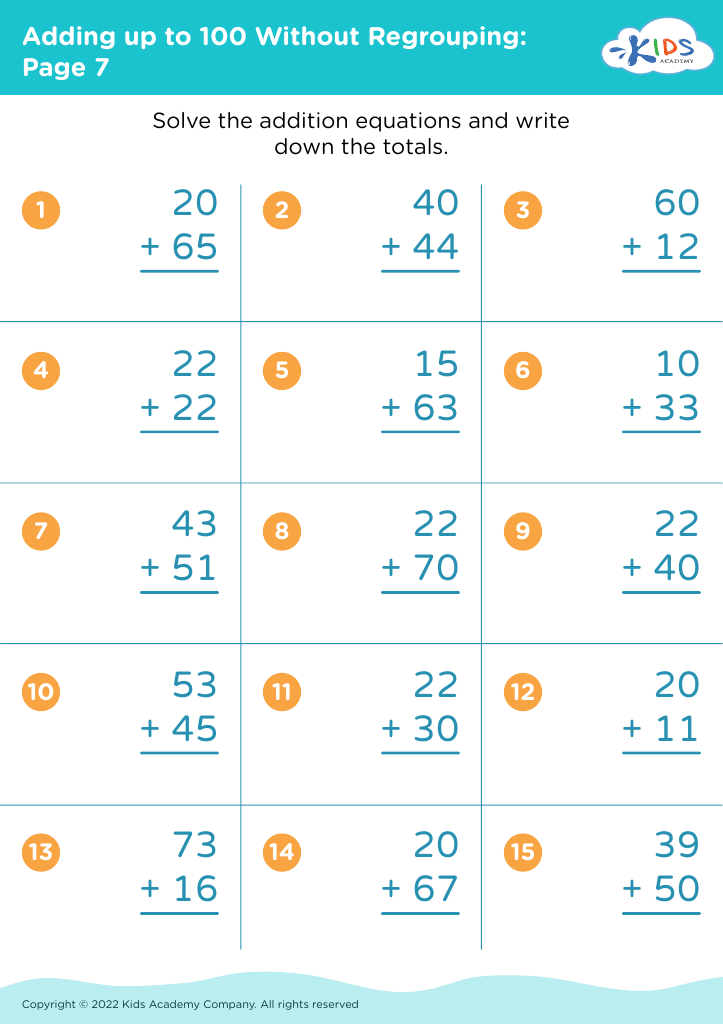
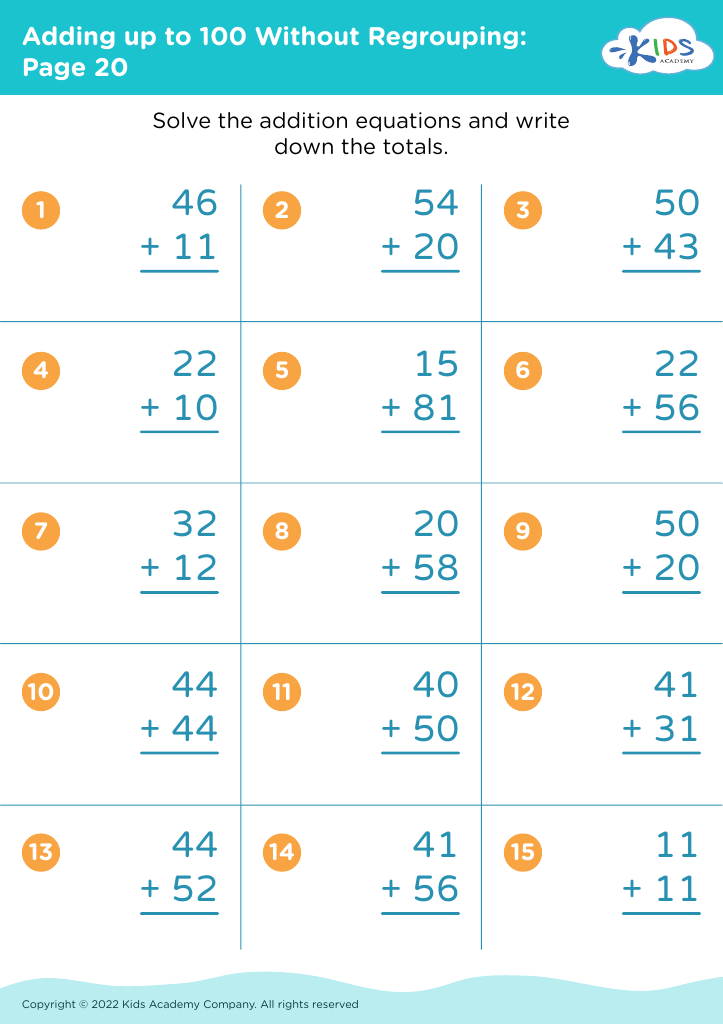
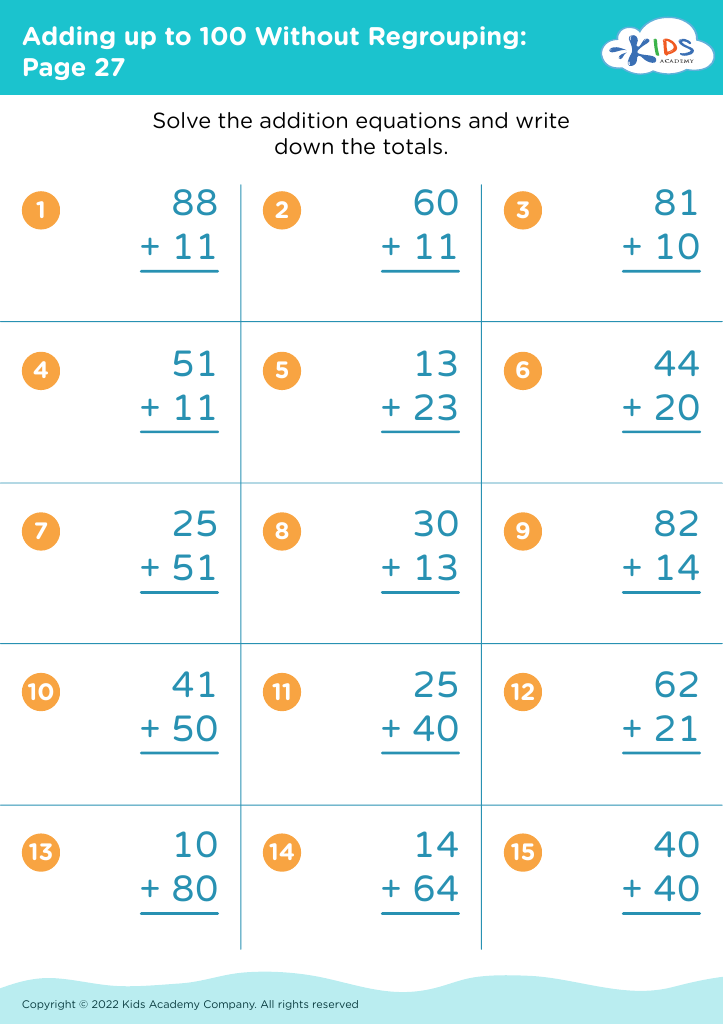
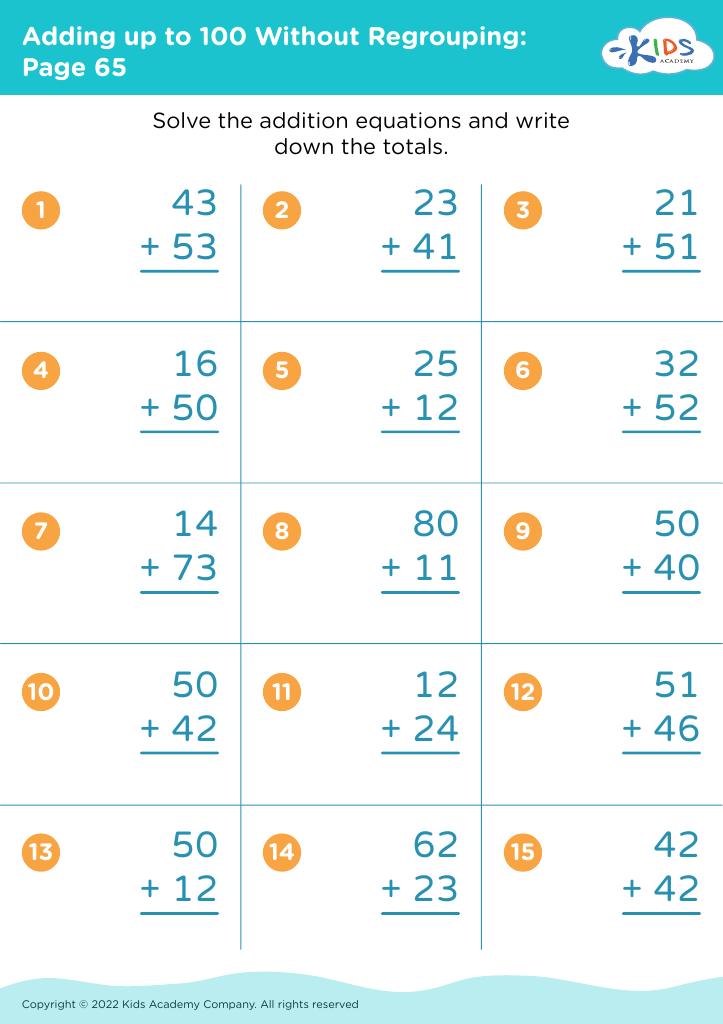
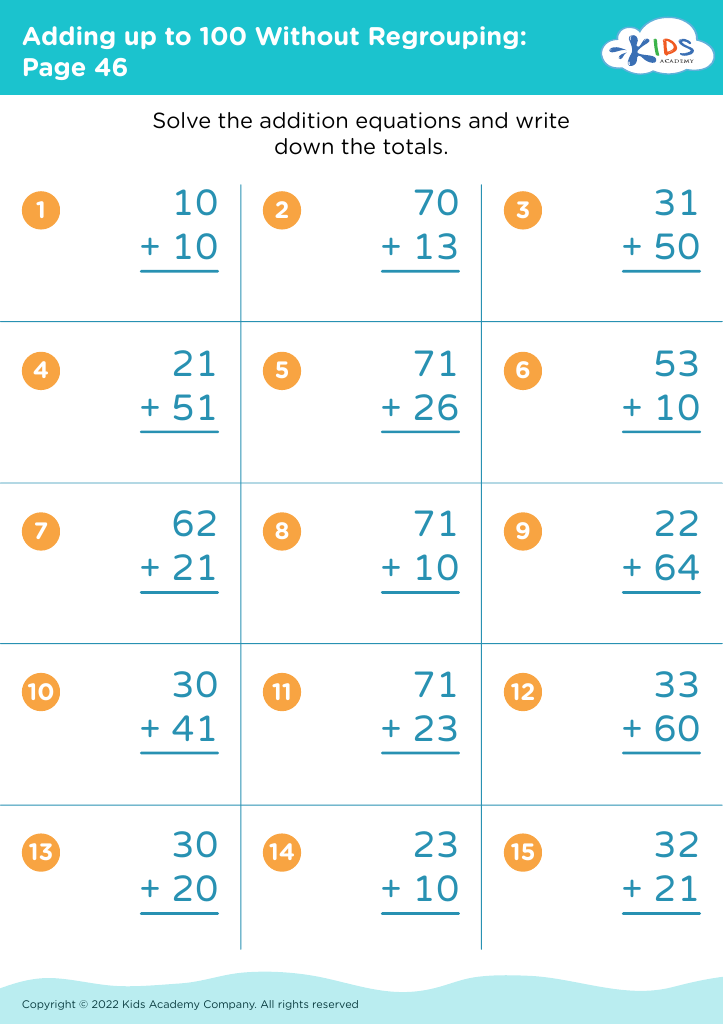




Adding up to 100 without regrouping is a fundamental math skill that is crucial for children aged 6-8. Understanding this concept lays a strong foundation for future mathematical learning, enabling students to easily handle more complex calculations as they progress in their education.
Firstly, this skill promotes number sense. When children grasp how numbers work together to combine to 100, they develop mental math strategies that facilitate quick calculations. For instance, recognizing combinations like 40 + 60 or 25 + 75 helps children to think critically about number relationships.
Furthermore, mastering this skill enhances confidence in math. As children successfully add numbers without regrouping, they build a sense of accomplishment, which encourages them to tackle more challenging problems. This positive experience can foster a lifelong love for math and learning in general.
Additionally, practical applications abound in daily life. From understanding distance (e.g., spending money, keeping track of supplies), these foundational skills enable children to make sense of their world, thus developing essential problem-solving and analytical skills.
Parents and teachers play a vital role in nurturing these abilities. Emphasizing addition up to 100 without regrouping not only supports academic success but also prepares children for real-world scenarios, encouraging them to be effective decision-makers.