





%20(1).jpg)

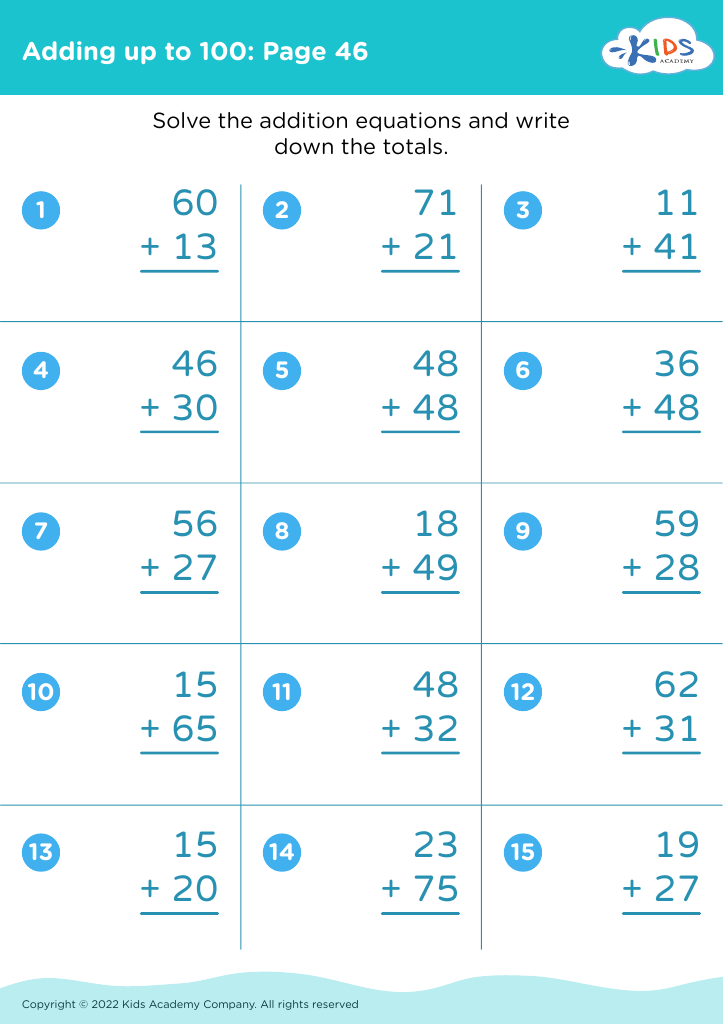
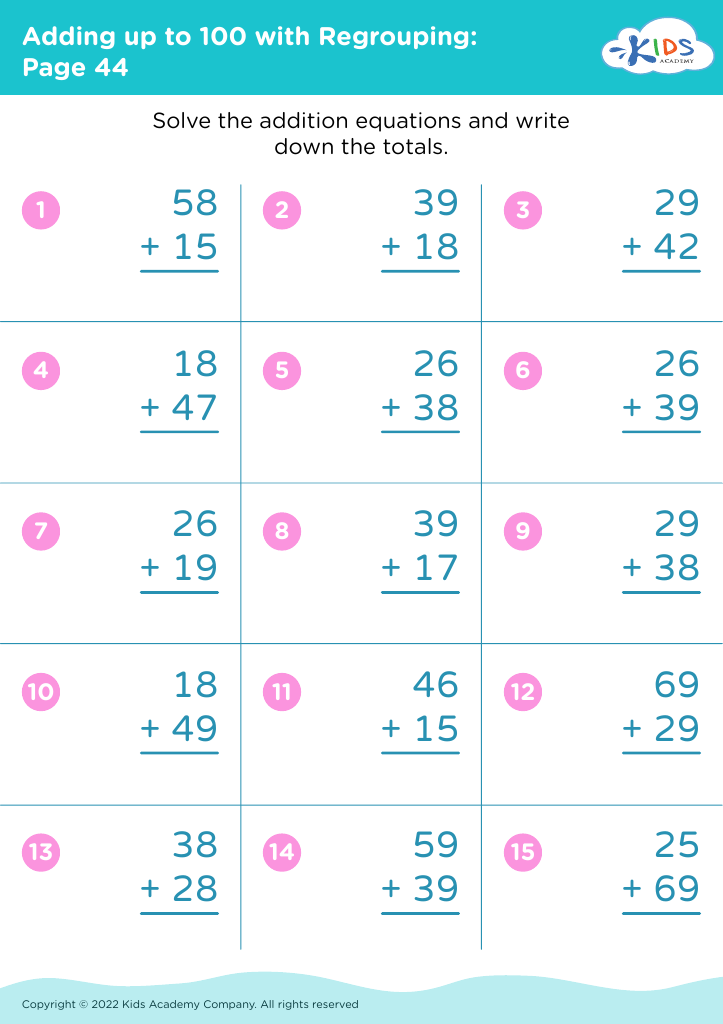
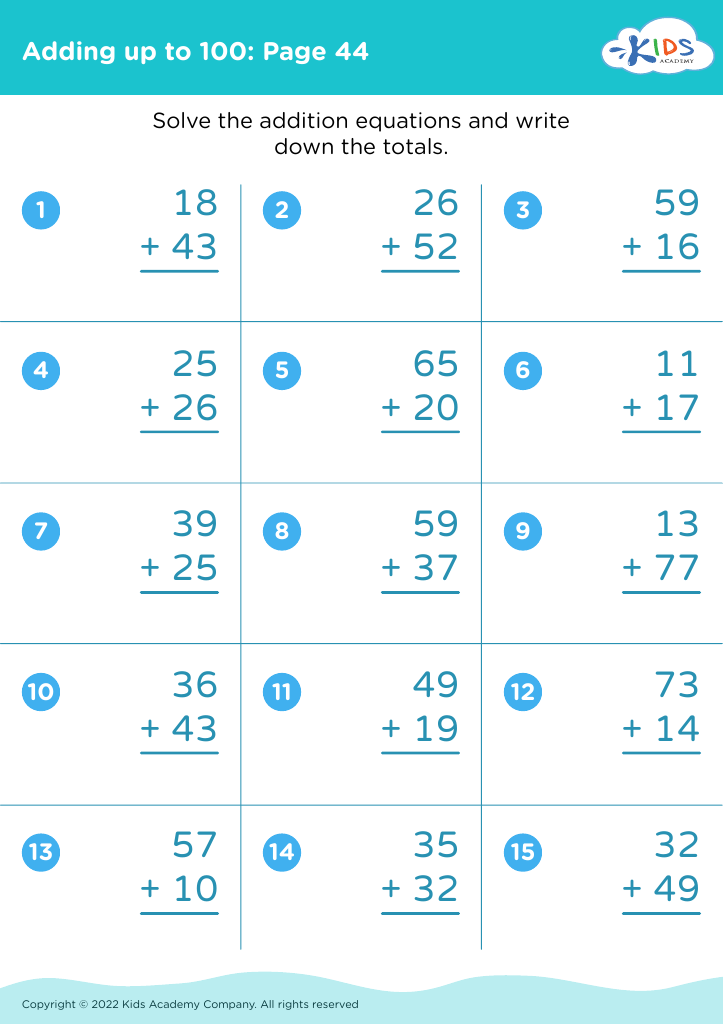
Ensuring that children aged 6-8 learn to add up to 100 is crucial for several key reasons. Firstly, this foundational math skill is essential for their future academic success. It helps kids understand and manage basic arithmetic, paving the way for more complex mathematical concepts like multiplication, division, and eventually, algebra.
Adding up to 100 enhances number sense, a vital cognitive ability that allows children to recognize relationships between numbers and observe mathematical patterns. This understanding not only aids their calculations but also develops critical thinking and problem-solving skills, which are applicable across all subjects and everyday scenarios.
Furthermore, achieving proficiency in this area boosts confidence. When children consistently succeed in math, they are more likely to develop a positive attitude towards learning and schooling in general. It prepares them for standardized tests and reduces anxiety related to math challenges.
From a developmental perspective, practicing addition up to 100 also improves focus and fine motor skills through activities like counting objects or writing numbers. It fosters mental agility and concentration, enhancing cognitive development overall.
Therefore, parents and teachers should prioritize this skill to build a strong educational foundation, crucial for broader success inside and outside the classroom. Investing time and effort in these early years yields long-term benefits, contributing to a child's overall intellectual growth and self-esteem.








