Recognizing shapes Adding up to 100 Worksheets for Ages 6-8
8 filtered results
-
From - To
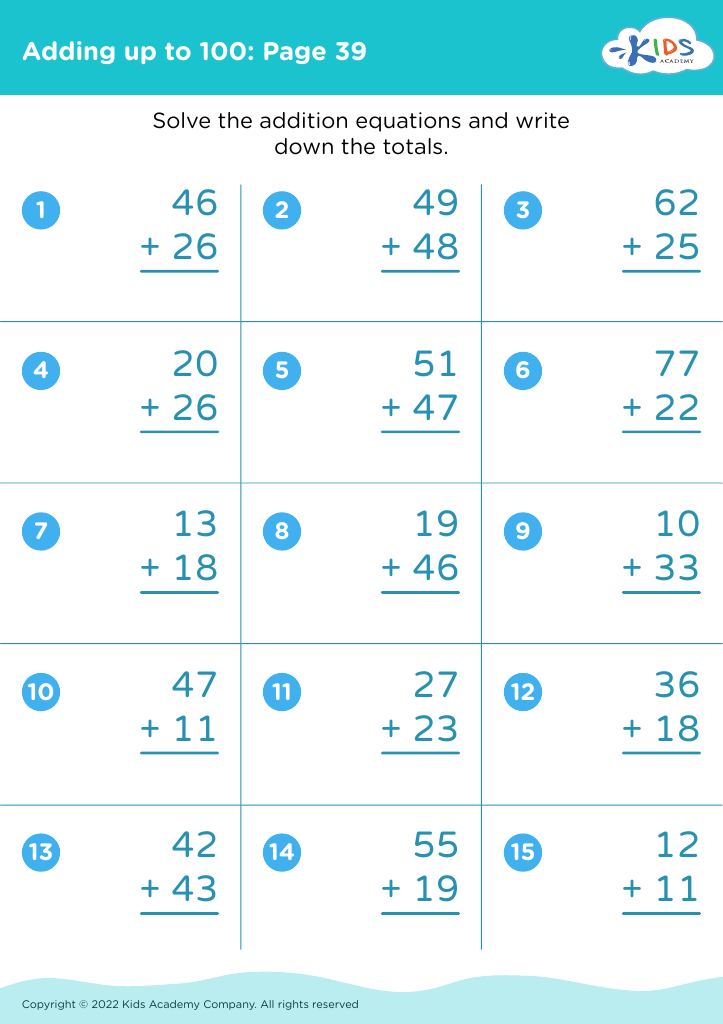
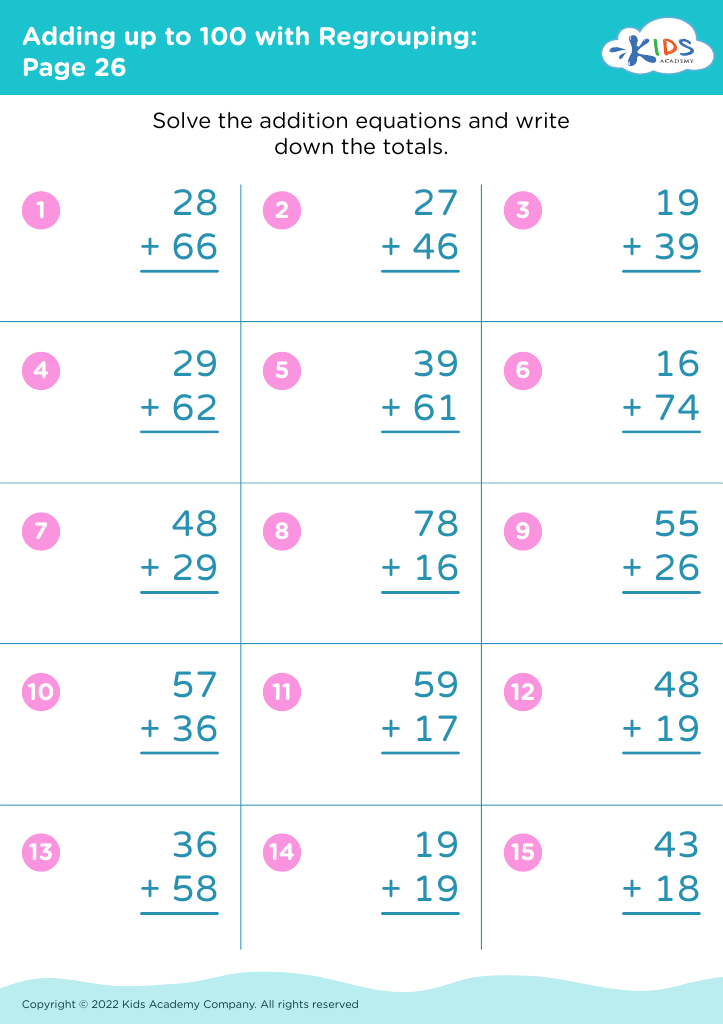
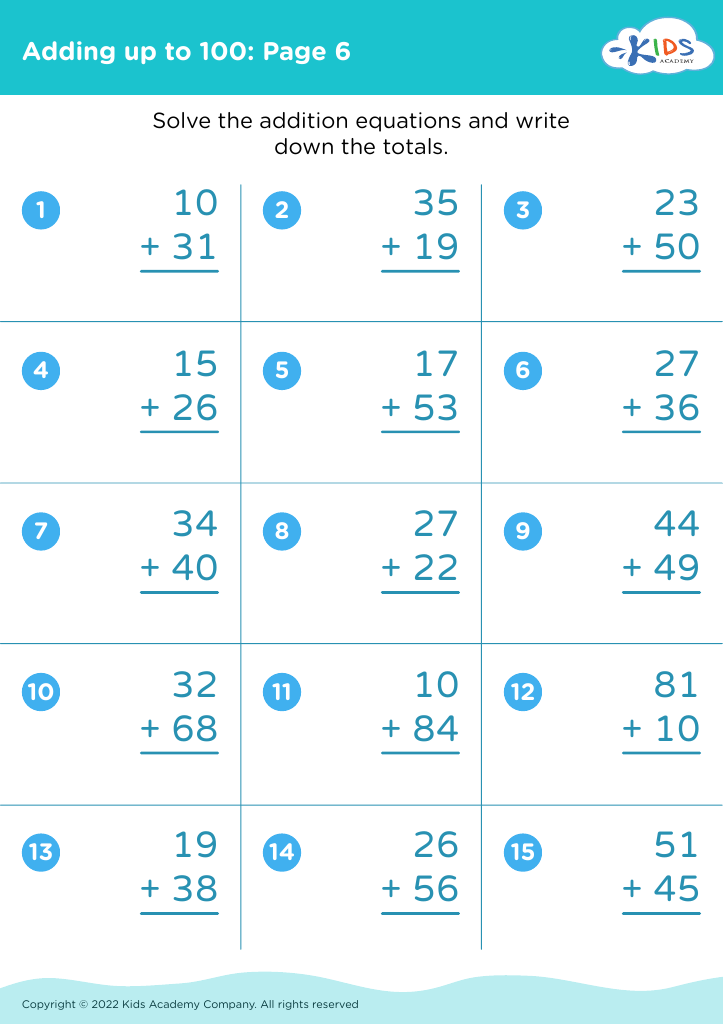
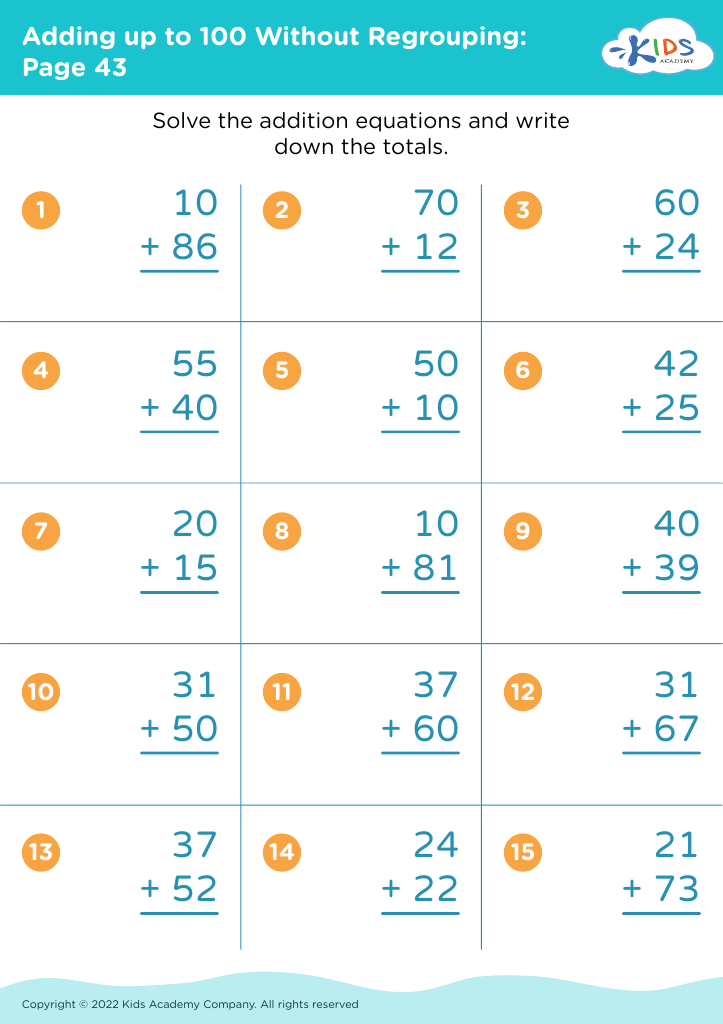
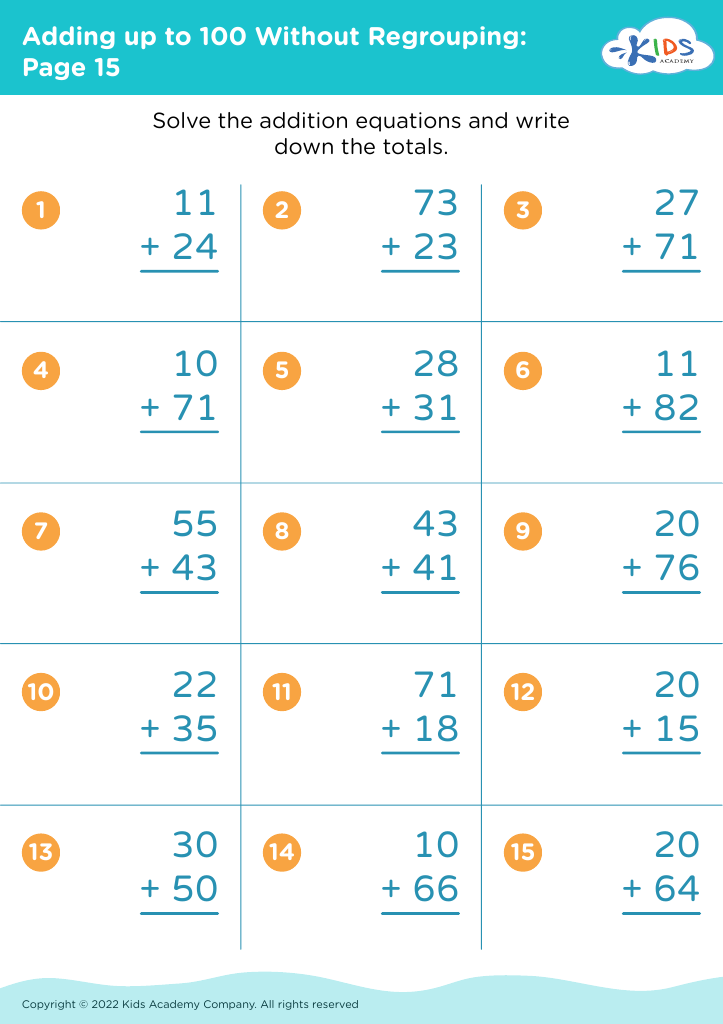
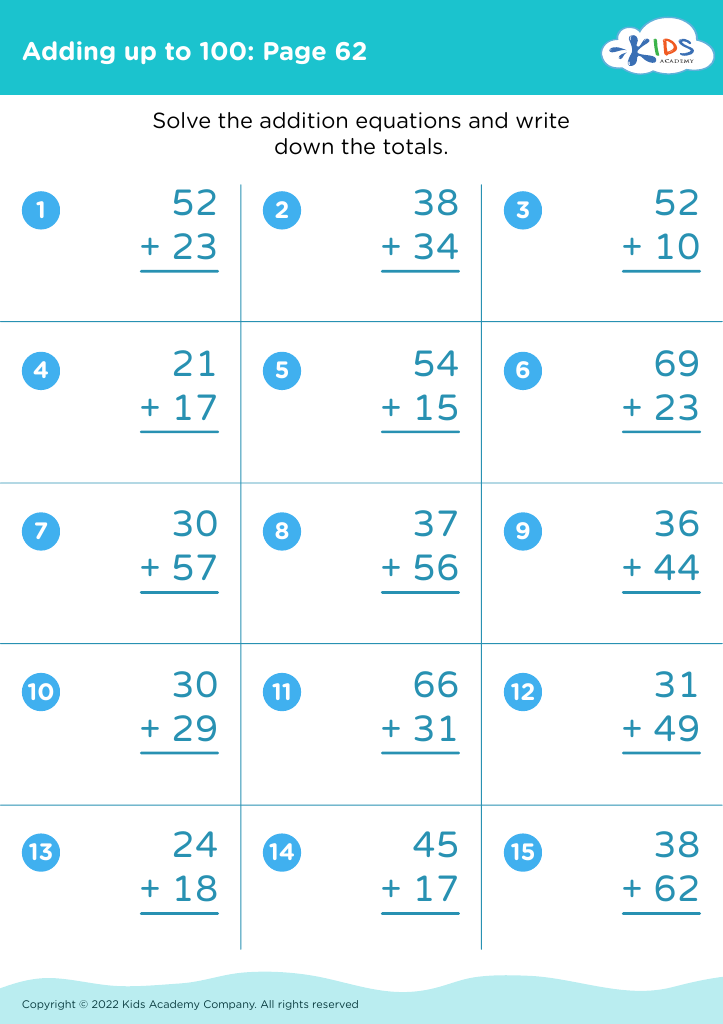
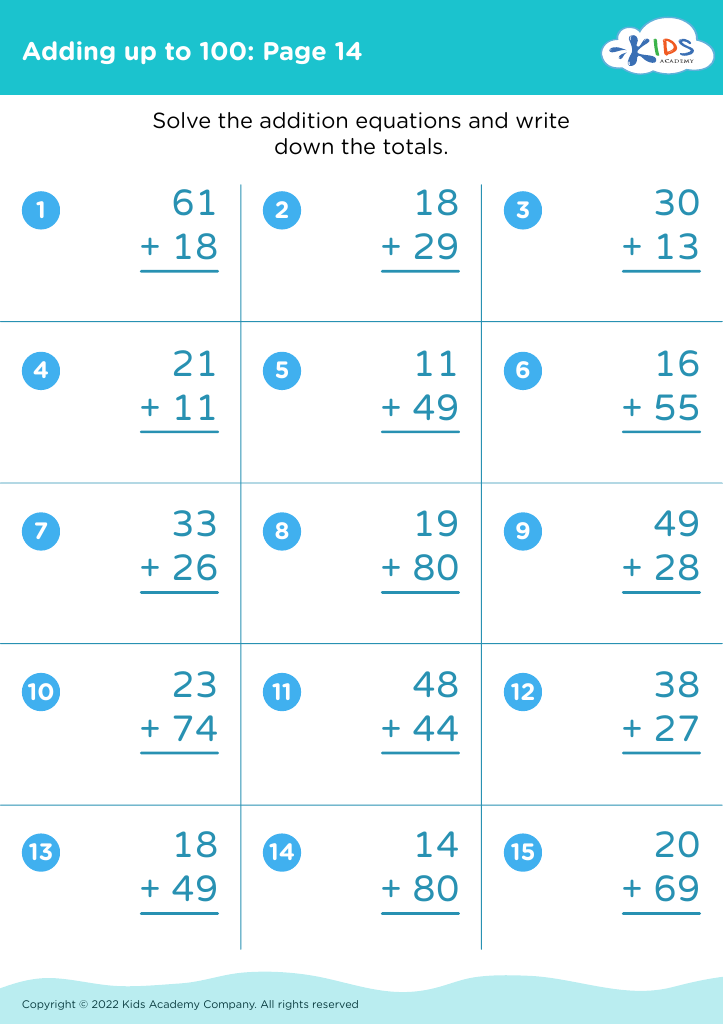
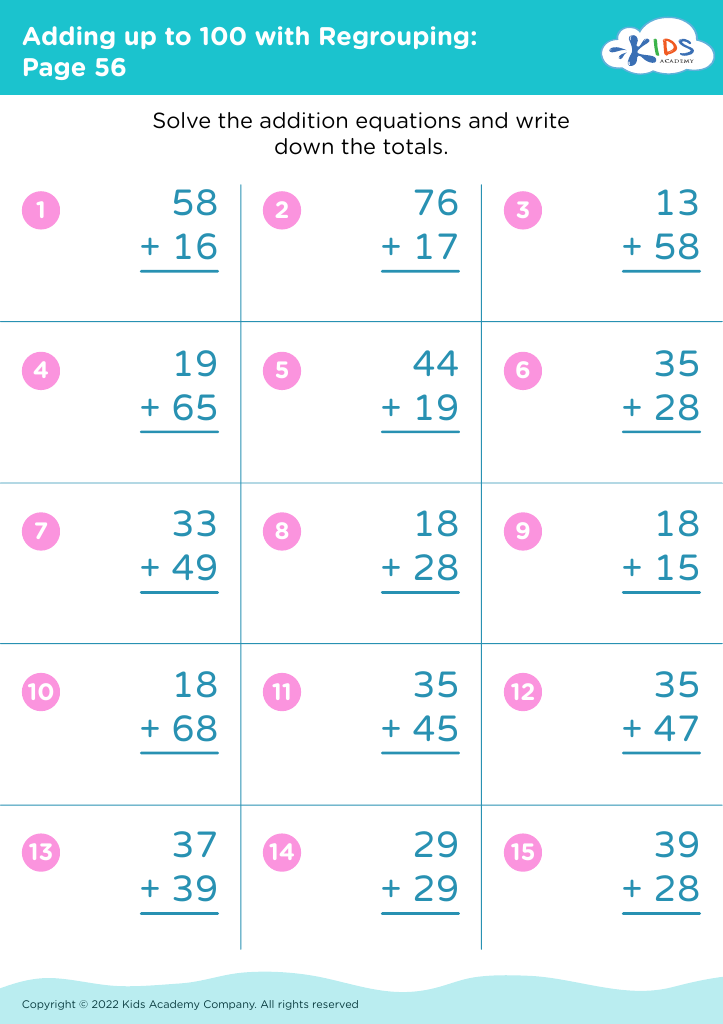
Introducing our "Recognizing Shapes Adding up to 100 Worksheets" designed specifically for children ages 6-8. These engaging worksheets combine geometry and math, allowing young learners to explore shapes while practicing addition skills up to 100. With vibrant visuals and age-appropriate activities, kids will strengthen their shape recognition abilities alongside their numerical understanding. Perfect for classroom settings or at-home learning, these worksheets promote critical thinking and problem-solving skills in a fun and interactive way. Watch your child gain confidence as they master both shapes and addition, setting the foundation for future success in math! Start enhancing their learning journey today!


%20(1).jpg)




Recognizing shapes and understanding how they can be combined to add up to 100 is crucial for children aged 6-8 as it lays the foundation for mathematical reasoning and spatial awareness. This age group is critical for cognitive development, where children begin to make connections between geometric concepts and real-world applications.
Shape recognition enhances visual-spatial skills, allowing children to identify and manipulate different shapes, preparing them for more complex mathematical challenges. When children learn to add shapes to reach a total of 100, they practice basic arithmetic while also developing problem-solving skills and logical reasoning. Such activities promote critical thinking, as they must visualize how different shapes fit together.
Moreover, engaging in these learning activities fosters creativity and allows children the opportunity to explore concepts in a hands-on manner. It encourages collaboration when working in groups to solve shape-related problems, promoting communication and social skills.
Ultimately, recognizing shapes and their potential combinations strengthens a child's overall mathematical foundation, essential for success in future math-related endeavors. Parents and teachers play pivotal roles in nurturing these skills, ensuring that children are prepared for more advanced concepts as they progress through their education.








