Adding up to 1000 Without Regrouping Worksheets for Ages 6-8 - Page 3
73 filtered results
-
From - To
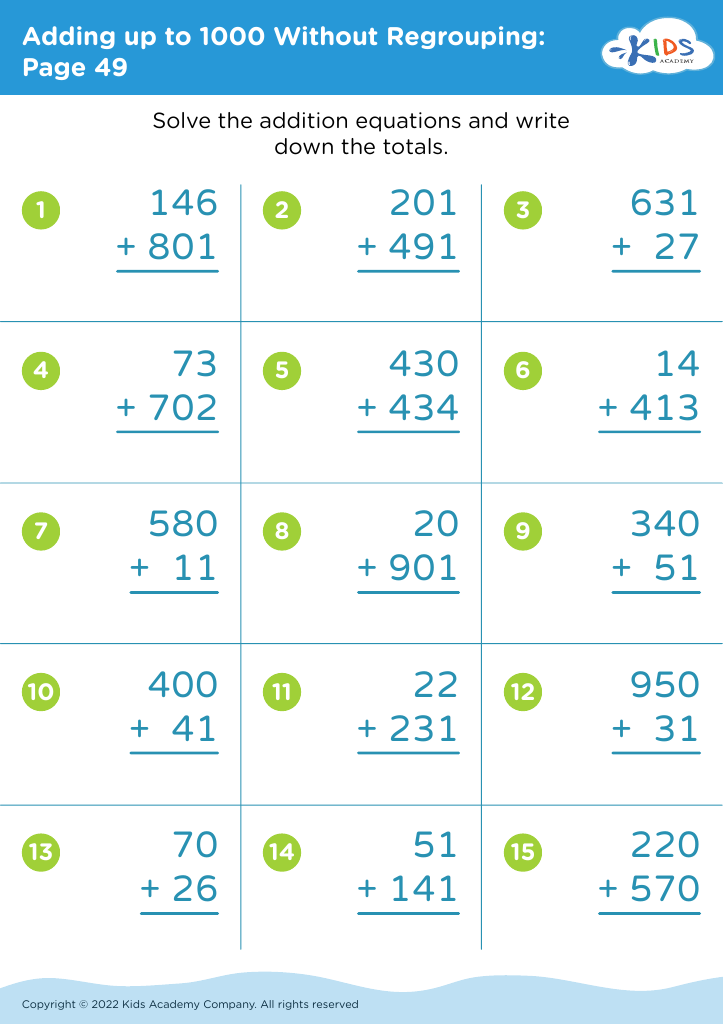
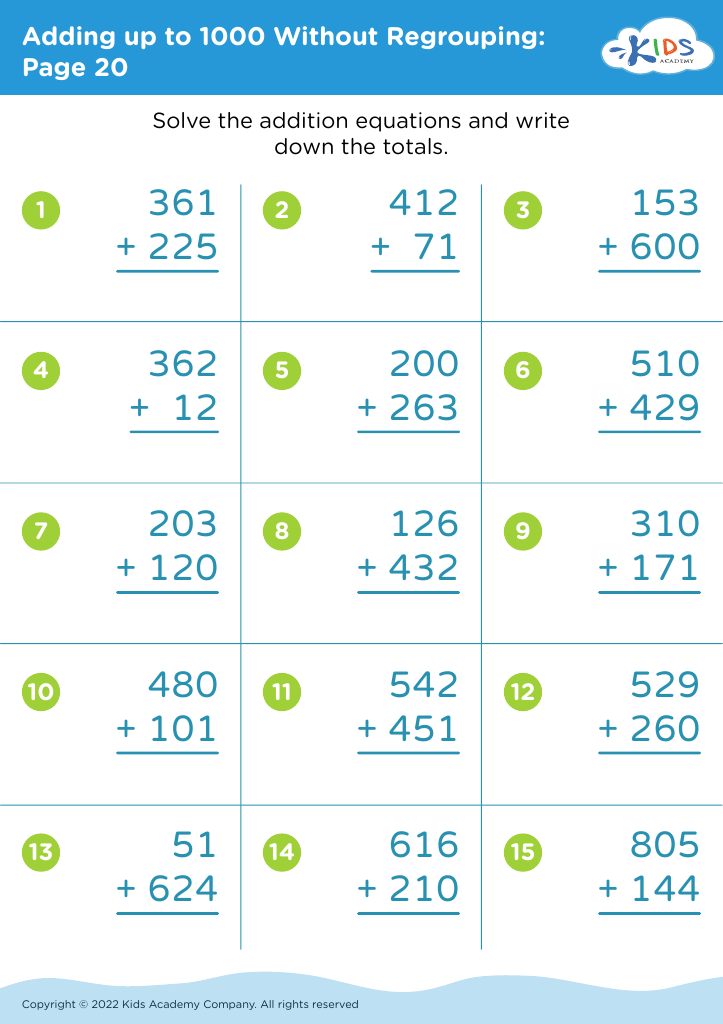
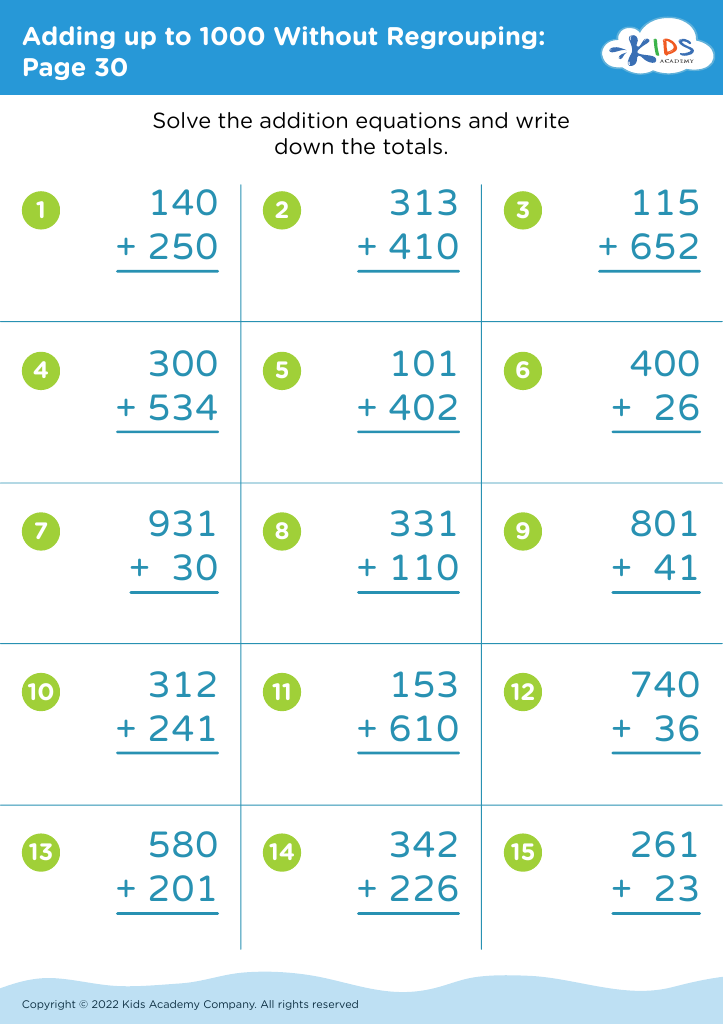
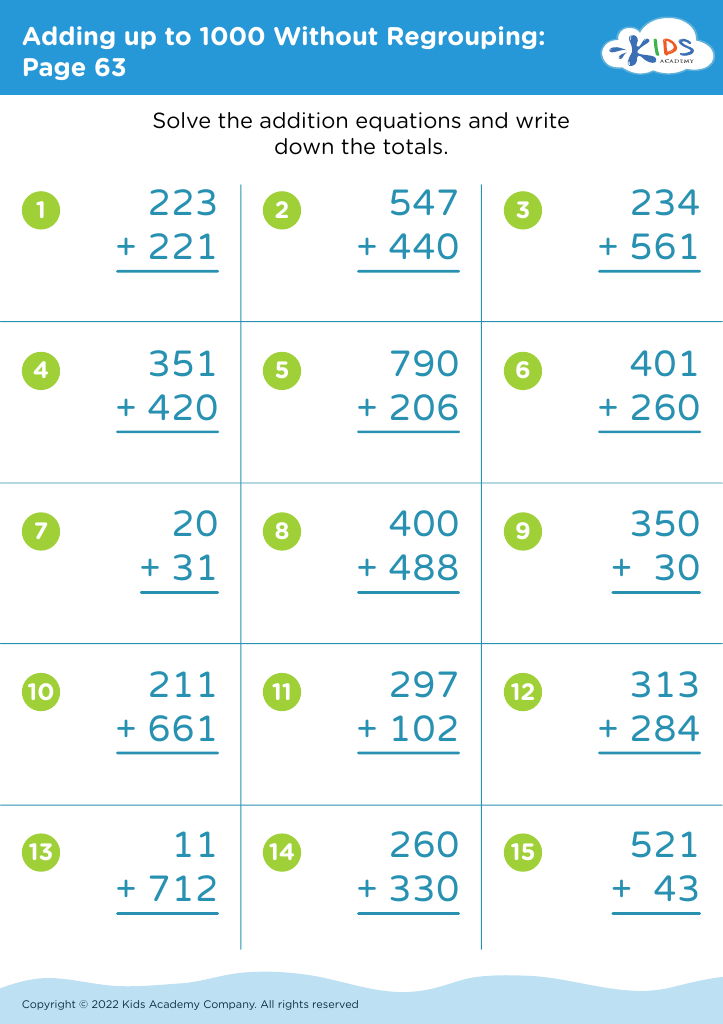
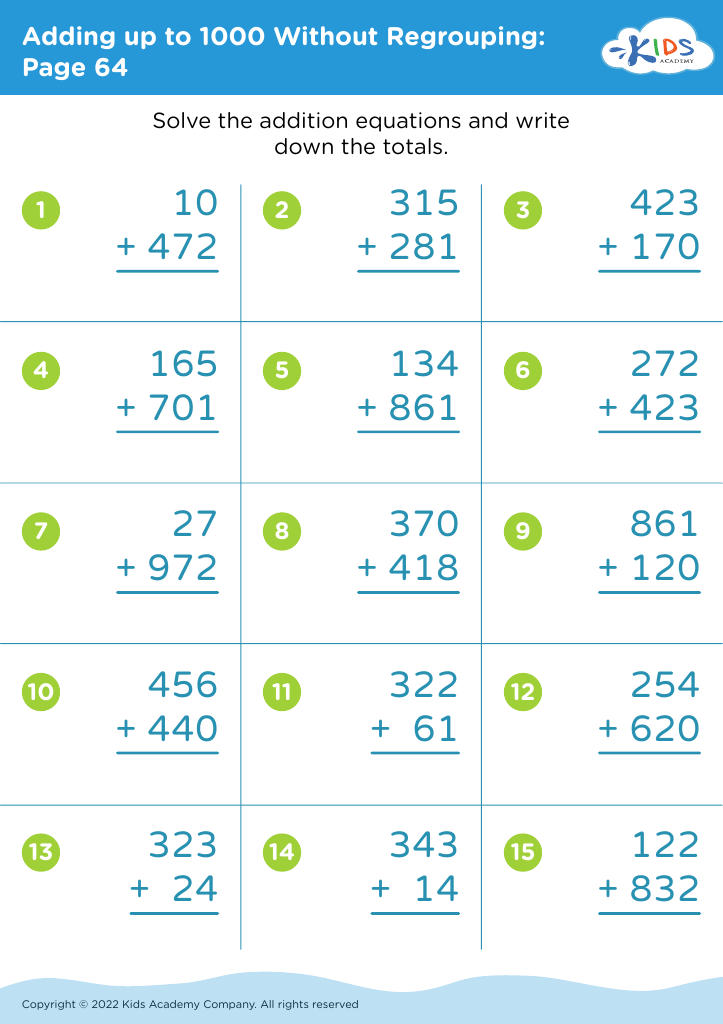
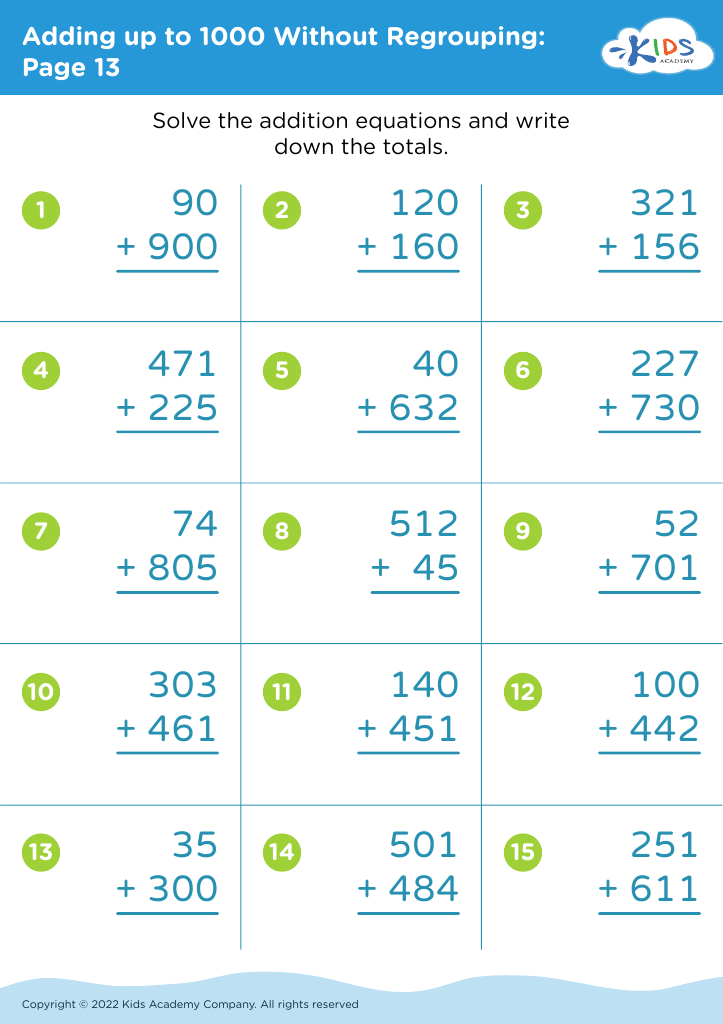
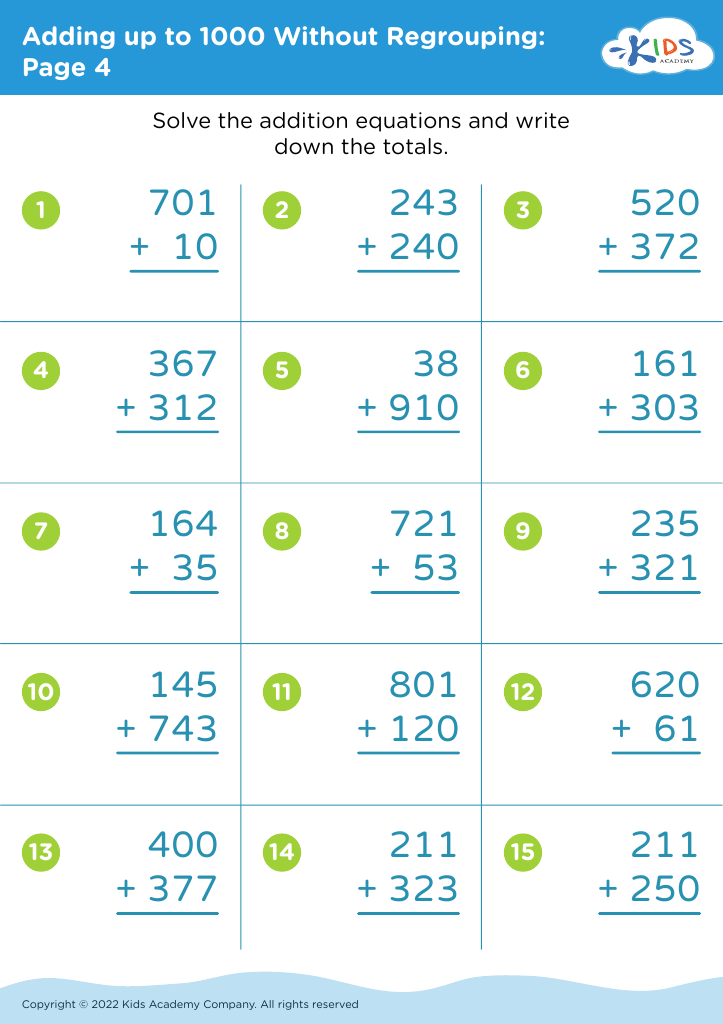
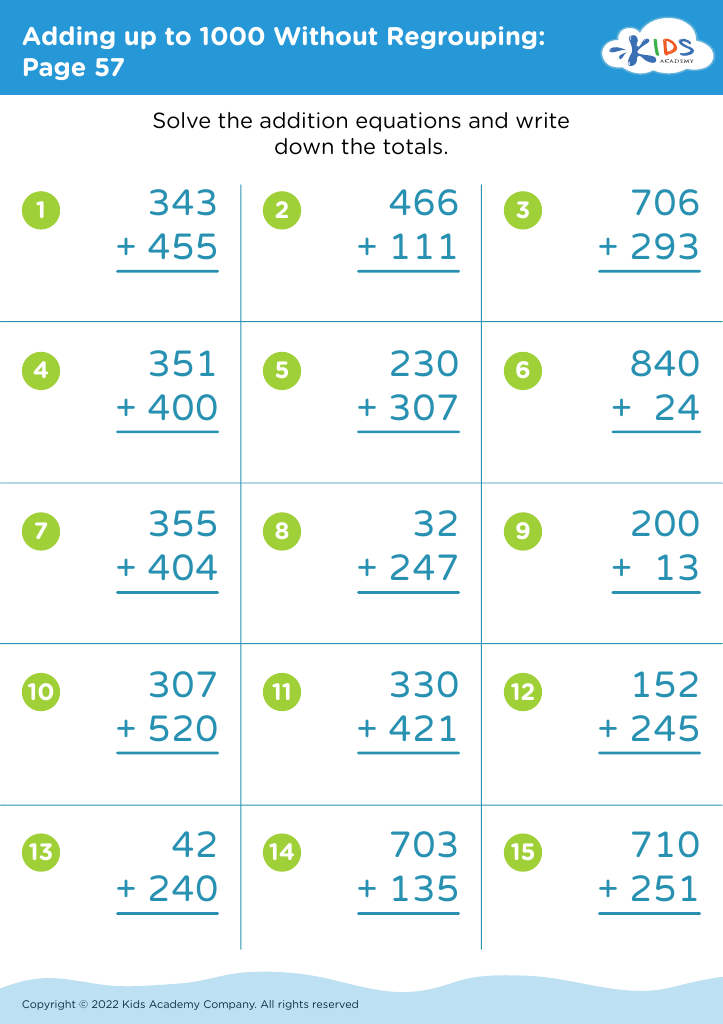
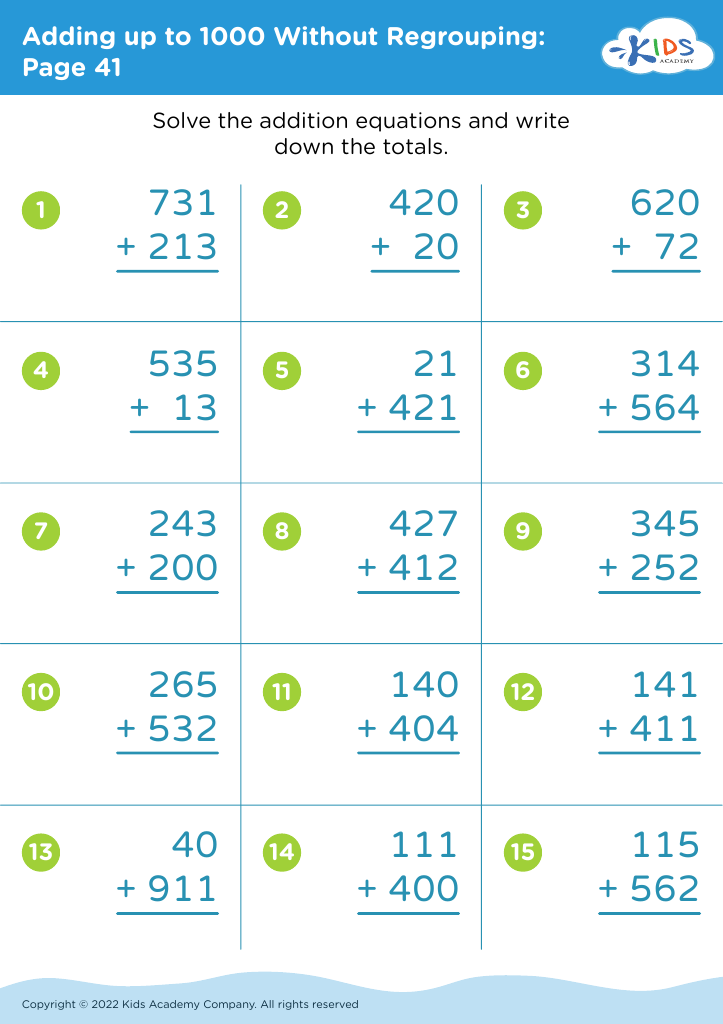
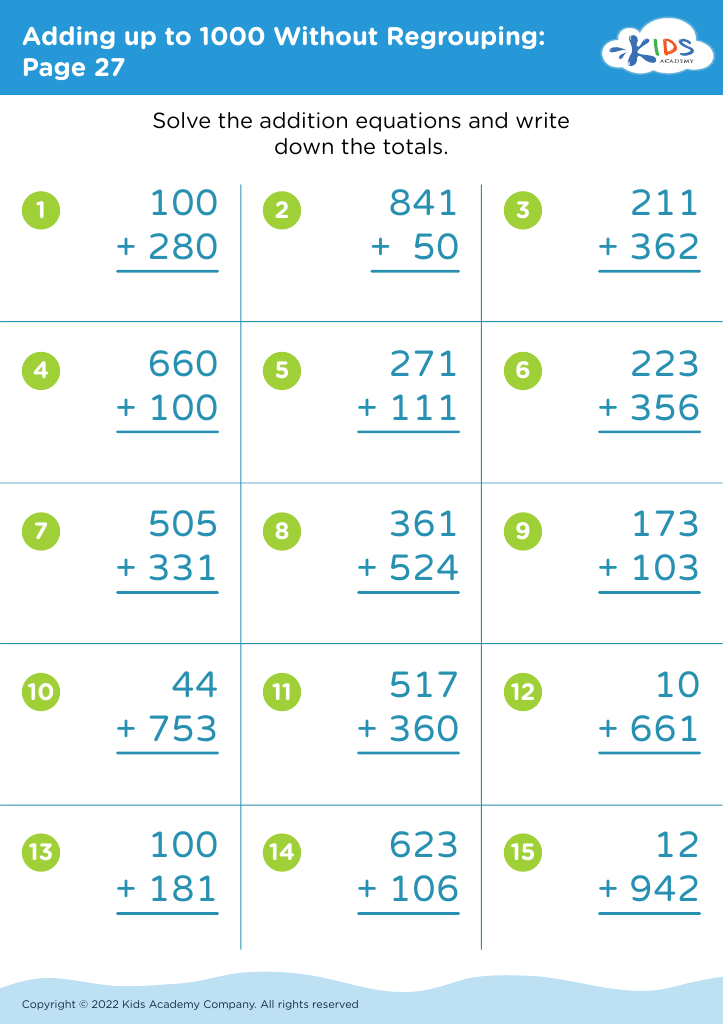
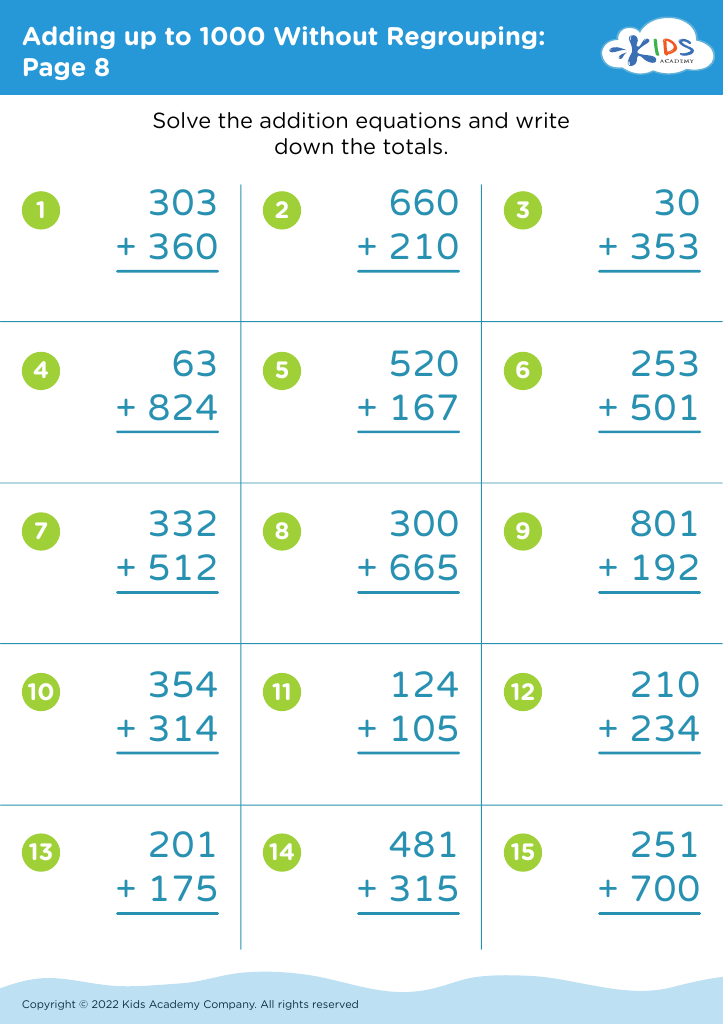
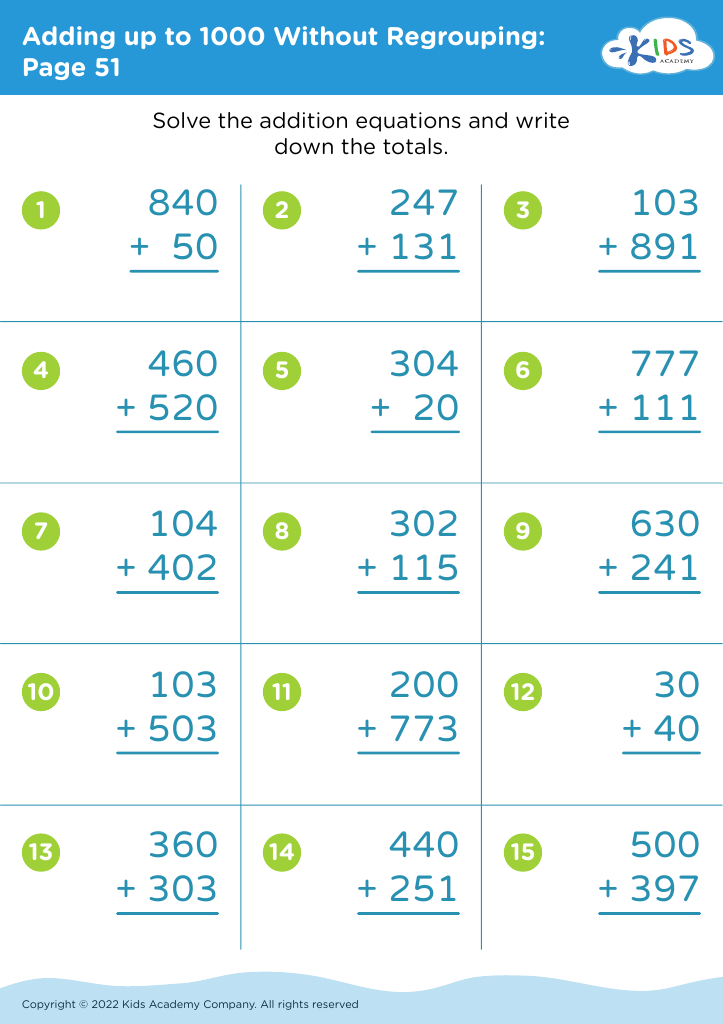
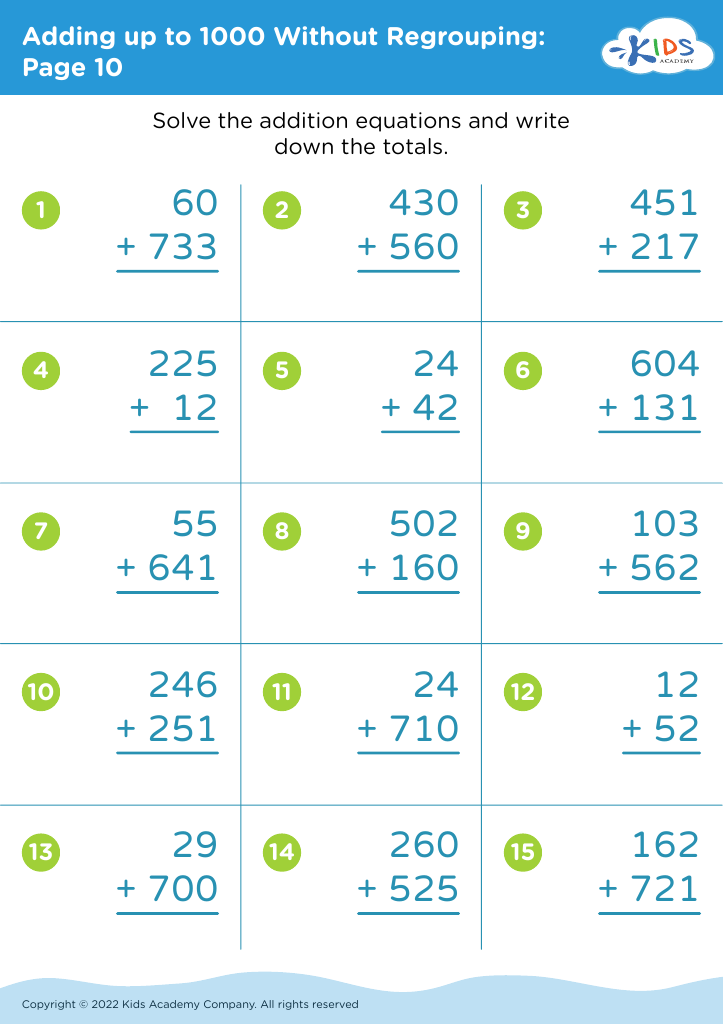
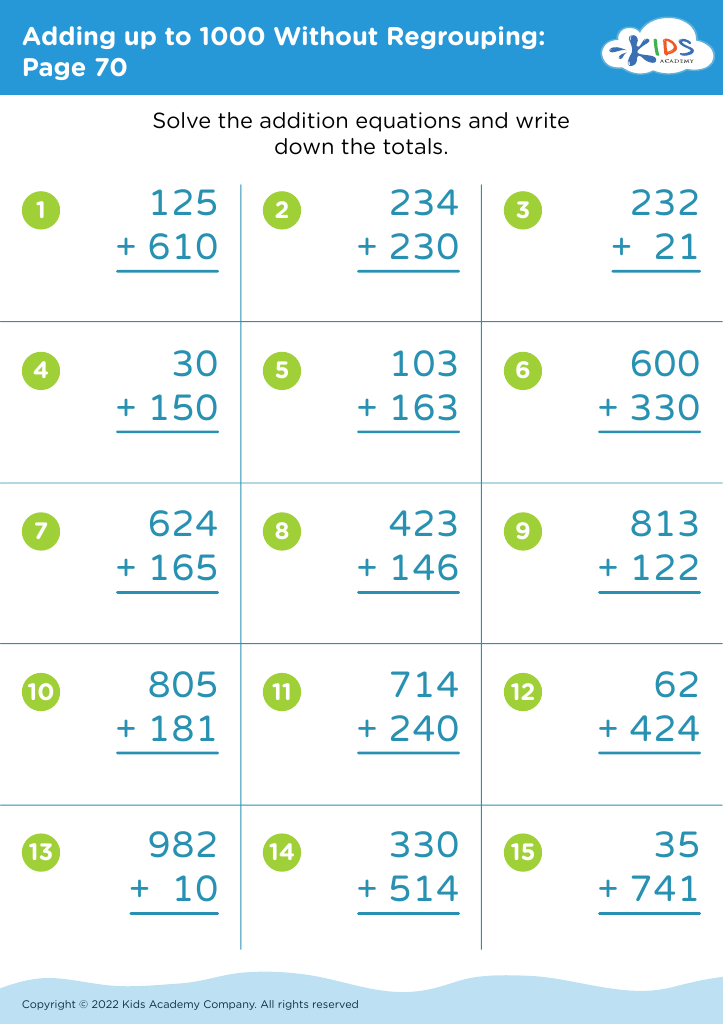
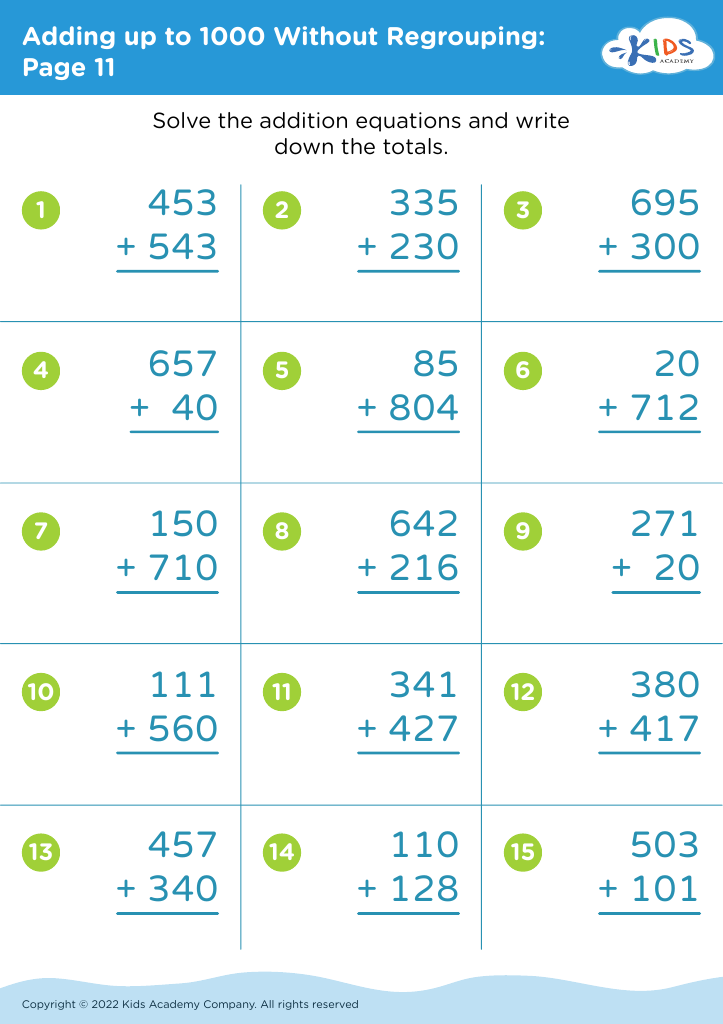
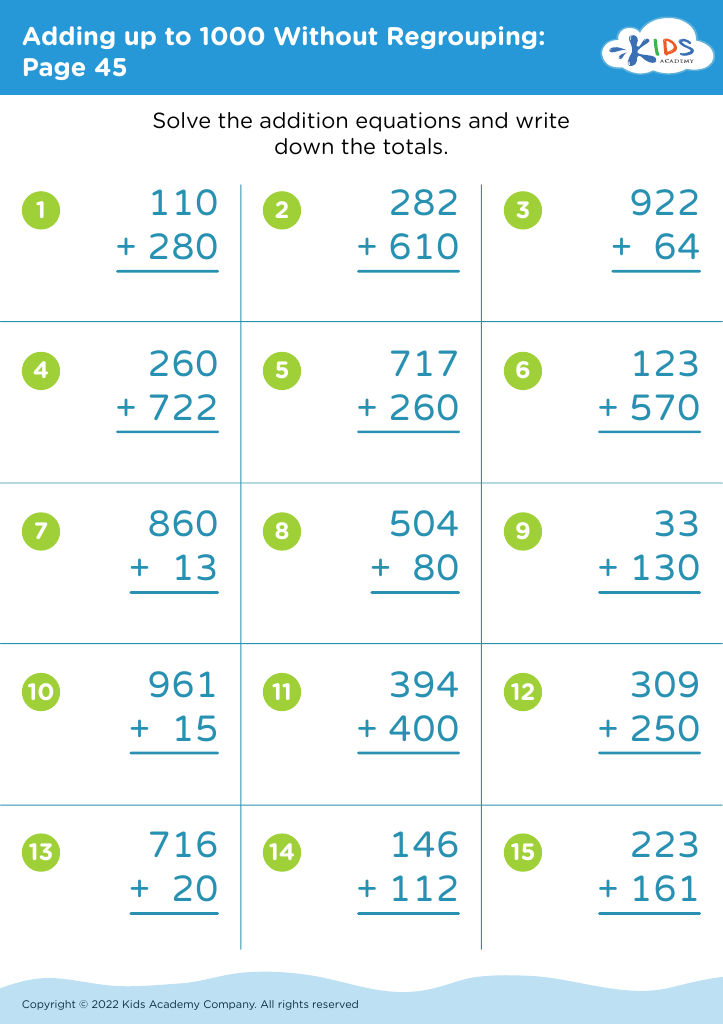
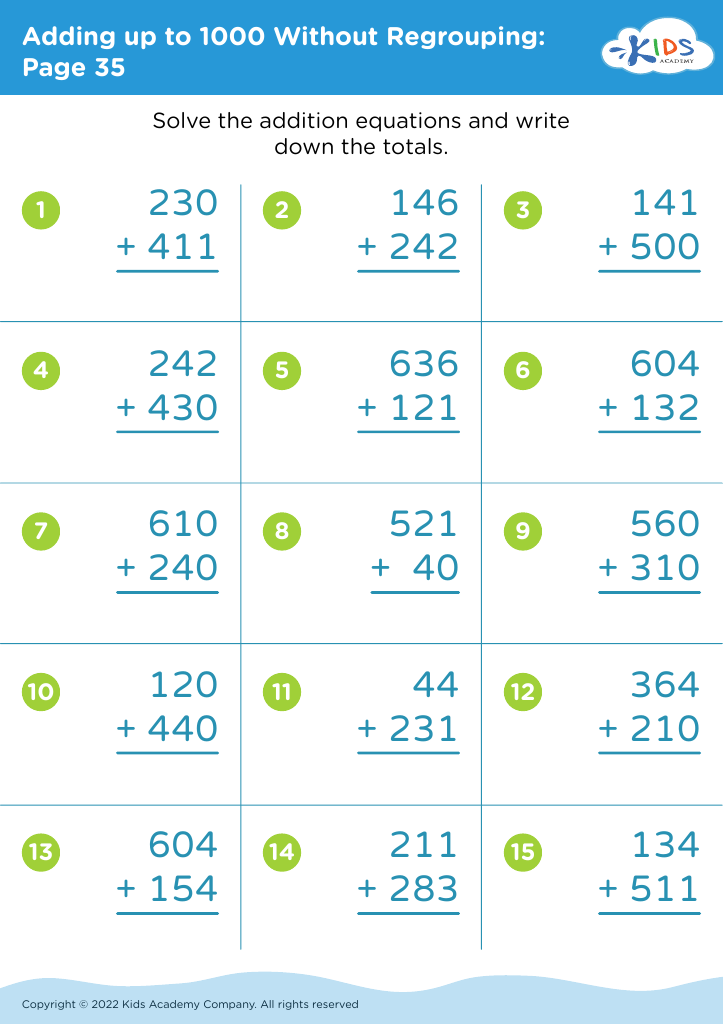
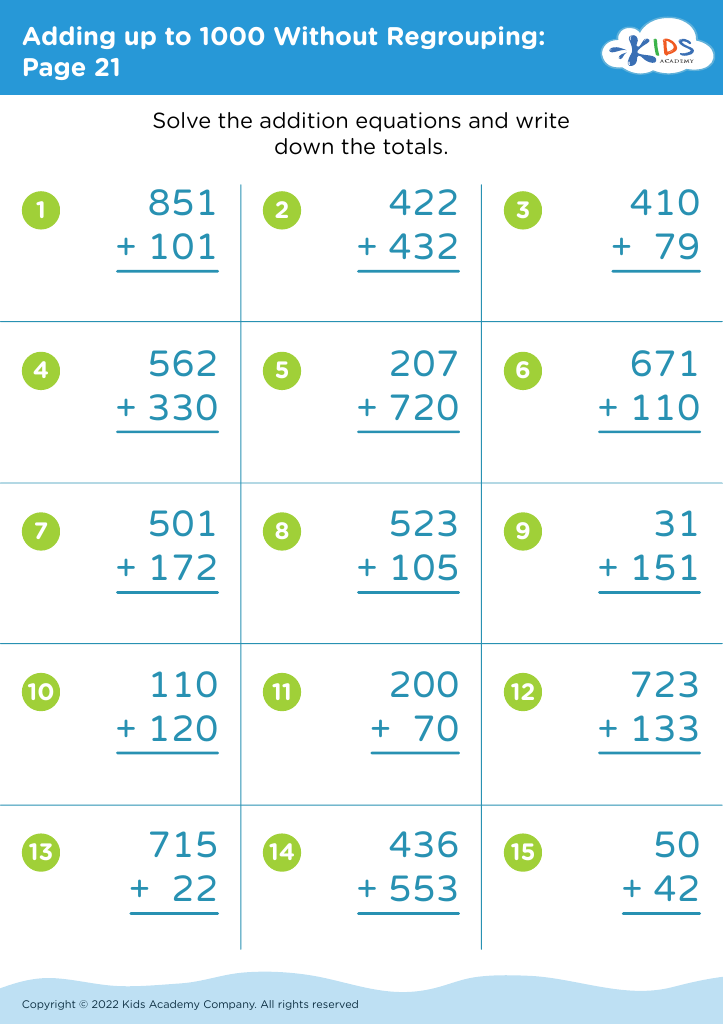
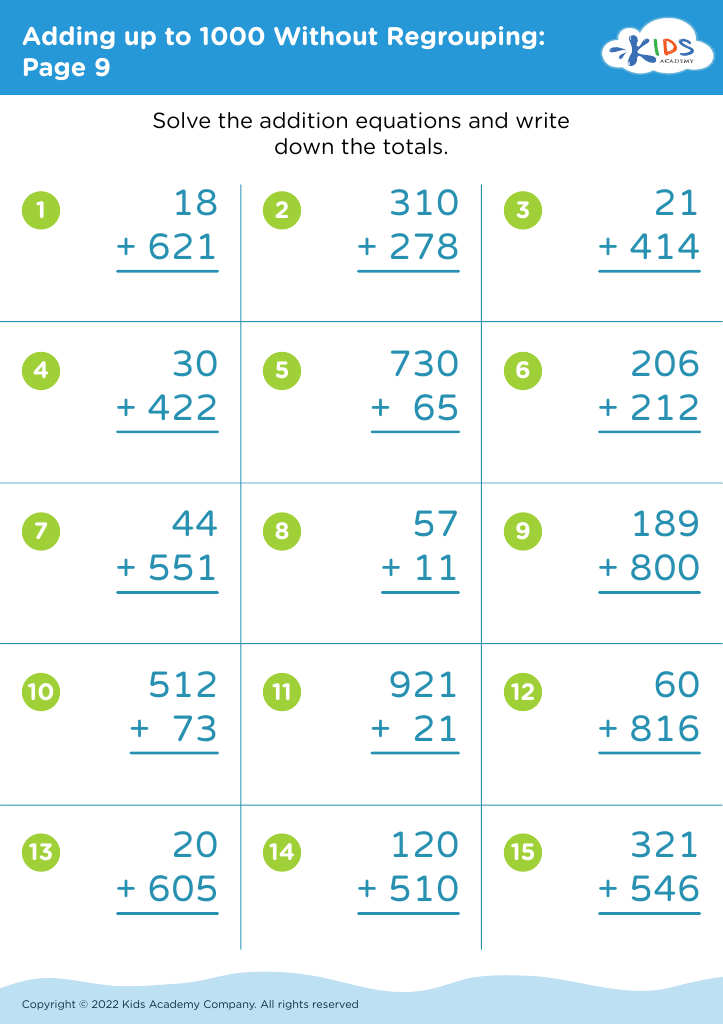
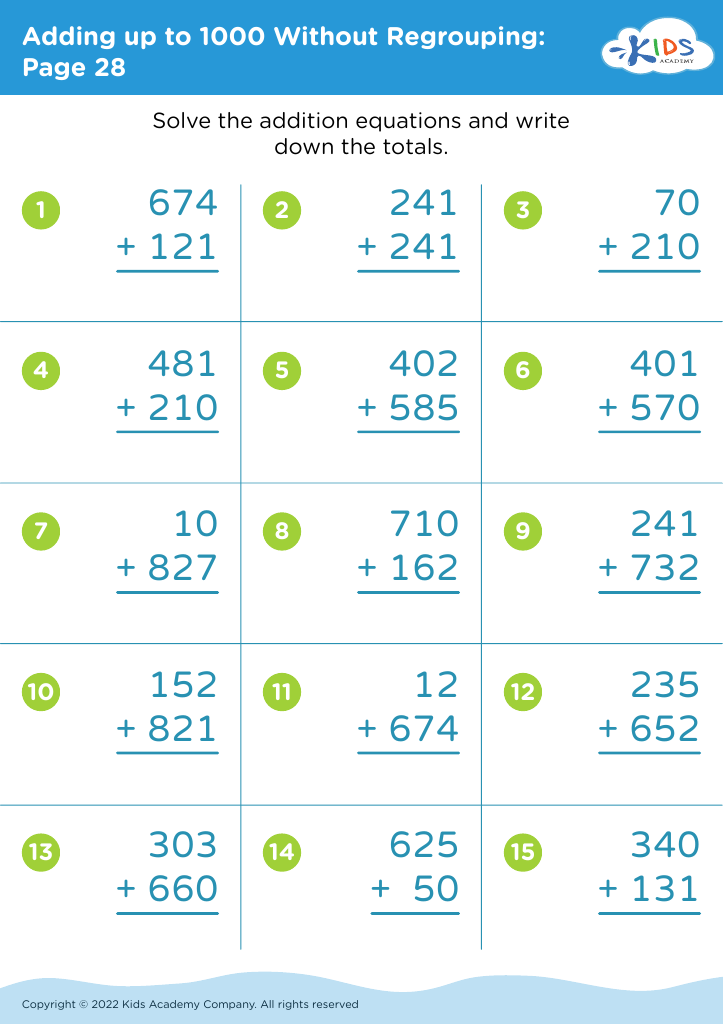
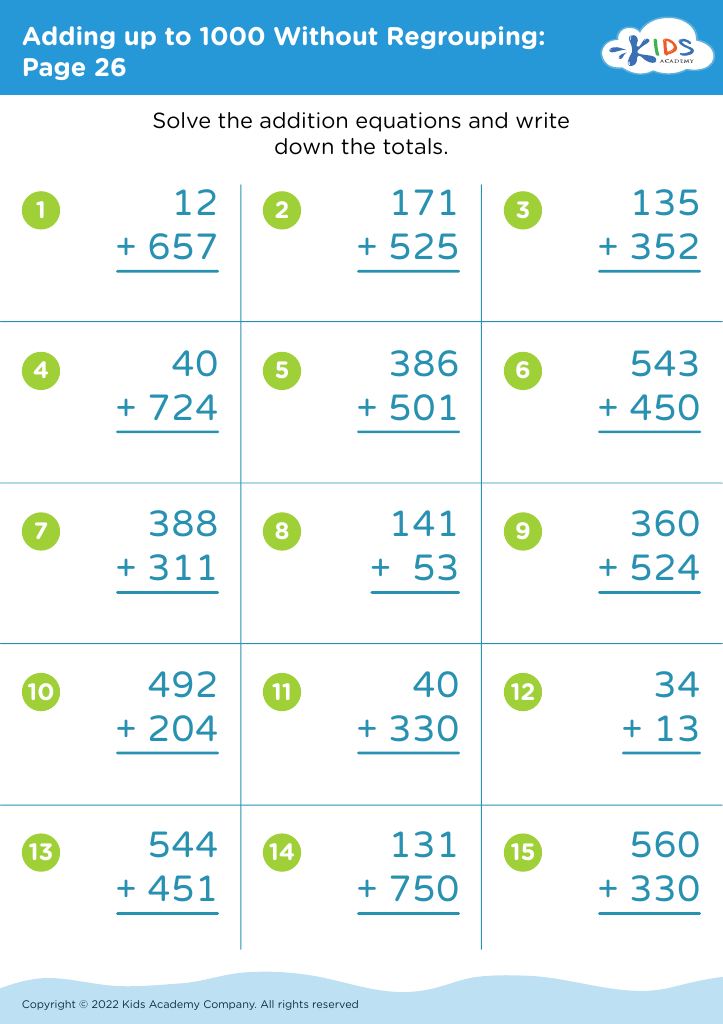
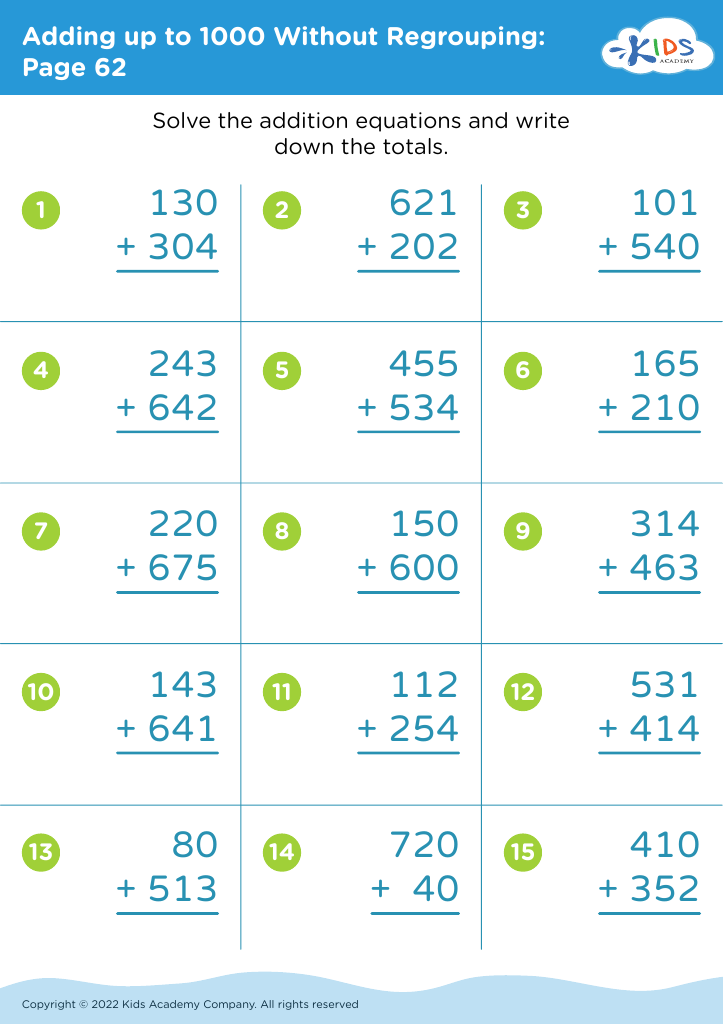
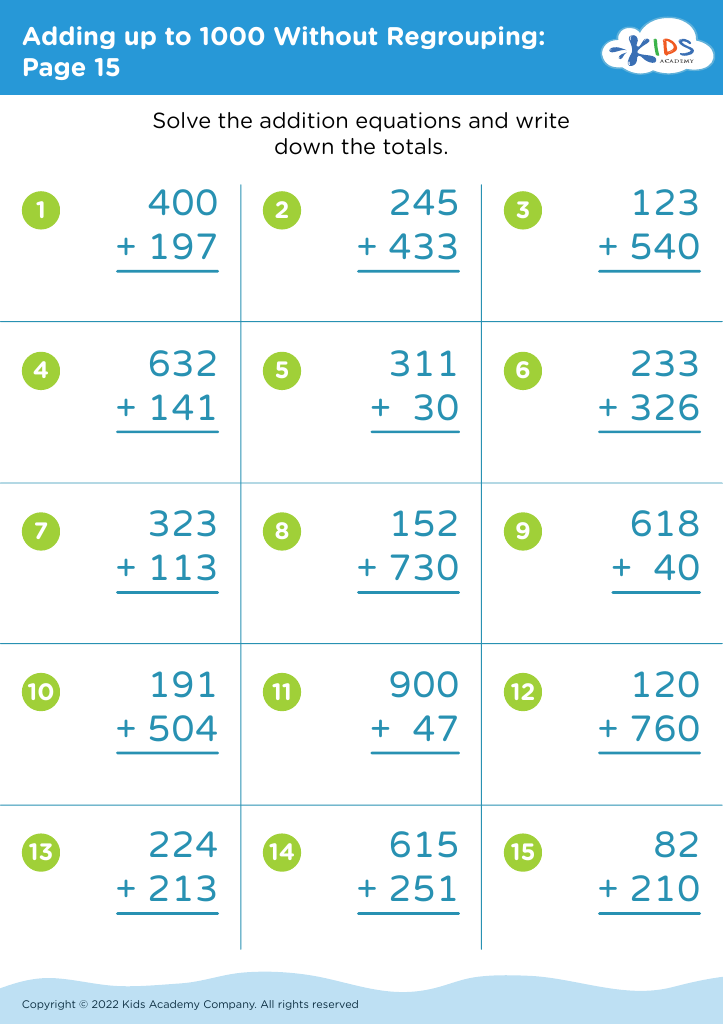
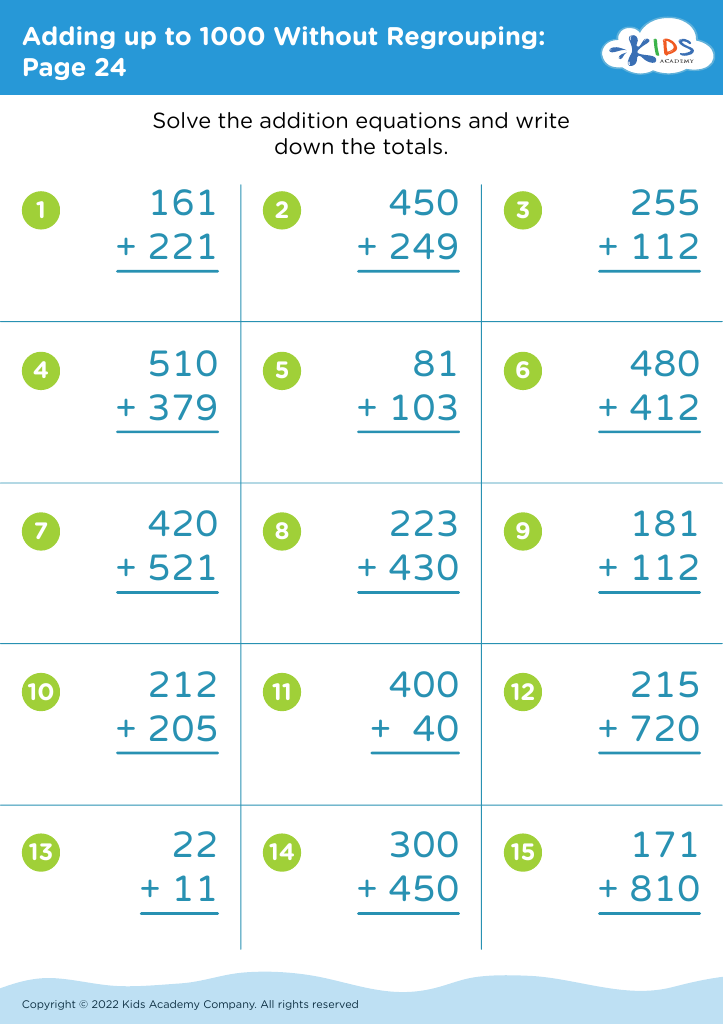



Adding up to 1000 without regrouping is a fundamental skill for children aged 6-8 as it lays the groundwork for more complex arithmetic and problem-solving abilities in future education. Mastering this concept ensures that children understand basic place value - focusing on hundreds, tens, and ones. When children grasp the ease of adding large numbers without regrouping, they build confidence in their math skills, which is crucial for their academic self-esteem.
Parents and teachers should mitigate the fear often associated with large numbers. By breaking down operations into simpler steps, children not only find math more approachable but also learn to enjoy it. Mastering addition without regrouping encourages logical thinking and precision. It’s different from regular counting because it requires the child’s brain to juggle multiple numbers and positions at once.
In practical terms, these skills help kids in everyday situations, like adding up bills and calculating distances. Learning to add correctly prepares them for future academic challenges that involve regrouping and advanced operations like multiplication and division. Most importantly, it promotes a solid math foundation vital for STEM subjects and innumerable real-life applications, nurturing a generation of thinkers, problem-solvers, and innovators.
Therefore, parents and teachers should prioritize adding up to 1000 without regrouping as a milestone in a child's math education.