Counting skills Adding up to 50 Worksheets for Ages 6-8 - Page 2
34 filtered results
-
From - To
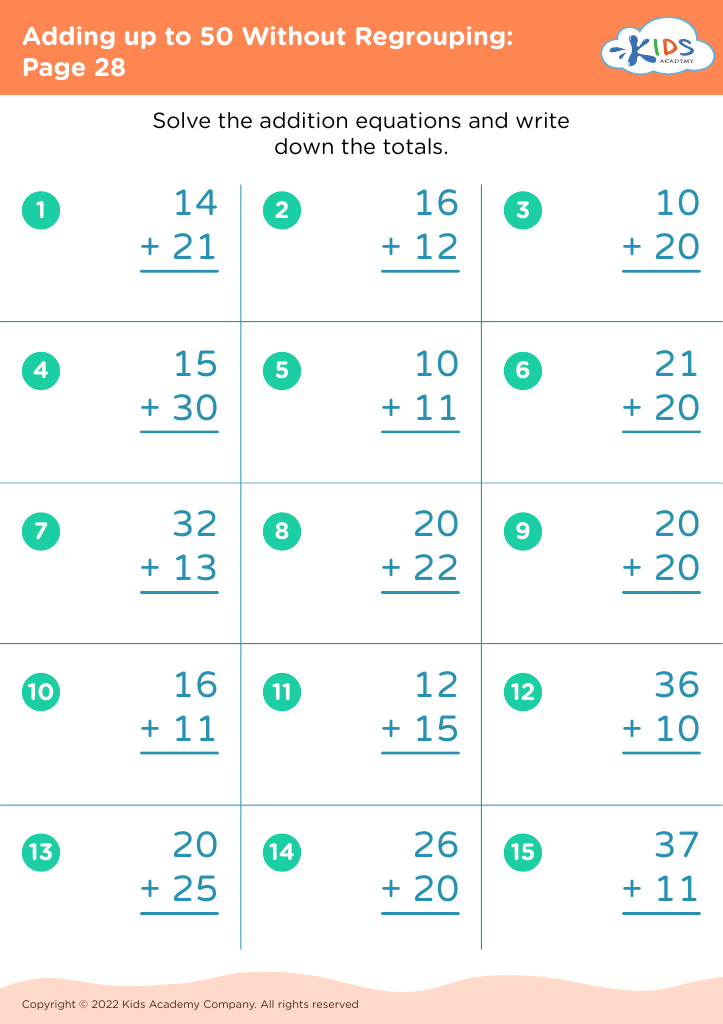
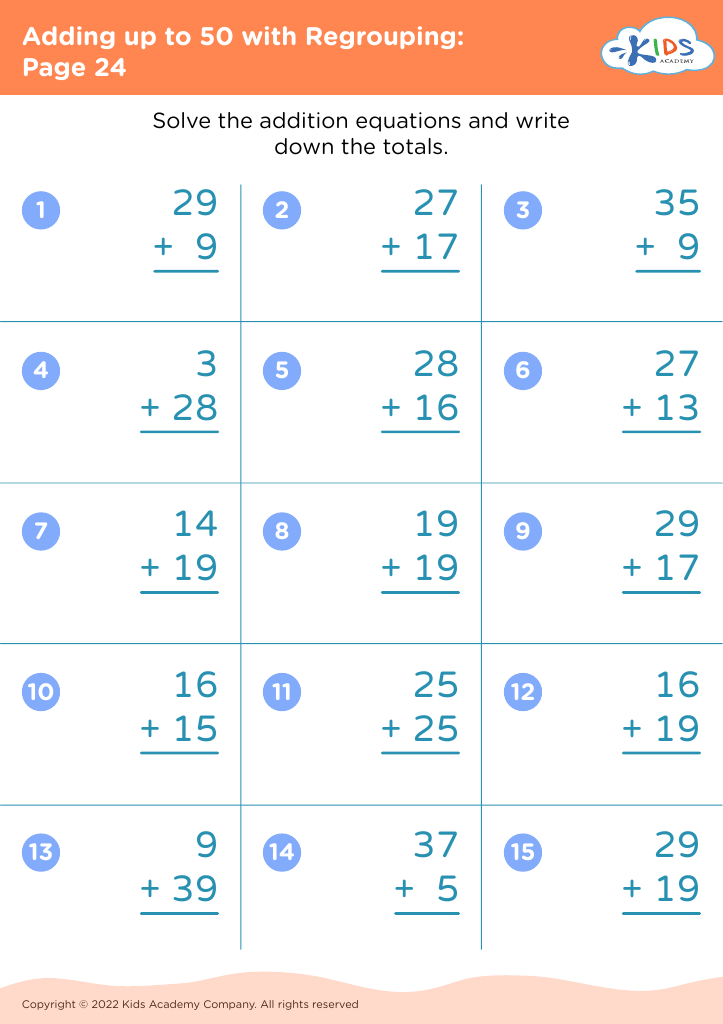
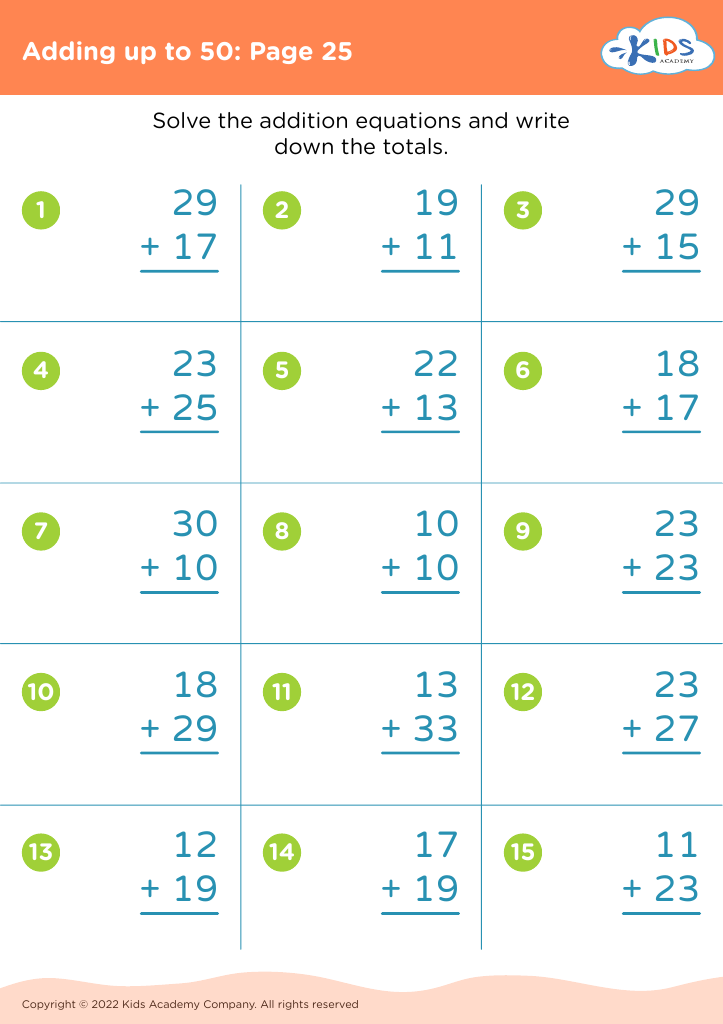
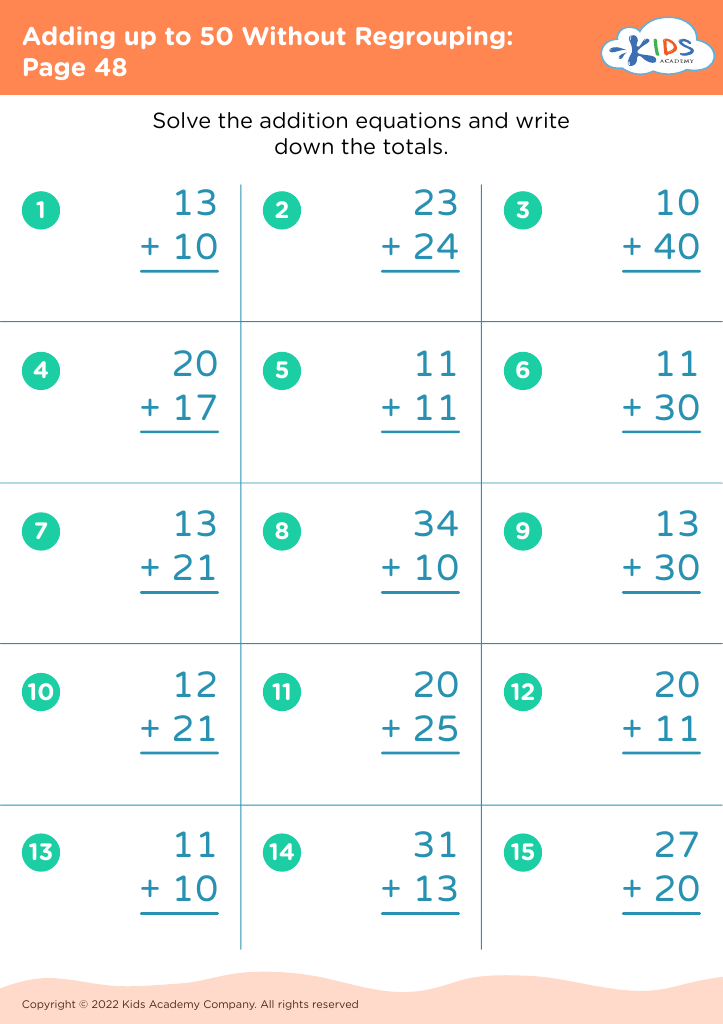
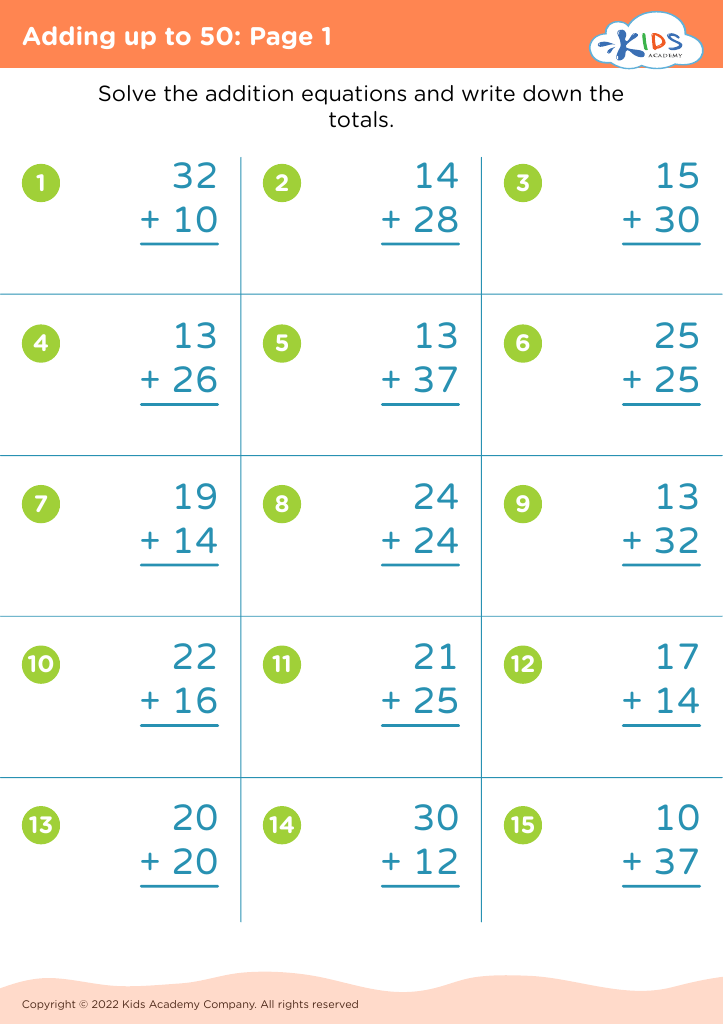
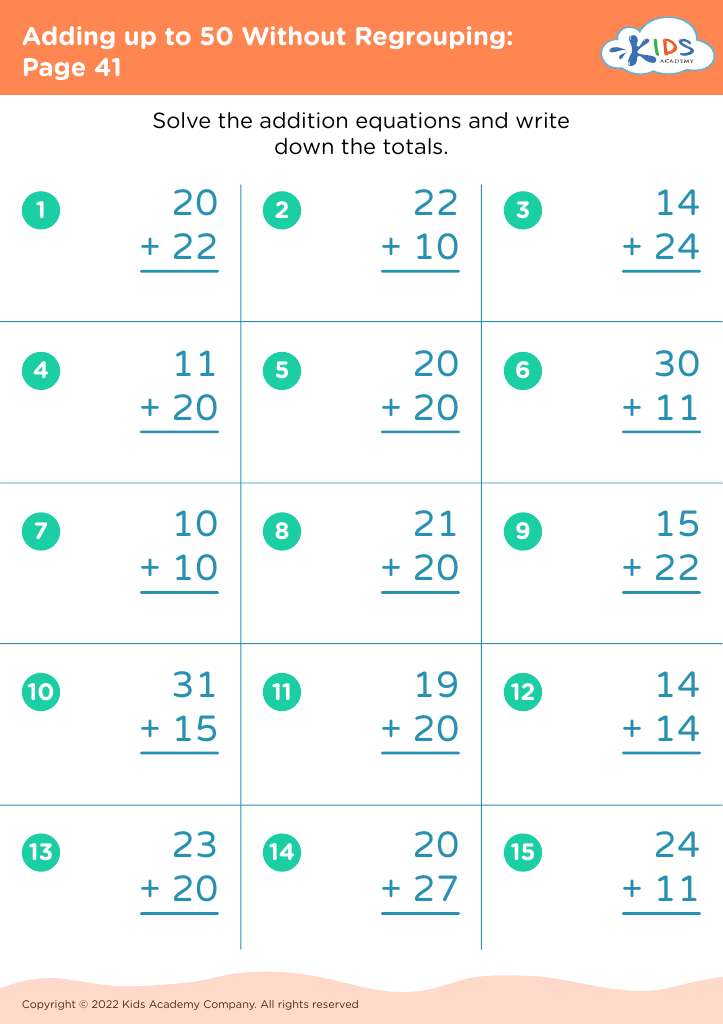
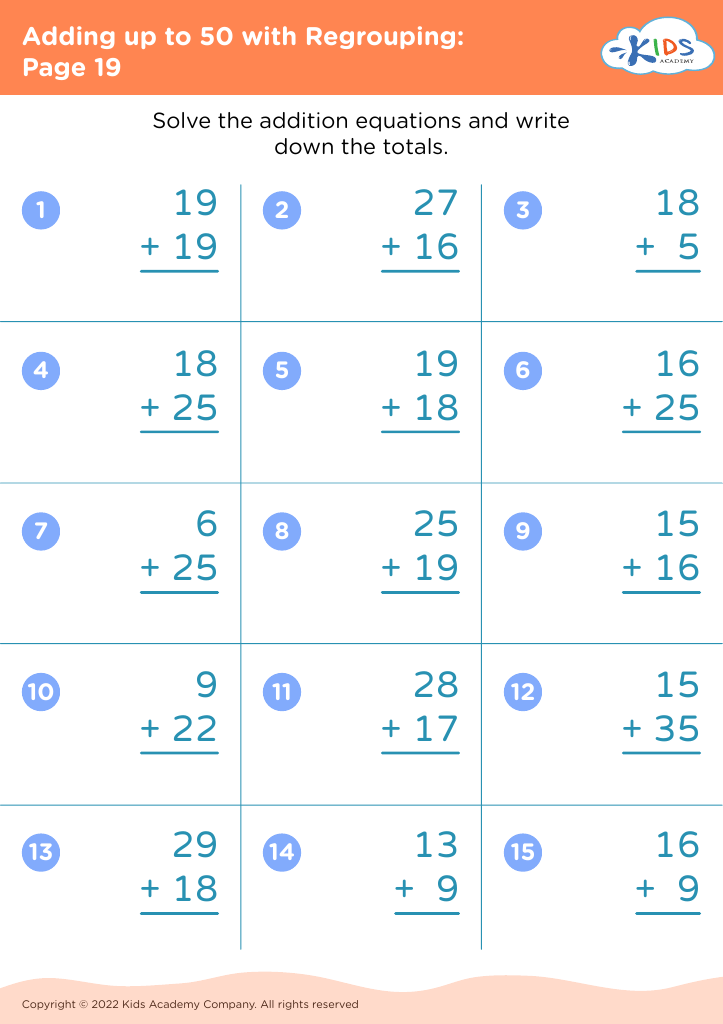
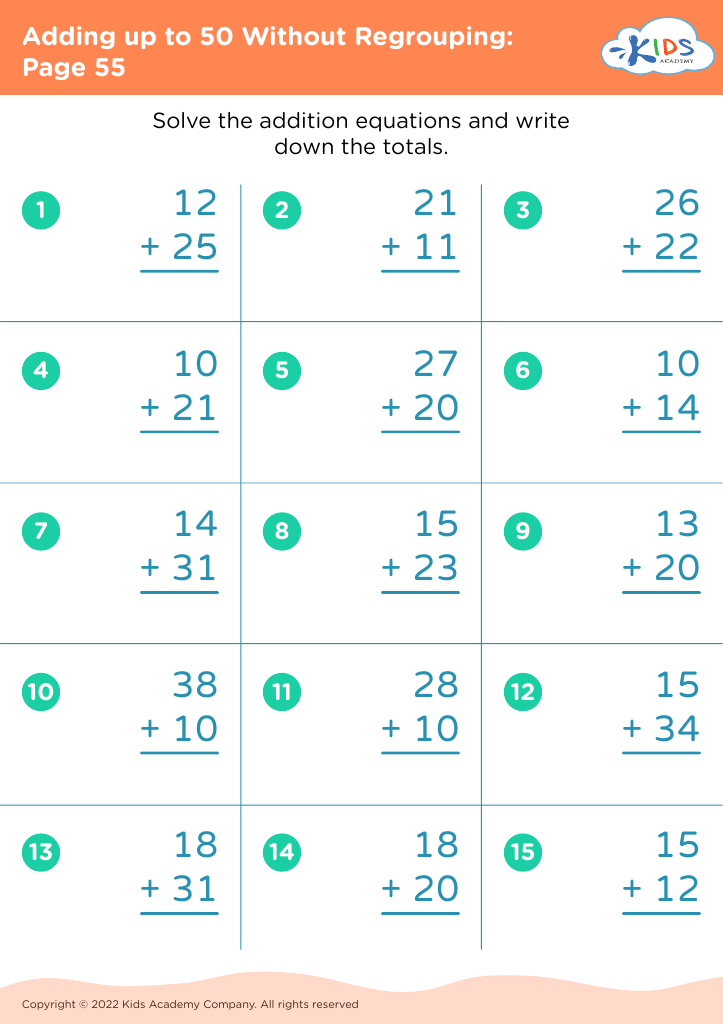
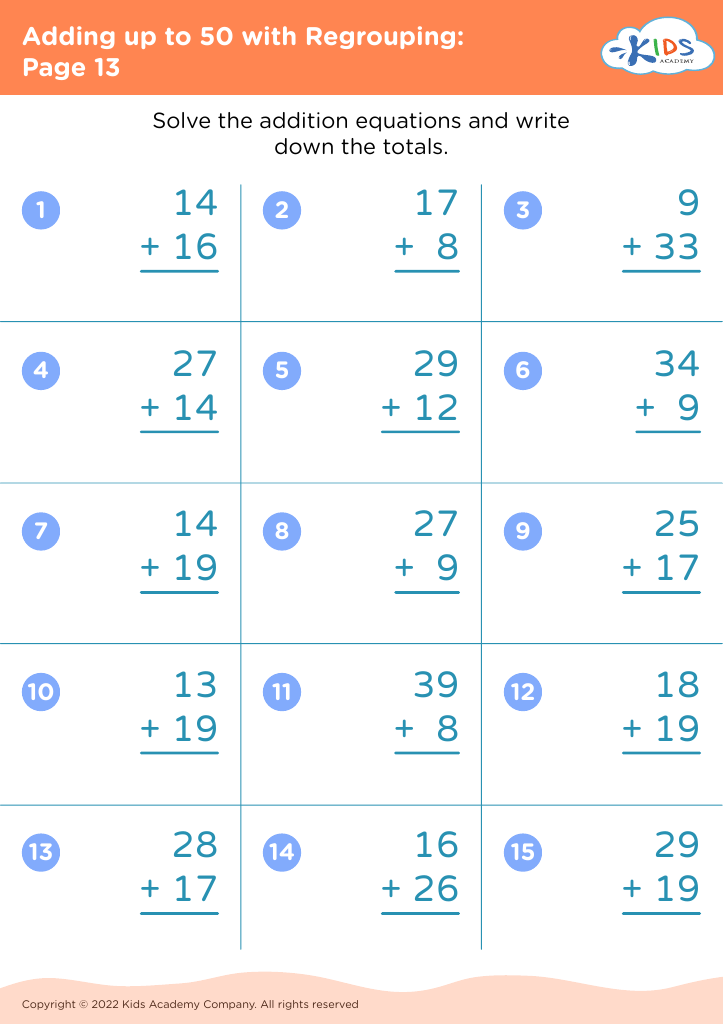
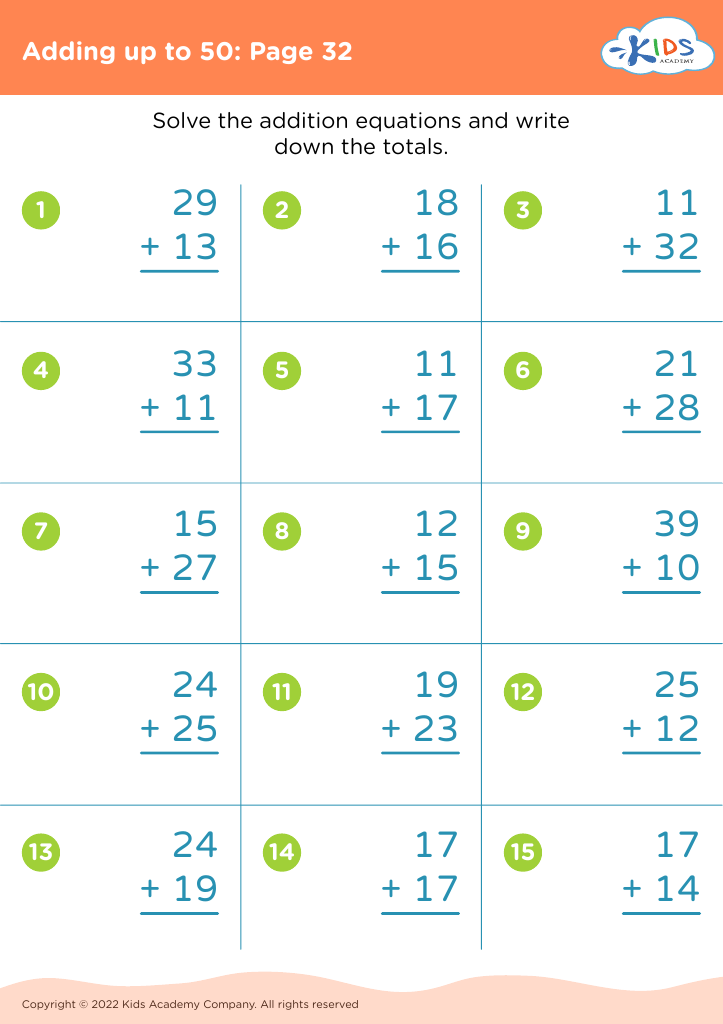




Counting skills, particularly the ability to add up to 50, are foundational for children aged 6-8. These skills are not just about numbers; they are essential for cognitive development and everyday problem-solving. Mastery of counting and basic addition enhances a child's ability to understand patterns, build logical reasoning, and improve concentration.
For parents and teachers, supporting this skill propels children into more complex mathematics and real-life applications. From budgeting allowance to telling time and measuring ingredients in a recipe, incorporating numbers into daily activities fosters a pragmatic understanding of math. These skills also promote self-confidence, as children learn to tackle increasingly challenging tasks, encouraging a positive attitude toward learning.
Furthermore, developing strong counting skills at an early age can diminish math anxiety. Children who feel competent in basic calculations are more likely to perform well in critical areas of education and even science and technology fields later on. Investing time in strengthening these abilities ensures students are prepared for future academic challenges and enhances their overall educational experience, setting the groundwork for lifelong learning and success. In essence, counting skills are pivotal, warranting the active engagement of parents and teachers alike in nurturing this vital competency.








