Addition skills Addition & Subtraction Worksheets for Ages 6-8 - Page 3
50 filtered results
-
From - To
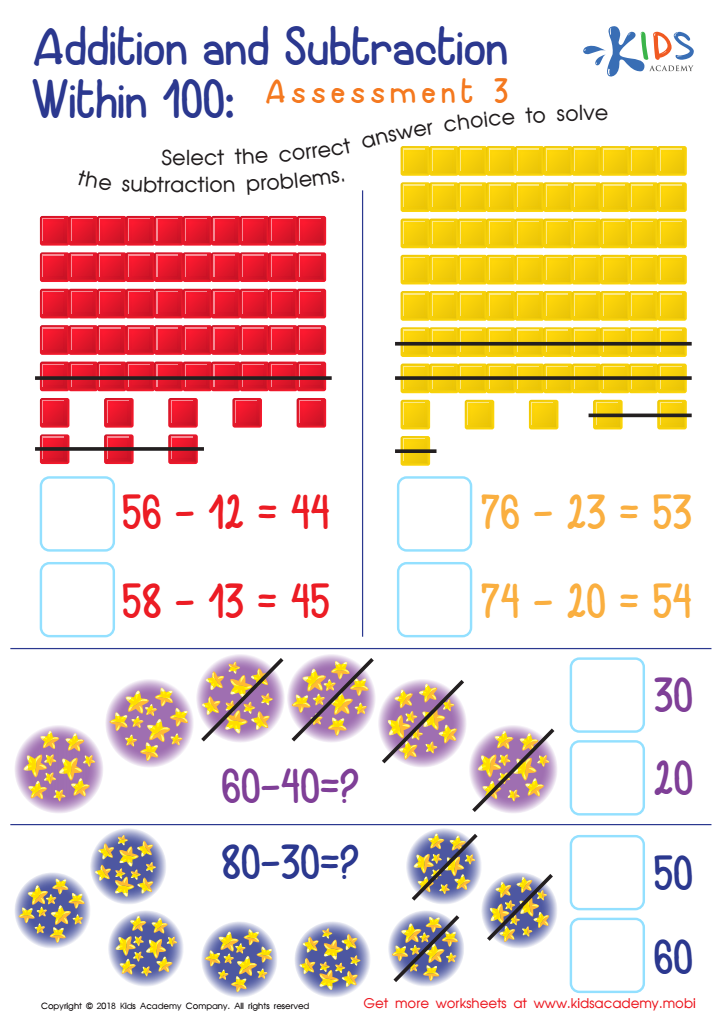
Addition and Subtraction Within 1: Assessment 3 Worksheet
 Assign to My Students
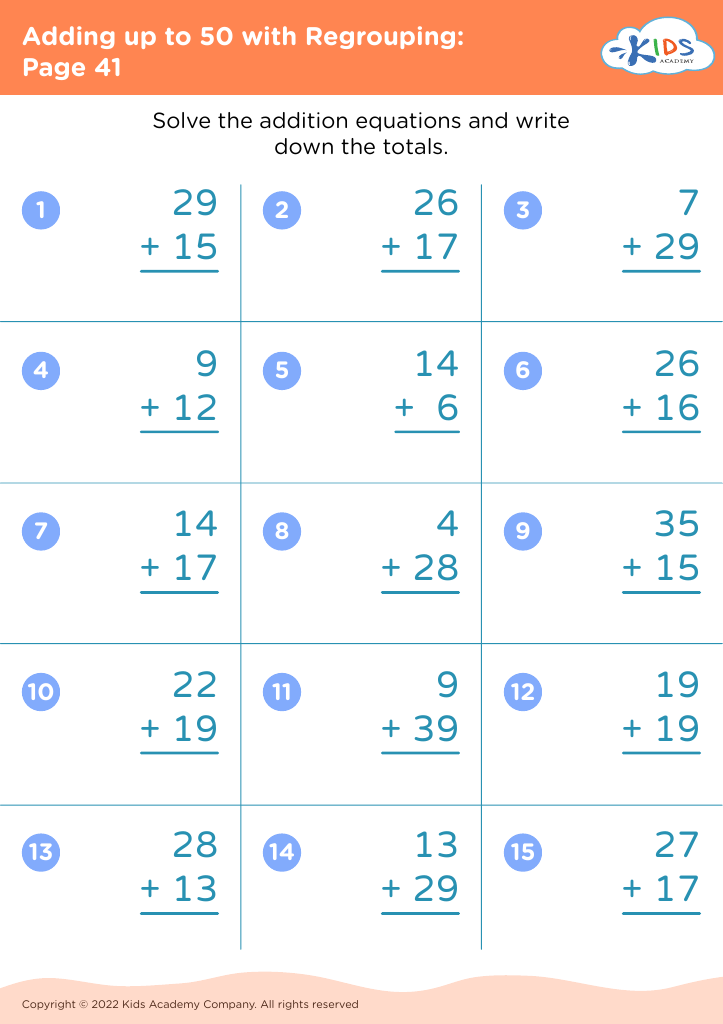








Addition and subtraction skills are foundational for children's mathematical understanding and overall academic success, making it crucial for parents and teachers to prioritize them for ages 6-8. This age group is typically when children transition from basic number recognition to manipulating numbers, laying the groundwork for future concepts in math. Mastery of these skills enhances cognitive development, promotes problem-solving abilities, and boosts logical thinking. Strong skills in addition and subtraction help children tackle more complex math concepts such as multiplication and division, which they will encounter later.
Additionally, proficiency in these basic operations can increase a child's confidence and interest in math, reducing anxiety around the subject. When children excel in foundational skills, they are more likely to participate actively in class and pursue higher-level math challenges.
Furthermore, these skills are not just academic; they are applicable in everyday life, from understanding money to measuring in cooking or building projects. Teachers and parents can create a supportive learning environment by reinforcing these concepts through fun games and practical activities, ensuring that students see the relevance of math in real life. By fostering a strong math foundation, we equip children with essential tools for lifelong learning and critical thinking.








