Fine Motor Skills (coloring) Addition & Subtraction Worksheets for Ages 6-8
3 filtered results
-
From - To
Enhance your child's math learning experience with these engaging Fine Motor Skills (Coloring) Addition & Subtraction Worksheets specially designed for ages 6-8! Created by Kids Academy, these fun and educational printables combine basic math operations with coloring activities to support fine motor development and reinforce key math concepts. Ideal for young learners, these worksheets help children practice addition and subtraction while nurturing their artistic skills. Each worksheet features delightful illustrations that turn learning into an exciting adventure. Perfect for the classroom or at-home practice, these resources ensure math practice remains enjoyable and effective.
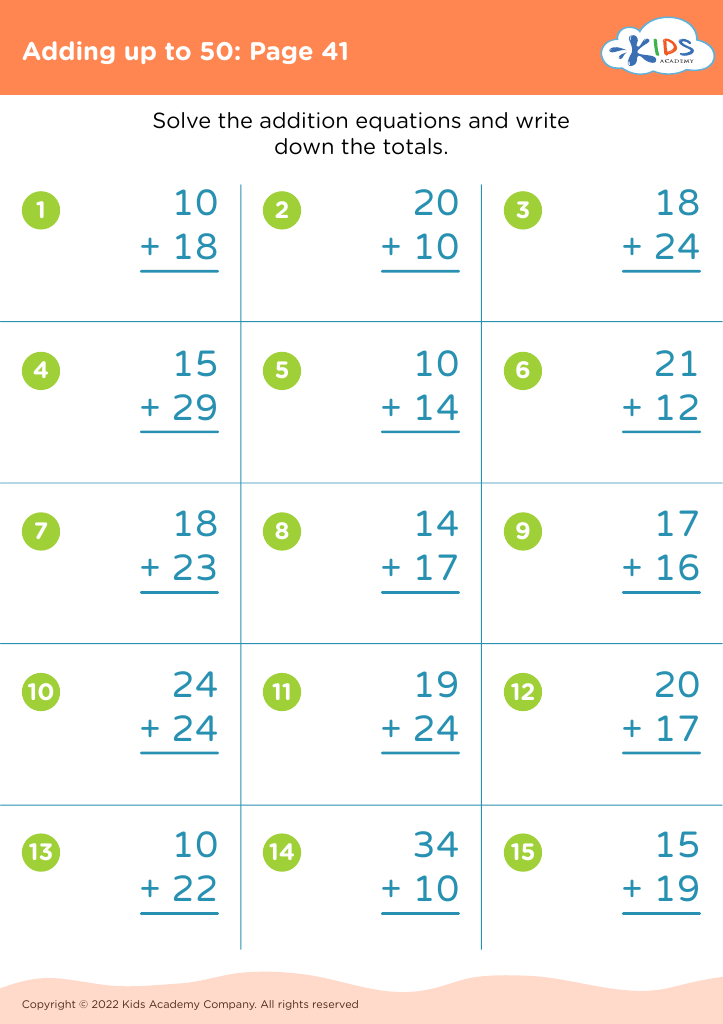
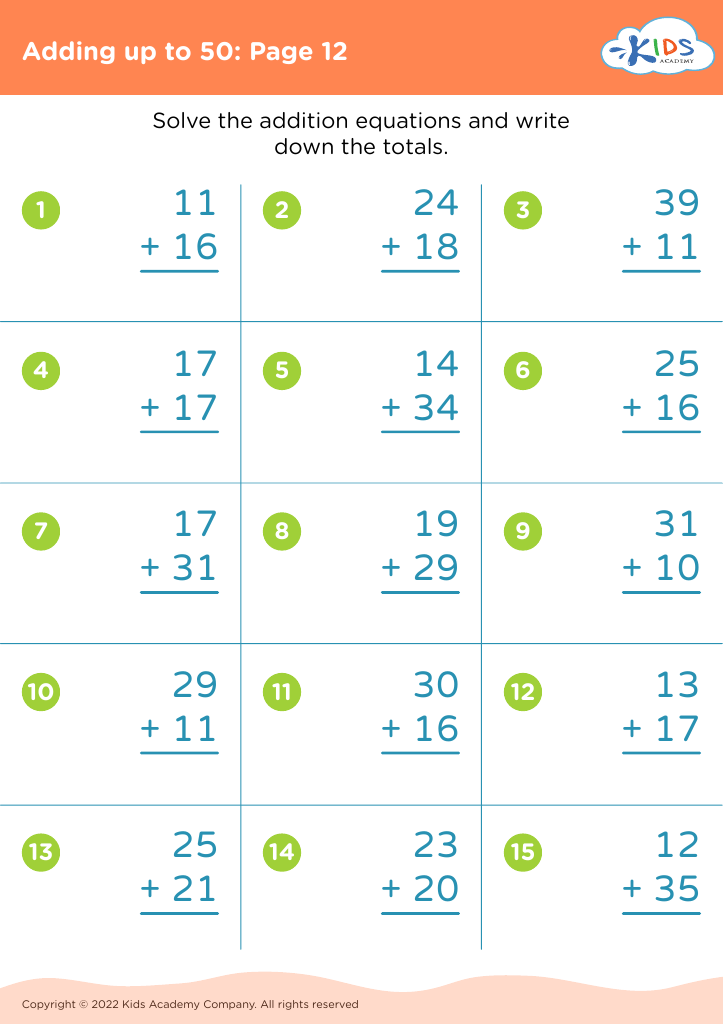
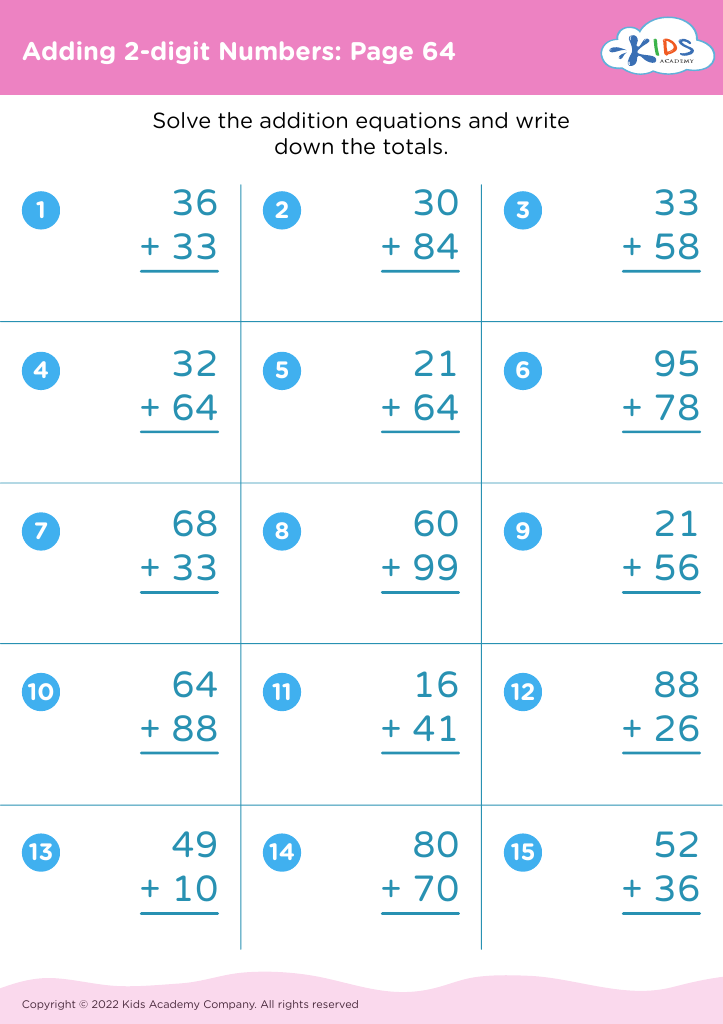








Parents and teachers should deeply care about fine motor skills encompassing activities such as coloring, addition, and subtraction for children aged 6-8, as these are pivotal for holistic development.
Fine motor skills, including precise hand movements required in coloring and writing, lay the groundwork for a child's early academic and life proficiency. Mastery in fine motor tasks facilitates smooth progression into more complex skills like writing legibility, buttoning clothing, or using tools, which are essential for independence and confidence.
Concurrently, addition and subtraction form the bedrock of mathematical understanding, engraving logical reasoning and analytical capabilities. Early competency in these foundational math concepts enables children to tackle more advanced mathematics with confidence. Furthermore, integrating coloring with mathematical exercises encourages engagement, making learning feel like play rather than a chore, fostering positive attitudes towards education.
By nurturing these skills, parents and teachers ensure children develop both cognitively and physically. Such nurturing prepares kids not only for academic success but also equips them with problem-solving skills and precision vital for everyday tasks. Ultimately, focusing on fine motor skills, alongside early arithmetic, contributes substantially to a well-rounded and confident learner.








