
Handwriting practice Addition & Subtraction Worksheets for Ages 6-8
5 filtered results
Difficulty Level
Grade
Age
-
From - To
Subject
Activity
Standards
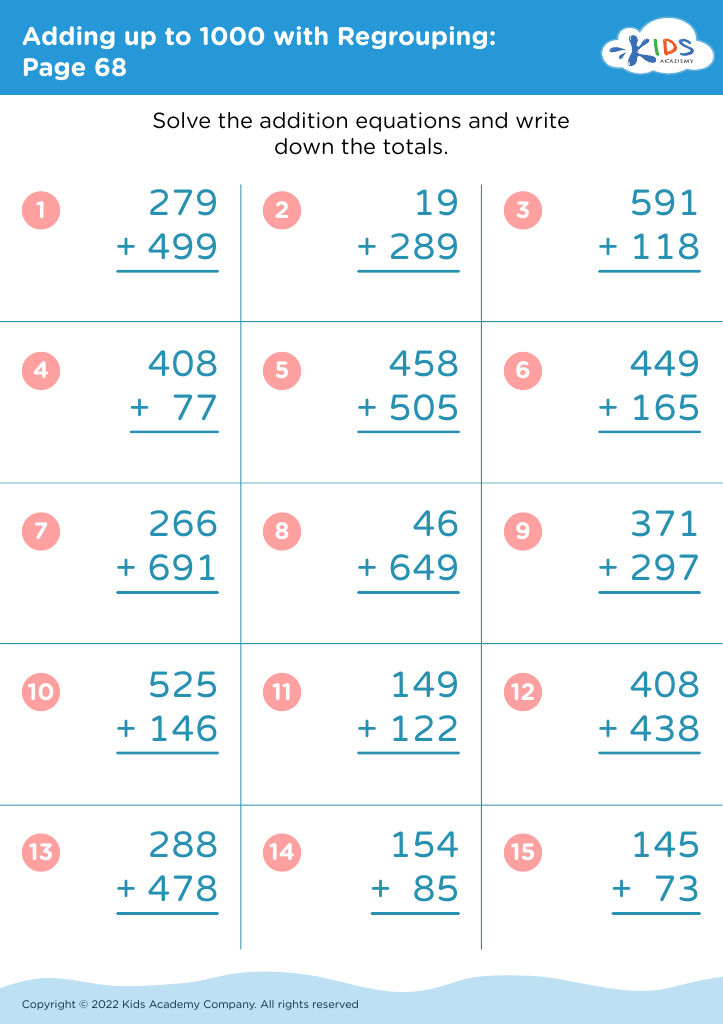
Enhance your child's math and writing skills with our Handwriting Practice Addition & Subtraction Worksheets designed for ages 6-8. Combining essential arithmetic exercises with handwriting practice, these worksheets help students improve their number sense while refining their fine motor skills. Each activity engages young learners with fun, visually appealing tasks, fostering a love for learning. Our expertly crafted worksheets support kids in mastering addition and subtraction, building confidence as they advance. Perfect for at-home practice or classroom use, these resources lay a strong foundation for lifelong mathematical and writing proficiency. Download now to support your child's educational journey!
Favorites
With answer key
Interactive
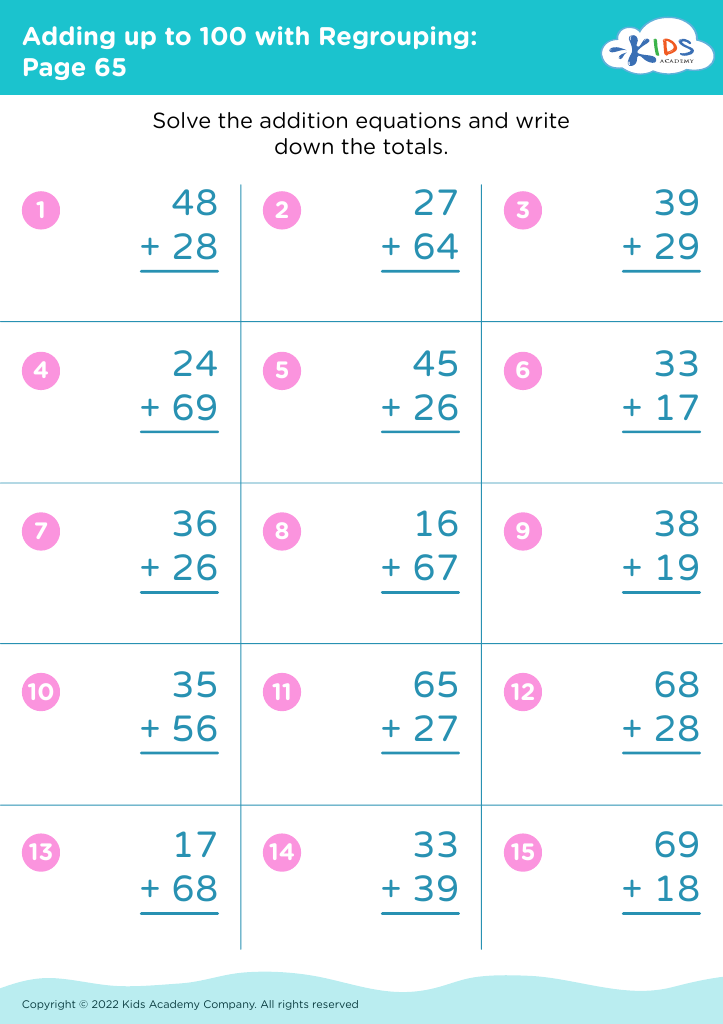
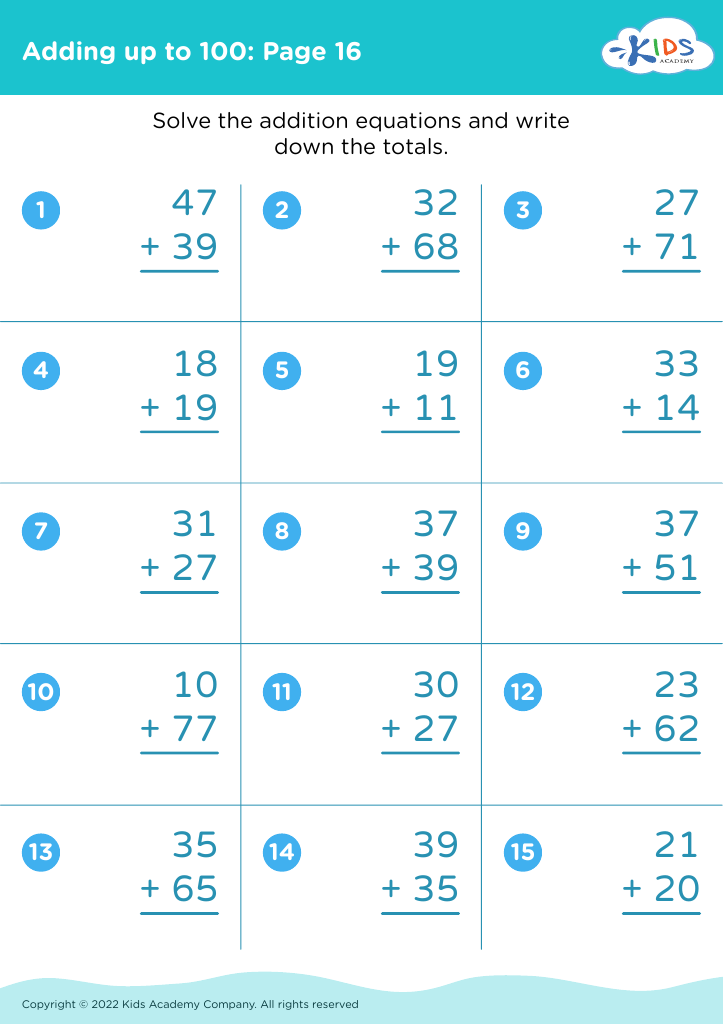
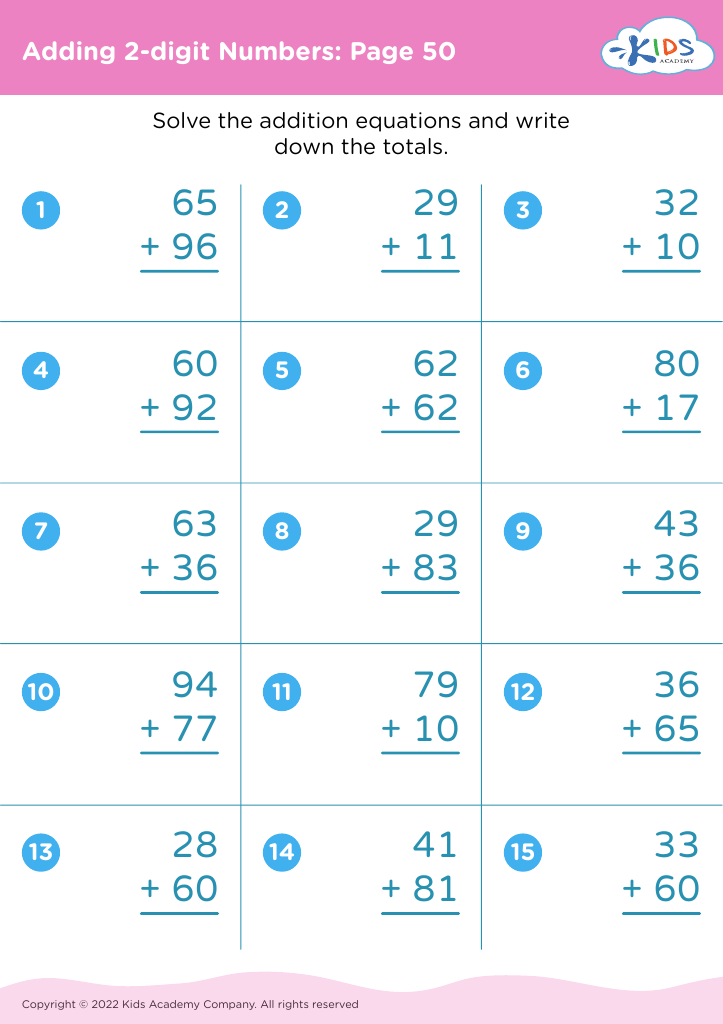
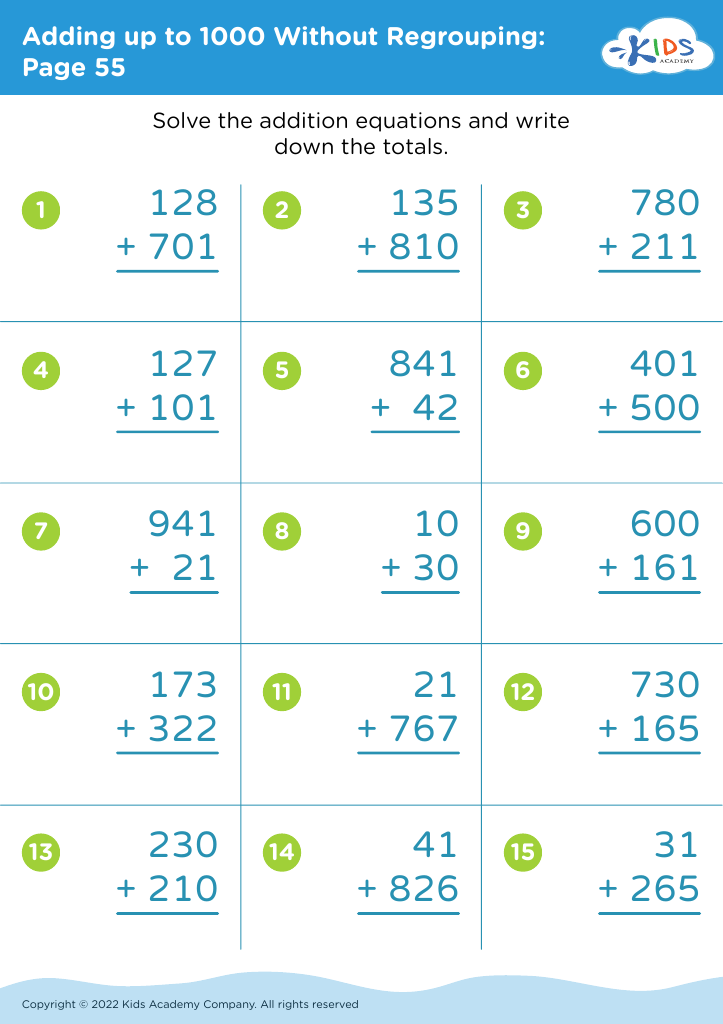
Join Kids Academy for Free
Who is primarily going to use this learning content?








Handwriting practice for addition and subtraction is crucial for children aged 6-8. This period is foundational for developing essential academic and fine motor skills. Handwriting helps to solidify the connections between visual and motor memory; when children write down their math problems, they engage multiple neural pathways which reinforce their understanding and retention of mathematical concepts.
Firstly, clear and legible handwriting reduces errors and enhances accuracy in math. Kids who struggle with handwriting might misinterpret numbers and operators, leading to mistakes. Teaching them proper technique ensures they can represent numbers correctly, which is fundamental to mastering addition and subtraction.
Secondly, integrating math practice with handwriting drills improves both disciplines simultaneously. This dual focus harnesses the cognitive benefits of active learning and repetition, making the learning process more effective. Neat handwriting also fosters organizational skills, helping students lay out math problems clearly, thereby simplifying more complex calculations over time.
Moreover, this early age is ideal for forming positive learning habits. Encouraging neatness and precision in writing and calculations sets a strong academic foundation. It boosts kids' confidence in their abilities, nurturing a positive attitude toward math which can influence their success and enthusiasm in later grades.
In conclusion, handwriting practice tied to addition and subtraction not only improves penmanship but also deepens comprehension and builds lifelong study skills for young learners.








