Understanding quantity Addition & Subtraction Worksheets for Ages 6-8
9 filtered results
-
From - To
Discover the engaging world of addition and subtraction with our "Understanding Quantity" worksheets, specifically designed for children aged 6-8. These resources provide essential practice in recognizing and comparing quantities, helping young learners establish a strong mathematical foundation. Each worksheet features colorful visuals and interactive exercises that capture attention while promoting comprehension. As children connect numbers with real-world objects, they build confident problem-solving skills. Our thoughtfully crafted activities accommodate different learning paces, ensuring every child’s progression. Explore fun, educational worksheets that foster a love for mathematics, encouraging students to master addition and subtraction concepts through hands-on learning experiences.
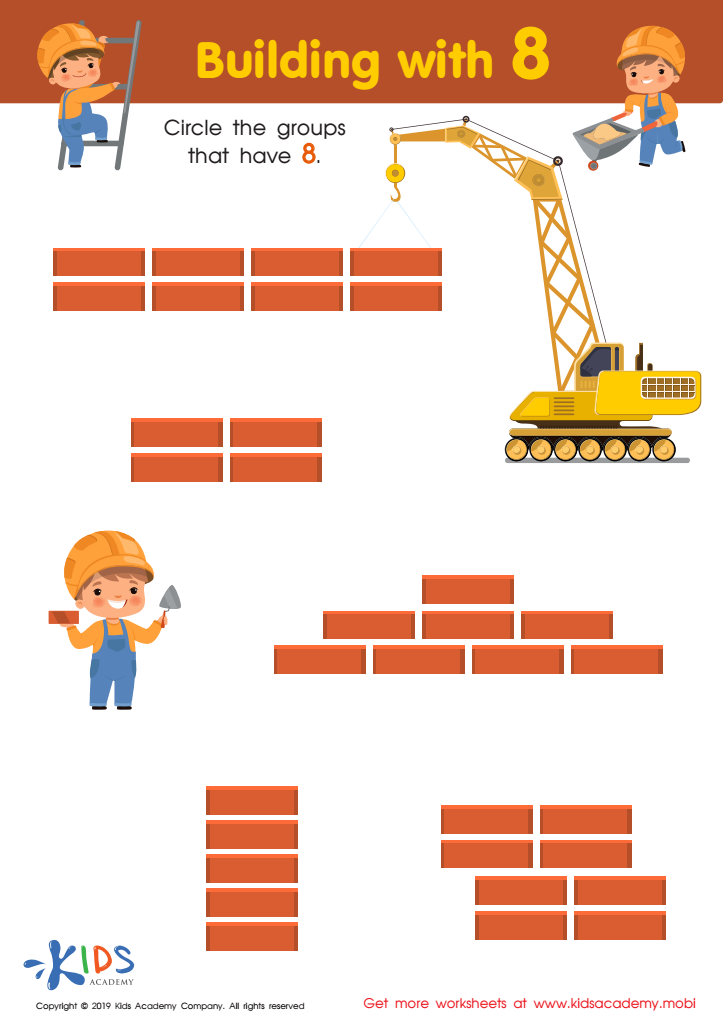
Building with 8 Worksheet
 Assign to My Students
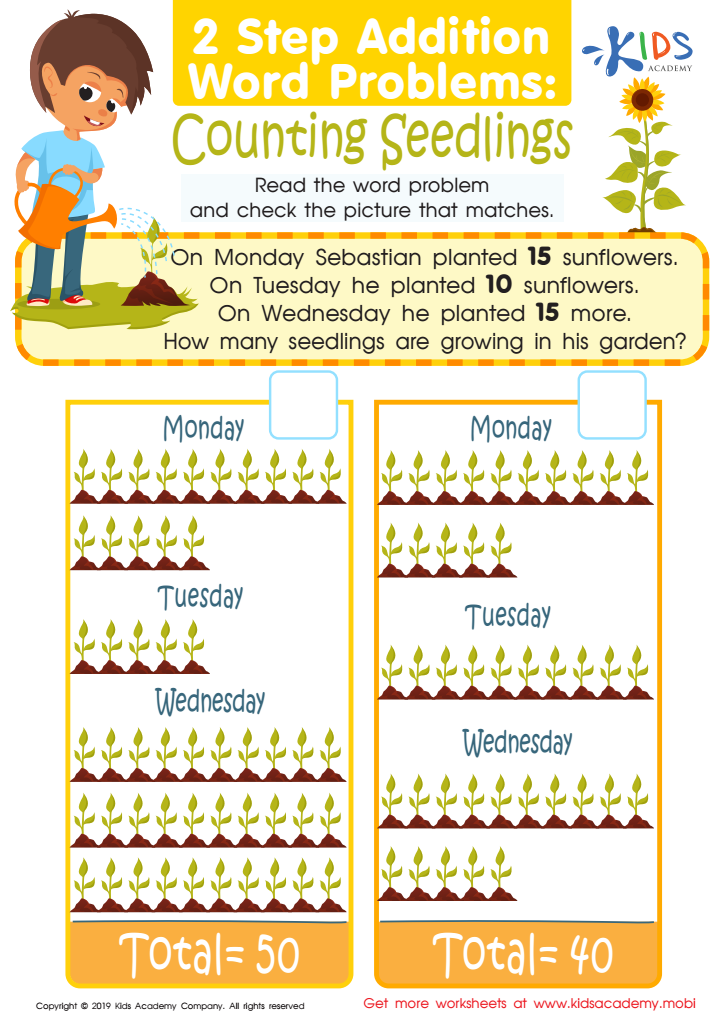
Counting Seedlings Worksheet
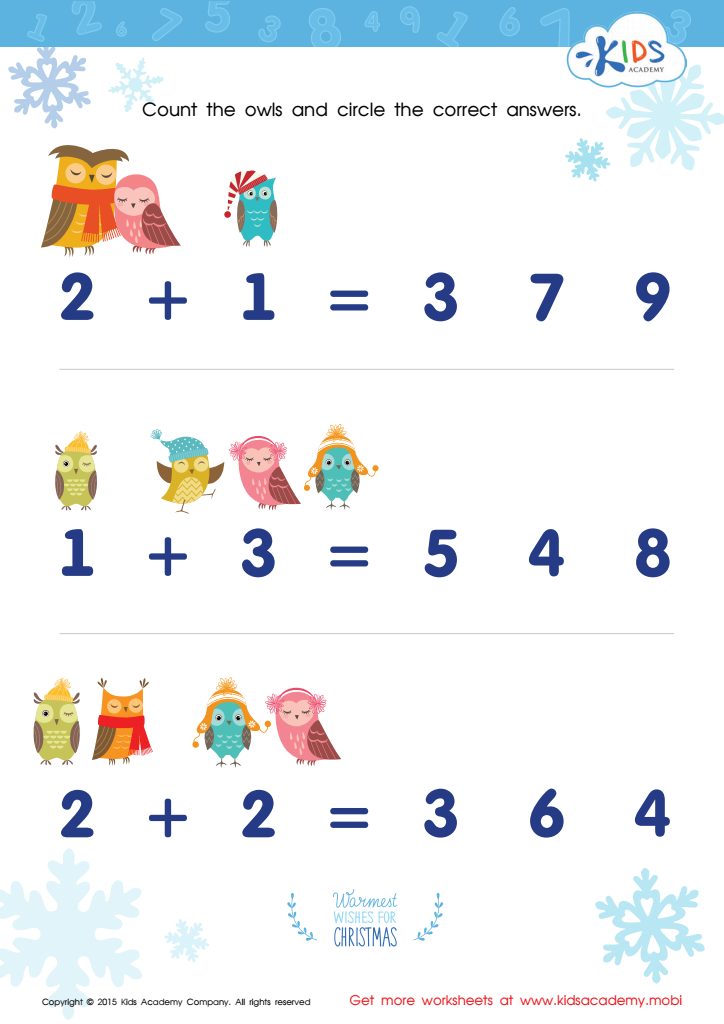
Count Little Owls Worksheet
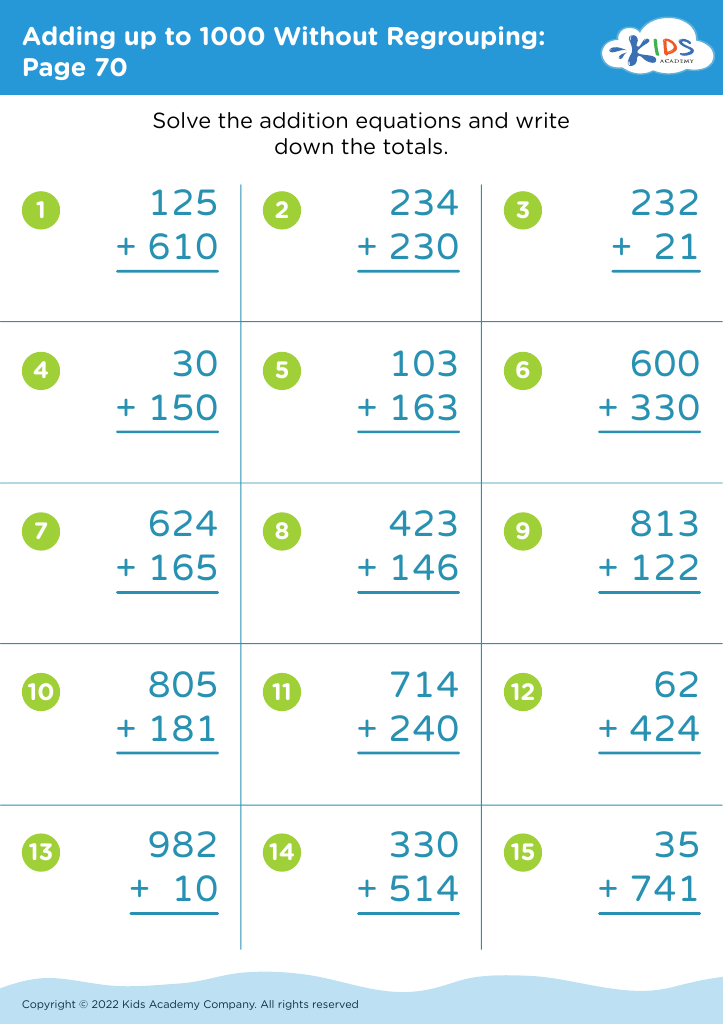








Understanding quantity addition and subtraction is crucial for children aged 6-8 because it lays the foundation for their mathematical skills and overall cognitive development. During these formative years, children begin to grasp the concepts of numbers and their relationships, setting the stage for more complex mathematical operations in the future. Mastery of addition and subtraction helps them develop critical thinking and problem-solving abilities, skills that are essential not just in math, but across all subjects and daily life.
Furthermore, these fundamental operations enhance children's number sense, enabling them to make sense of quantities in practical contexts, whether it’s in measuring ingredients for a recipe, planning a budget, or scheduling their time. When parents and teachers focus on helping children understand these concepts, they foster a positive attitude towards math, reducing anxiety and increasing confidence in their abilities.
Additionally, strong addition and subtraction skills are vital in understanding broader mathematical principles taught in advanced grades, such as multiplication and division. Supporting children through engaging activities, games, and real-world applications ensures they not only retain these skills but also appreciate their relevance, ultimately leading to lifelong learning and success in mathematics.








