Filters

865 filtered results

Clear all filters
Favorites
With answer key
Interactive

865 filtered results

Difficulty Level

Grade


Subject

    Check out this FREE Trial Lesson on Addition for age 6-8!

    Properties of Addition - Part 1

    Favorites
    With answer key
    Interactive
    • 6-8
    • Addition
    Adding up to 50 with Regrouping: Page 71
    Adding up to 50 with Regrouping: Page 71
    Adding up to 50 with Regrouping: Page 71
    Worksheet
    Boomerang Addition Worksheet
    Boomerang Addition Worksheet

    Boomerang Addition Worksheet

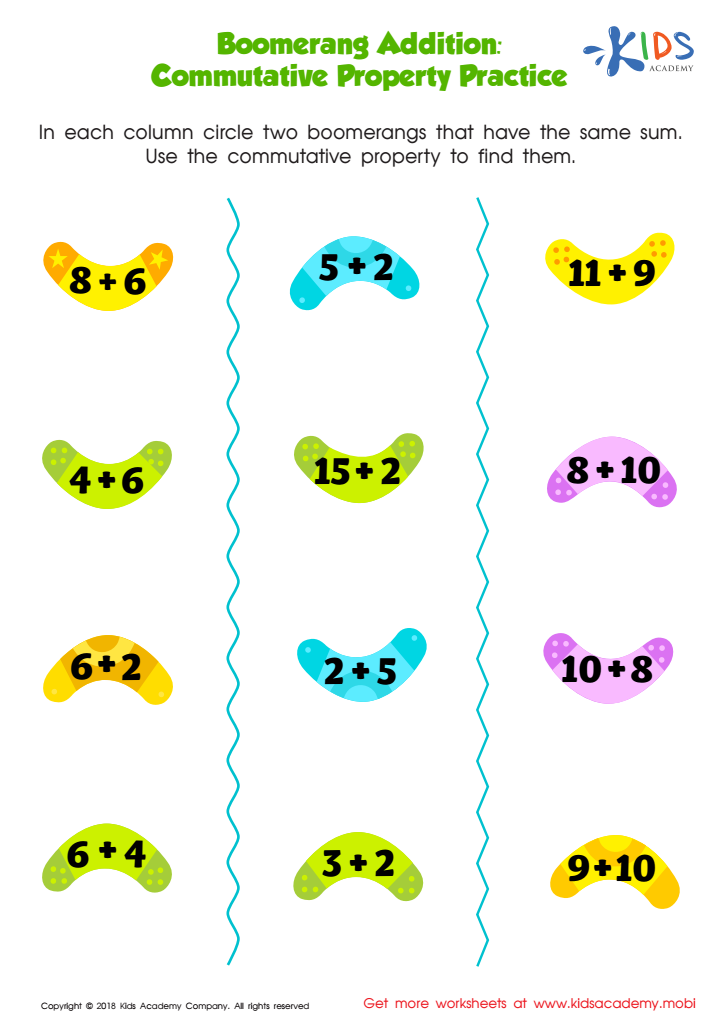
    Kids know that when a boomerang is thrown, it reverses its path back. The same goes for addition: numbers can be rearranged and the sum will remain the same. Use this worksheet to find matching pairs of colorful boomerangs and equations. Look through each column and use the commutative property to find the pairs with the same sum.
    Boomerang Addition Worksheet
    Worksheet
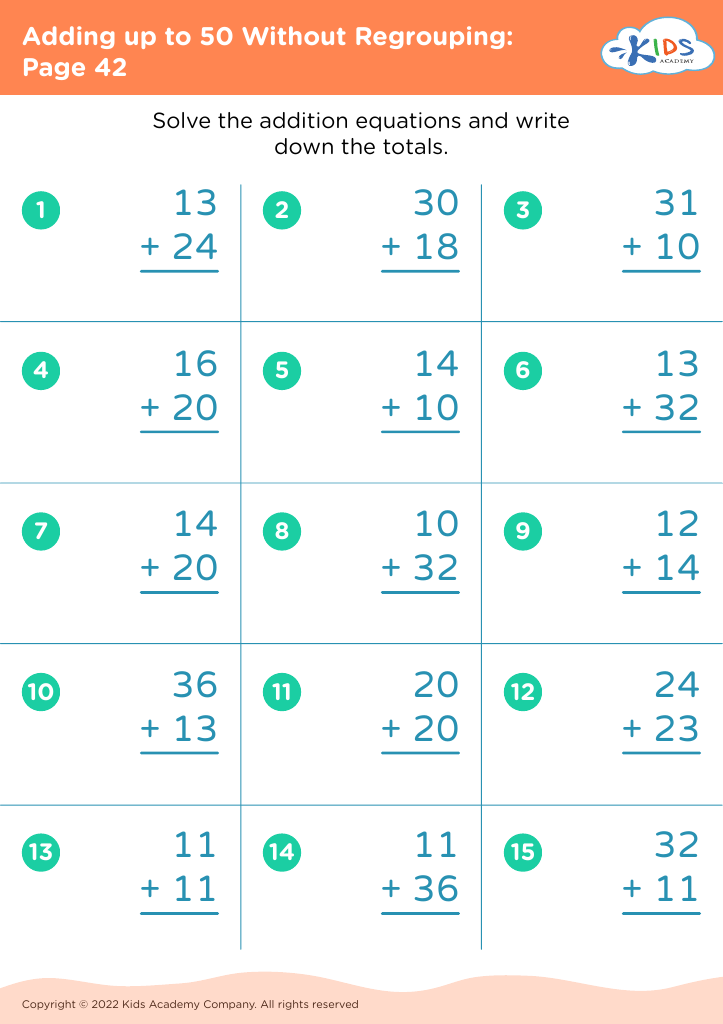
    Adding up to 50 Without Regrouping: Page 42
    Adding up to 50 Without Regrouping: Page 42
    Adding up to 50 Without Regrouping: Page 42
    Worksheet
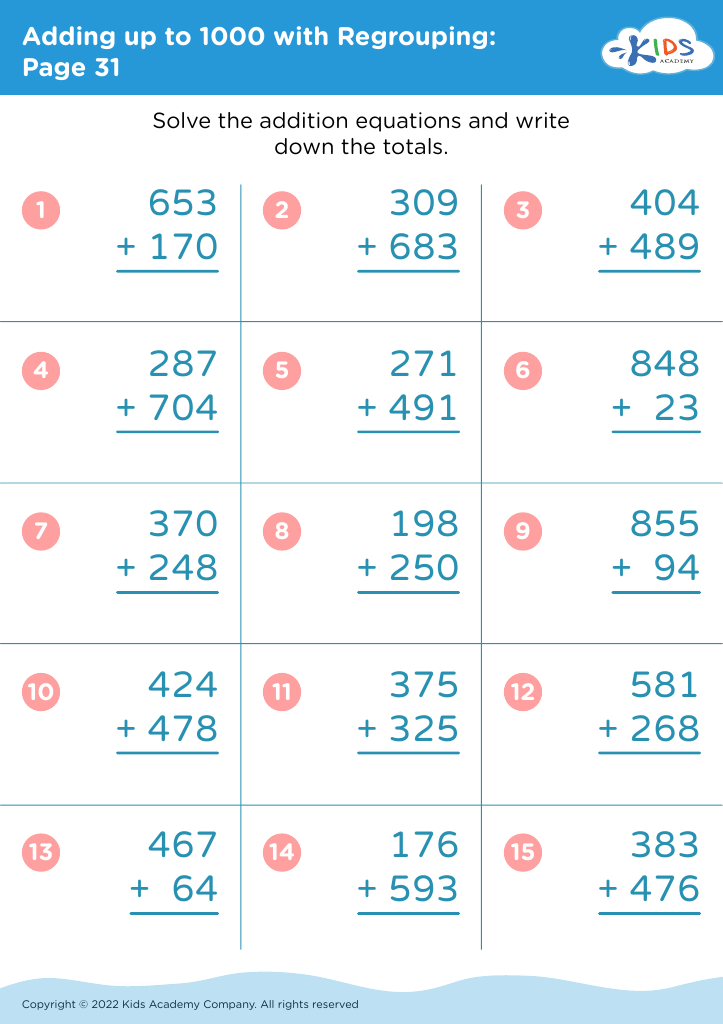
    Adding up to 1000 with Regrouping: Page 31
    Adding up to 1000 with Regrouping: Page 31
    Adding up to 1000 with Regrouping: Page 31
    Worksheet
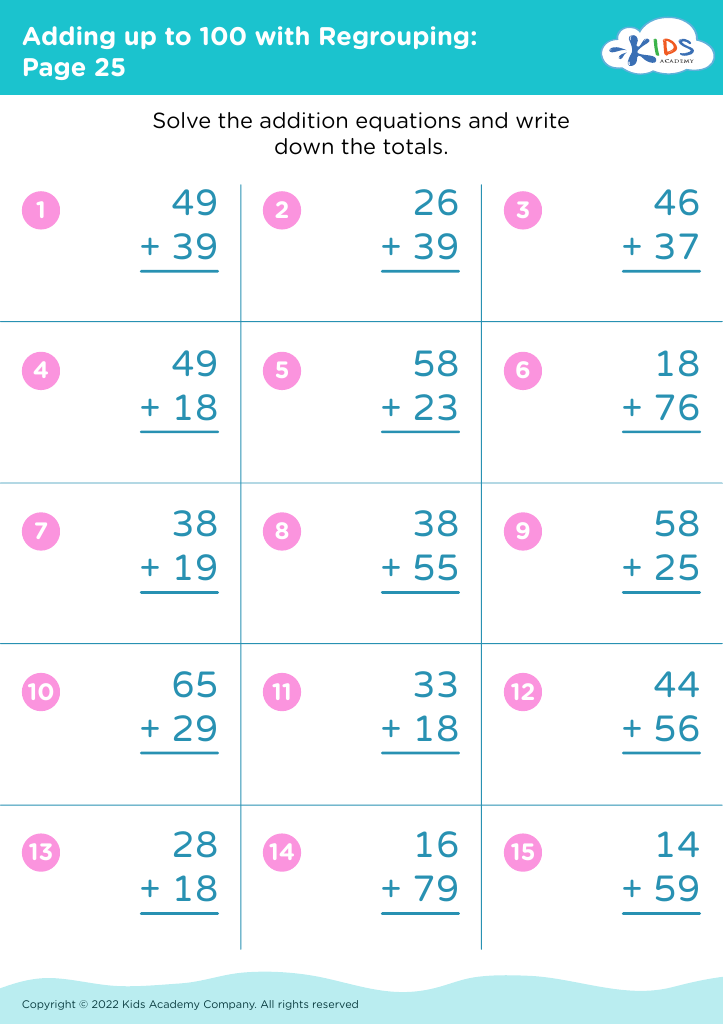
    Adding up to 100 with Regrouping: Page 25
    Adding up to 100 with Regrouping: Page 25
    Adding up to 100 with Regrouping: Page 25
    Worksheet
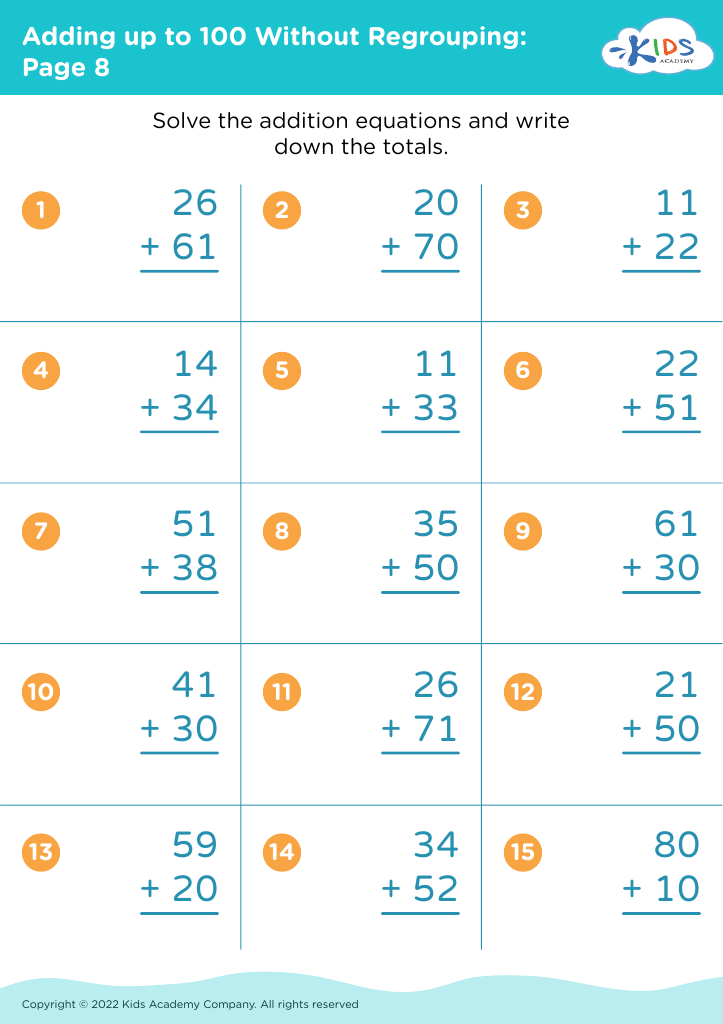
    Adding up to 100 Without Regrouping: Page 8
    Adding up to 100 Without Regrouping: Page 8
    Adding up to 100 Without Regrouping: Page 8
    Worksheet
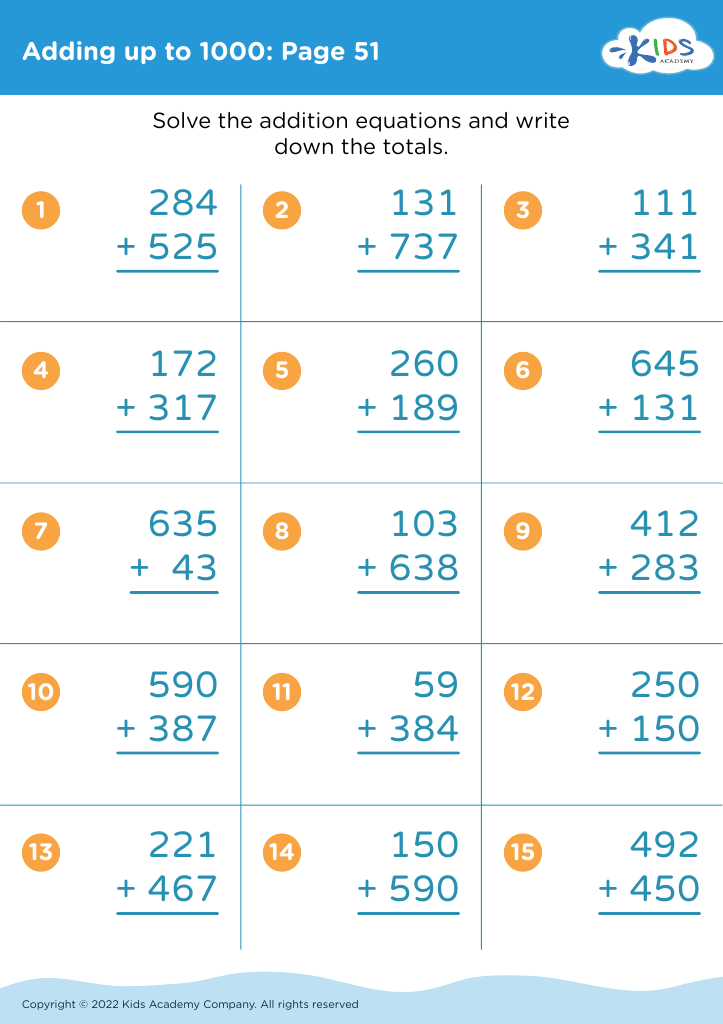
    Adding up to 1000: Page 51
    Adding up to 1000: Page 51

    Adding up to 1000: Page 51

    Adding up to 1000: Page 51
    Worksheet
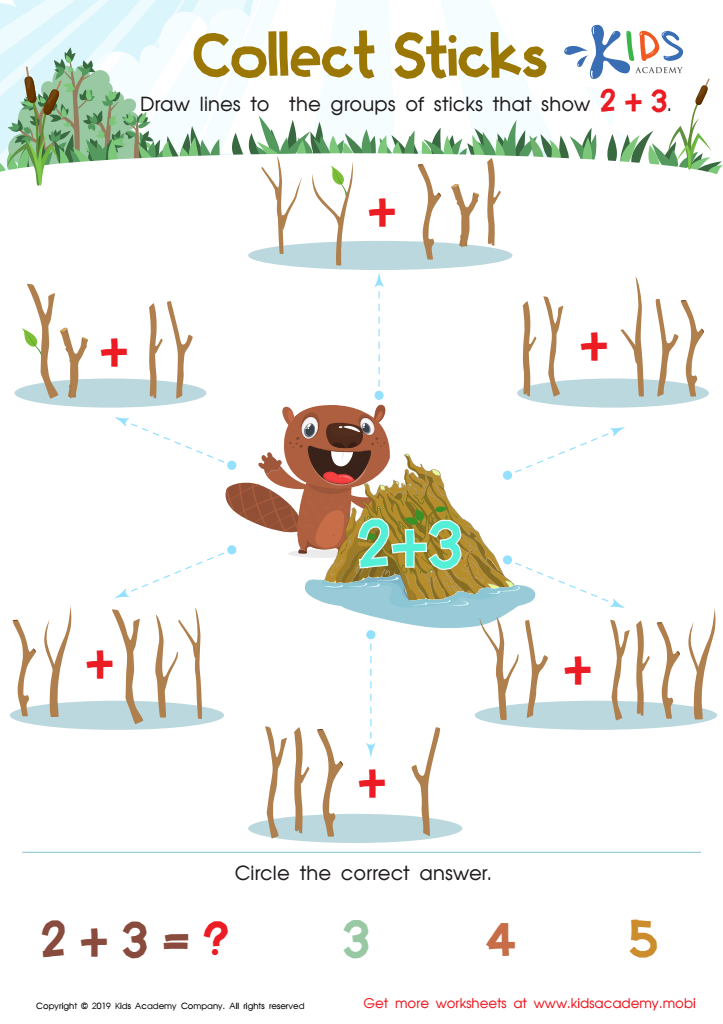
    Collect Sticks Worksheet
    Collect Sticks Worksheet

    Collect Sticks Worksheet

    Let math be fun for your kids with a simple and colorful worksheet exercise. Addition and subtraction can be daunting, but you can make it enjoyable with exercises like this one. Get them to draw lines to the groups of sticks that show 2+3 and watch them light up.
    Collect Sticks Worksheet
    Worksheet
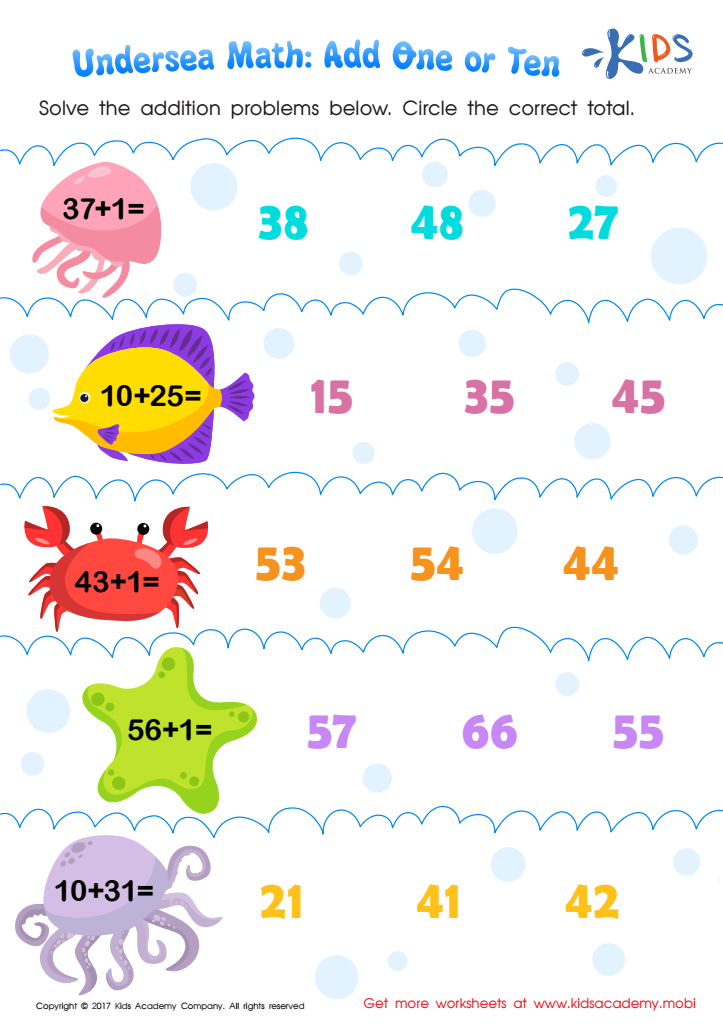
    Add one or ten worksheet
    Add one or ten worksheet

    Undersea Math Worksheet
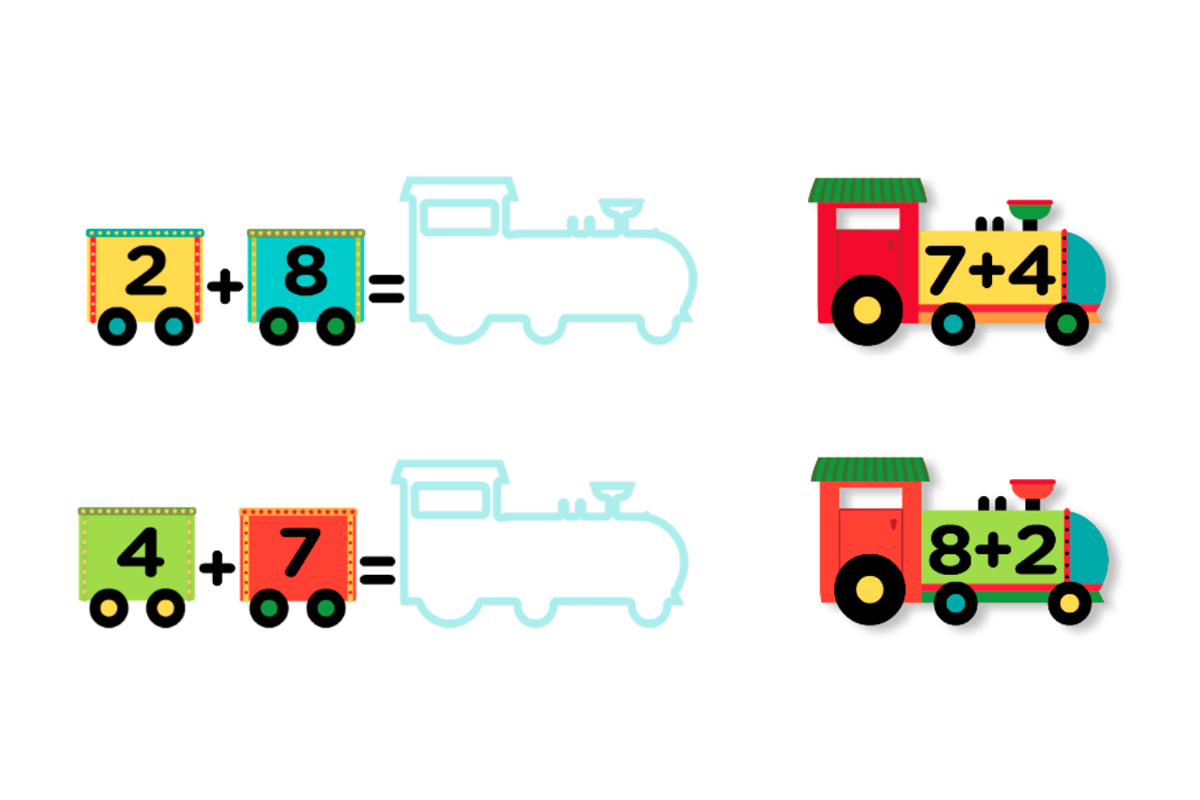
    Dive under the sea and practice addition with place value! This fun sea-themed math worksheet will help your child add ones and tens to 2-digit numbers. Kids need to practice to gain an understanding of math processes and this worksheet uses vibrant tropical fish to entertain and build important skills.
    Undersea Math Worksheet
    Worksheet
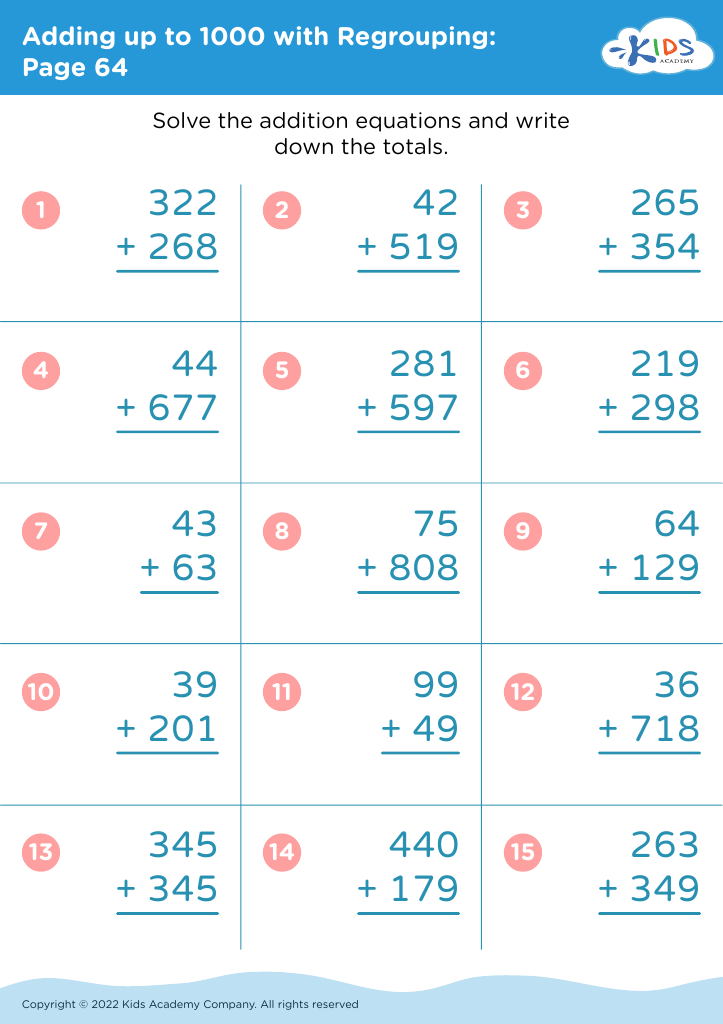
    Adding up to 1000 with Regrouping: Page 64
    Adding up to 1000 with Regrouping: Page 64
    Adding up to 1000 with Regrouping: Page 64
    Worksheet
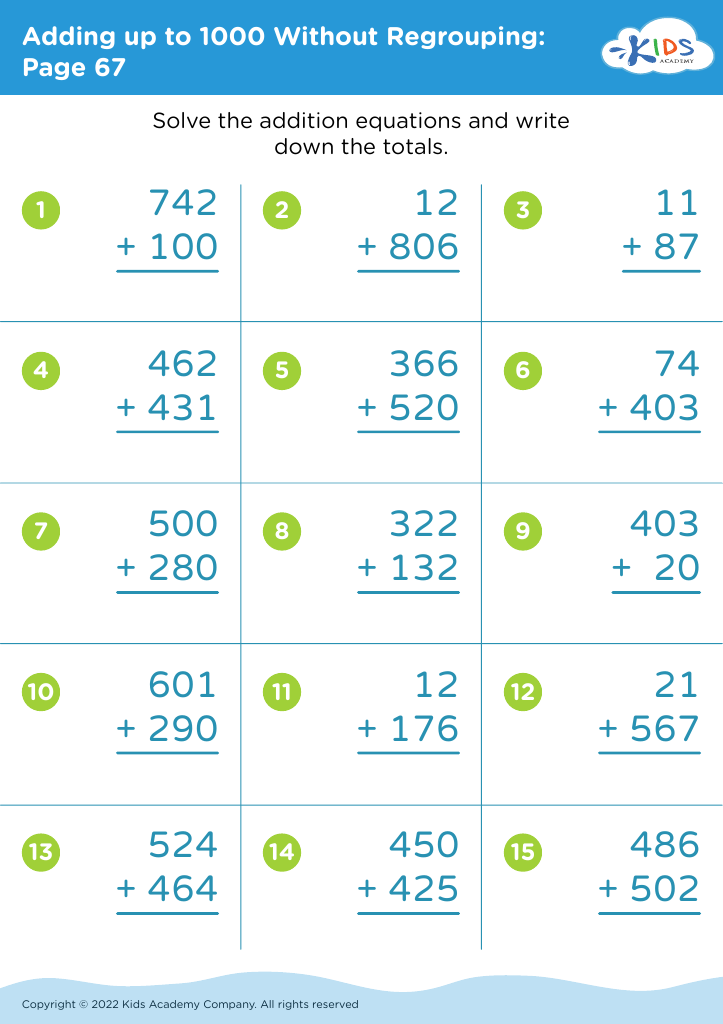
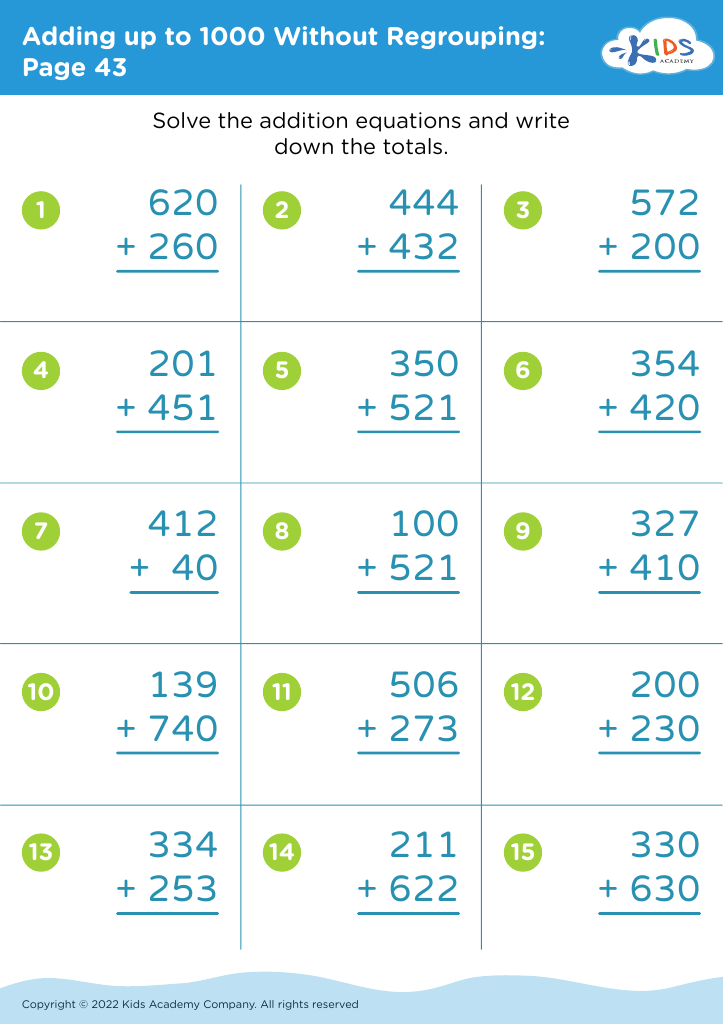
    Adding up to 1000 Without Regrouping: Page 43
    Adding up to 1000 Without Regrouping: Page 43
    Adding up to 1000 Without Regrouping: Page 43
    Worksheet
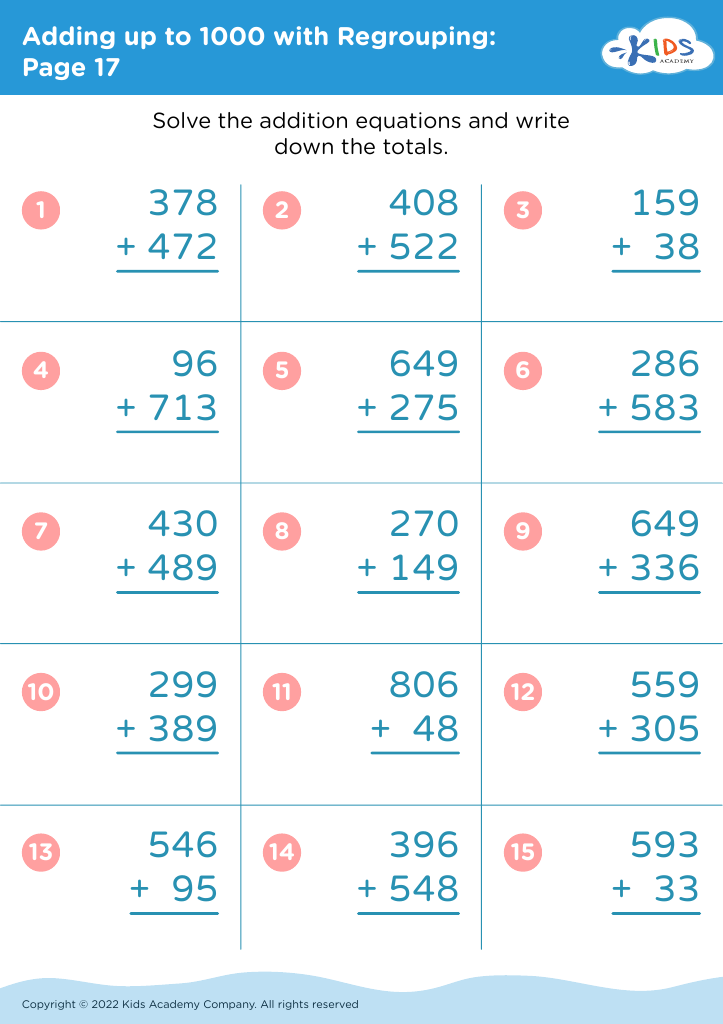
    Adding up to 1000 with Regrouping: Page 17
    Adding up to 1000 with Regrouping: Page 17
    Adding up to 1000 with Regrouping: Page 17
    Worksheet
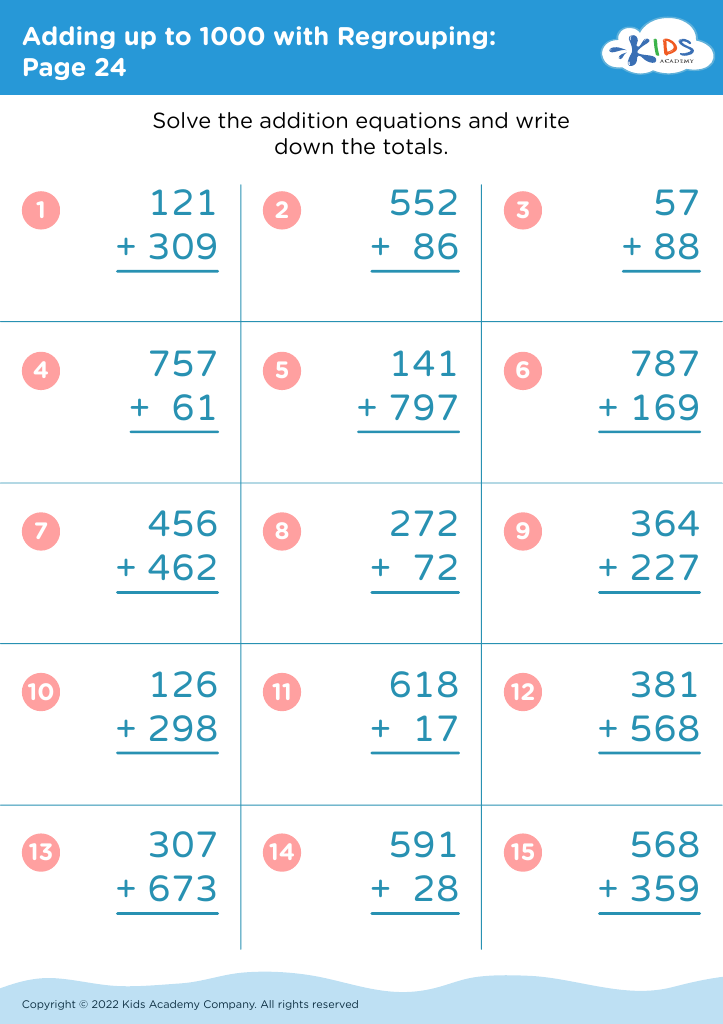
    Adding up to 1000 with Regrouping: Page 24
    Adding up to 1000 with Regrouping: Page 24
    Adding up to 1000 with Regrouping: Page 24
    Worksheet
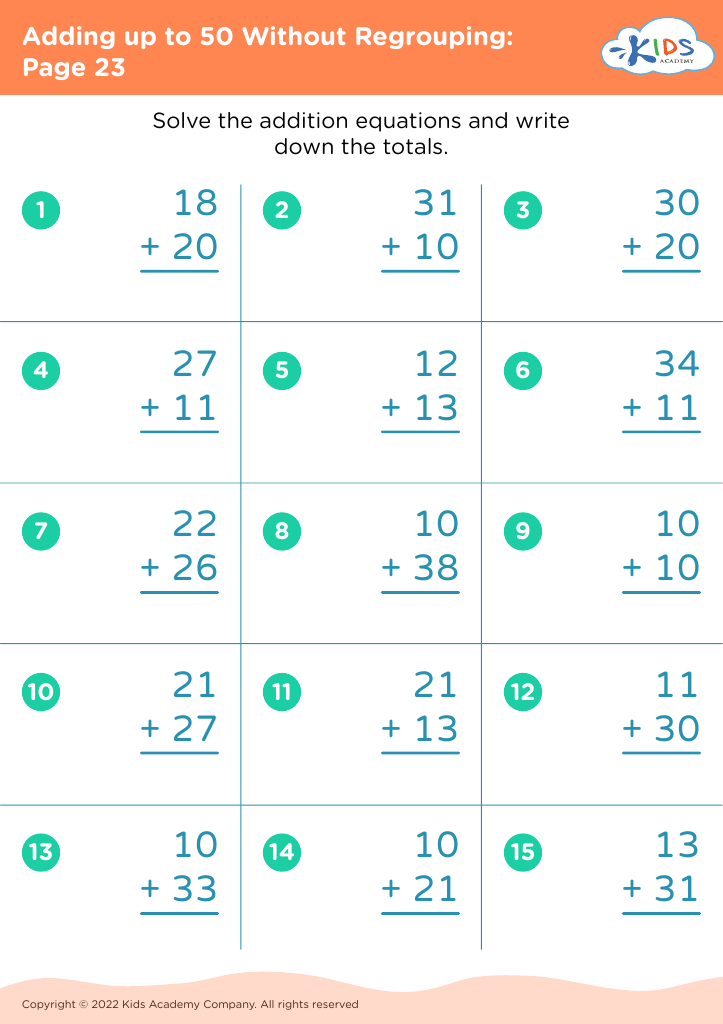
    Adding up to 50 Without Regrouping: Page 23
    Adding up to 50 Without Regrouping: Page 23
    Adding up to 50 Without Regrouping: Page 23
    Worksheet
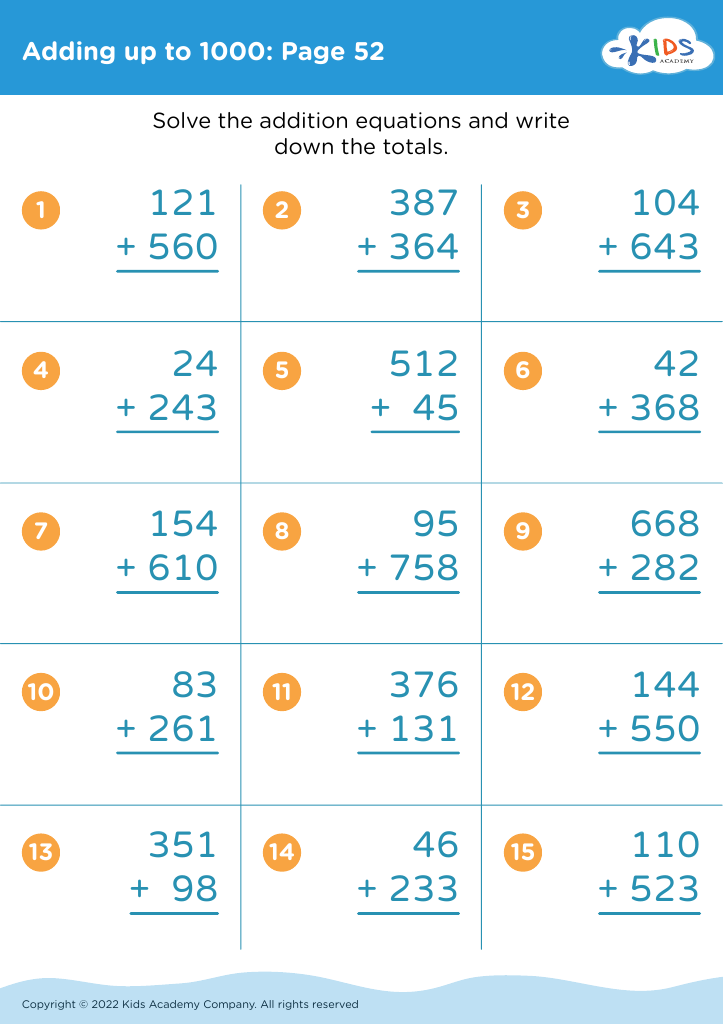
    Adding up to 1000: Page 52
    Adding up to 1000: Page 52

    Adding up to 1000: Page 52

    Adding up to 1000: Page 52
    Worksheet
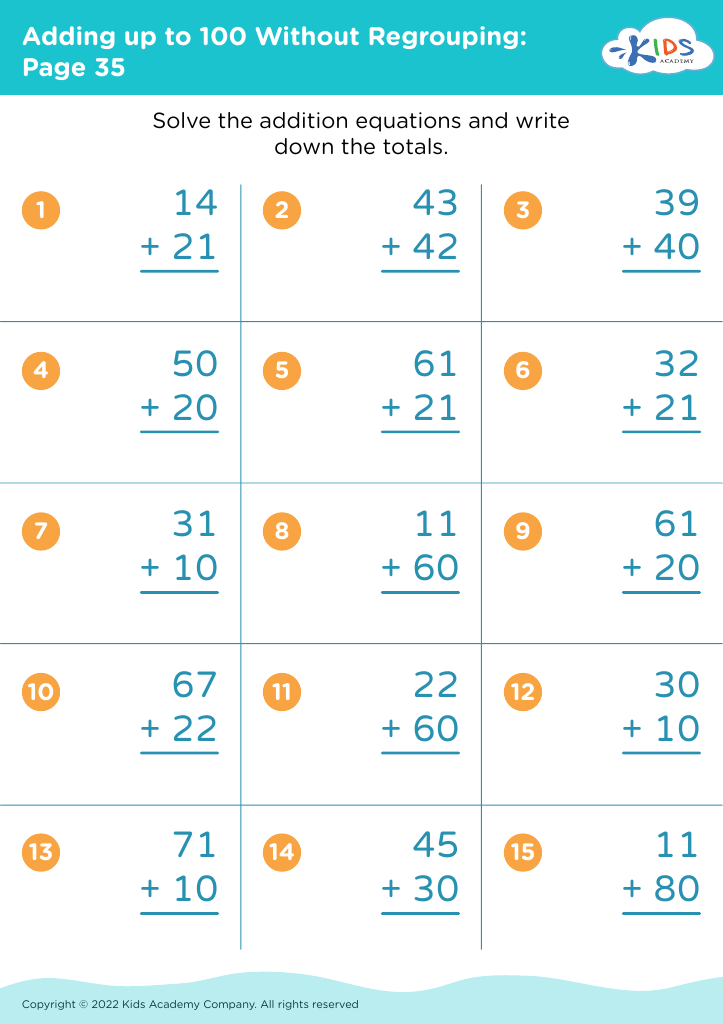
    Adding up to 100 Without Regrouping: Page 35
    Adding up to 100 Without Regrouping: Page 35
    Adding up to 100 Without Regrouping: Page 35
    Worksheet
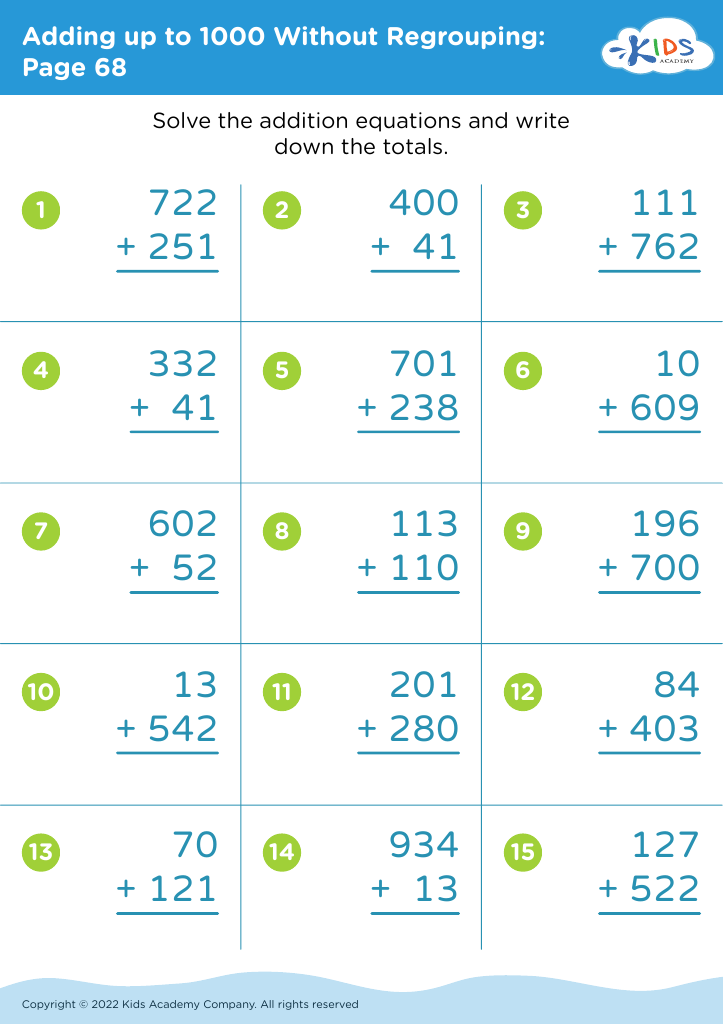
    Adding up to 1000 Without Regrouping: Page 68
    Adding up to 1000 Without Regrouping: Page 68
    Adding up to 1000 Without Regrouping: Page 68
    Worksheet
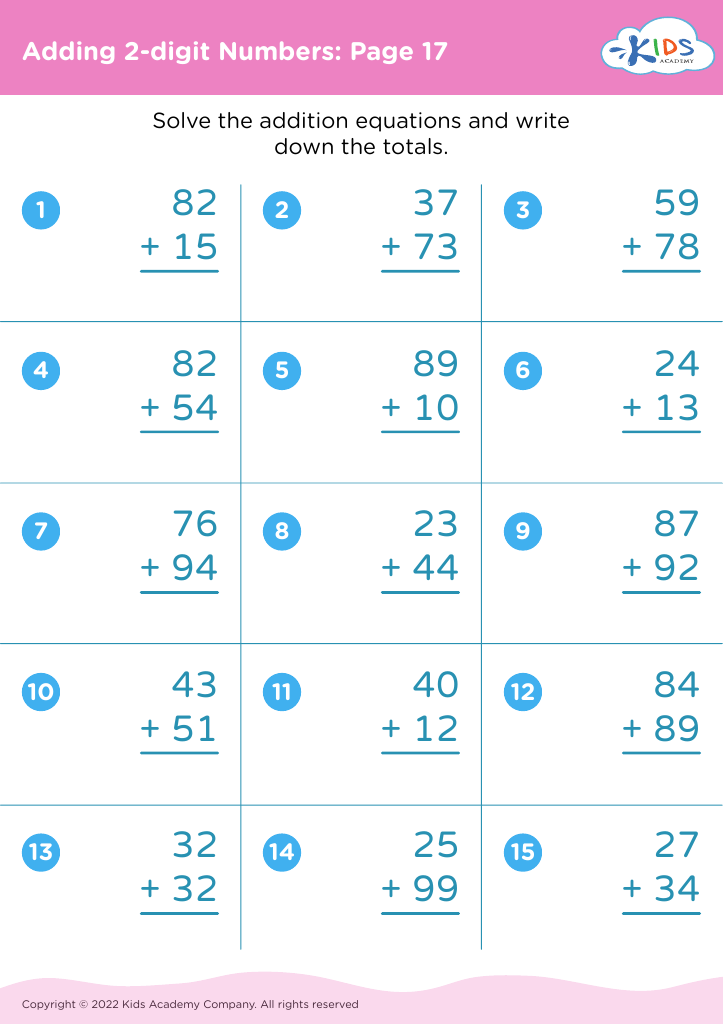
    Adding 2-digit Numbers: Page 17
    Adding 2-digit Numbers: Page 17

    Adding 2-digit Numbers: Page 17

    Adding 2-digit Numbers: Page 17
    Worksheet
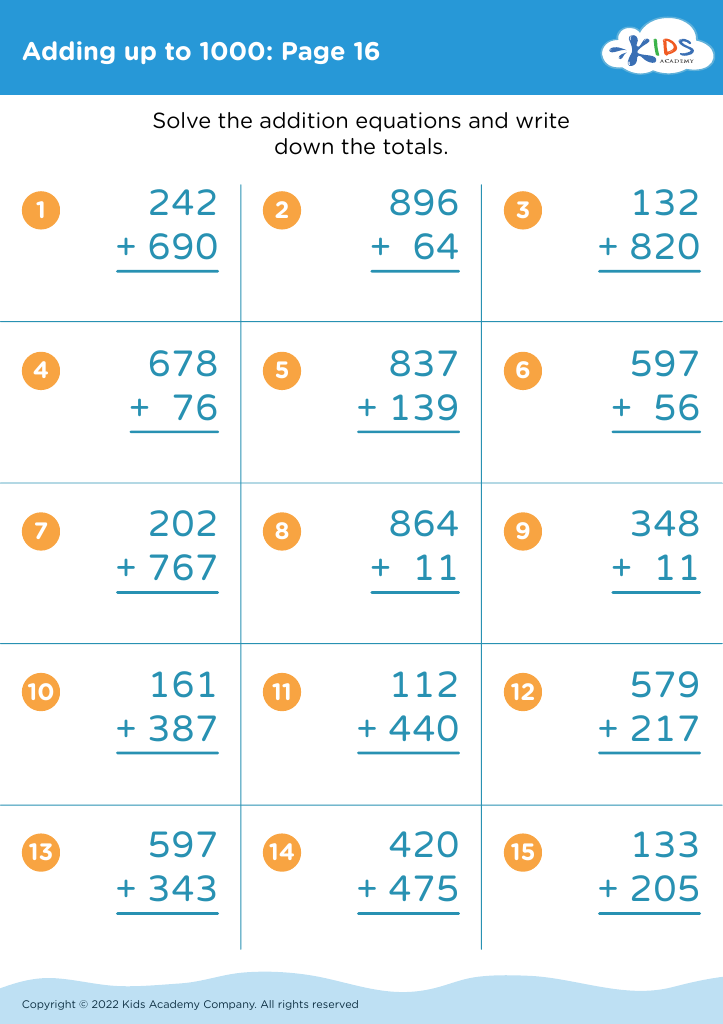
    Adding up to 1000: Page 16
    Adding up to 1000: Page 16

    Adding up to 1000: Page 16

    Adding up to 1000: Page 16
    Worksheet
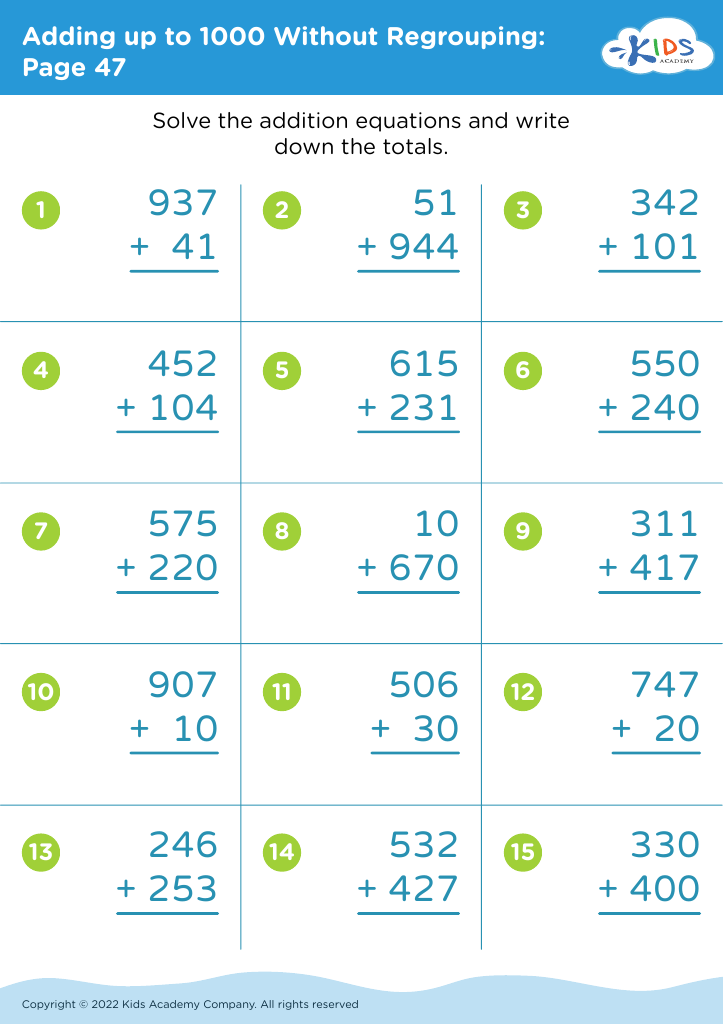
    Adding up to 1000 Without Regrouping: Page 47
    Adding up to 1000 Without Regrouping: Page 47
    Adding up to 1000 Without Regrouping: Page 47
    Worksheet
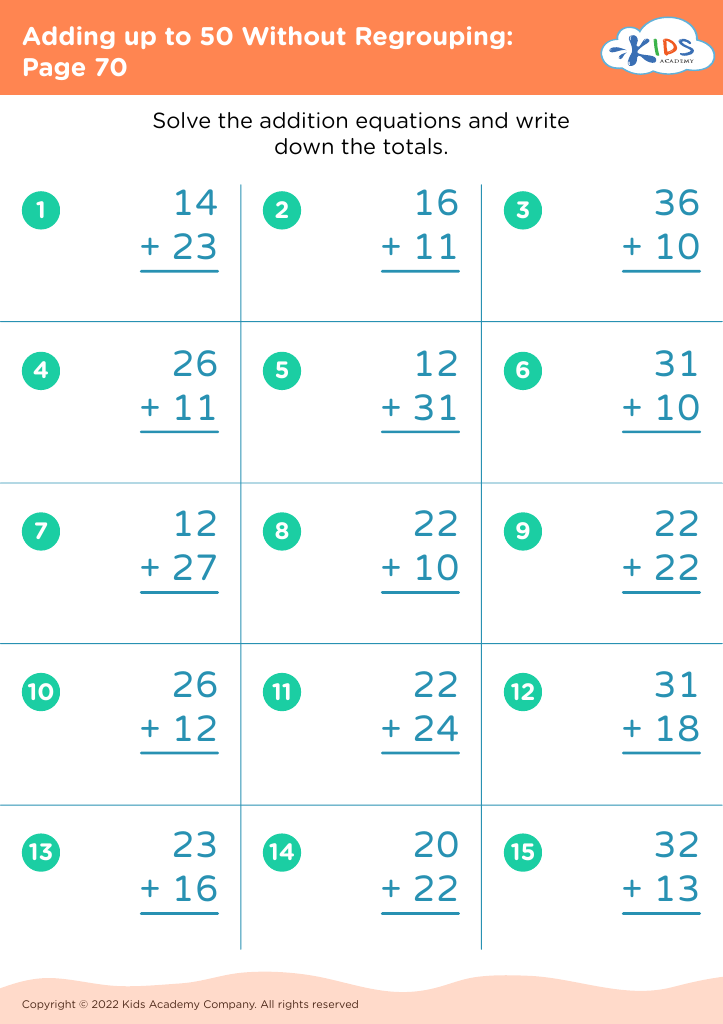
    Adding up to 50 Without Regrouping: Page 70
    Adding up to 50 Without Regrouping: Page 70
    Adding up to 50 Without Regrouping: Page 70
    Worksheet
    Adding up to 50 Without Regrouping: Page 28
    Adding up to 50 Without Regrouping: Page 28
    Adding up to 50 Without Regrouping: Page 28
    Worksheet
    Fabulous Fours Worksheet

    Fabulous Fours Worksheet

    Fabulous Fours Worksheet

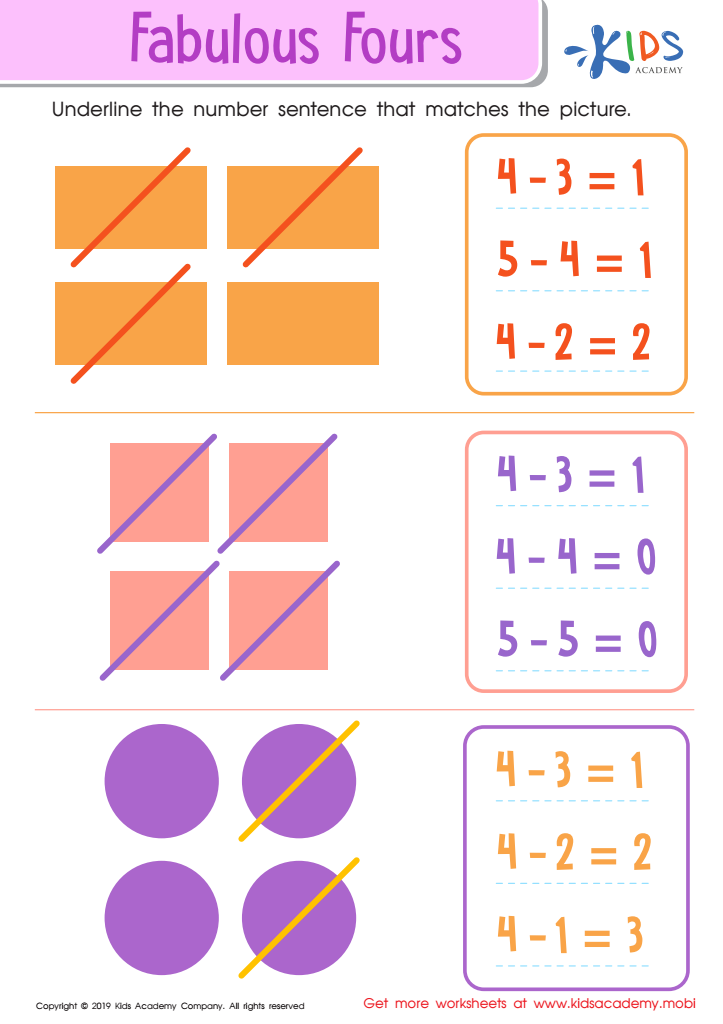
    Mastering basic math like addition and subtraction is essential for your kids. Use fun exercises and tests to evaluate their understanding of equations. Challenge them with this worksheet - have them count the objects in each picture, then trace a line to the pictures which show the equation 3-2.
    Fabulous Fours Worksheet

    Worksheet
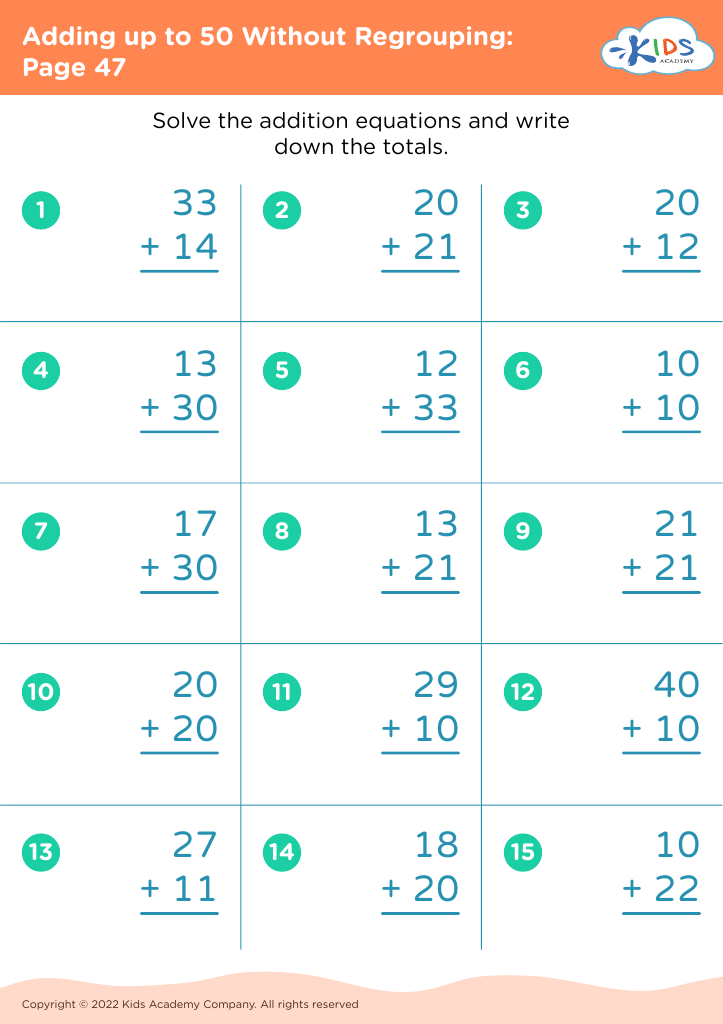
    Adding up to 50 Without Regrouping: Page 47
    Adding up to 50 Without Regrouping: Page 47
    Adding up to 50 Without Regrouping: Page 47
    Worksheet


    Understanding addition is a cornerstone of early mathematical development for children aged 6-8. It lays the foundation for more complex math topics they will encounter in later years, such as multiplication, division, fractions, and algebra. At this young age, children's brains are highly receptive to learning numerical and logical concepts. Engaging with addition helps boost their cognitive development, enhancing problem-solving skills, memory, and critical thinking.

    Moreover, mastering addition has practical life implications. Whether it's counting money, telling time, or sharing toys, addition is a part of everyday activities. A strong grasp of addition aids in building confidence and independence in children, allowing them to navigate daily tasks more effectively.

    For parents and teachers, fostering a solid comprehension of addition during these formative years also promotes a positive attitude toward learning math, reducing anxiety and encouraging a growth mindset. When children see math as enjoyable and accessible, they are more likely to take on academic challenges in the future.

    Incorporating games, interactive activities, and real-world examples makes learning addition fun and meaningful. By investing time and effort in teaching addition, parents and teachers can give children a significant advantage in their educational journey and daily lives.