Comparing numbers Addition Worksheets for Ages 6-8
4 filtered results
-
From - To
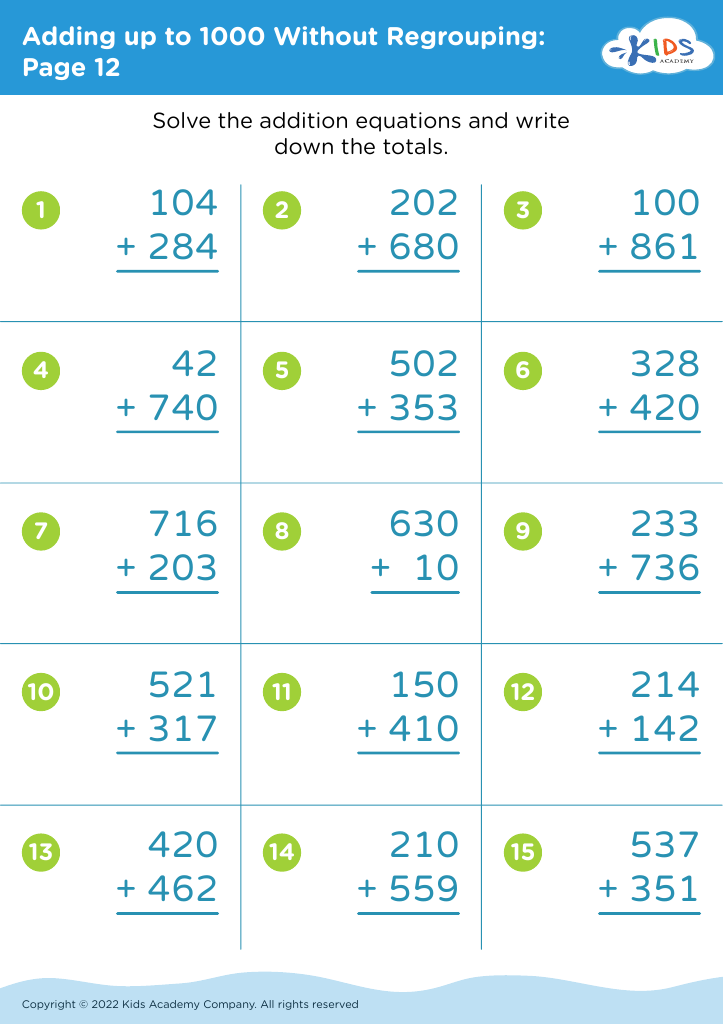
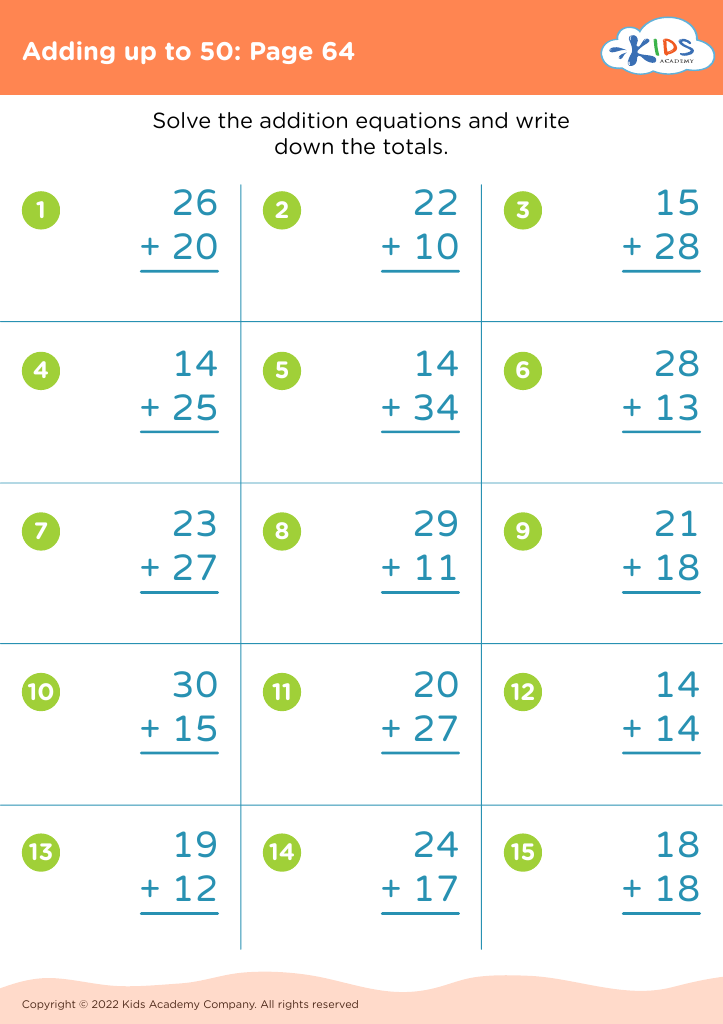
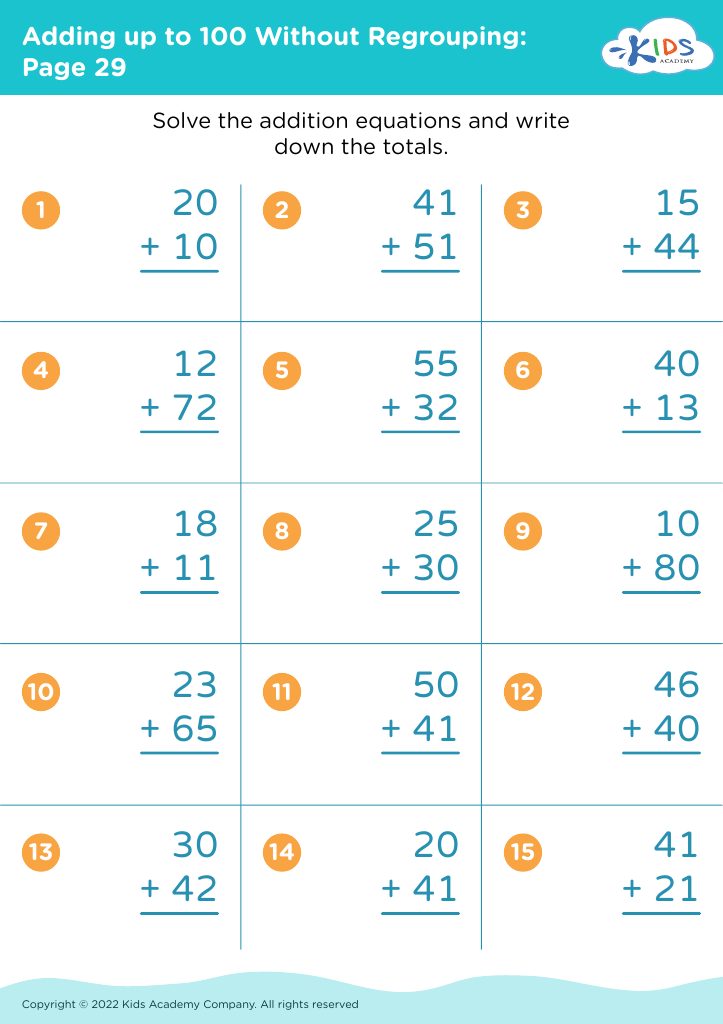
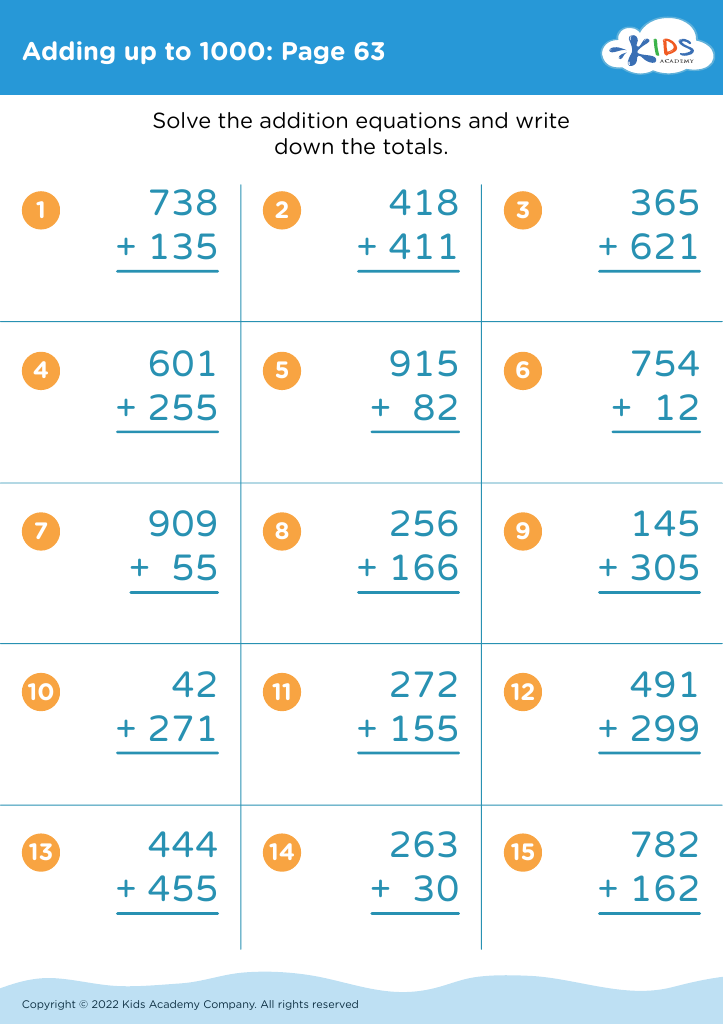
Enhance your child's numerical skills with our "Comparing Numbers Addition Worksheets for Ages 6-8." These engaging and educational worksheets are crafted to help young learners understand the fundamentals of comparing numbers while practicing addition. Designed by experts, each worksheet focuses on building fluency in addition and enhancing problem-solving abilities. With colorful and fun activities, children will find learning enjoyable and rewarding. Perfect for home or classroom use, these worksheets provide a solid foundation in math essentials. Boost your child's confidence and competence in numbers today with our expertly designed worksheets!








Parents and teachers play a crucial role in the development of essential mathematical skills in children aged 6-8, such as comparing numbers and understanding addition. These fundamental concepts serve as the building blocks for more complex mathematical operations and problem-solving abilities in the future.
Learning to compare numbers helps children understand quantity, magnitude, and order, which are vital for grasping other mathematical principles. It enables kids to make informed decisions, recognize patterns, and develop critical thinking skills. For instance, when children compare numbers, they can determine which is greater or smaller, identify sequences, and understand basic arithmetic relationships.
Addition, on the other hand, is the foundation of arithmetic and is integral to everyday life. By mastering addition, children not only learn to solve simple problems but also gain confidence in handling money, telling time, and measuring objects. It promotes cognitive development by enhancing memory, attention, and logical reasoning.
Parents and teachers must nurture these skills through engaging activities like games, visual aids, and hands-on practice. By doing so, they foster a positive attitude toward mathematics and ensure a strong foundation for academic success. Ultimately, developing competency in comparing numbers and addition prepares children for advanced math concepts, boosting their overall educational trajectory and life skills.








