Develop fine motor skills Addition Worksheets for Ages 6-8
9 filtered results
-
From - To
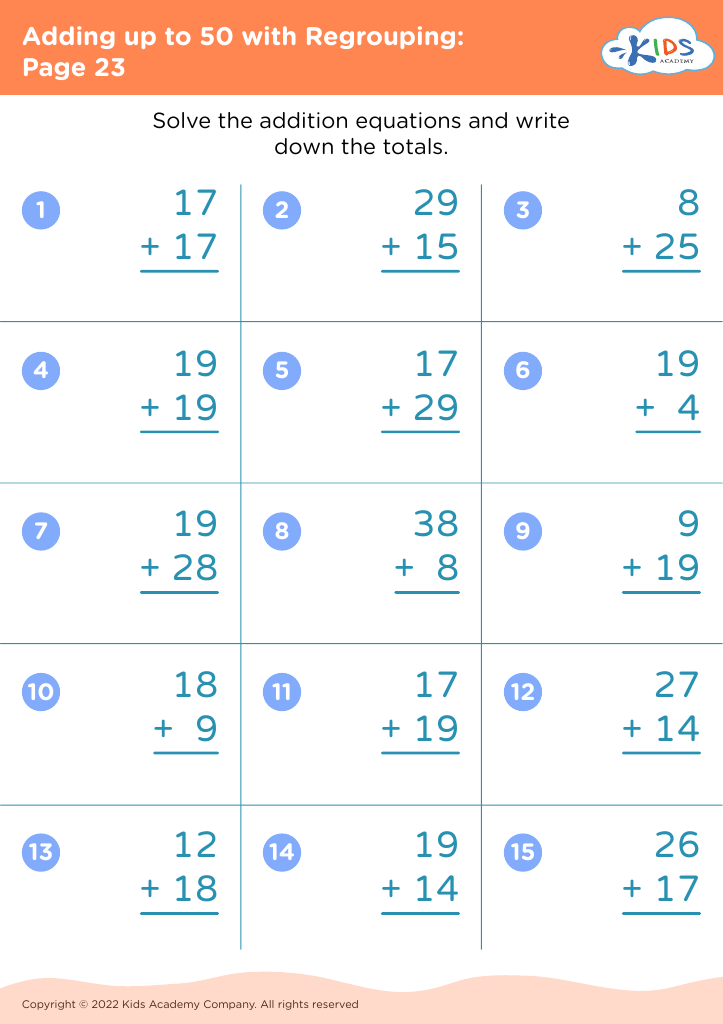
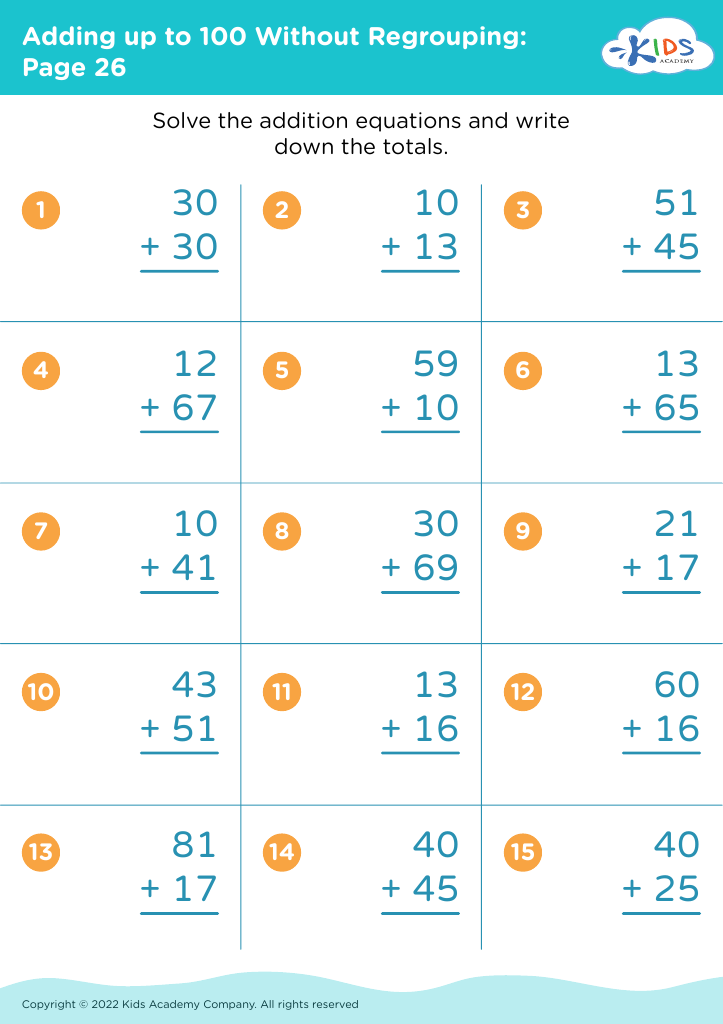
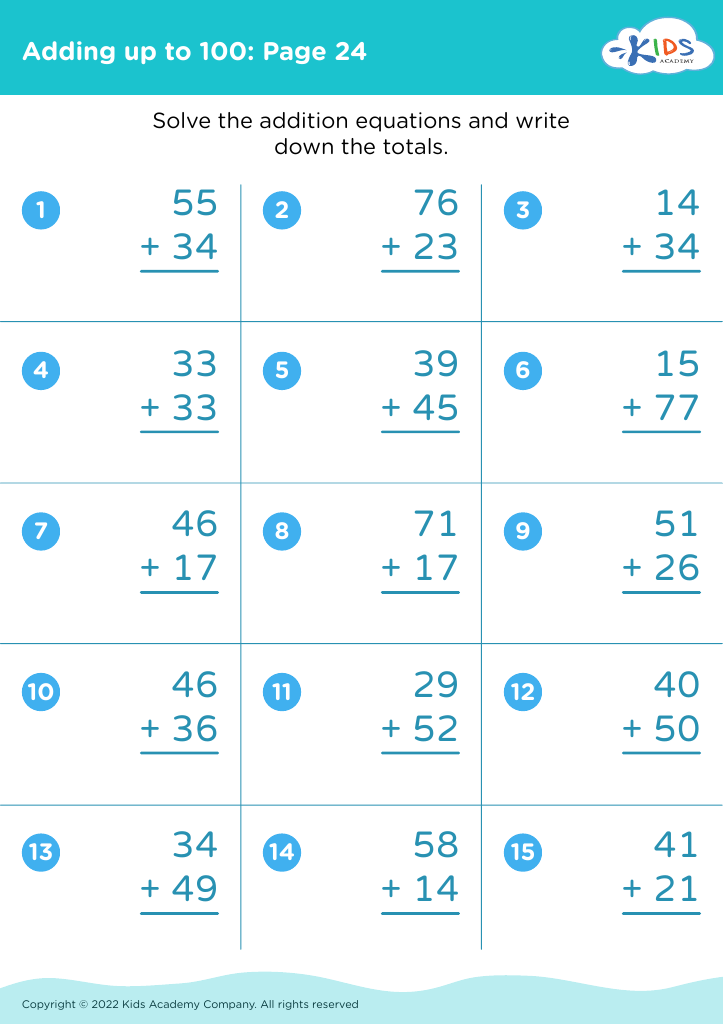
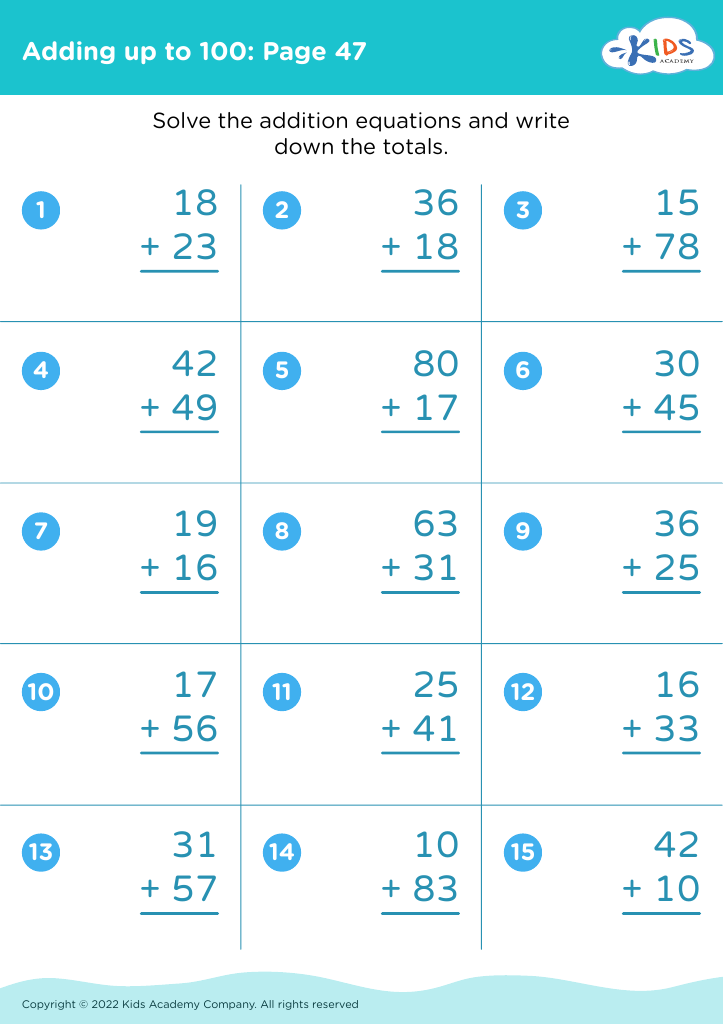
Welcome to our "Develop Fine Motor Skills Addition Worksheets" page designed for children aged 6-8! These engaging printable worksheets combine fundamental addition concepts with fun activities that enhance fine motor skills. As your child navigates through colorful exercises and creative challenges, they will not only practice addition but also strengthen their hand-eye coordination and dexterity. Each worksheet is carefully crafted to provide a balance of learning and play, ensuring that children stay motivated and focused while mastering essential math skills. Start your child's journey to confident math competence while developing their fine motor abilities today!
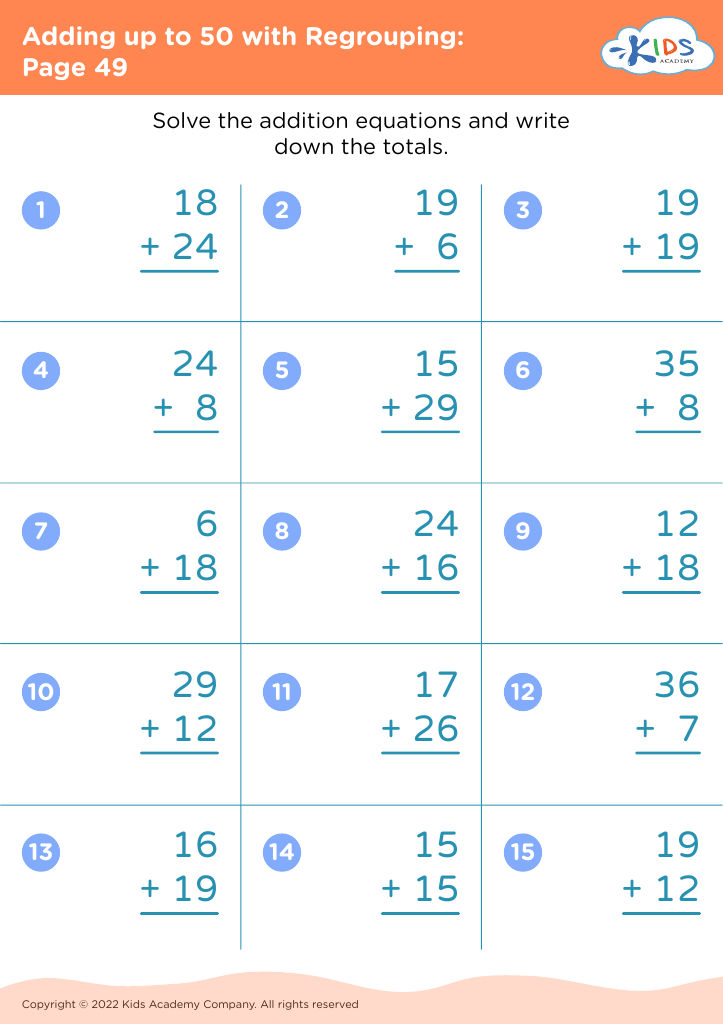








Developing fine motor skills is crucial for children aged 6-8 as it lays the foundation for their overall growth and learning. Parents and teachers should prioritize fine motor skill development for several reasons.
Firstly, these skills are essential for mastering basic tasks such as writing, cutting, and manipulating objects, which are fundamental components of daily life and academic success. As children learn to write, well-developed fine motor skills enhance their ability to form letters and express their thoughts clearly.
Additionally, fine motor skills are linked to cognitive development. Engaging in activities that require precise hand-eye coordination, such as drawing, playing with building blocks, or threading beads, encourages problem-solving and creativity. These activities stimulate brain development during a critical stage in a child's growth.
Moreover, strong fine motor abilities can boost a child's self-esteem and independence. When children can effectively complete tasks like dressing or using tools, they feel more confident in their capabilities, fostering a positive attitude towards learning.
In summary, nurturing fine motor skills enhances children's academic performance, cognitive development, and self-confidence, ultimately preparing them for future challenges in both school and life.








