Develop problem-solving skills Addition Worksheets for Ages 6-8
6 filtered results
-
From - To
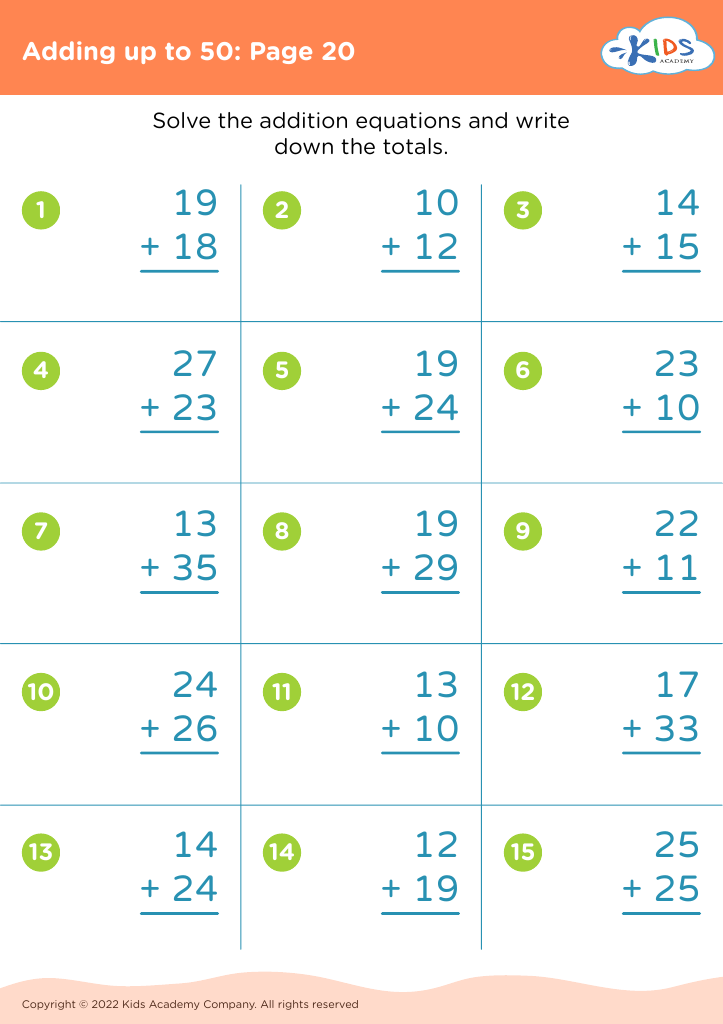
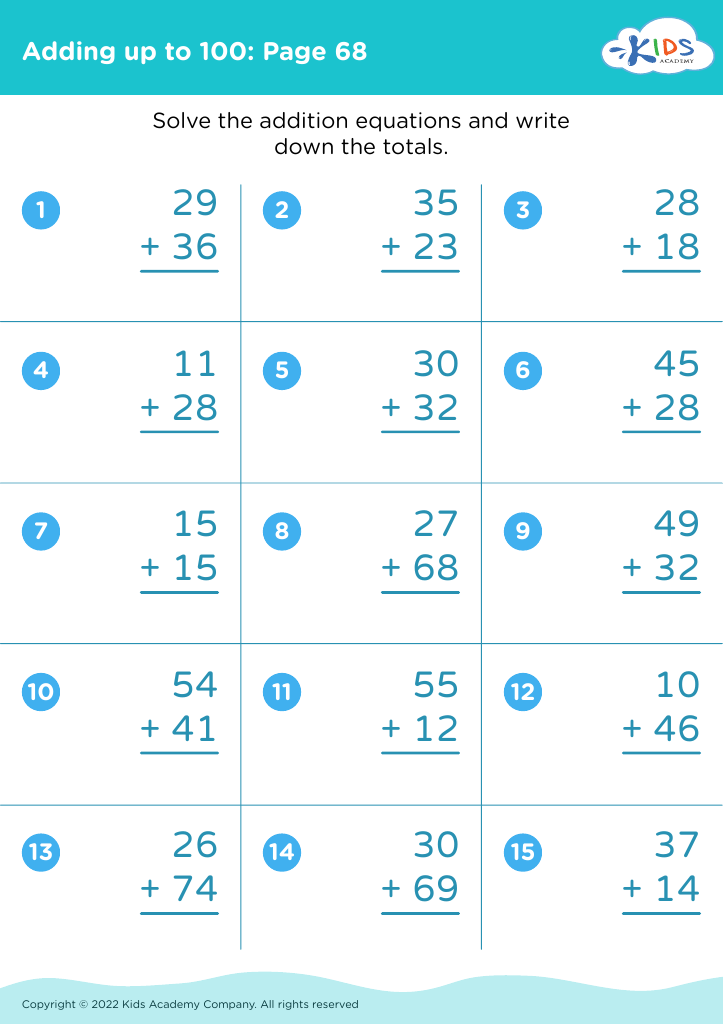
Enhance your child's problem-solving abilities with our engaging Addition Worksheets specially designed for ages 6-8. These worksheets not only focus on basic addition skills but also encourage critical thinking and strategy development. Using fun and interactive activities, children will tackle a variety of real-life math scenarios that make learning exciting. Our thoughtfully crafted exercises help build confidence and foster independent thinking in young minds. Whether at home or in the classroom, these resources are perfect for reinforcing math concepts while developing essential problem-solving skills. Equip your student with the tools they need to succeed in math and beyond!
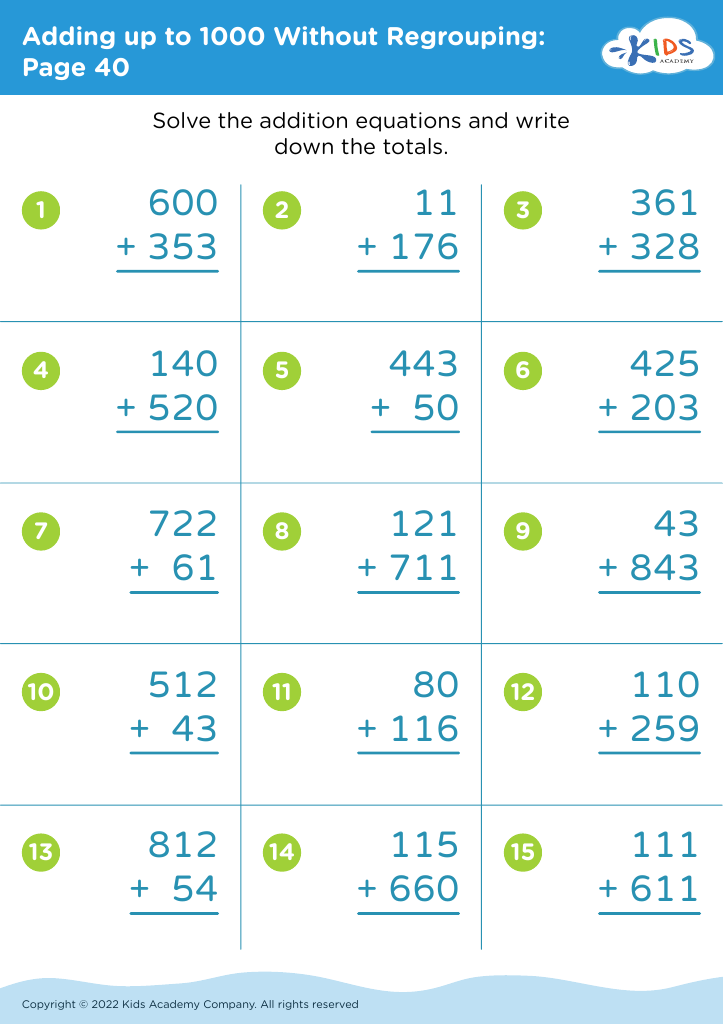
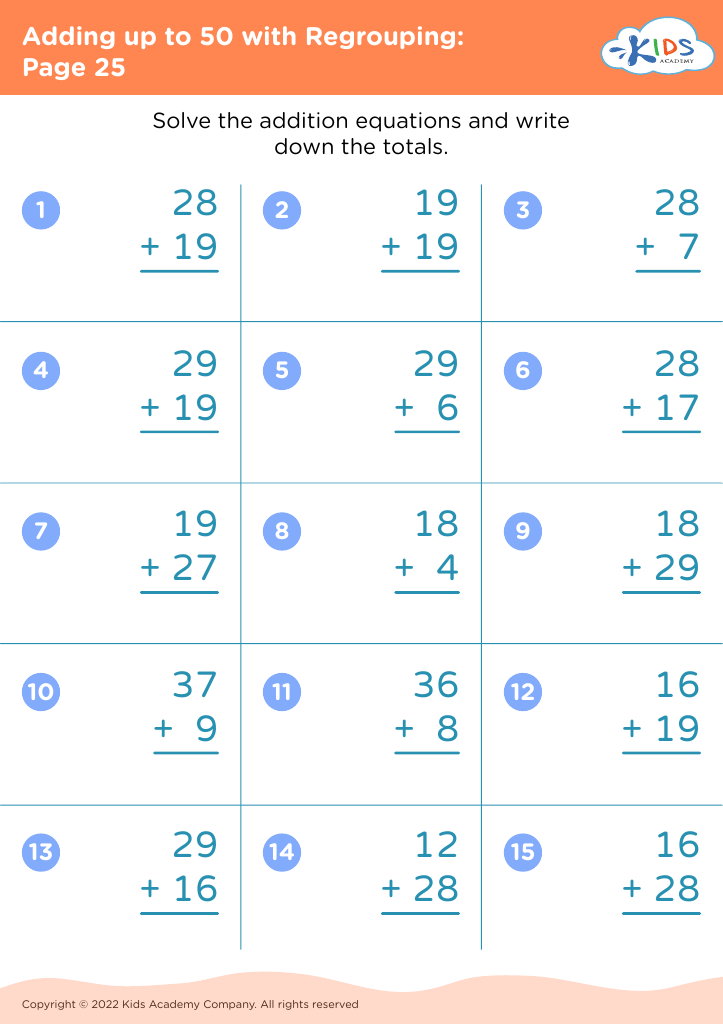
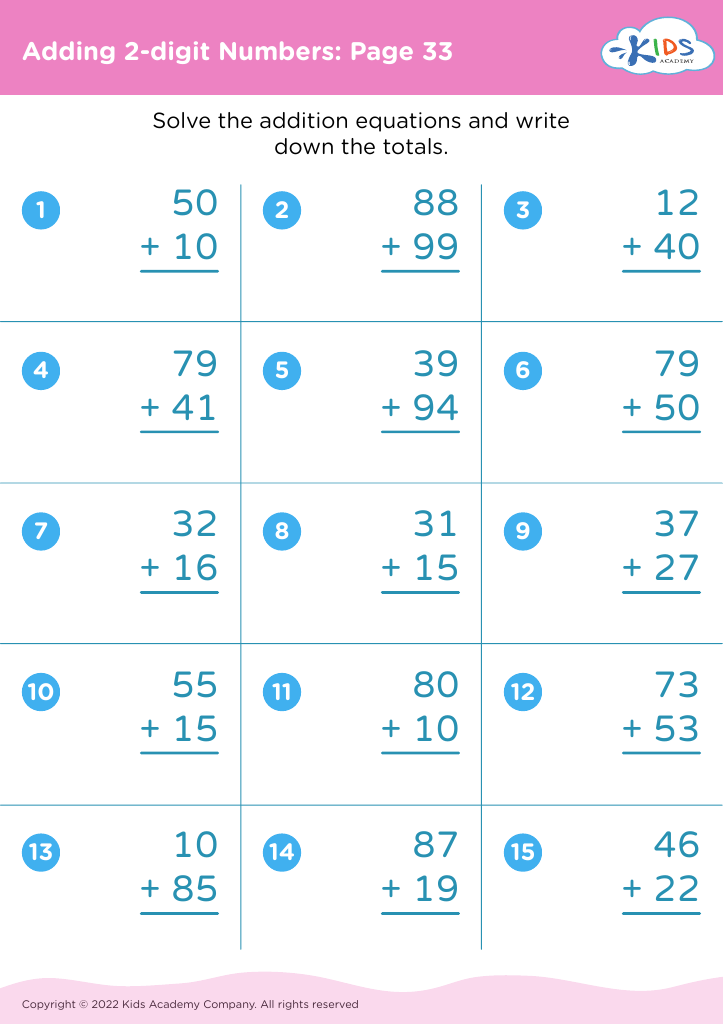
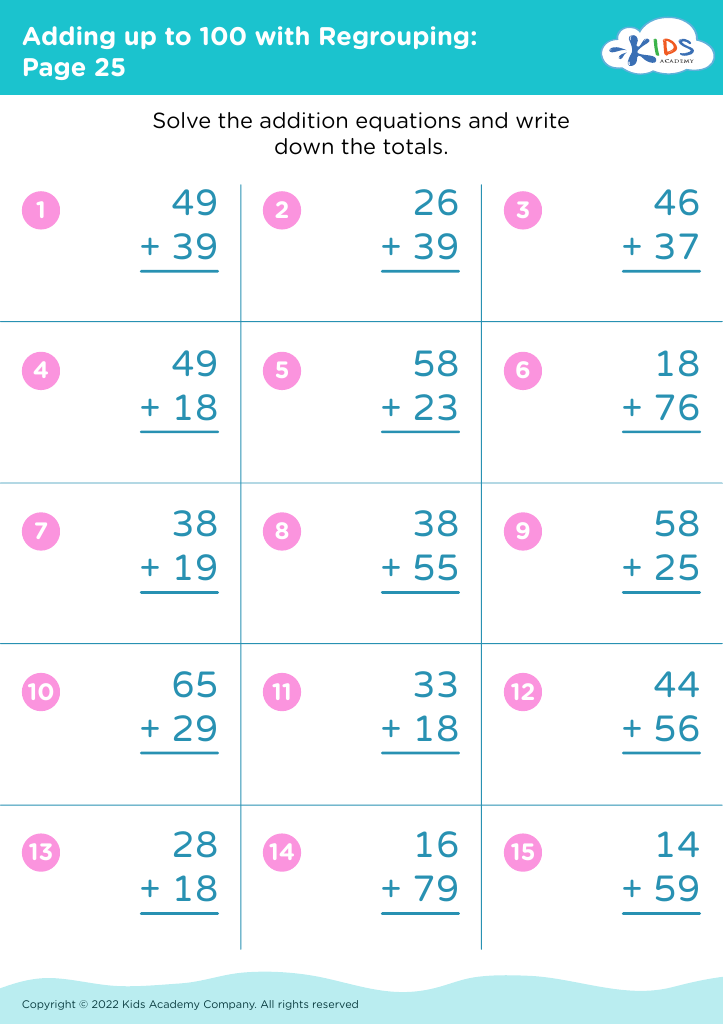







.jpg)
Developing problem-solving skills in children, particularly in the context of addition for ages 6-8, is crucial for their overall cognitive growth and future academic success. During this period, children are transitioning from concrete to abstract thinking, and mastering basic addition serves as a foundation for more complex mathematical concepts. By fostering problem-solving abilities, parents and teachers not only enhance children's mathematical skills but also cultivate critical thinking, perseverance, and confidence.
When children engage with addition problems, they learn to identify patterns, devise strategies, and approach challenges with flexibility. This practice promotes resilience, as they learn to analyze their mistakes and explore different pathways to find solutions. These skills are transferable beyond mathematics—they can apply them in everyday situations and other subjects, boosting their ability to navigate the complexities of life.
Moreover, as children improve their problem-solving skills, they develop a growth mindset, understanding that effort and practice lead to improvement. This attitude towards learning encourages them to embrace challenges and develop a lifelong love for learning. Ultimately, investing time in nurturing problem-solving abilities in addition sets the stage for a strong mathematical foundation and equips children with essential life skills that will benefit them in numerous ways.








