Filters

110 filtered results

Clear all filters
Favorites
With answer key
Interactive

110 filtered results

Difficulty Level

Grade


Subject

    Check out this FREE Trial Lesson on Addition for age 6-8!

    Z

    Favorites
    With answer key
    Interactive
    • 6-8
    • Problem-Solving Skills
    • Addition
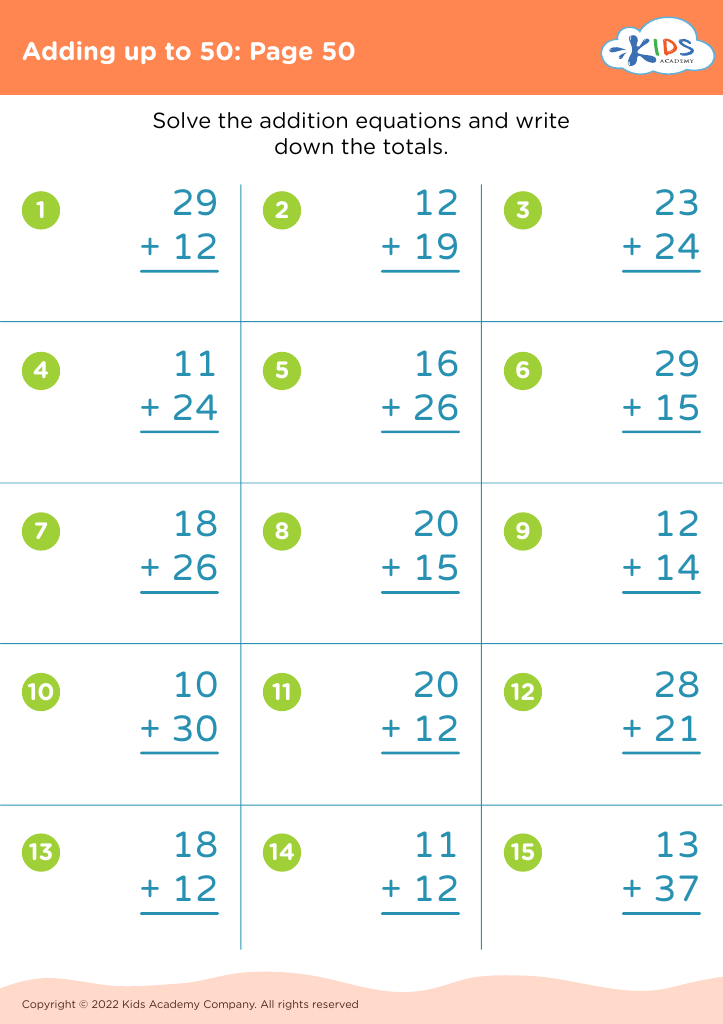
    Adding up to 50: Page 50
    Adding up to 50: Page 50

    Adding up to 50: Page 50

    Adding up to 50: Page 50
    Worksheet
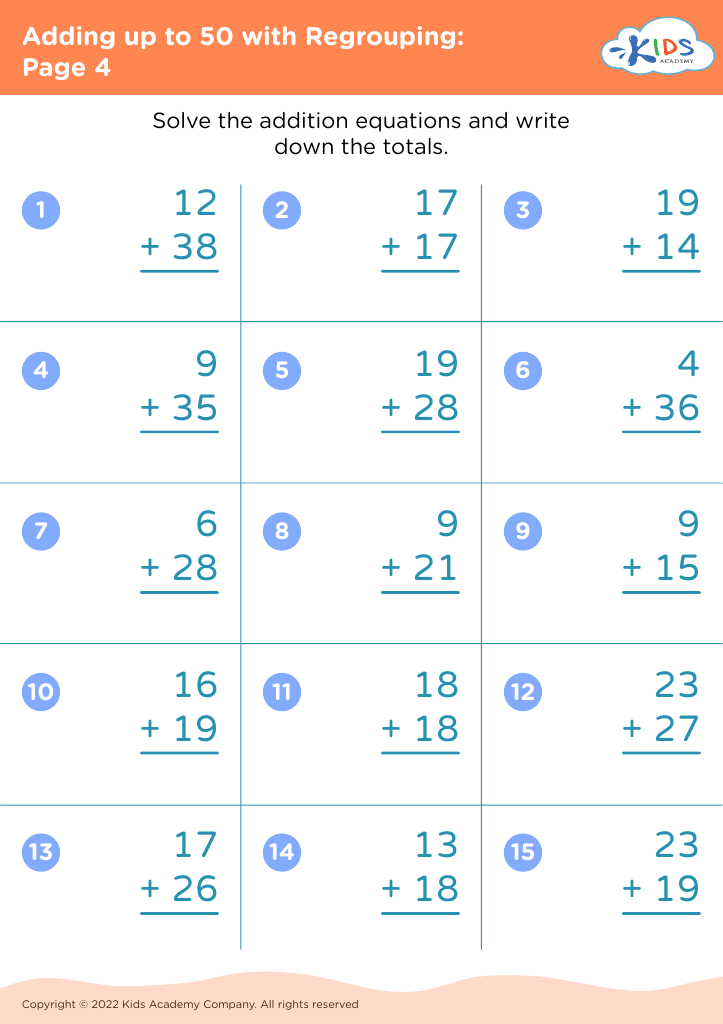
    Adding up to 50 with Regrouping: Page 4
    Adding up to 50 with Regrouping: Page 4
    Adding up to 50 with Regrouping: Page 4
    Worksheet
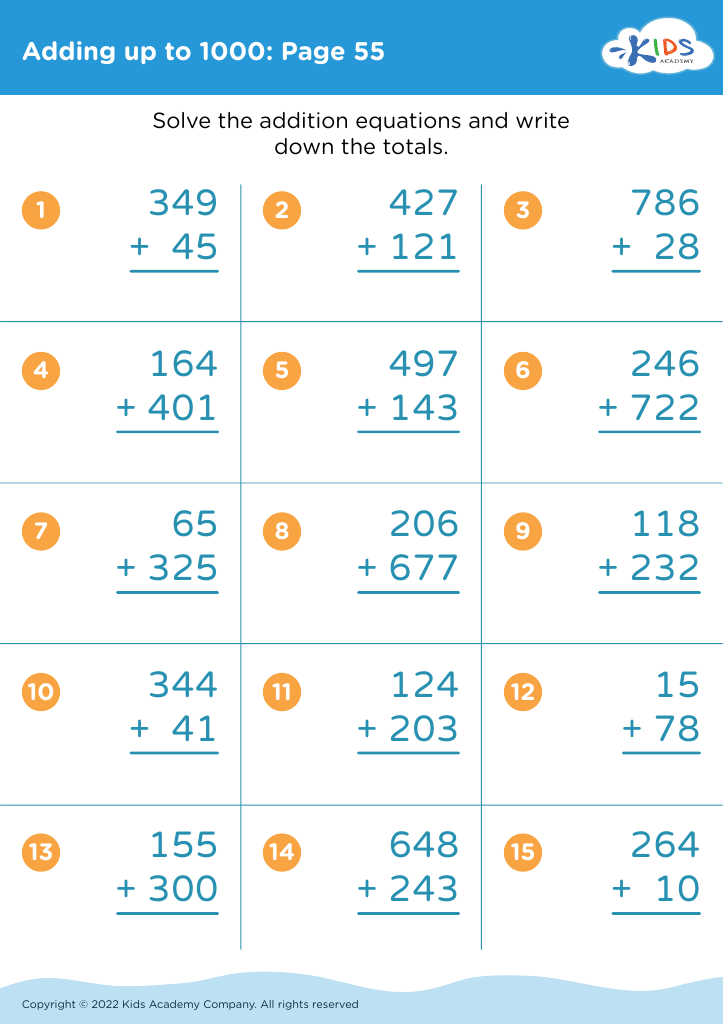
    Adding up to 1000: Page 55
    Adding up to 1000: Page 55

    Adding up to 1000: Page 55

    Adding up to 1000: Page 55
    Worksheet
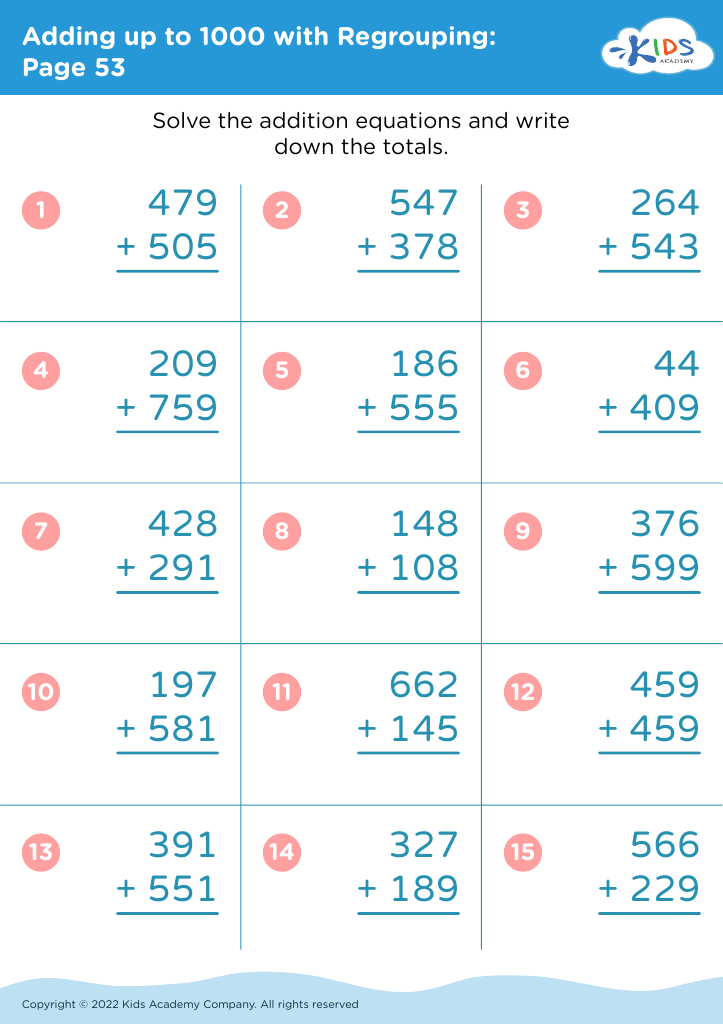
    Adding up to 1000 with Regrouping: Page 53
    Adding up to 1000 with Regrouping: Page 53
    Adding up to 1000 with Regrouping: Page 53
    Worksheet
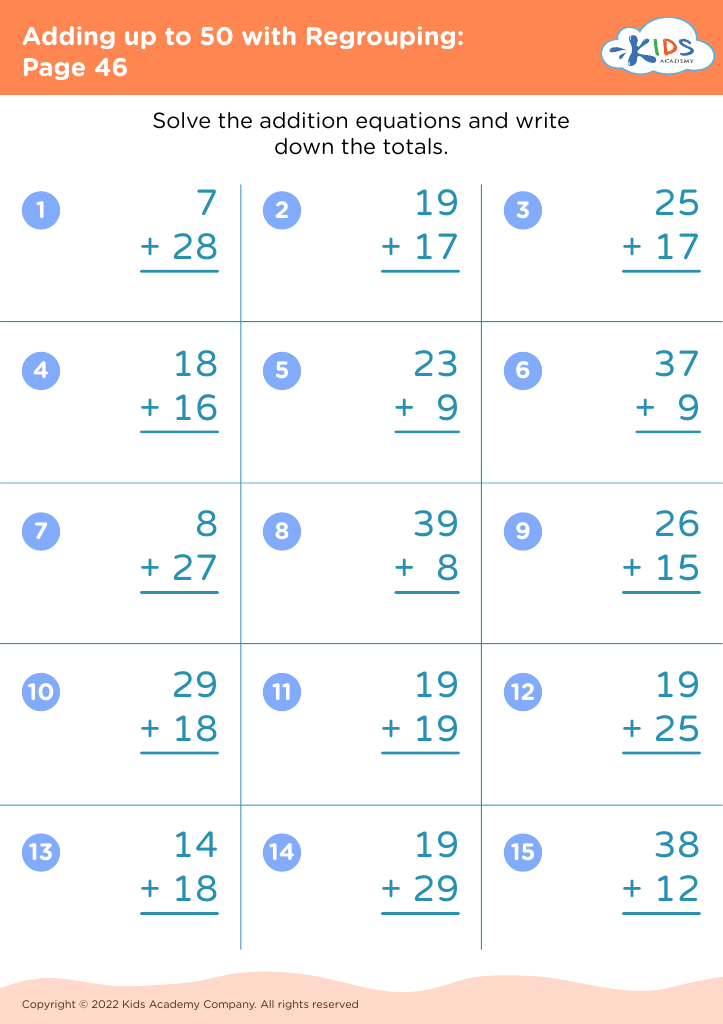
    Adding up to 50 with Regrouping: Page 46
    Adding up to 50 with Regrouping: Page 46
    Adding up to 50 with Regrouping: Page 46
    Worksheet
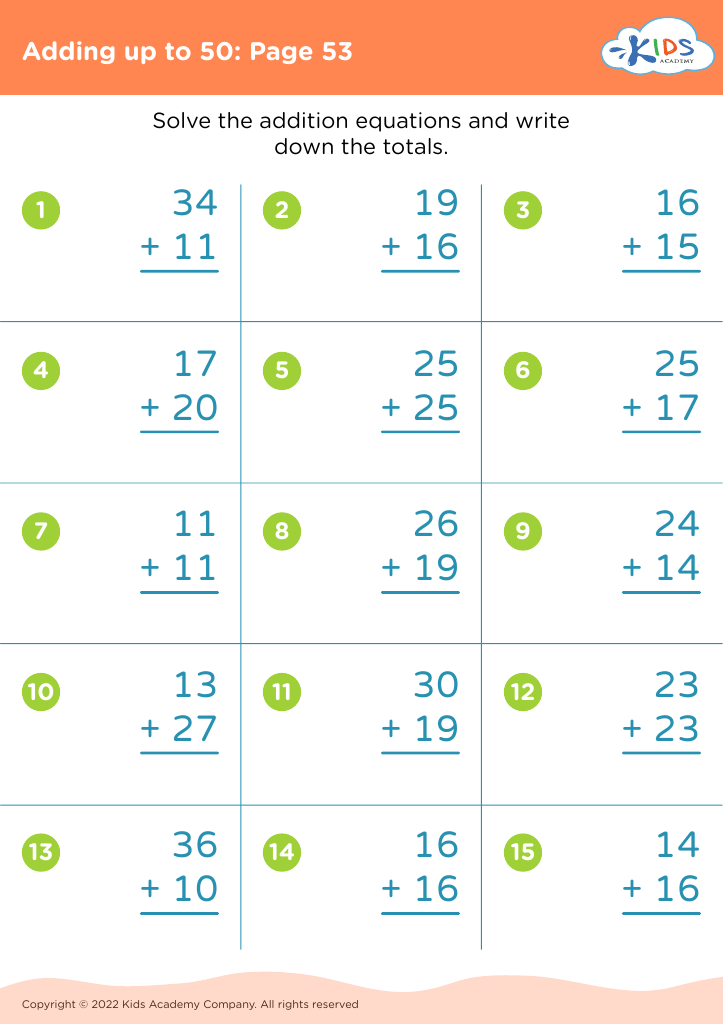
    Adding up to 50: Page 53
    Adding up to 50: Page 53

    Adding up to 50: Page 53

    Adding up to 50: Page 53
    Worksheet
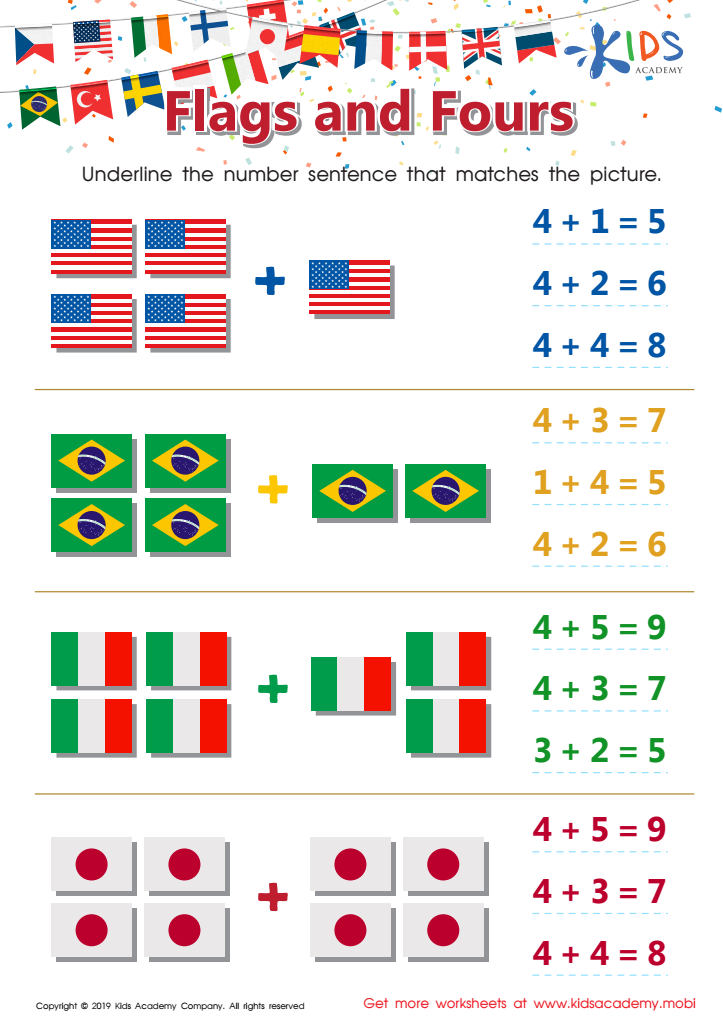
    Flags and Fours Worksheet
    Flags and Fours Worksheet

    Flags and Fours Worksheet

    Have your kids identify country flags from this colorful printout. Then, ask them to underline the number sentence that goes with each flag. Combining math with national flag recognition strengthens kids' knowledge of both, promoting an understanding of identity and numbers.
    Flags and Fours Worksheet
    Worksheet
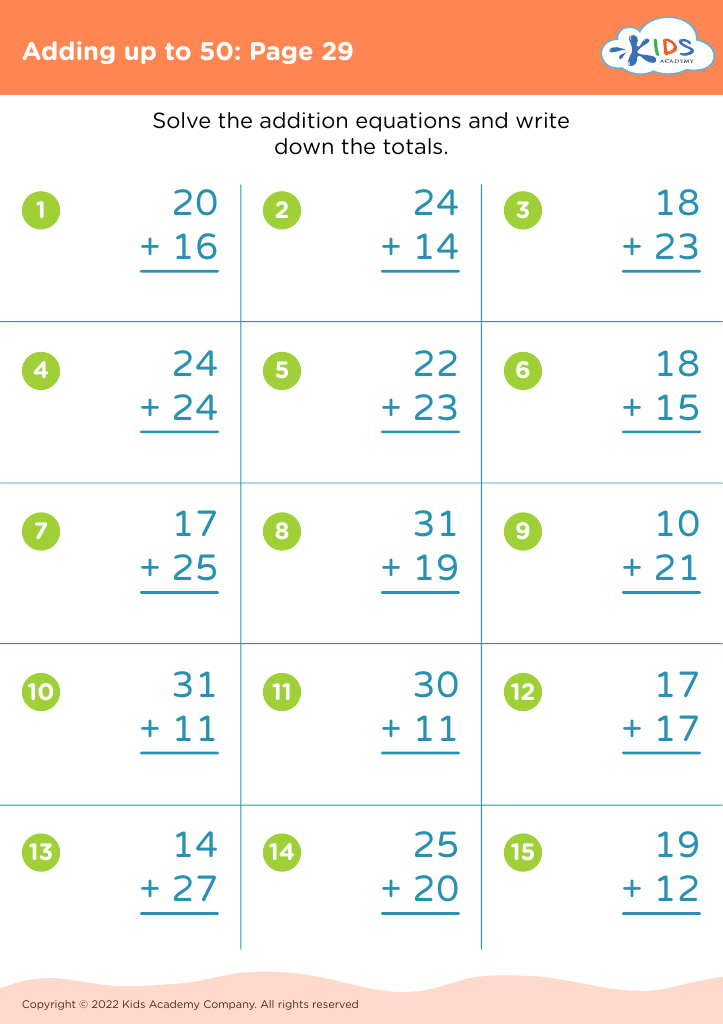
    Adding up to 50: Page 29
    Adding up to 50: Page 29

    Adding up to 50: Page 29

    Adding up to 50: Page 29
    Worksheet
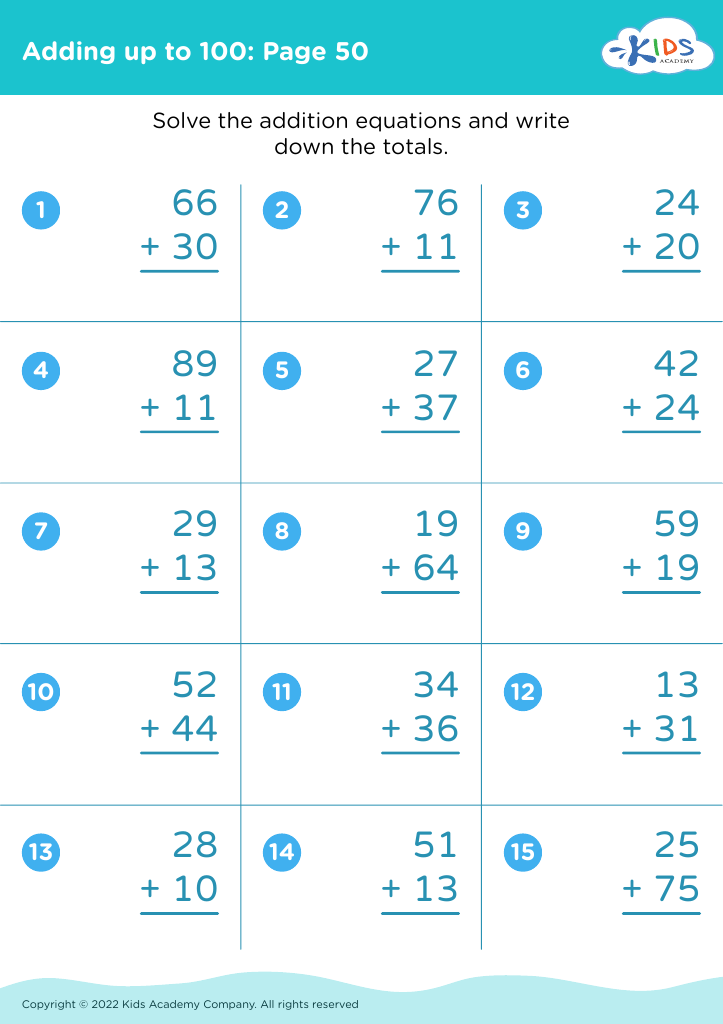
    Adding up to 100: Page 50
    Adding up to 100: Page 50

    Adding up to 100: Page 50

    Adding up to 100: Page 50
    Worksheet
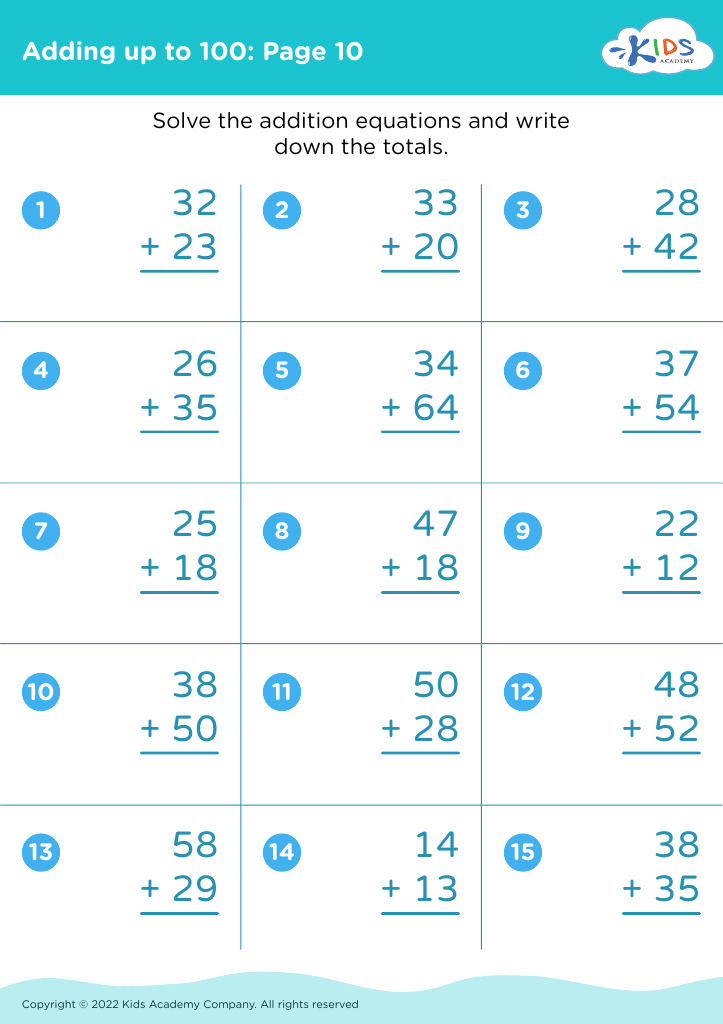
    Adding up to 100: Page 10
    Adding up to 100: Page 10

    Adding up to 100: Page 10

    Adding up to 100: Page 10
    Worksheet
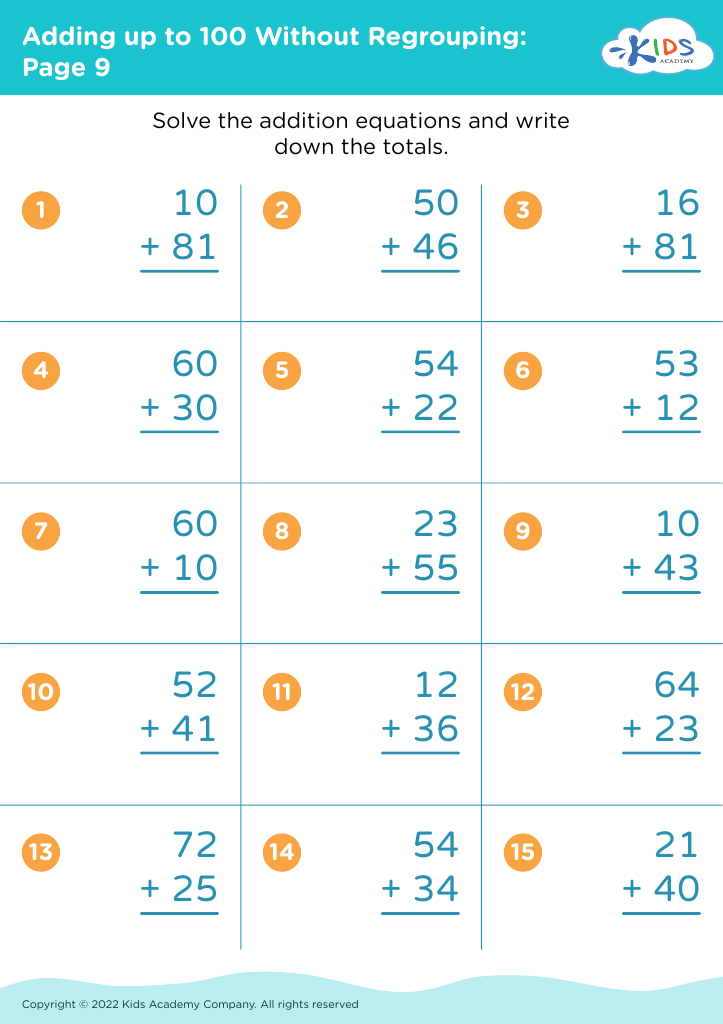
    Adding up to 100 Without Regrouping: Page 9
    Adding up to 100 Without Regrouping: Page 9
    Adding up to 100 Without Regrouping: Page 9
    Worksheet
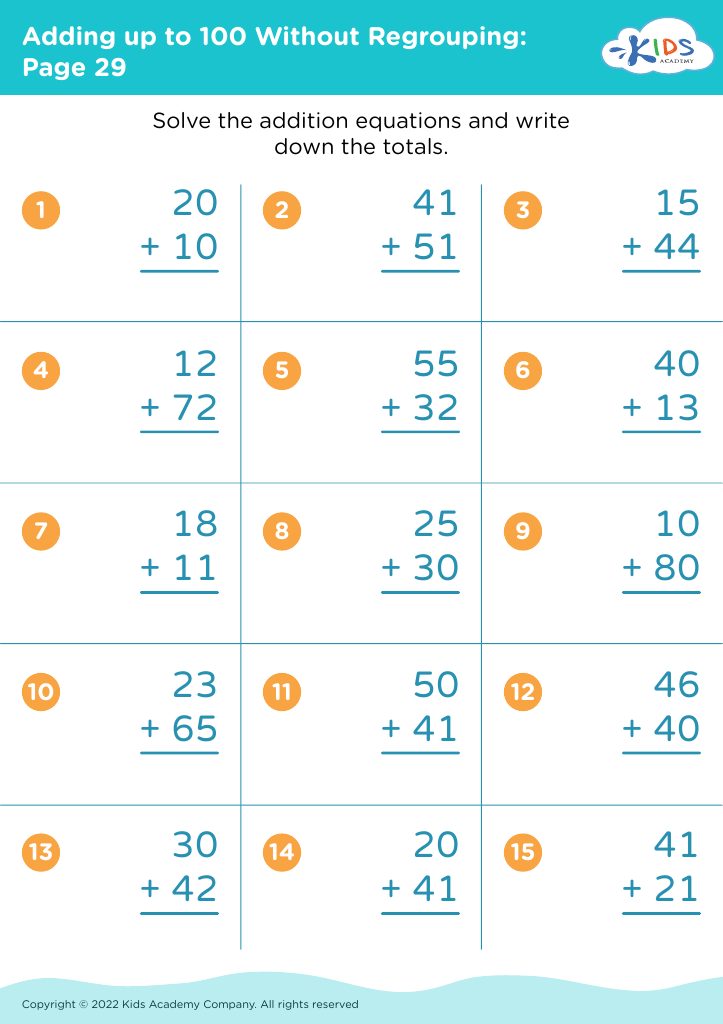
    Adding up to 100 Without Regrouping: Page 29
    Adding up to 100 Without Regrouping: Page 29
    Adding up to 100 Without Regrouping: Page 29
    Worksheet
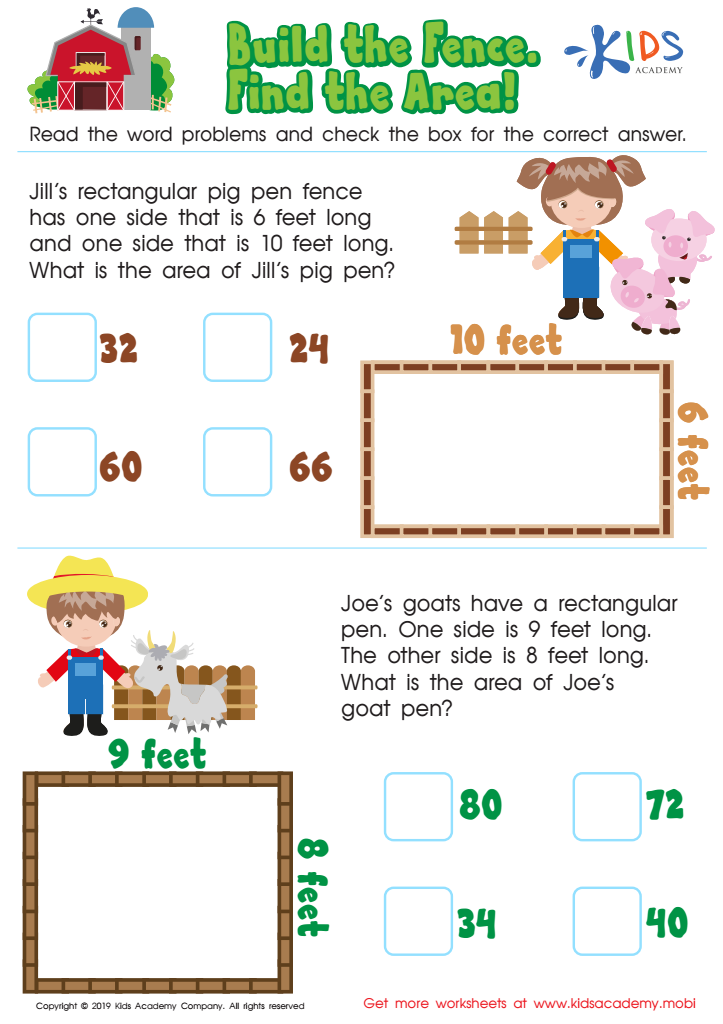
    Build the Fence, Find the Area Worksheet
    Build the Fence, Find the Area Worksheet

    Build the Fence, Find the Area Worksheet

    Help your kids gain skills in mathematics with this simple worksheet. Kids can refresh their addition and subtraction to solve geometry problems. Read the word problems and then help them check the box for the correct answer if they need extra help. This worksheet is great for improving kids' familiarity with basic equations.
    Build the Fence, Find the Area Worksheet
    Worksheet
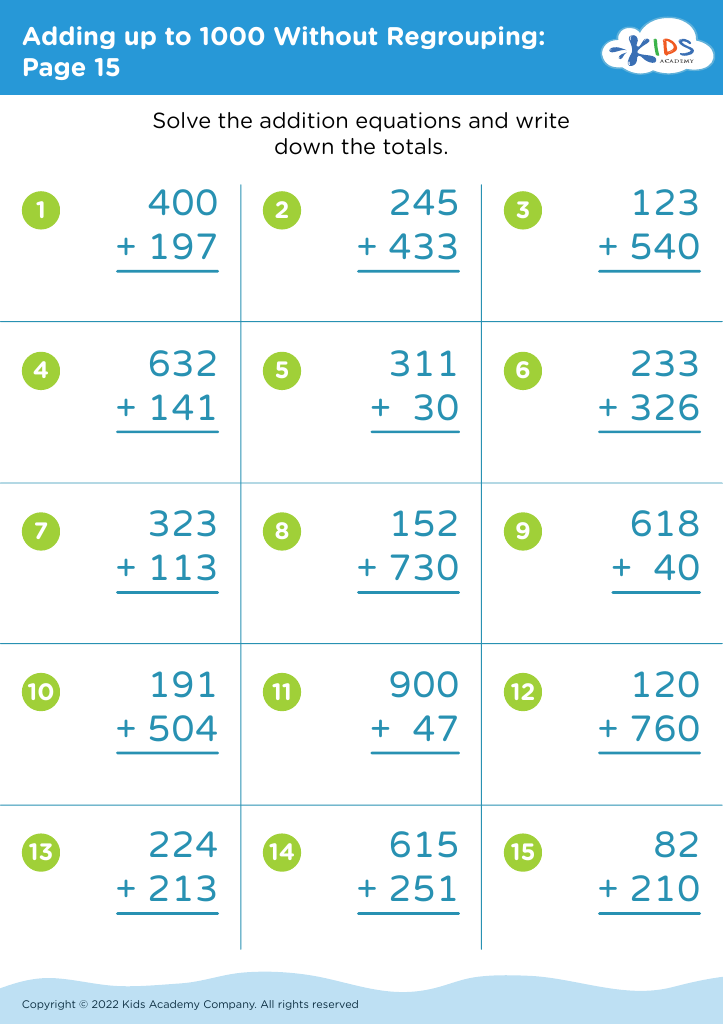
    Adding up to 1000 Without Regrouping: Page 15
    Adding up to 1000 Without Regrouping: Page 15
    Adding up to 1000 Without Regrouping: Page 15
    Worksheet


    ... 4 5

    Problem-solving skills are essential for children aged 6-8 as they lay the foundation for academic success and everyday life. During these formative years, children begin to transition from concrete thinking to more abstract reasoning. By fostering problem-solving skills, parents and teachers equip students with the ability to approach challenges critically and creatively, boosting their confidence in math and other subjects.

    Addition problem-solving not only teaches mathematical concepts but also enhances essential thinking skills, such as reasoning, decision-making, and perseverance. For example, when children tackle addition problems, they learn to break larger tasks into manageable steps, reflect on various strategies, and adapt their approaches when faced with difficulties.

    Moreover, these skills are transferrable to real-life situations, such as sharing, budgeting, or planning activities, promoting resilience and resourcefulness. Engaging children in collaborative problem-solving activities also encourages teamwork, communication, and social-emotional development. Therefore, it's crucial for parents and teachers to actively support and nurture these skills, ensuring that children are well-prepared to tackle challenges both in and out of the classroom as they grow. By prioritizing problem-solving, caregivers can help foster a culture of curiosity and a love for lifelong learning.