Comparing Numbers Worksheets for Ages 6-8 - Page 3
52 filtered results
-
From - To
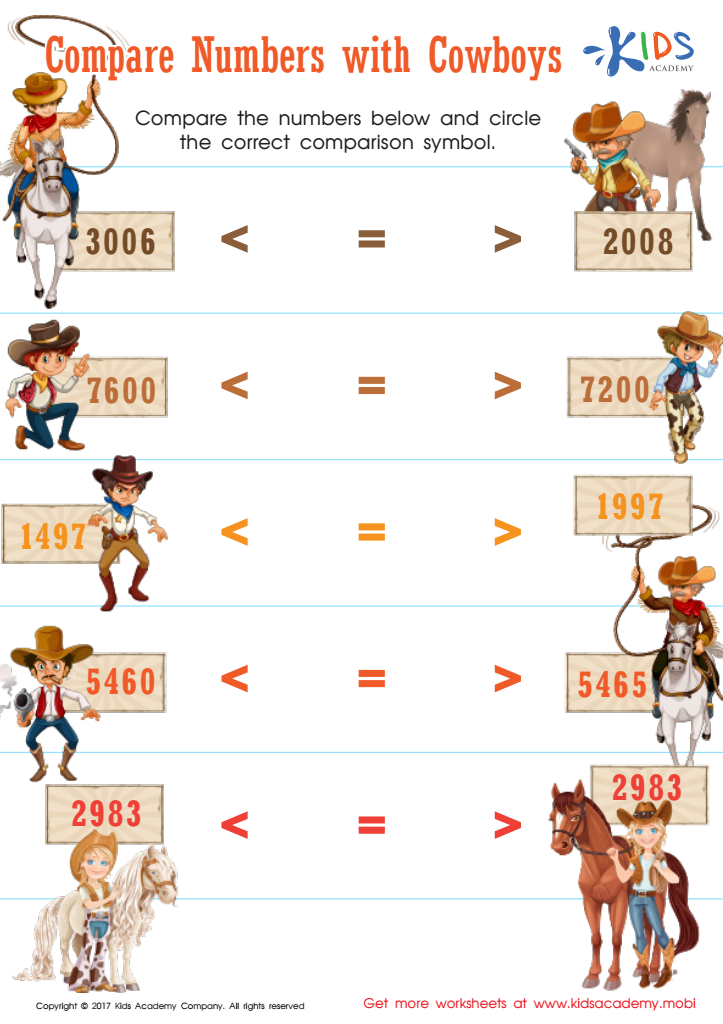
Compare Numbers Worksheet for 3rd Grade
 Assign to My Students

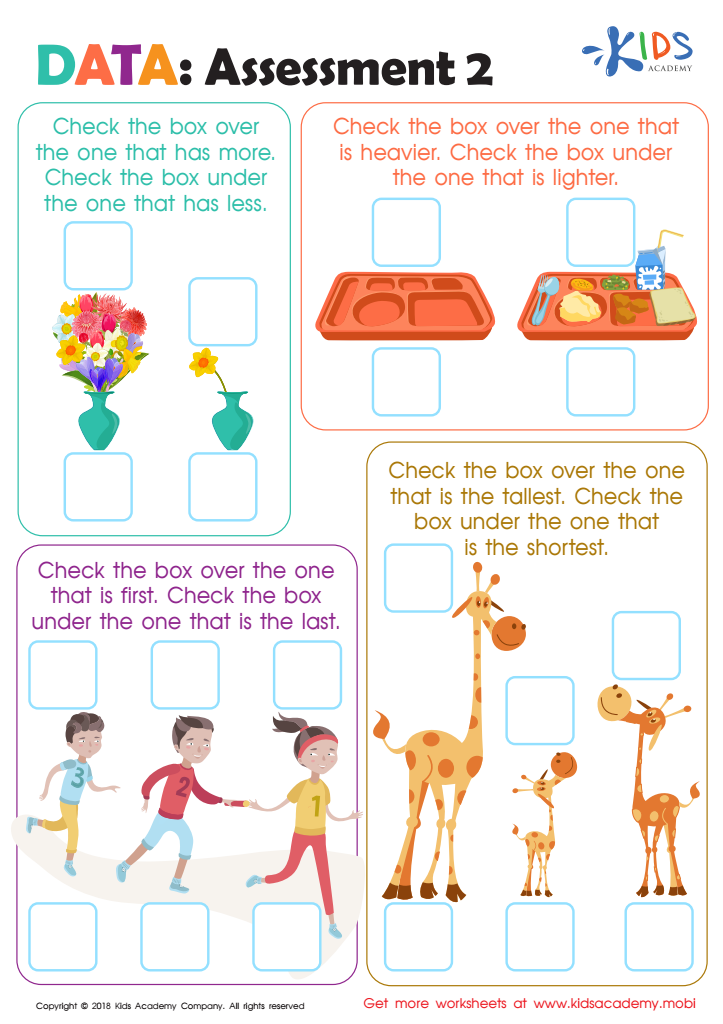
Data: Assessment 2 Worksheet
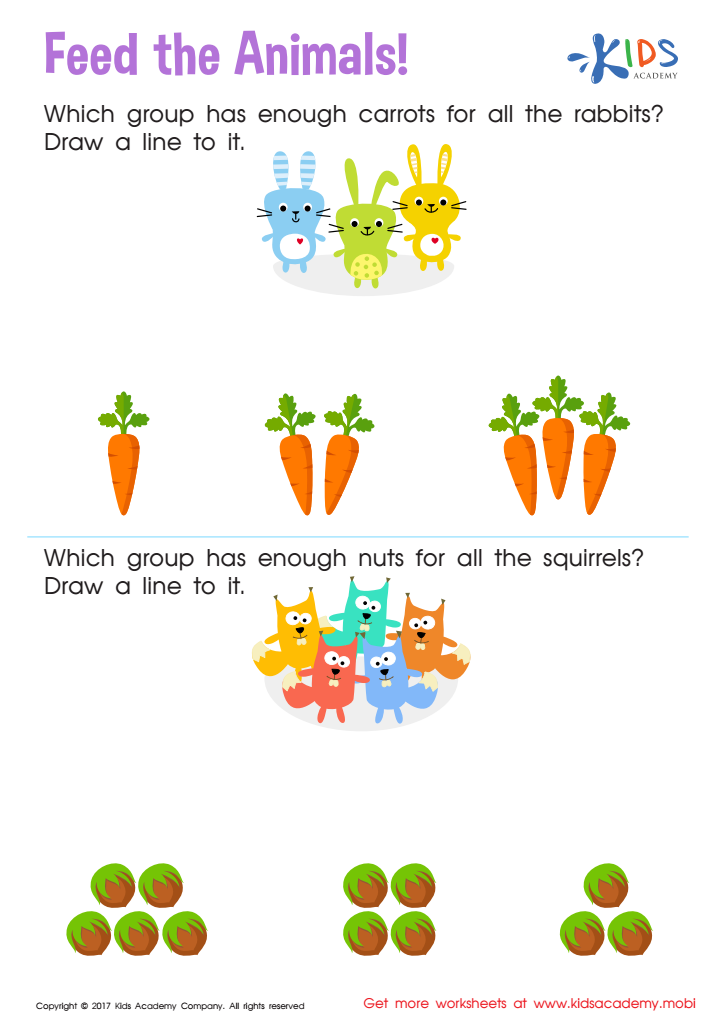
Count and Match: Feed the Animals Worksheet
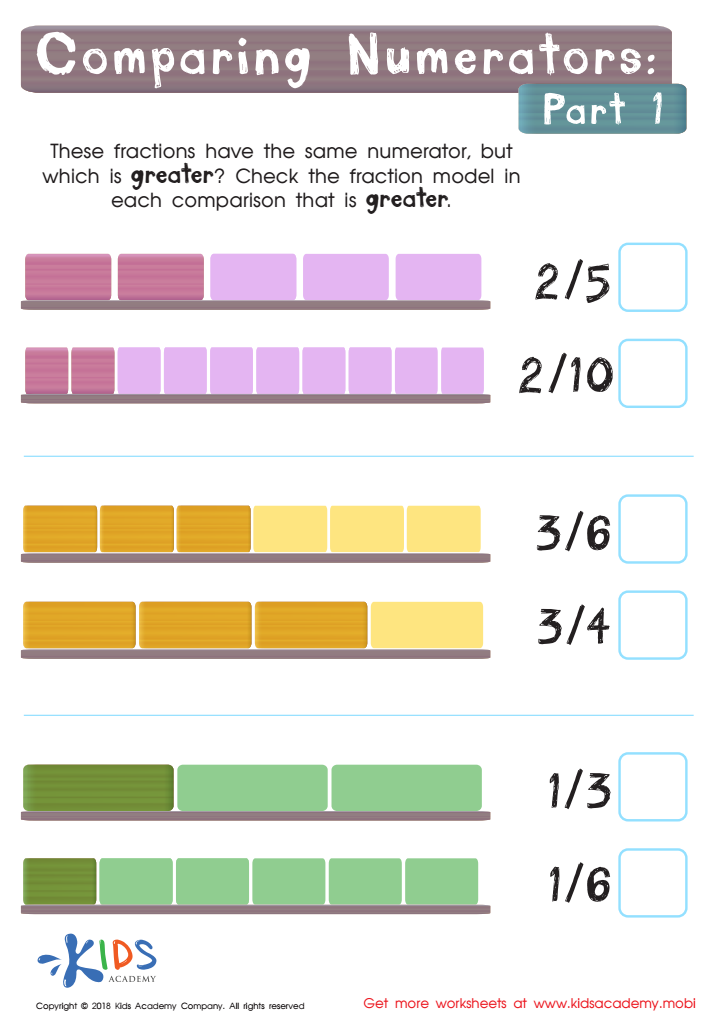
Comparing Numerators Part 1 Worksheet








Comparing numbers is an essential skill for children aged 6-8, laying the foundation for their mathematical understanding and critical thinking. For parents and teachers, nurturing this skill is crucial for several reasons:
Firstly, it helps develop number sense, enabling children to recognize the value of different quantities. They learn to not only identify larger and smaller numbers but also understand the relationships between them. This foundational knowledge is crucial as they progress to more complex arithmetic and problem-solving tasks.
Secondly, comparing numbers encourages engagement with mathematical language and concepts, such as greater than, less than, and equal to. By using these terms, children develop communication skills that are vital for discussing math more effectively.
Moreover, this skill supports everyday decision-making, from budgeting to measuring, promoting practical applications of math. When children internalize the concept of comparison, they also enhance their cognitive abilities, enabling them to analyze situations and arrive at logical conclusions.
By actively participating in activities that involve comparing numbers, parents and teachers can foster a positive attitude towards math, helping to build confidence and competence in young learners. Overall, this skill plays a pivotal role in establishing a strong mathematical foundation that will benefit children long-term.