Spatial understanding Geometry Worksheets for Ages 6-8
3 filtered results
-
From - To
Explore our engaging Spatial Understanding Geometry Worksheets designed for children ages 6-8! These worksheets are perfect for young learners to develop essential geometric skills through fun activities. By using these resources, students will enhance their ability to recognize shapes, understand spatial relationships, and improve their problem-solving capabilities. Our thoughtfully crafted exercises include identifying, matching, and manipulating various geometric forms, ensuring that each child gains confidence in spatial concepts. Ideal for classroom use or at-home practice, these worksheets cater to diverse learning styles, making geometry accessible and enjoyable for every child. Encourage your students to explore the fascinating world of shapes today!
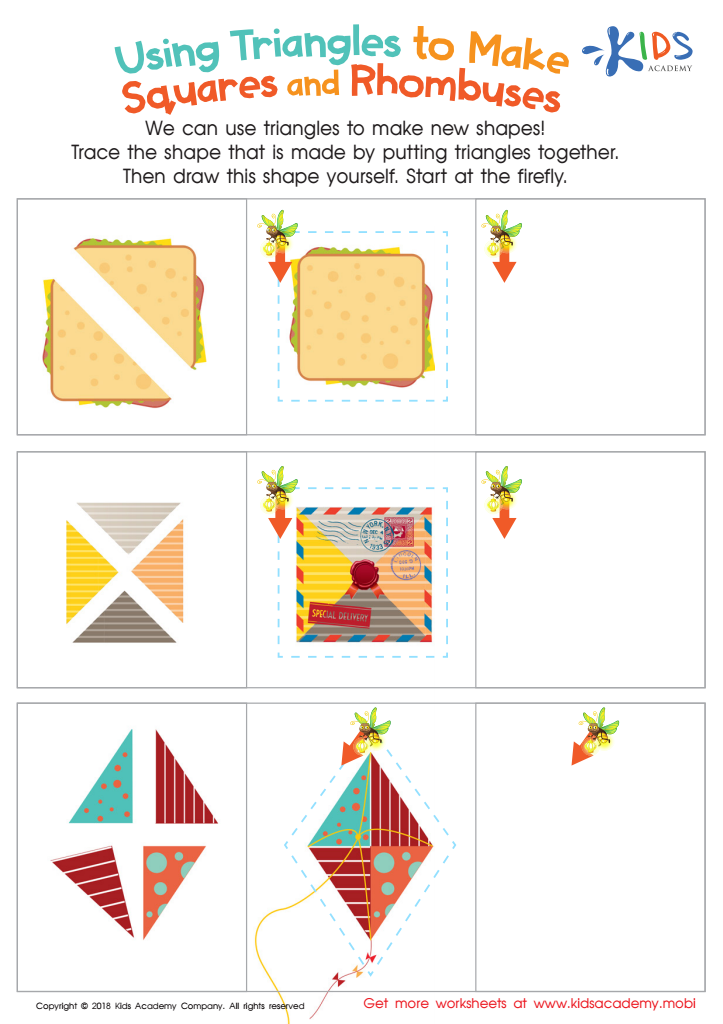
Using Triangles to Make Squares and Rhombuses Worksheet
 Assign to My Students











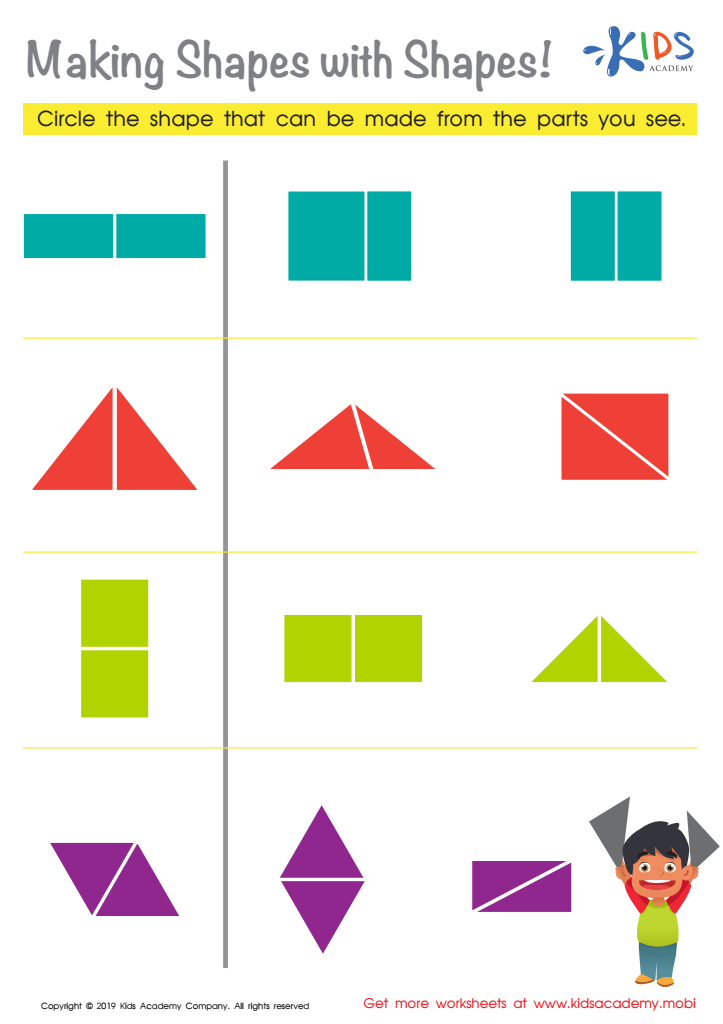
Making Shapes with Shapes Worksheet
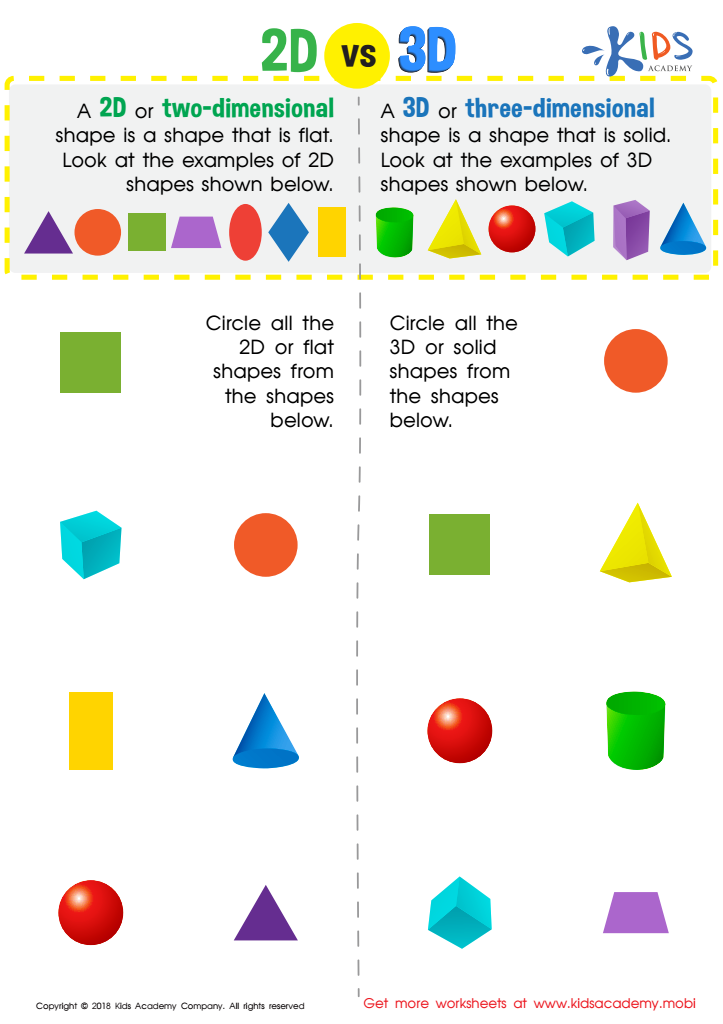
2D vs 3D Shapes Worksheet








Spatial understanding in geometry is crucial for the development of young learners aged 6-8, as it lays the foundation for their mathematical journey and everyday life skills. During these formative years, children are naturally curious and engaged with their environment, making it an ideal time to cultivate their spatial reasoning abilities.
Parents and teachers should care about spatial understanding because it enhances critical thinking and problem-solving skills. Children learn to visualize shapes, understand relationships between objects, and navigate space, all of which are essential for grasping more complex mathematical concepts in later grades.
Additionally, strong spatial skills are linked to success in various disciplines, such as science, technology, engineering, and mathematics (STEM). Early exposure to geometric concepts helps children recognize patterns, classify objects, and develop an intuition for measurement and symmetry. Beyond academics, spatial reasoning supports real-world applications, like reading maps or assembling puzzles.
Finally, by fostering an appreciation for geometry through engaging activities like building, drawing, or hands-on exploration, parents and teachers can inspire confidence and a love for learning in young children. This can set them on a lifelong path of curiosity and academic success.








