Visual Learning Geometry Worksheets for Ages 6-8
5 filtered results
-
From - To
Discover our engaging Visual Learning Geometry Worksheets designed specifically for children aged 6-8. These worksheets incorporate colorful visuals and interactive elements to help young learners grasp fundamental geometric concepts such as shapes, symmetry, spatial awareness, and more. Each worksheet encourages hands-on exploration, making complex ideas more understandable and fun. With a variety of activities tailored to different learning styles, these resources support skill development and foster a love for math. Perfect for classroom use or at-home practice, our visual learning worksheets aim to build confidence and proficiency in geometry through playful, visual experiences. Dive into a world of shapes today!
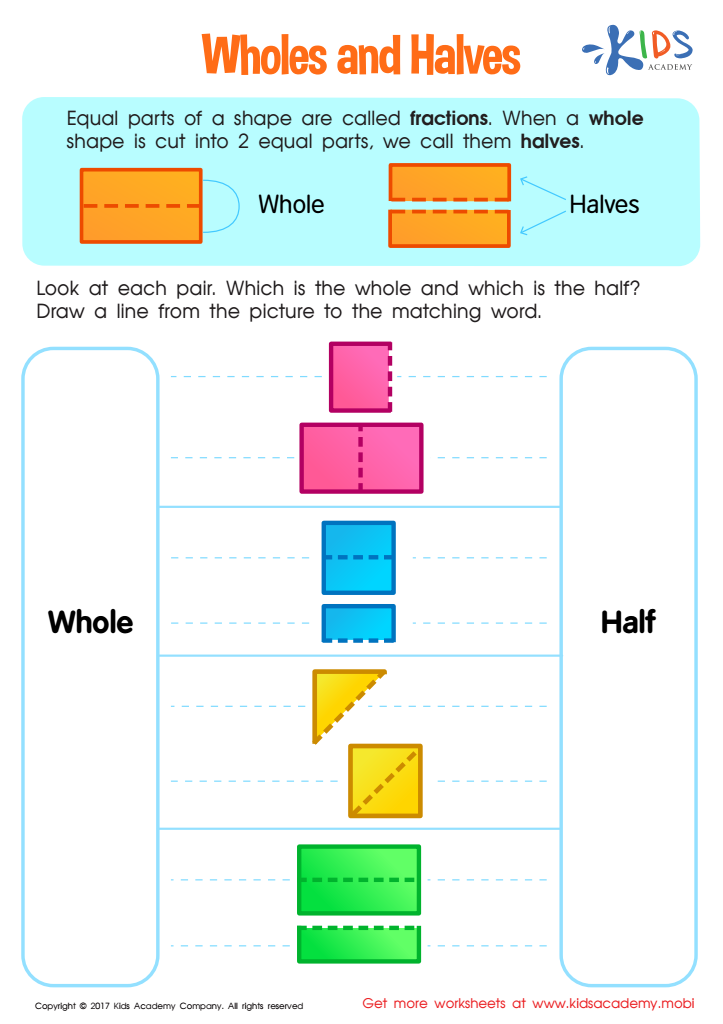
Wholes and Halves Worksheet
 Assign to My Students











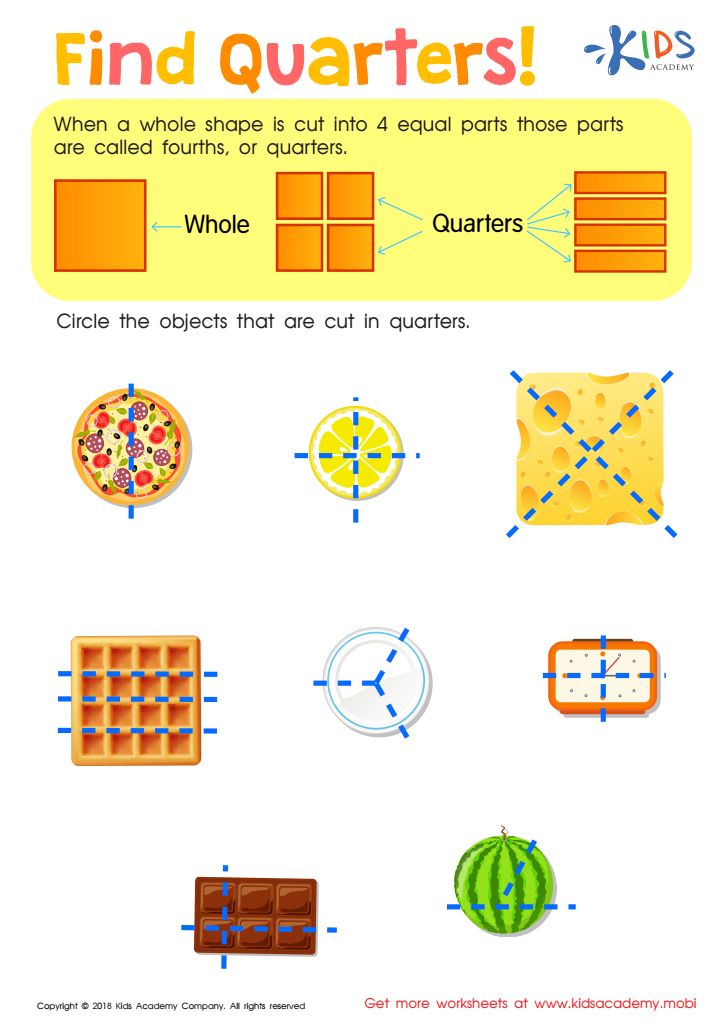
Find Quarters Worksheet
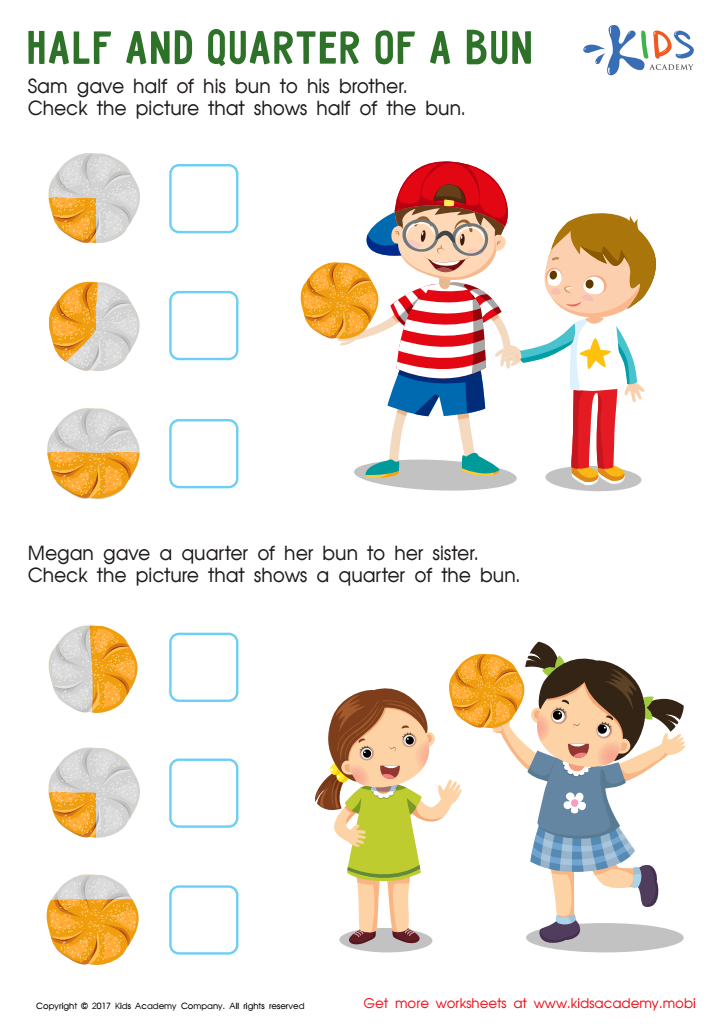
Half and Quarter of a Bun Worksheet
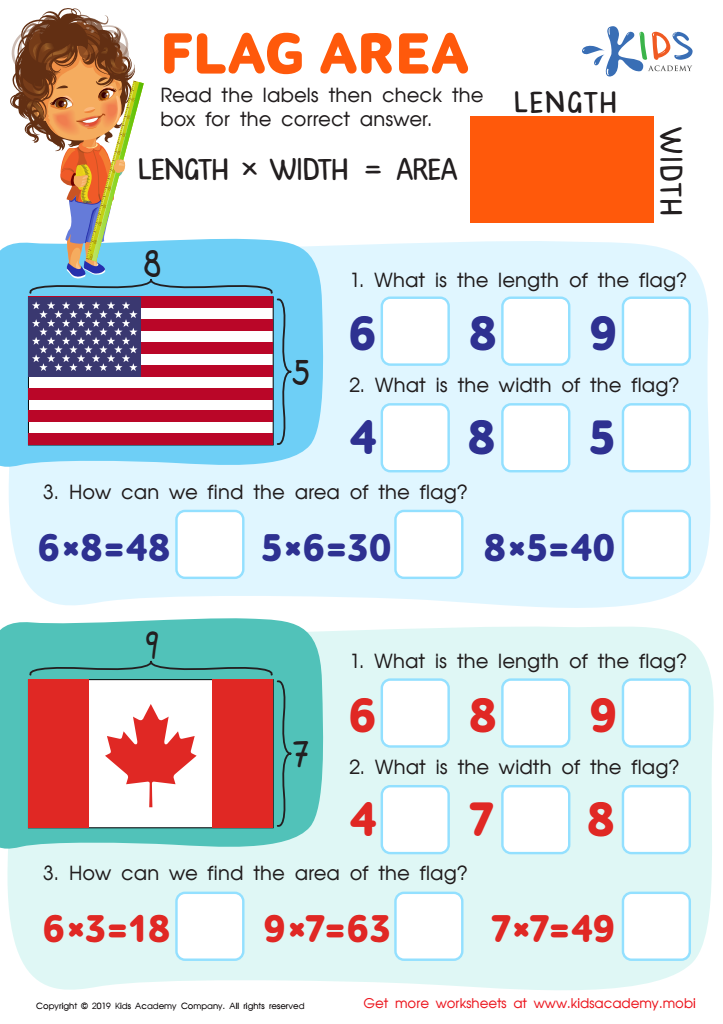
Flag Area Worksheet
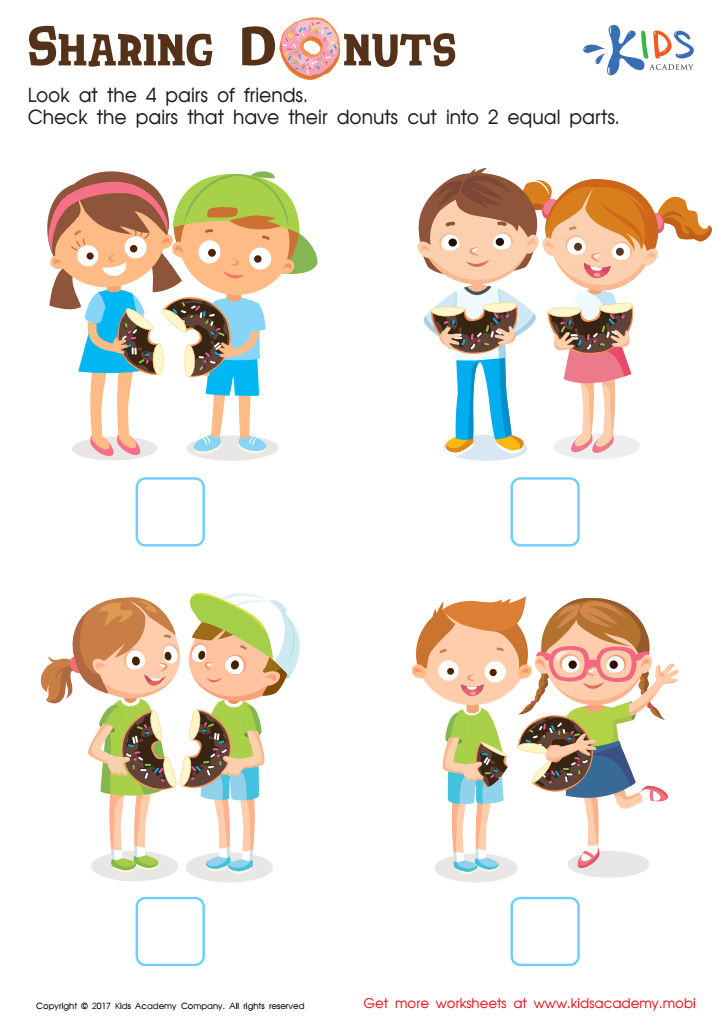
Sharing Donuts Worksheet








Visual Learning Geometry for ages 6-8 is crucial for young learners as it lays a robust foundation in mathematical concepts through visual representation. At this developmental stage, children are naturally inclined to learn through images, shapes, and spatial relationships. Teaching geometry visually helps in nurturing their ability to recognize and categorize shapes, understand spatial reasoning, and develop critical thinking skills.
Parents and teachers should care because incorporating visual learning strategies fosters engagement and retention. Visual aids, such as diagrams, models, and interactive activities, cater to diverse learning styles, making mathematics accessible and enjoyable. Additionally, these methods encourage exploration and curiosity, allowing children to discover geometric concepts through hands-on experience.
Moreover, geometry is not only about shapes but also about understanding patterns, symmetry, and measurement, which are fundamental in daily life and various fields, from art to engineering. As students grasp these concepts in early education, they build confidence and a positive attitude towards math, setting the stage for future academic success.
In summary, prioritizing visual learning in geometry empowers children with essential skills, enhances their learning experience, and lays a vital groundwork for more complex mathematical concepts in later grades.








