
Associative learning Numbers Worksheets for Ages 6-8
4 filtered results
Difficulty Level
Grade
Age
-
From - To
Subject
Activity
Standards
Introducing our engaging Associative Learning Numbers Worksheets designed for ages 6-8! These educational resources help young learners make meaningful connections between numbers and concepts, enhancing their math skills in a fun, interactive manner. Through colorful and creative activities, children will develop a stronger understanding of numbers, addition, and subtraction, fostering a love for mathematics. Perfect for both classroom and at-home learning, our worksheets align with educational standards and promote cognitive development. Empower your child to excel in math with our expertly crafted content that transforms learning into an enjoyable adventure. Download now and start the journey to mathematical mastery!
Favorites
With answer key
Interactive
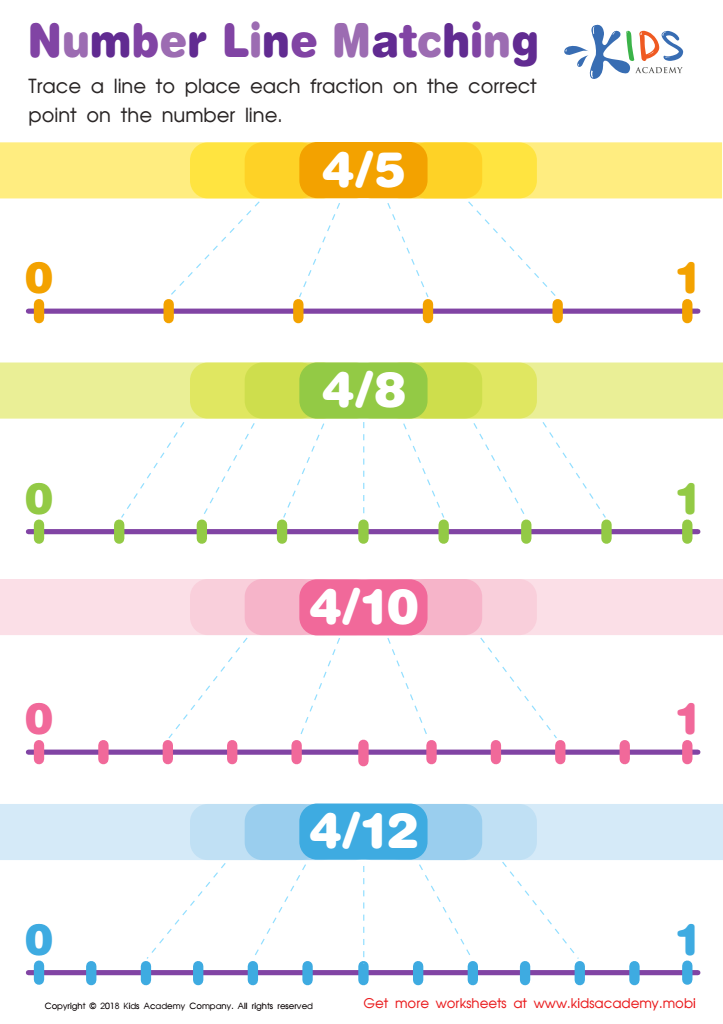
Number Line Matching Worksheet
Math can be fun! Have your child count points on the number line, then identify and trace fractions above it. It's a great way for them to learn and have some fun!
 Assign to My Students
Number Line Matching Worksheet
Worksheet
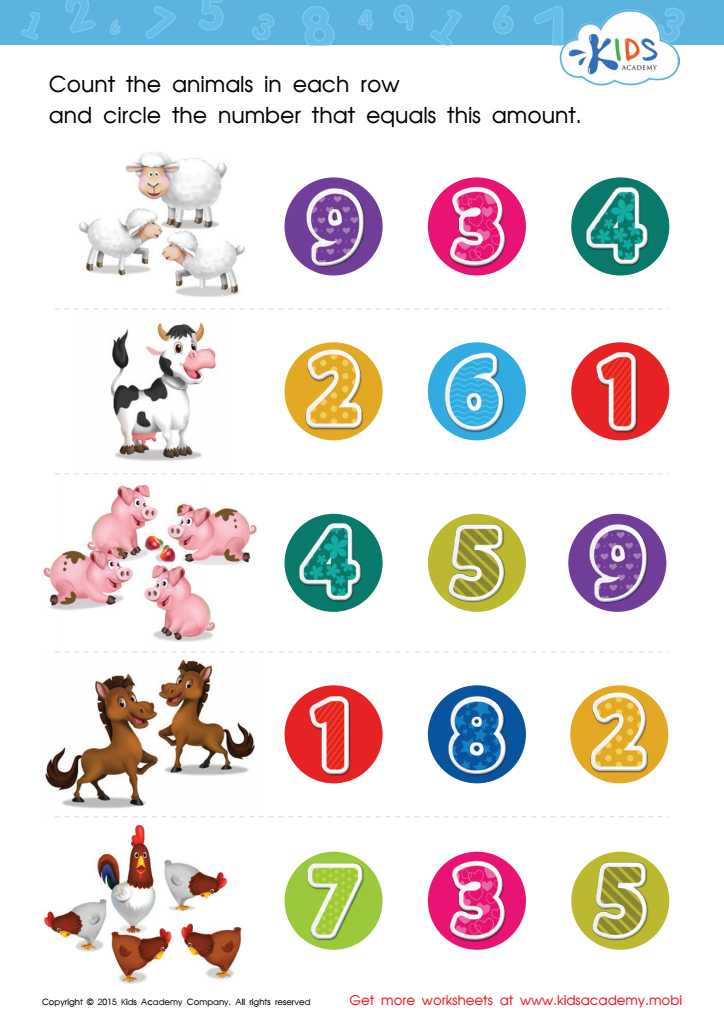
Count and Match 1 – 5 Math Worksheet
Find the colorful worksheet aimed to help your little learner develop their math skills. Count the cute animals and identify the correct numbers based on the Singapore Math method. This worksheet is a fantastic way to start your kid on their mathematical journey.
Count and Match 1 – 5 Math Worksheet
Worksheet
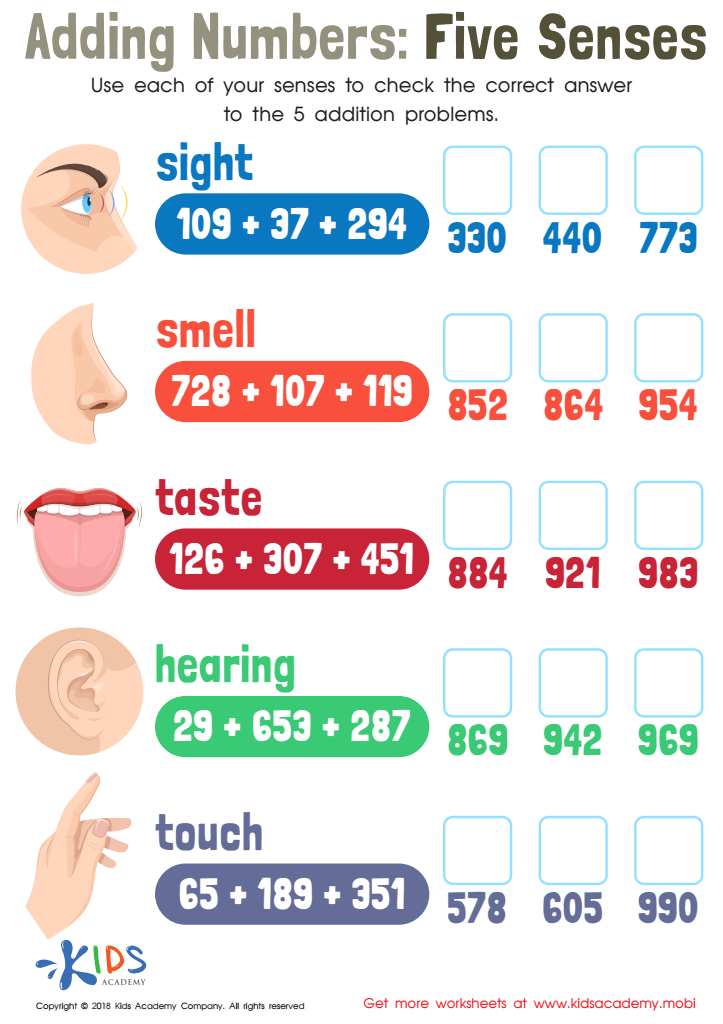
Adding Numbers: Five Senses Worksheet
Help your child identify the five senses on their body: eye, nose, tongue, ear, and skin. Explain that they're used for seeing, smelling, tasting, hearing and touching. Then, have them solve the five addition problems in the worksheet and check the correct answers.
Adding Numbers: Five Senses Worksheet
Worksheet
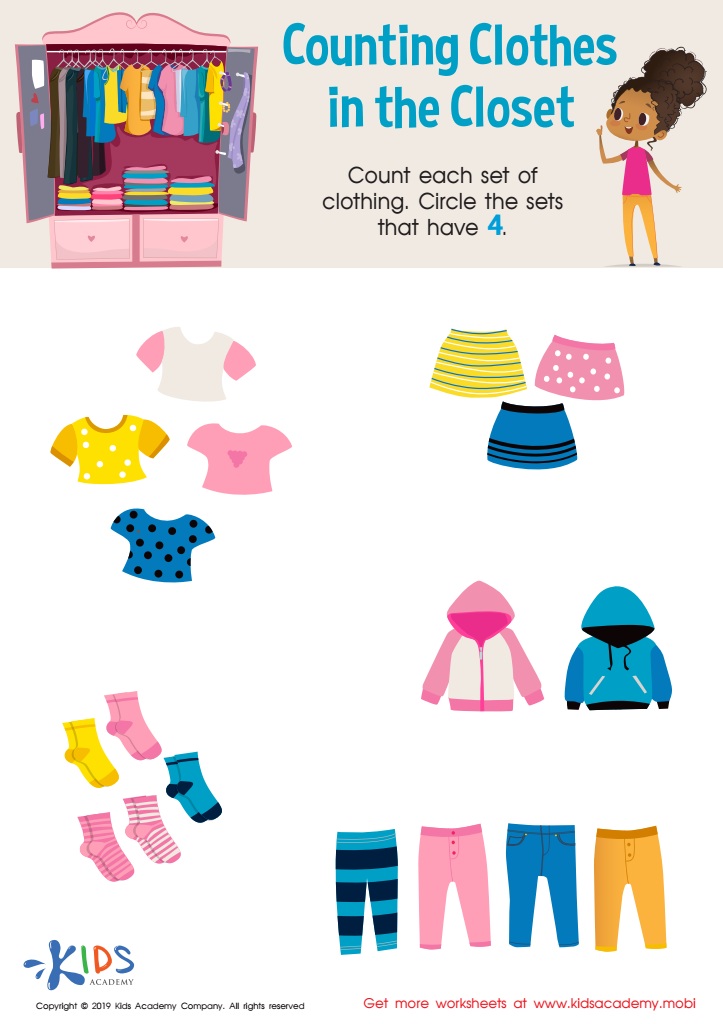
Counting Clothes Worksheet
Help your kids become better counters with fun exercises and objects they can relate to. Print out this worksheet and assist your kid in counting 5 sets of clothing. Have them circle the sets that have 4 so they can master counting small numbers. Strengthen their math skills with your help.
Counting Clothes Worksheet
Worksheet
Join Kids Academy for Free
Who is primarily going to use this learning content?








Associative learning in numbers is crucial for children aged 6-8 because it forms the basis for numerical understanding and future mathematical competence. Associative learning helps children recognize patterns and relationships between numbers. It fosters a deeper comprehension of math concepts by enabling them to connect new information with what they already know. For example, recognizing that 3+4 is the same as 4+3 helps reinforce the commutative property of addition.
During the ages of 6-8, children transition from simple counting to more complex addition and subtraction. Associative learning aids in solidifying these foundational skills, creating a more intuitive grasp of more complex arithmetic. By associating numbers with tangible objects or everyday experiences, children can better internalize abstract concepts, making math more relatable and less intimidating.
Additionally, fostering strong associative learning skills promotes problem-solving and critical thinking. When children understand the underlying principles of numbers and their relationships, they are more equipped to tackle math challenges independently and creatively. This creates a positive attitude towards learning math, decreases anxiety, and boosts confidence.
Parents and teachers should care about developing these skills early on to ensure children build a robust mathematical foundation. This preparation is not only vital for academic success but also for everyday decision-making and logical reasoning.








