
Geography knowledge Numbers Worksheets for Ages 6-8
5 filtered results
Difficulty Level
Grade
Age
-
From - To
Subject
Activity
Standards
Introduce young learners to the exciting world of geography with our "Geography Knowledge Numbers Worksheets for Ages 6-8". Designed to mesmerize curious minds, these engaging worksheets seamlessly combine number learning with fascinating geographical facts. Children will embark on a global journey, enhancing their numerical skills while discovering continents, oceans, and international landmarks. Perfectly tailored to the 6-8 age group, these activities nurture both math proficiency and a love for discovering new places. Ideal for classrooms or home learning, our worksheets promise endless educational fun, sparking young imaginations and fostering a lifelong fascination with our planet. Explore and learn today!
Favorites
With answer key
Interactive
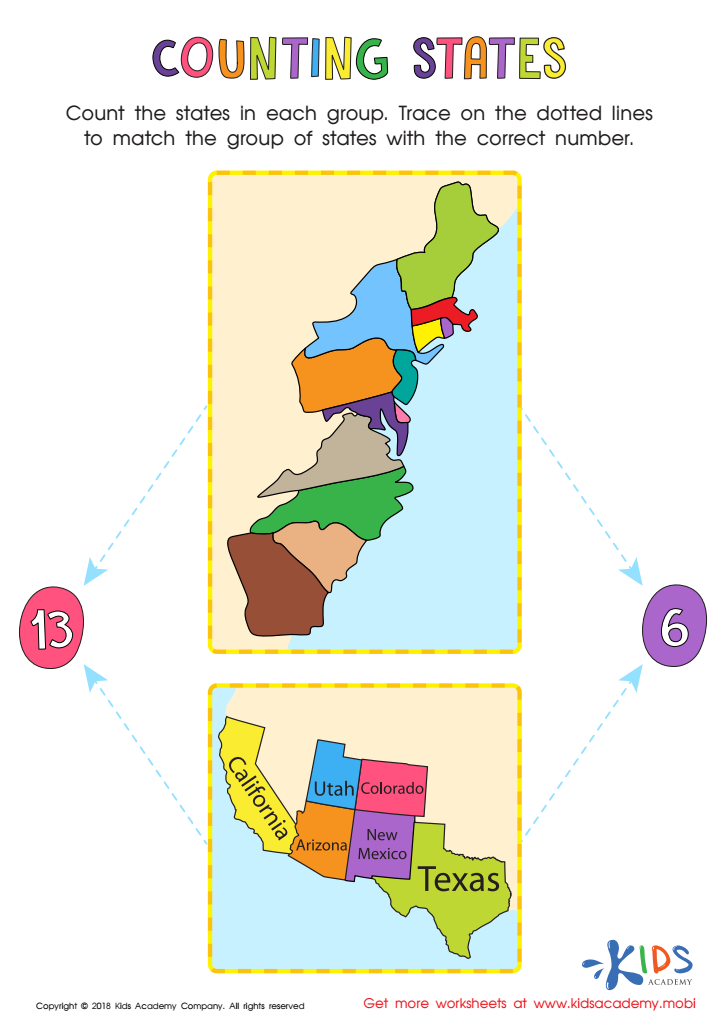
Counting States Worksheet
This fun and educative worksheet helps your kids learn more about their country. Ask them if they can name all the states, then help them trace on the dotted lines to match each state group to the correct number. Counting together is a fun way to reinforce learning.
 Assign to My Students
Counting States Worksheet
Worksheet
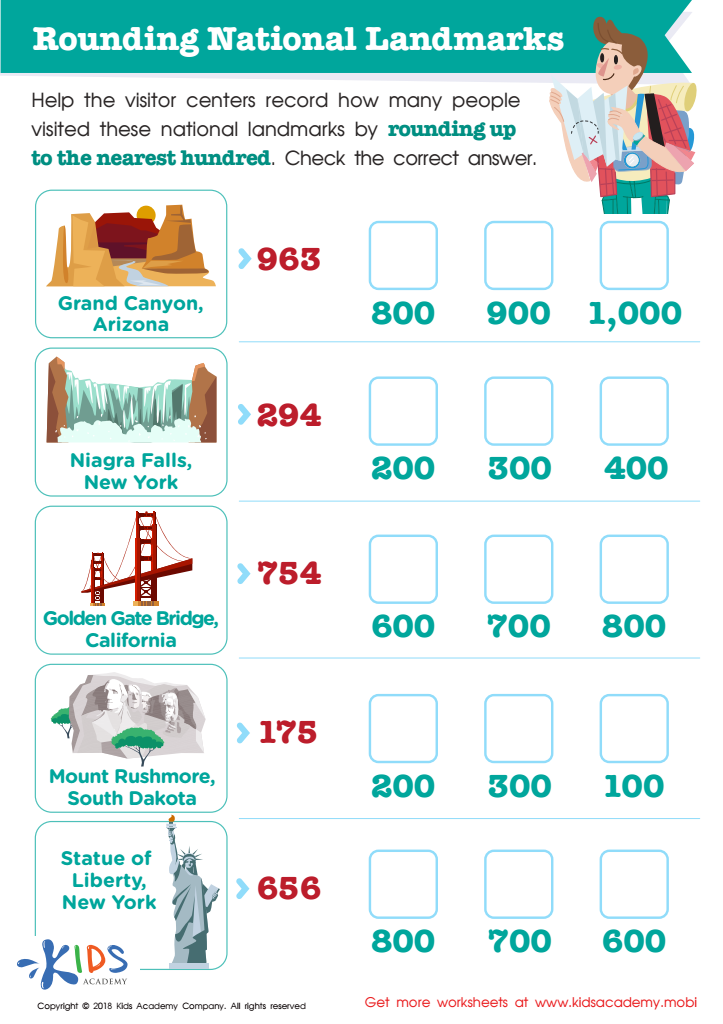
Rounding National Landmarks Worksheet
Does your city have tourist attractions? Help your kids count visitors to these national landmarks by rounding up to the nearest hundred. Then check the correct answer from the provided options. Or explore tourist centres in another state with your family.
Rounding National Landmarks Worksheet
Worksheet
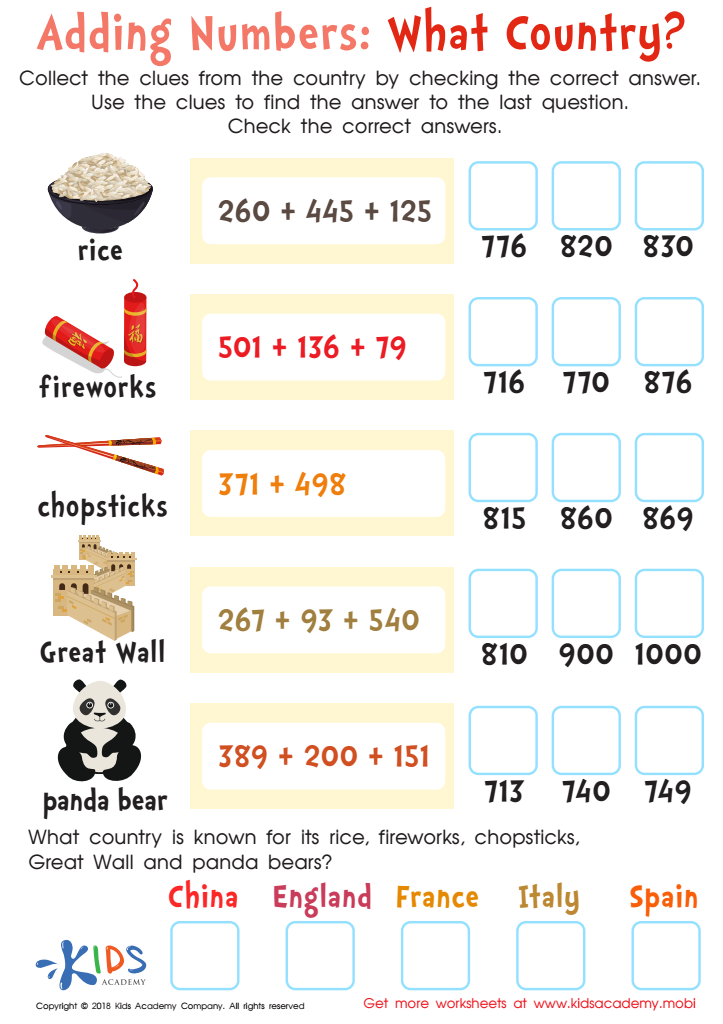
Adding Numbers: What Country Worksheet
Students can use this worksheet to learn more about different countries. Have them collect clues from the worksheet to answer the last question. Help them check the correct answer, and they'll gain knowledge about each country's food, animals, celebrations, and landmarks.
Adding Numbers: What Country Worksheet
Worksheet
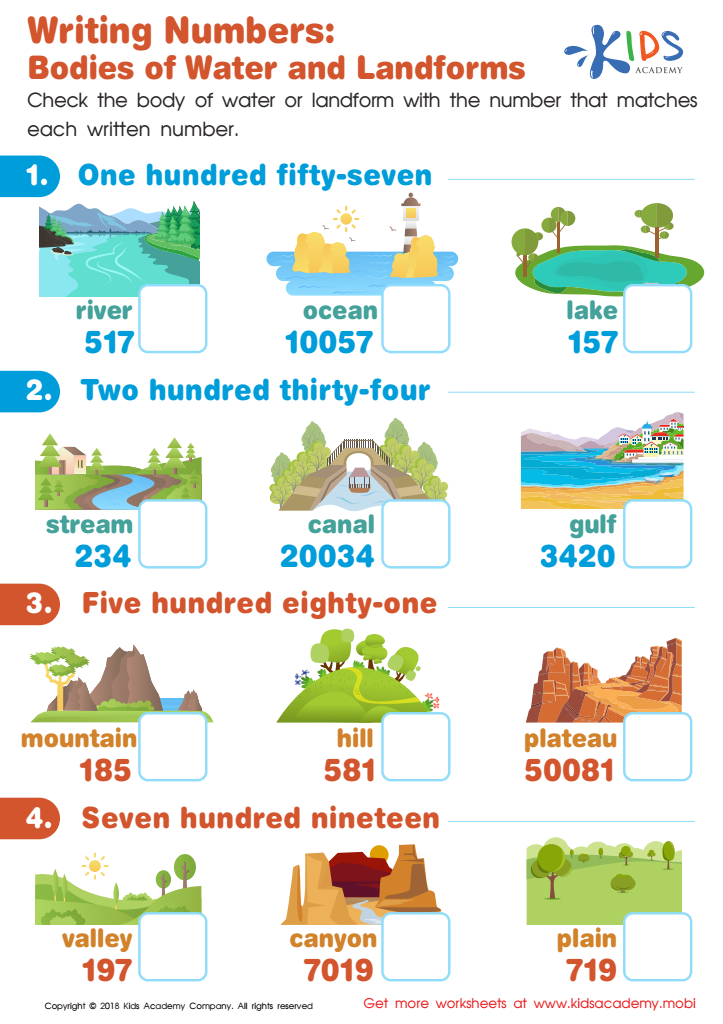
Bodies of Water and Landforms Writing Numbers Worksheet
Your student will love this engaging worksheet with its bright hues, while you give them practice comparing numbers with higher place values. Matching the correct number words to their numeral representations is key for our students as they deal with larger numbers and higher place values.
Bodies of Water and Landforms Writing Numbers Worksheet
Worksheet
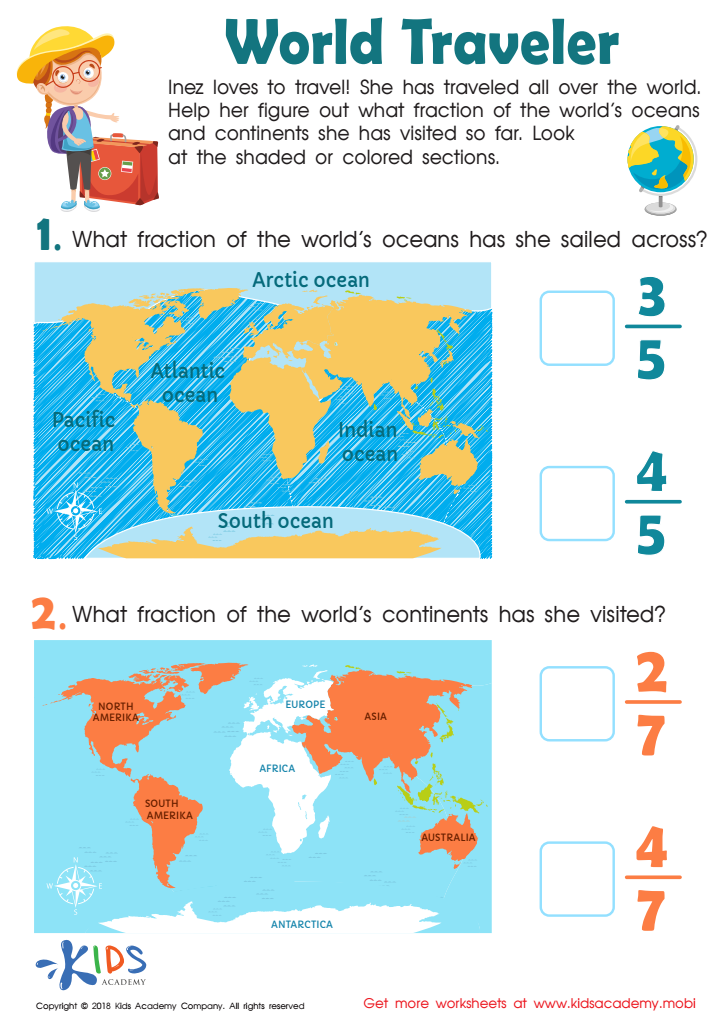
World Traveler Worksheet
Kids love exploring the world? Inez sure does! She's seen oceans and continents around the globe. Your kids can help her figure out what fraction of the world she has visited. Have them name all the countries they've been to, then look at the marked sections on the printout to find out!
World Traveler Worksheet
Worksheet
Join Kids Academy for Free
Who is primarily going to use this learning content?





%20(1).jpg)


Understanding geography at an early age, particularly between 6-8 years old, has numerous benefits that are critical for a child’s overall development. First, early introduction to geography fosters curiosity and a better understanding of the world around them. It helps children recognize different countries, cultures, and global diversity, promoting tolerance and empathy. Knowing the basics of geography also aids in comprehending current events, since many news stories have geographical elements.
Moreover, learning about physical geography, such as maps, landforms, and bodies of water, lays foundation for spatial thinking skills that enhance problem-solving abilities in other subjects like mathematics and science. Geography education encourages critical thinking and inquisitiveness, qualities essential for lifelong learning.
Behaviorally, geography can facilitate greater environmental awareness. Understanding the interplay between the earth's features and human life encourages a commitment to protect and preserve our planet. Finally, familiarity with geographical notions can also improve basic academic skills; place names, map reading, and environmental descriptions enhance vocabulary and comprehension skills.
Thus, both parents and teachers have strong reasons to prioritize geography education in early years, fostering well-rounded, informed, and responsible global citizens while supporting academic and personal growth.








