Understanding quantity Numbers Worksheets for Ages 6-8
4 filtered results
-
From - To
Explore our "Understanding Quantity Numbers Worksheets" designed for children aged 6-8. These engaging, interactive worksheets help young learners grasp the concept of quantity by connecting numbers to real-world objects. Through fun activities tailored to their developmental stage, students will enhance their counting, comparing, and number recognition skills. Each worksheet encourages hands-on practice, making learning enjoyable and effective. This resource supports foundational math skills, fostering confidence and competence in young mathematicians. Perfect for classroom use or at-home learning, our worksheets nurture an appreciation for numbers and quantities while preparing children for more advanced math concepts. Start your math journey with us today!
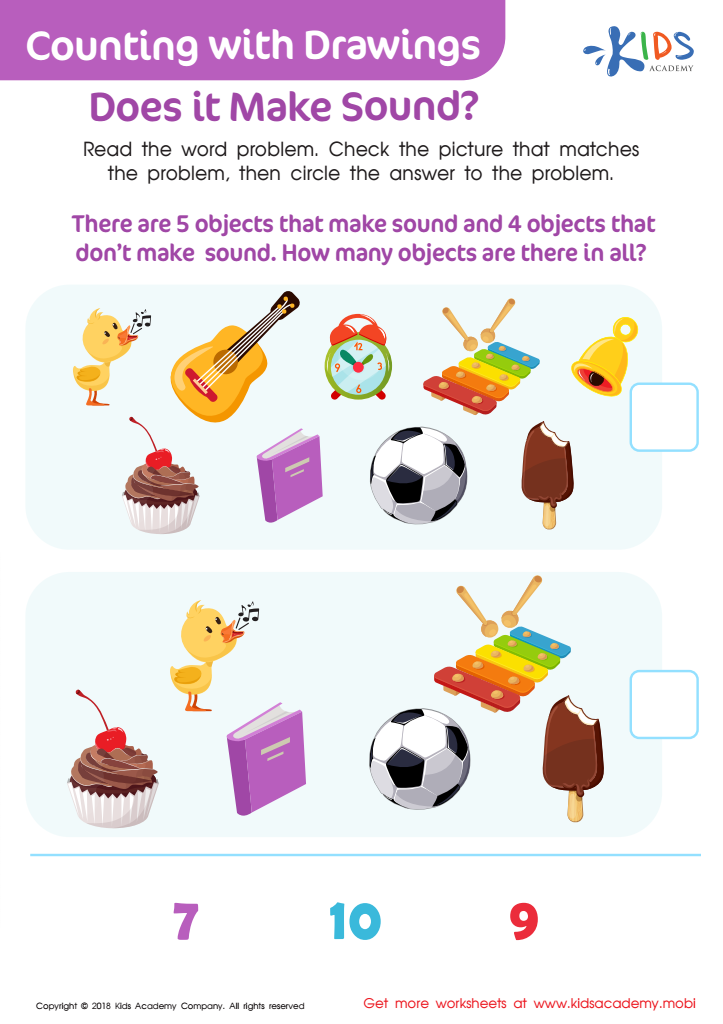
Counting With Drawings. Does It Make Sound? Worksheet
 Assign to My Students
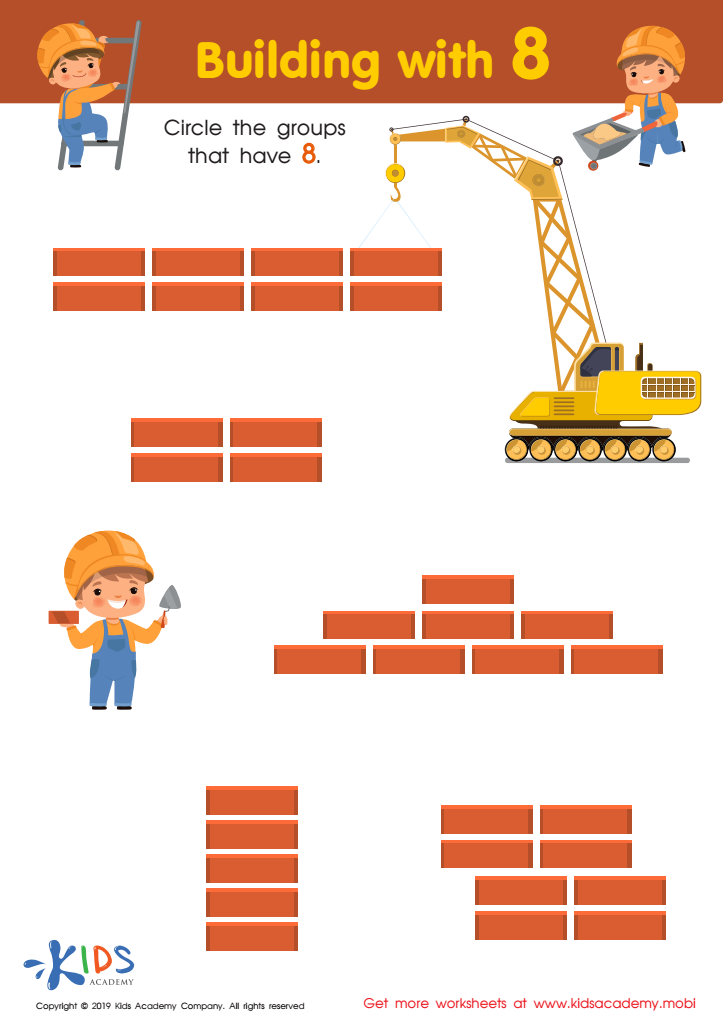
Building with 8 Worksheet
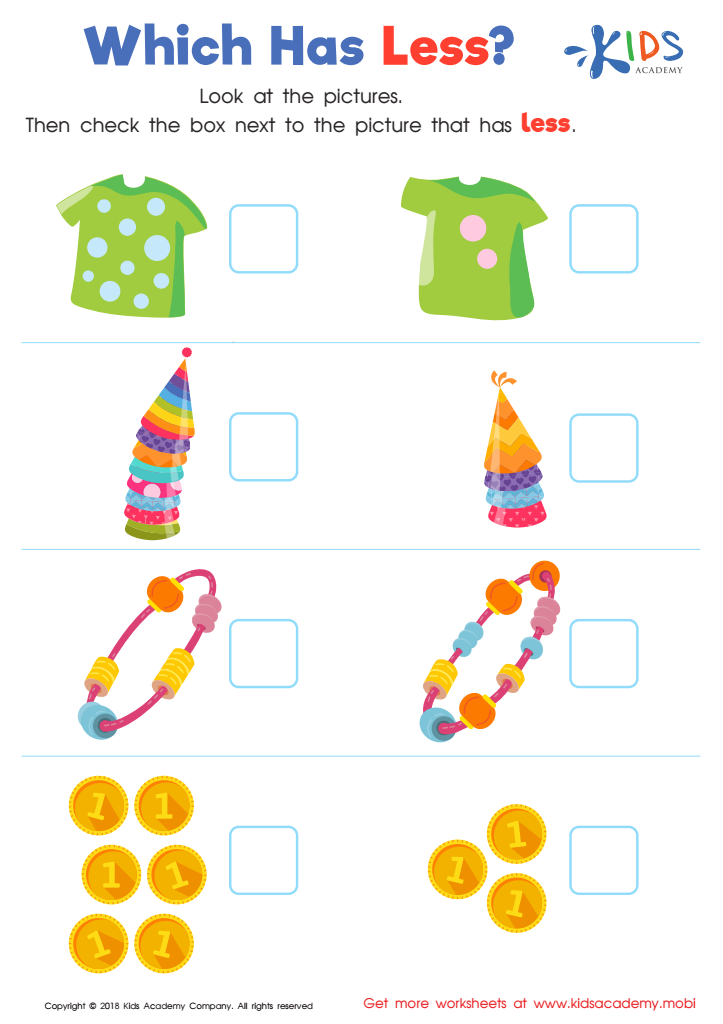
Which Has Less? Worksheet
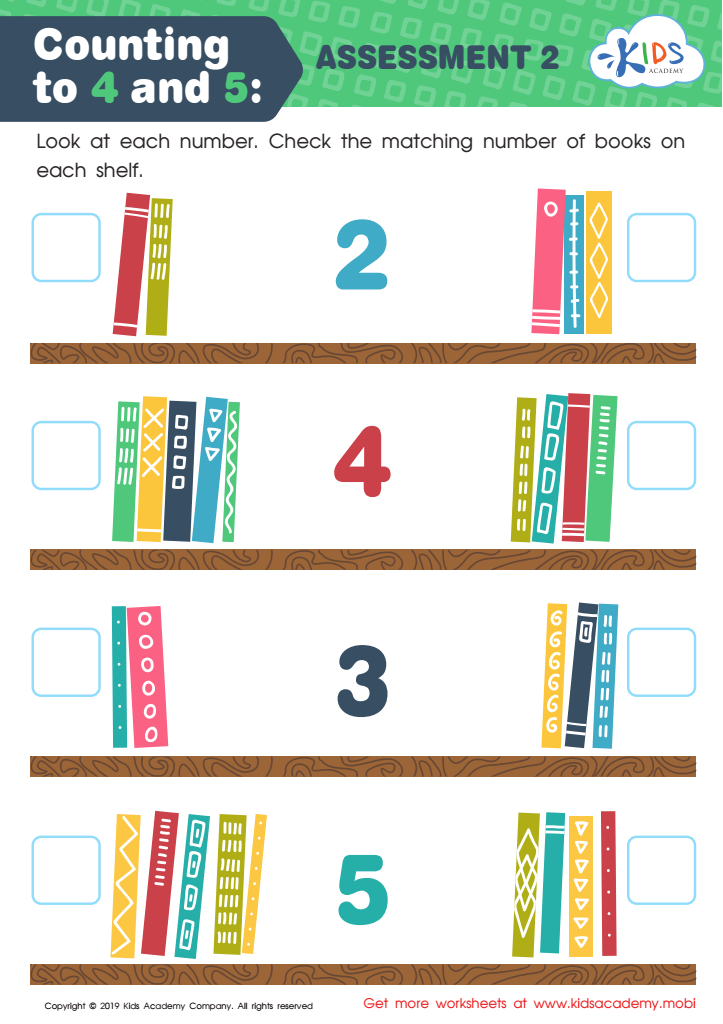
Counting to 4 and 5: Assessment 2 Worksheet





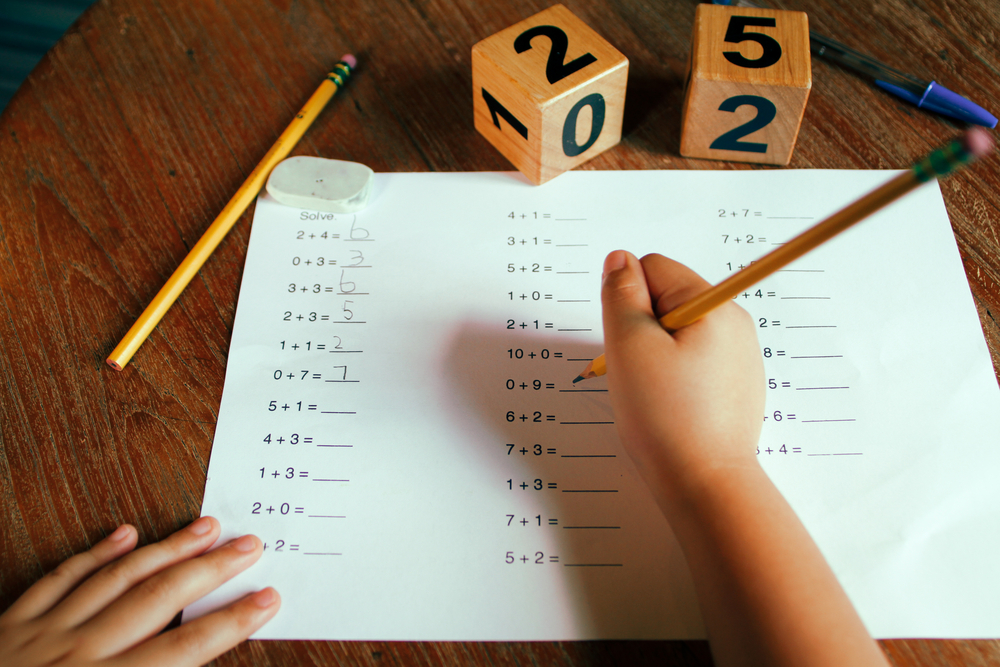


Understanding quantity numbers is crucial for children aged 6-8, as it lays the foundation for their mathematical development and affects their overall academic success. At this age, children are transitioning from simple counting to grasping more complex concepts like addition, subtraction, and the idea of magnitude. When parents and teachers emphasize the significance of quantity numbers, they help children develop essential problem-solving skills and critical thinking.
Early mastery of quantity encourages confidence and fosters a positive attitude towards math, reducing future anxiety as the subject matures. Additionally, understanding quantities enhances everyday skills such as measuring ingredients for a recipe or managing allowance money. It also promotes logical reasoning, important for grasping more complex subjects later on.
Moreover, quantity understanding is interrelated with language skills, as children learn to describe and compare quantities, enhancing their communication abilities. Engaging in discussions about numbers cultivates a rich learning environment and can strengthen the bond between parents and children or teachers and students.
In summary, investing time in helping children understand quantity numbers is essential, as these skills are fundamental not just in math, but in everyday life, fostering holistic development in young learners.








